About HCW
What Owner Operated Means in Practice
2 min readUpdated July 2026
HCW Crane Service is run by its owner, Devan, who quotes the work and operates the equipment. There is no rental counter and no crew to dispatch. An operator comes with every crane, and the person who quotes the lift is the person on the controls when it happens, day or night.
Owner Certification
Devan Decastro, NCCCO Certified Crane Operator
- Certification
- Telescopic Boom Crane, Swing Cab (TLL)
- CCO ID
- 444146986
- First certified
- February 28, 2025
- Valid through
- February 28, 2030
Issued by the National Commission for the Certification of Crane Operators. Check it yourself on NCCCO's public lookup, which shows the current status.
Verify on NCCCO(opens verifycco.org in a new tab)An Operator Comes With the Crane
The first thing worth being clear about is that this is not equipment rental. You cannot hire the crane and run it yourself, and nobody drops a machine off in your driveway.
That is not a policy invented to sell labour. A crane is one of the few pieces of equipment where the machine is genuinely the easy part. Choosing where it sets up, judging whether that ground will carry it, deciding how an awkward object gets rigged, and knowing when a pick should not happen at all are the work.
So the machine and the judgement are not separable here. What you are hiring is a person who has done this a long time, who arrives with the equipment attached.
The Person Who Quotes Is the Person on the Controls
The unusual part of this operation is not the cranes. Other people in this area have cranes. It is that the person you describe the job to is the person who sets up the truck, rigs the load and runs the lift.
That matters because the details that decide a lift are small and easy to lose. The gate that is two inches narrower than it looks. The soft patch where the pool was dug. The neighbour who needs the driveway clear by nine. Every handoff between a salesperson, a dispatcher and an operator is a chance for one of those to go missing.
Here there is no handoff. The same person also knows the roads: the real miles to an outlying job, which routes a boom truck cannot take, and how long the drive around the lake actually is. That is the whole of the difference, and it is worth more on the day than a bigger fleet.
What It Means for Your Schedule
One operator means a real ceiling on how many jobs exist in a day, and that is worth stating plainly rather than hiding behind vague availability.
In practice it means summer morning slots go early, because everyone in the trades wants the cool hours and there are only so many of them. It means booking a week ahead is meaningfully better than booking the night before, even though short notice often works.
It also means the answer to a date is sometimes no. That is the cost of the arrangement, and it is preferable to a soft yes that collapses at seven in the morning and takes five other trades down with it.
The First Phone Call
There is no booking desk in front of the operator. The number reaches the person who will do the work, at any hour, which is the only reason being open around the clock is worth anything.
The call is short and specific. What is being lifted, where it is, roughly how heavy, and how far it has to travel from a spot a truck can park. Those four answers decide almost everything, and photos answer them faster than words do.
You will get a straight assessment on that call, including if the honest answer is that the job does not work as described. Nobody benefits from finding that out in a driveway.
How the job runs
Our Process
Step 1: You Reach the Operator
No dispatcher, no relay. The person who answers is the person who will walk the site and run the machine, so the answers you get are decisions rather than guesses.
Step 2: The Job Gets Scoped Honestly
Weight, distance, height and setup room. If those numbers do not work, that gets said on the phone rather than discovered once a truck is on your street.
Step 3: The Same Person Runs the Lift
Whoever scoped the job sets up the truck, rigs the load and operates the crane. Nothing said on the phone has to be passed along to someone else.
Step 4: One Name on the Outcome
If something needs following up, you call the same number and speak to the person who was there. There is nothing to escalate through.
Scope
What Is Included
- An operator with every crane, never a bare rental
- The owner on the quote, the walk and the machine
- 22-ton and 40-ton cranes with reach to 142 feet
- Direct phone access to the operator at any hour
- Straight answers about capacity and availability
- Consistency across every visit to the same property
From the cab
The View From the Operator's Seat
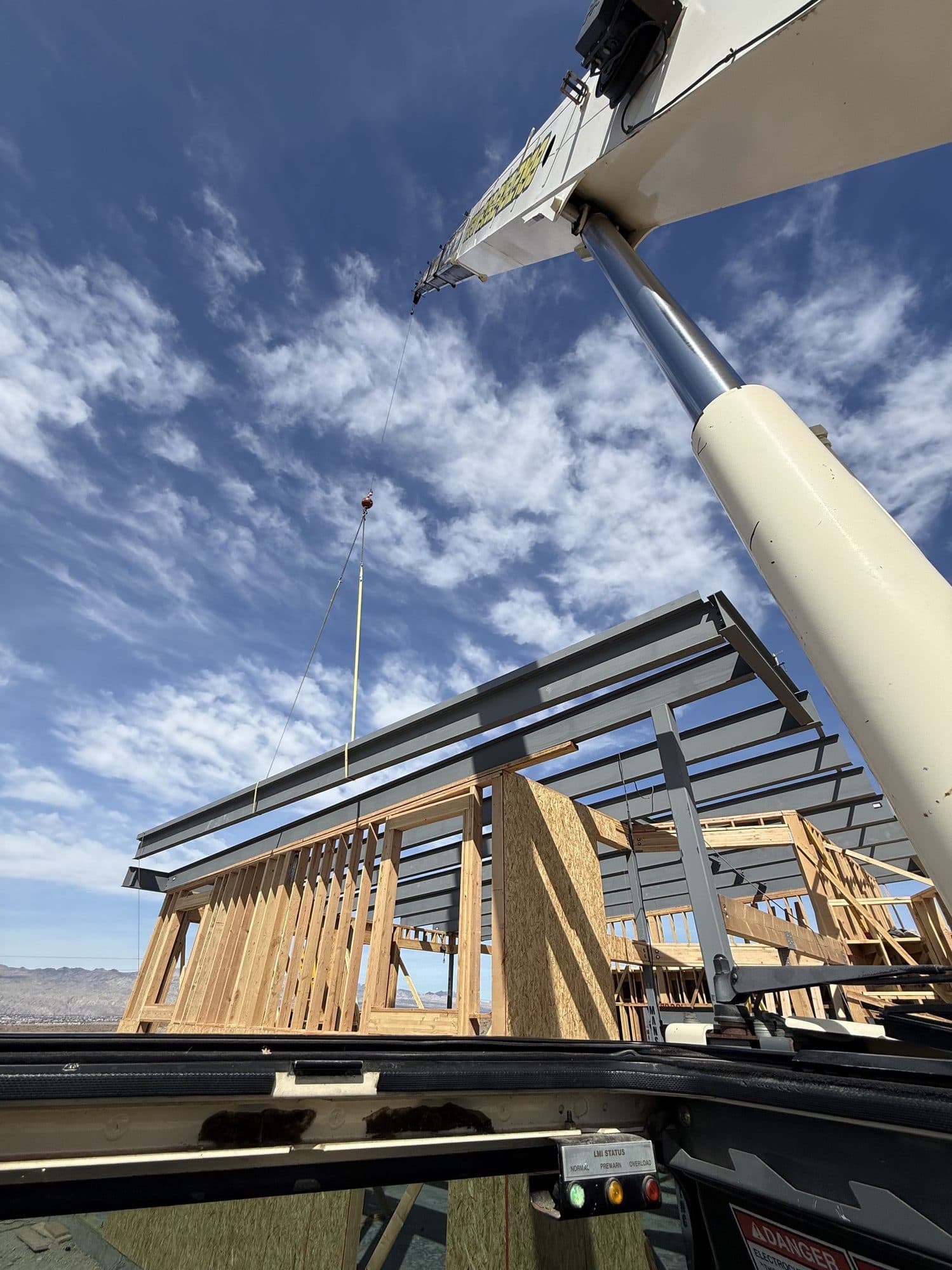
These were taken from inside the crane cab on real HCW jobs.
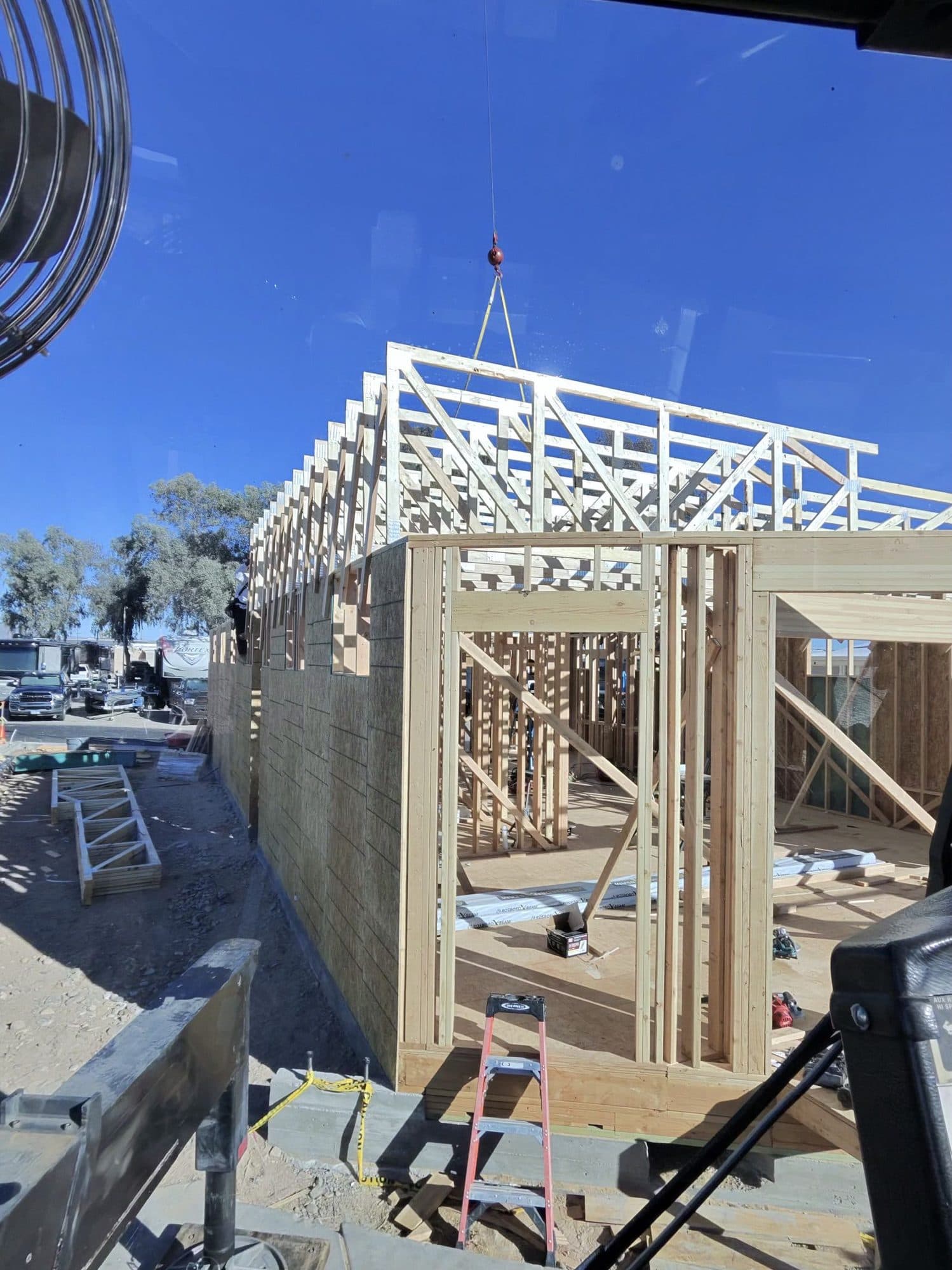
Trusses landing on a house frame 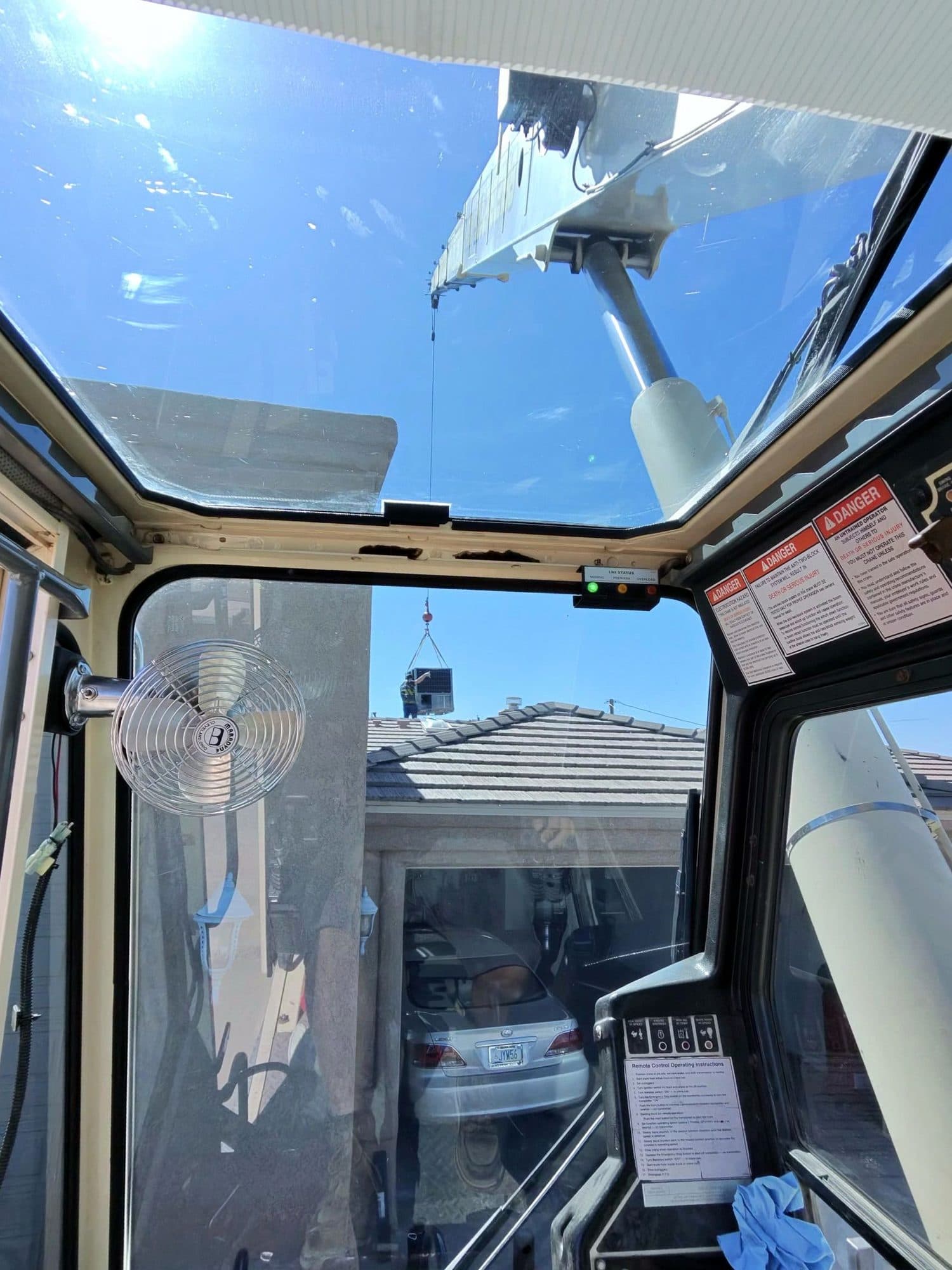
Rooftop unit lifted over a tile roof 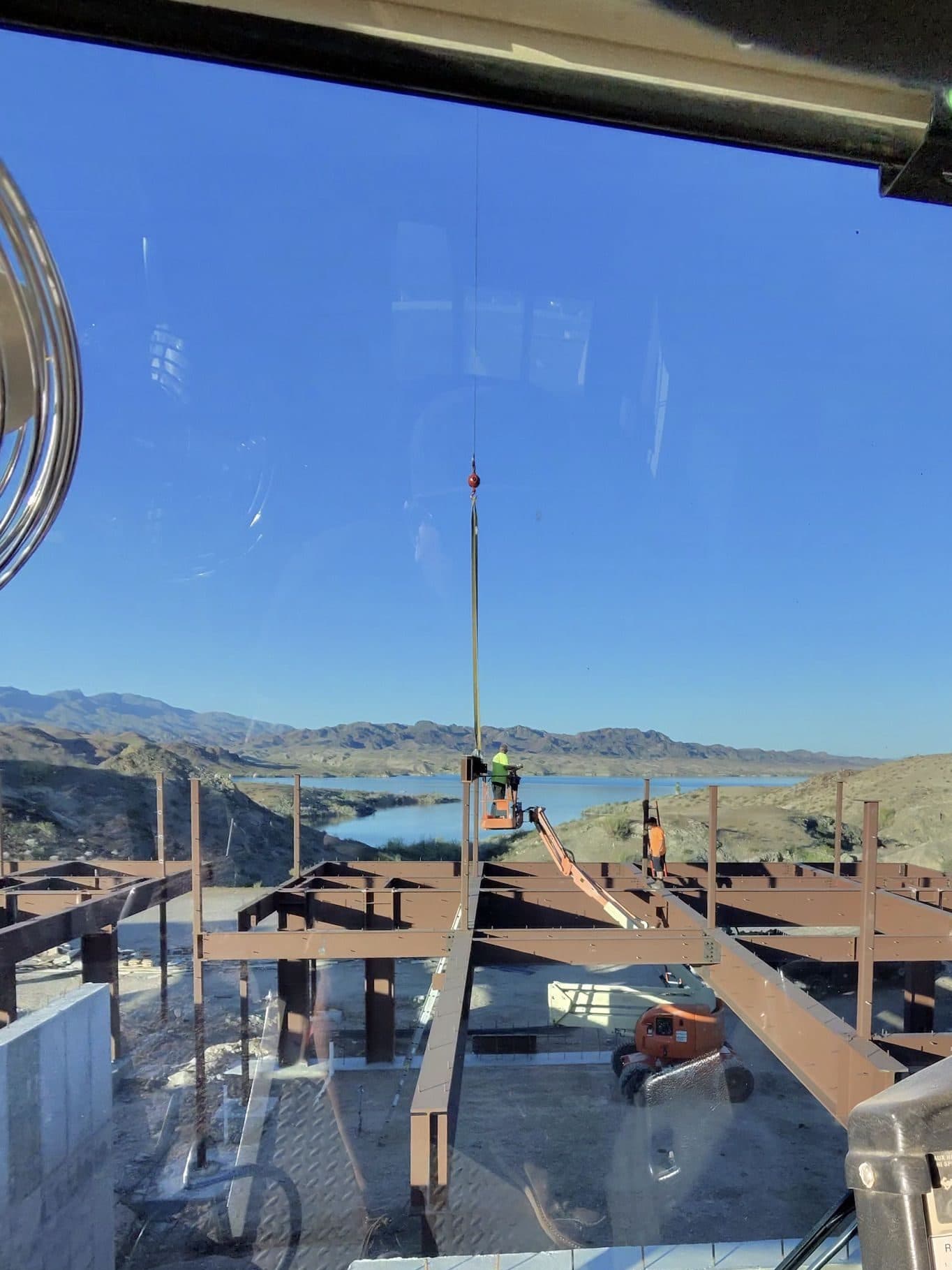
Steel framing above the lake
Answers
Frequently Asked Questions
Can I hire just the crane?
No. Every crane goes out with the operator running it. There is no version of this service where equipment is left with a customer, and that is true regardless of how experienced the customer is with heavy equipment.
Who is the owner?
Devan, who runs the equipment himself. He takes the calls, walks the sites, rigs the loads and operates both cranes. If you speak to somebody about a job here, that is who you are speaking to.
Is one operator enough for a big job?
For most work in this area, yes. Where a job genuinely needs two cranes working together or a larger machine than a 40-ton boom truck, it belongs somewhere with a fleet, and you will be told that instead of being sold something that does not fit.
How far ahead should I book?
A week is comfortable and short notice frequently works. The exception is summer mornings, which go quickly because every trade in town wants to be finished before the afternoon heat.
Do you subcontract any of the work?
The crane work and the rigging are done by the owner. Where a job needs a trade we do not do, such as the electrical or mechanical work at either end of a lift, that stays with your contractor rather than being quietly arranged by us.
More About HCW
- Our Equipment and CapacityRated capacity is measured at minimum radius and drops fast as the boom goes out. Here is how tonnage, reach and setup room really decide which crane fits.
- How We WorkWhat we ask on the phone, when a site visit is worth doing, how a lift day actually runs, and what happens after the truck leaves your property.
- Safety and Experienced OperatorsOver 20 years of operating experience, what that looks like in daily habits, and an honest statement of what this business does and does not publish.
- Family Owned Local ServiceBased on London Bridge Road, working both of this town's seasons. What being local means when your customers are also your neighbours at the grocery store.
- Our Equipment and CapacityRated capacity is measured at minimum radius and drops fast as the boom goes out. Here is how tonnage, reach and setup room really decide which crane fits.
- How We WorkWhat we ask on the phone, when a site visit is worth doing, how a lift day actually runs, and what happens after the truck leaves your property.
- Safety and Experienced OperatorsOver 20 years of operating experience, what that looks like in daily habits, and an honest statement of what this business does and does not publish.
- Family Owned Local ServiceBased on London Bridge Road, working both of this town's seasons. What being local means when your customers are also your neighbours at the grocery store.
- Communication and AccountabilityNo trade vocabulary, no vague reassurance. What the trade-offs are, what something will cost you in time, and what happens when we get something wrong.
- Mission and VisionThe job is to take a risk off somebody else. The aim is to be the operator local trades call first. Both stated plainly enough to be measured against.
Ready to schedule your lift?
Tell us the load, the site and the timing. We will confirm capacity, access and a window.