Rigging and Construction Lifts
Truck Loading and Unloading in Lake Havasu City
2 min readUpdated July 2026
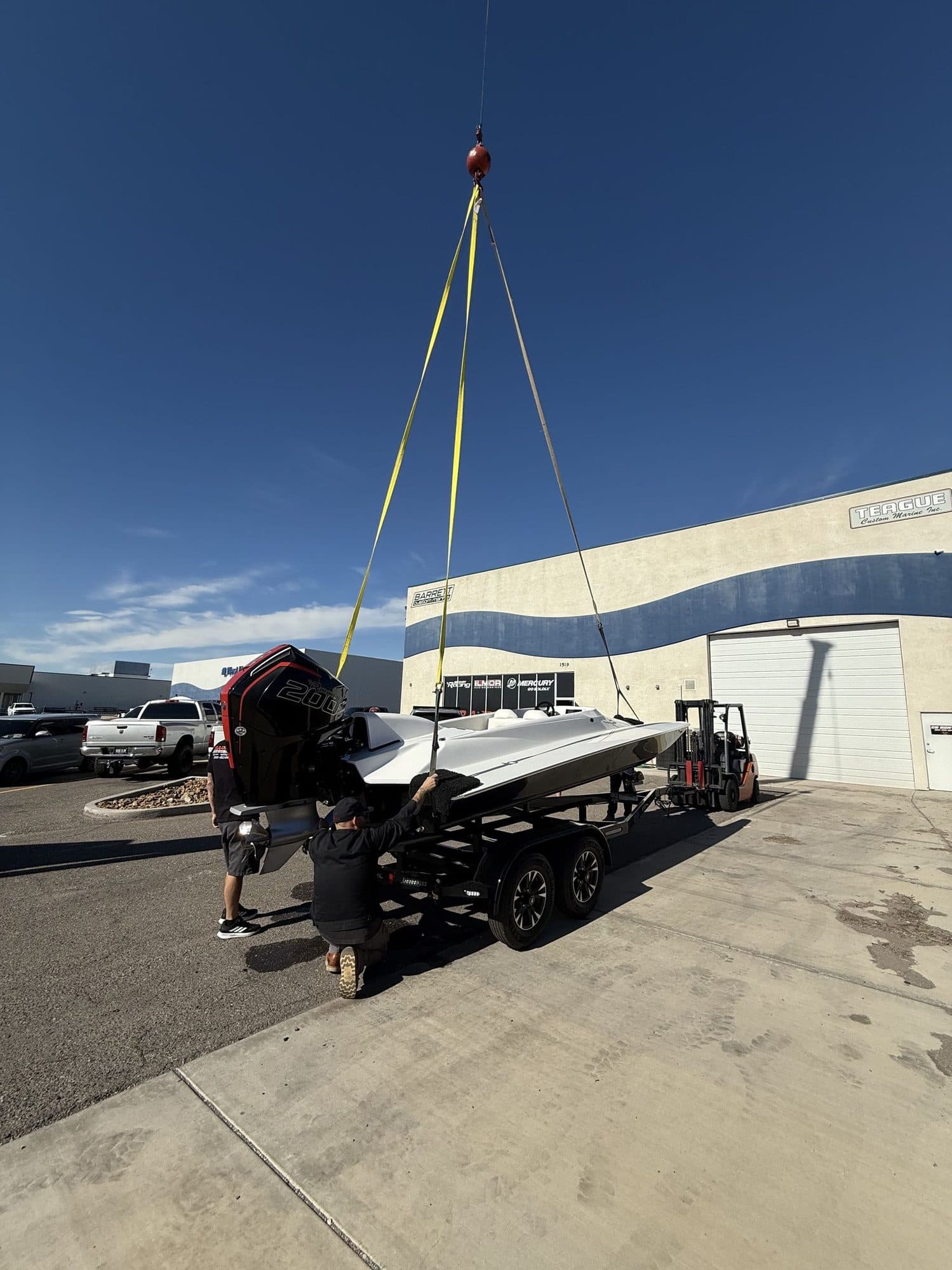
Truck loading and unloading is using a crane to take freight off a flatbed or step deck, or load it for shipment, where no forklift can do the job. It covers timing the crane to the delivery, rigging to the freight's lift points, and placing the load on blocking or where the driver needs it.
When the Forklift Is Not Enough
Plenty of freight arrives in Lake Havasu City on a flatbed with nothing on site that can take it off. A residential lot has no forklift. A job site has a telehandler that cannot handle the weight or reach the far side of the deck. A shop has a forklift, but the load is too long, too tall, or too heavy for its forks.
A crane unloads from the side of the trailer or from over the back, and it can set the load somewhere a forklift could never drive: behind a wall, on a slab inside a fenced yard, or straight onto its final pad. Sometimes unloading and placing are the same pick, which saves handling it twice.
Common loads are steel bundles, precast pieces, pallets of block, tanks, generators, equipment crates, and machinery coming in for a new shop. The rigging changes with each, and the weight should be on the paperwork the driver is carrying.
Timing the Crane to the Truck
Drivers run on their own schedule, and many of them are paid to drop and leave rather than wait. If the crane is not set up when the truck rolls in, the driver may leave with the load or start charging for detention. Confirming the delivery window the day before is the single best way to avoid that.
We like to be set up before the truck arrives, with the outriggers down and the landing spot marked. That means knowing where the trailer will park so the crane can reach it and the landing spot from one setup. Two setups for one load is wasted time.
On a residential street, the trailer and the crane may both need the road at the same time. That can mean a short closure with cones and a spotter, and on some streets it means checking with the city first. Tell us the street and we will tell you what we think it needs.
Loading Outbound Freight Balanced
Loading is where the driver takes charge of placement. Axle weights, the position of the load over the trailer, and the tie down points all belong to the driver, because the driver is the one who gets weighed and has to haul it. We set it exactly where they say, on the blocking they want.
Tall and top heavy items get held by the crane until the chains or straps are on. Letting go of a machine that wants to rock on a trailer deck before it is secured is how loads end up on the ground.
The weight and dimensions go to the hauler before the day. A load that turns out to be over width or over height for the trailer they sent means a second truck, and nobody wants to find that out with the load already hanging.
How the job runs
Our Process
Step 1: Delivery Details Gathered
We ask for the weight and dimensions from the bill of lading, the trailer type, the delivery window, and where the trailer can park. Photos of the unloading area and the landing spot tell us where the crane has to set up.
Step 2: Window Confirmed
The delivery window gets confirmed the day before, along with whether the driver is waiting or dropping. The crane is scheduled to be set up before the truck arrives, not after.
Step 3: Set Up and Staged
Outriggers go down where the crane can reach both the trailer and the landing spot from one position. Blocking or cribbing goes down at the landing spot. Cones and a spotter control the street if needed.
Step 4: Picked and Landed
Rigging goes to lift points or around the load as its design allows. The load comes off after a test lift and lands on blocking, on its pad, or on the outbound trailer where the driver directs.
Scope
What Is Included
- Crane set up before the truck arrives
- Weight taken from the bill of lading or manufacturer data
- Rigging chosen for the freight, not by habit
- Blocking or cribbing at the landing spot
- Outbound loads placed where the driver sets axle weights
- Tall loads held until chains or straps are on
- Street cones and a spotter when the road is in use
Real HCW jobs
From the Job Site
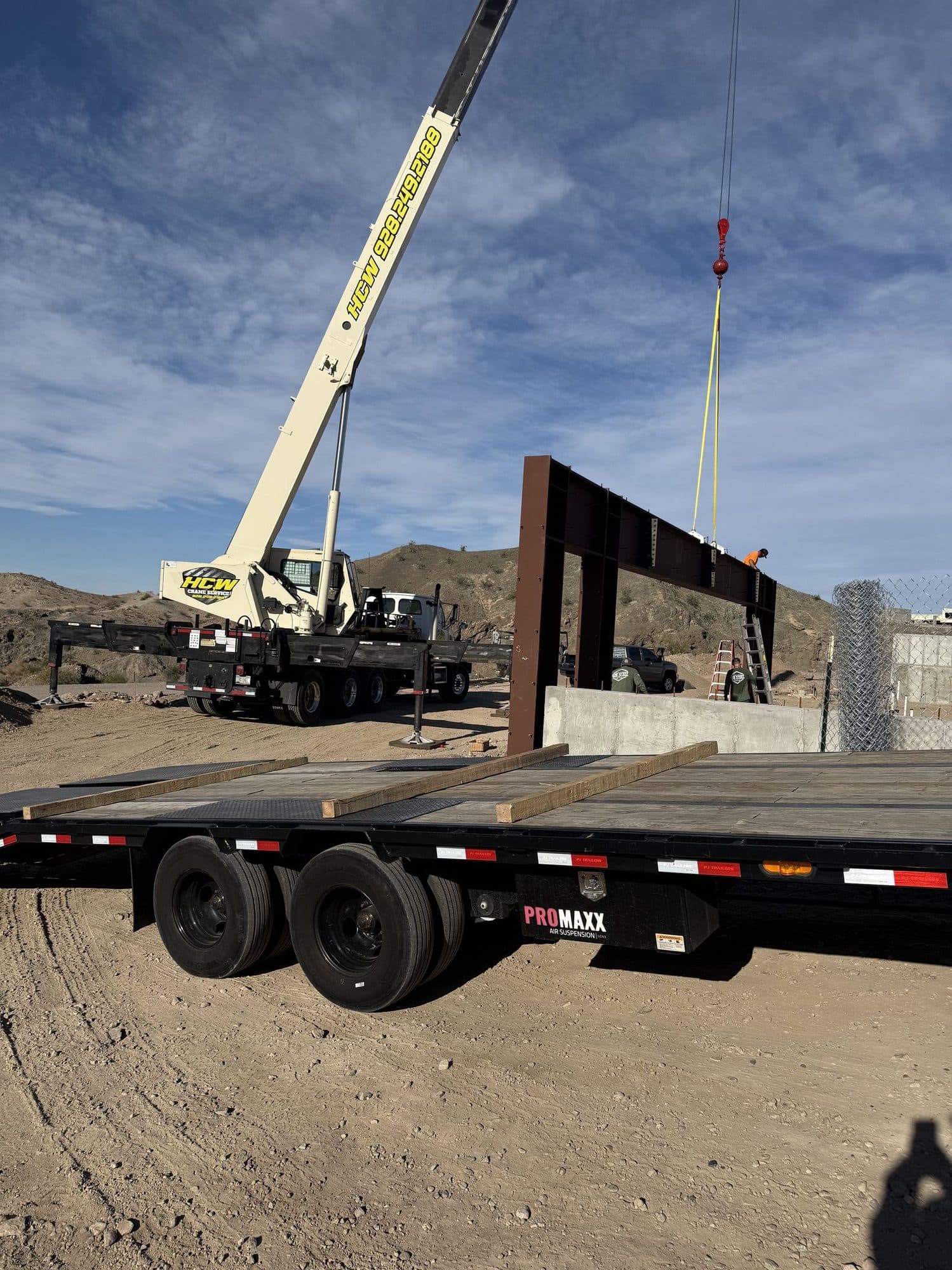
Steel frame off the trailer 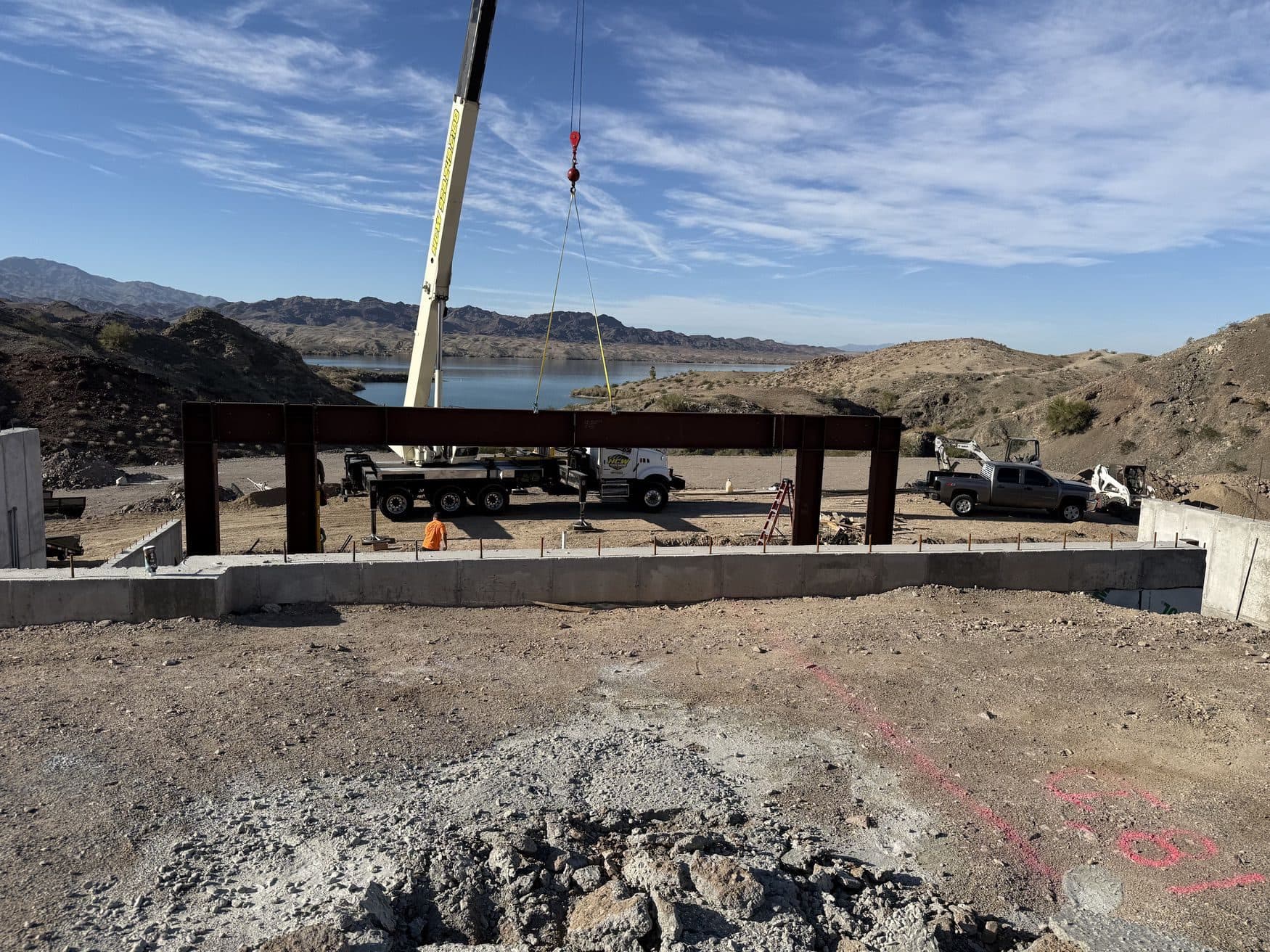
Steel portal frame above the lake 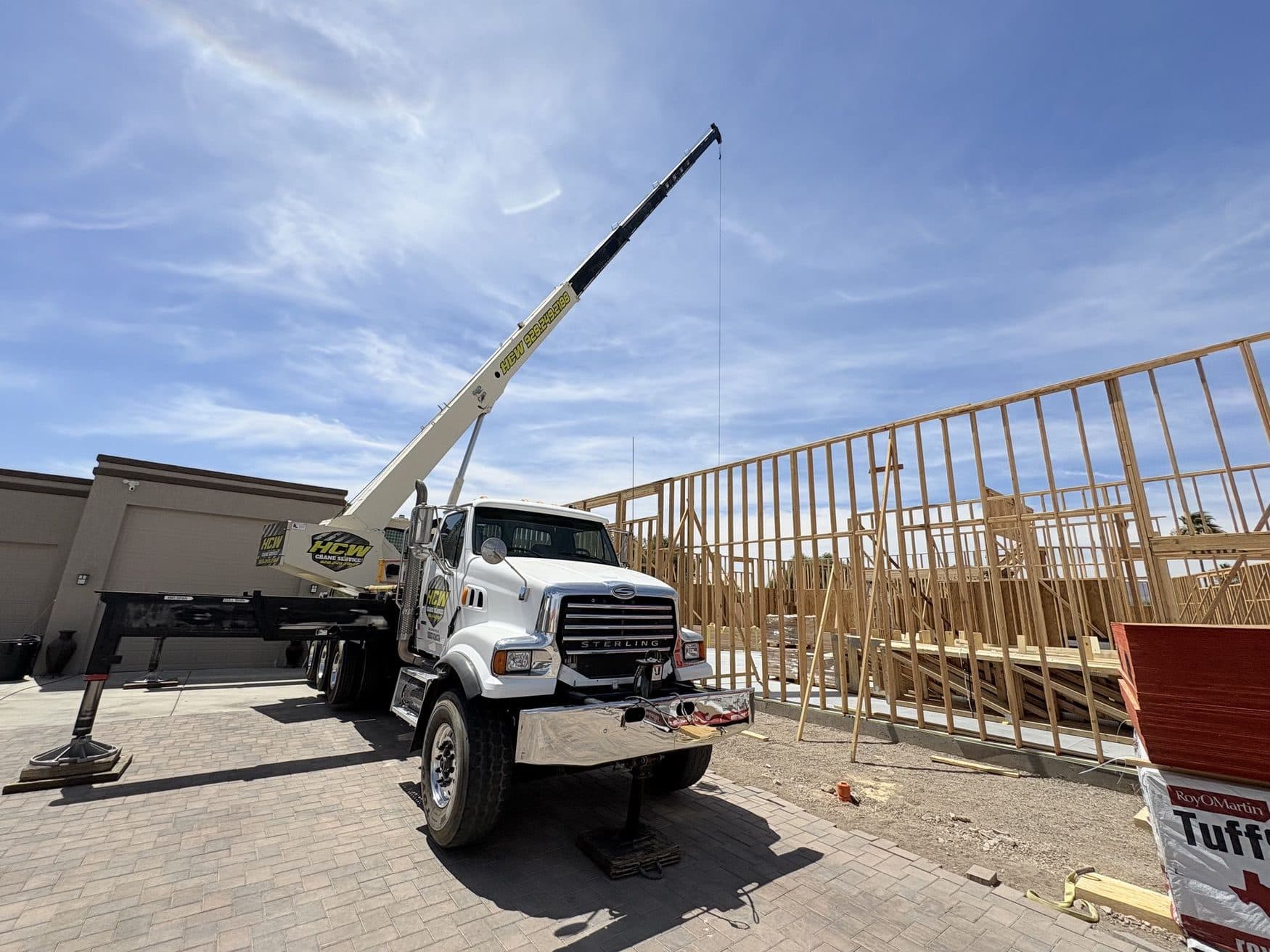
Crane staged at a framing job 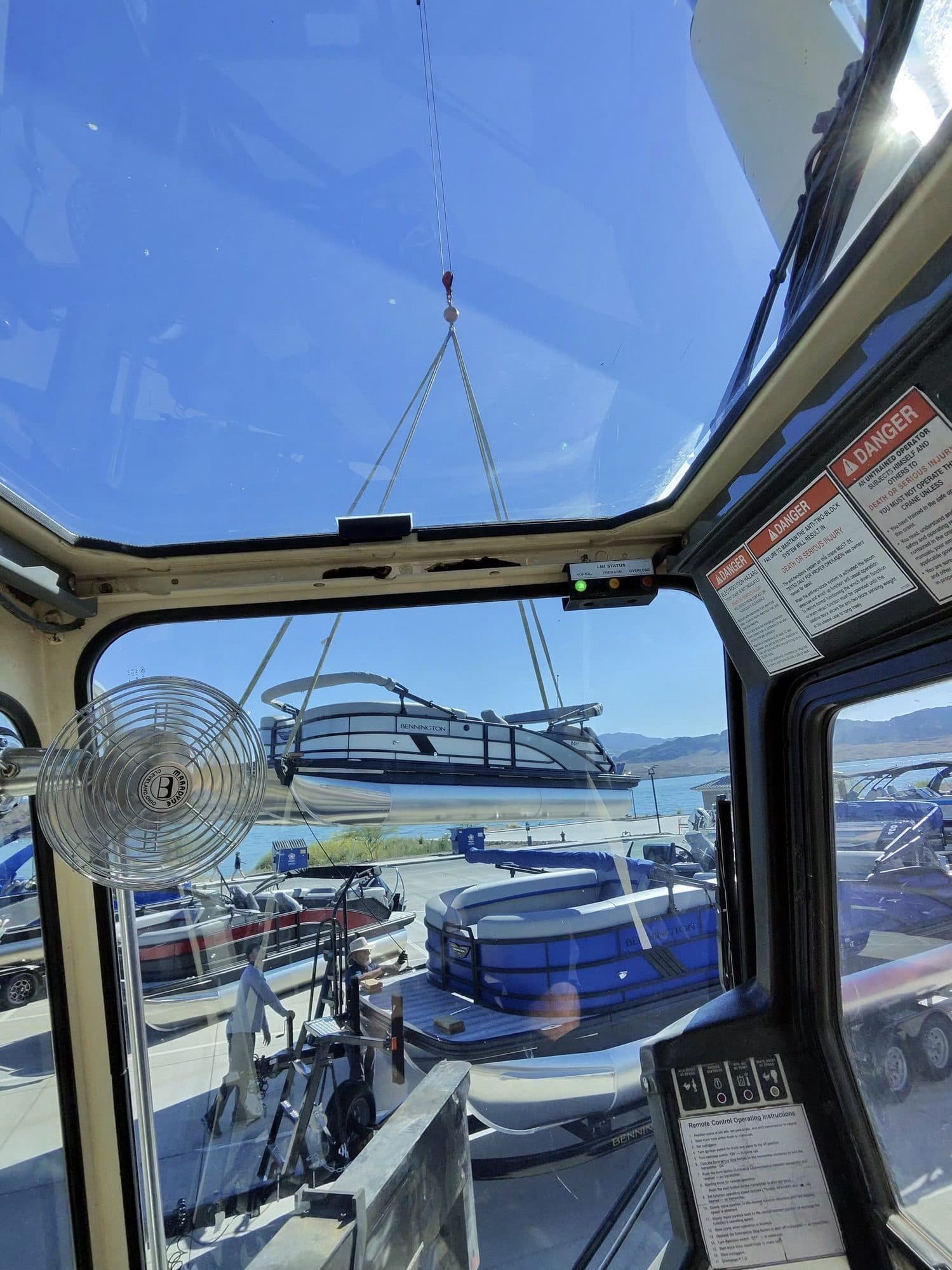
Pontoon lifted at a lakeside lot
Answers
Frequently Asked Questions
The freight is arriving tomorrow. Can you be there?
Call right away. The phone gets answered any hour, and whether a truck can be there depends on where it already is and what is on the schedule. Have the weight, the delivery window, and the address ready, and we will give you a straight answer on the first call.
Can you unload straight onto the final spot?
Often, if the crane can reach both the trailer and the final spot from one setup. That saves setting the load down and picking it again. Send the distance from where the trailer will park to where the load belongs, and the weight, and we can tell you if it works.
Who secures the load on an outbound trailer?
The driver. The driver owns axle weights, placement on the deck, and tie downs, because the driver is responsible on the road. We set the load exactly where they want it and hold tall or unstable pieces until the chains are on.
The driver will not wait. What do we do?
Confirm the delivery window the day before and have the crane set up before the truck arrives. If the timing is loose, ask the shipper whether the driver is dropping and leaving or paid to wait. Detention charges and a load leaving town again are both avoidable with one phone call.
Do you need the street closed?
Sometimes. If the trailer and the crane both need the road, cones and a spotter keep traffic clear during the lift. Some streets and some jobs need a city approval for that. Tell us the street and the setup and we will say what we think it needs.
Related Services
- Machinery Moving and SettingCrane machinery moving and setting in Lake Havasu City, Arizona. Shop machines picked out of one building, hauled, and set level in the next one.
- Shipping Container PlacementShipping container placement in Lake Havasu City, Arizona. Twenty and forty foot boxes set behind walls and on level pads where a tilt bed cannot reach.
- Same Day Crane ServiceSame day crane service in Lake Havasu City. An honest look at what fits inside one day, what needs a permit, and why you get a window.
- Rigging SupportRigging support in Lake Havasu City. Sling angles, hitch types, spreader beams, edge protection and center of gravity settled before the load leaves the ground.
- Machinery Moving and SettingCrane machinery moving and setting in Lake Havasu City, Arizona. Shop machines picked out of one building, hauled, and set level in the next one.
- Shipping Container PlacementShipping container placement in Lake Havasu City, Arizona. Twenty and forty foot boxes set behind walls and on level pads where a tilt bed cannot reach.
- Vehicle and Boat HoistingCrane vehicle and boat hoisting in Lake Havasu City, Arizona. Boats, side by sides, and project cars lifted over walls, onto stands, or onto trailers.
- Roofing Material LiftsCrane roofing material lifts in Lake Havasu City, Arizona. Concrete tile, shingle bundles, and underlayment staged on the roof where the roofer wants it.
- Solar Panel and Racking LiftsCrane solar panel and racking lifts in Lake Havasu City, Arizona. Panel pallets and rail bundles set on the roof or ground mount where installers need them.
Ready to schedule your lift?
Tell us the load, the site and the timing. We will confirm capacity, access and a window.