Why Choose HCW
The Last Twelve Inches and What We Leave Behind
2 min readUpdated July 2026
HCW Crane Service sets loads slowly onto marked positions, checks level and alignment while the load is still on the hook, and adjusts before anything is unhooked. Cribbing, pads, slings, packaging and cones all leave with the truck, so the site is handed back in the state it was found.
The Last Twelve Inches
Ninety percent of a lift is uneventful. The part that decides whether the job is good is the final foot, when the load is close to its landing point and everything about the position becomes visible.
That part gets done slowly, on tag lines, with hand signals from the one person doing the signalling and eyes on the spot from whoever has to live with the result. Rushing it saves perhaps thirty seconds.
Landing on a mark rather than near one is the standard. That means the mark exists before the lift starts. Chalk on a pad, tape on a curb, a pencil line on a pier. Setting to a description is how a spa ends up two inches off centre and nobody notices until the surround goes on.
Level and Square Before It Is Unhooked
A load that is still on the hook can be adjusted with a finger. Once it is bearing, it takes bars, blocks and somebody's back. So the check happens first.
Level gets checked with a level, not by eye. Alignment gets checked against whatever it has to line up with, which is usually more specific than people expect: pad edges, conduit stub-ups, anchor holes, a pier layout, the swing of a door on an enclosure.
Only when that is right does the rigging come off. It is a small discipline and it eliminates the most common callback in this trade, which is equipment that sits a little wrong and causes a problem weeks later.
What Leaves With Us
Everything that came off the truck goes back on it. Pads, cribbing, blocks, slings, shackles, tag lines and cones. Nothing gets left because it will be needed next time.
Packaging is the other half. Crating, banding, shrink wrap, pallets and any timber used under a load during handling get gathered rather than left in a pile for somebody else to deal with. On a residential job that matters more than the lift does to how the day feels.
The surfaces the truck sat on get looked at before we go. Not a formality. If an outrigger left a mark, it is better that we find it and tell you than that you find it after we have gone.
Why This Matters More Than It Sounds
Precision at the end of a lift is not craftsmanship for its own sake. It is the difference between a trade being able to start immediately and a trade having to fix something first.
A rooftop unit set square on its curb means the mechanical crew connects it. A unit set slightly off means somebody is levering it into position on a hot roof. A generator aligned to its stub-ups means the electrician runs conduit. Aligned by eye and it means a redo.
Every one of those is a small thing that lands on somebody else's afternoon, which is exactly why it belongs to the person with the load still on the hook.
How the job runs
Our Process
Step 1: Mark the Position First
Chalk, tape or a pencil line before the lift begins. A load gets set to a mark rather than to a description of where it should roughly go.
Step 2: Come Down Slow
The final foot is done on tag lines with hand signals, with whoever owns the result watching the spot rather than the crane.
Step 3: Check While It Is Still Hooked
Level, alignment to pads, stub-ups or anchors, and clearance to anything adjacent. Adjustment happens now, not with bars afterwards.
Step 4: Clear the Site
Rigging, cribbing, pads and cones back on the truck. Packaging and dunnage gathered. Surfaces checked before the site is handed back.
Scope
What Is Included
- Marked landing positions agreed before the lift starts
- Slow controlled set on tag lines for the final approach
- Level and alignment checked before the rigging comes off
- Adjustment while the load is still on the hook
- Packaging, banding, pallets and dunnage removed
- Outrigger surfaces inspected before we leave the site
From the cab
The View From the Operator's Seat
These were taken from inside the crane cab on real HCW jobs.
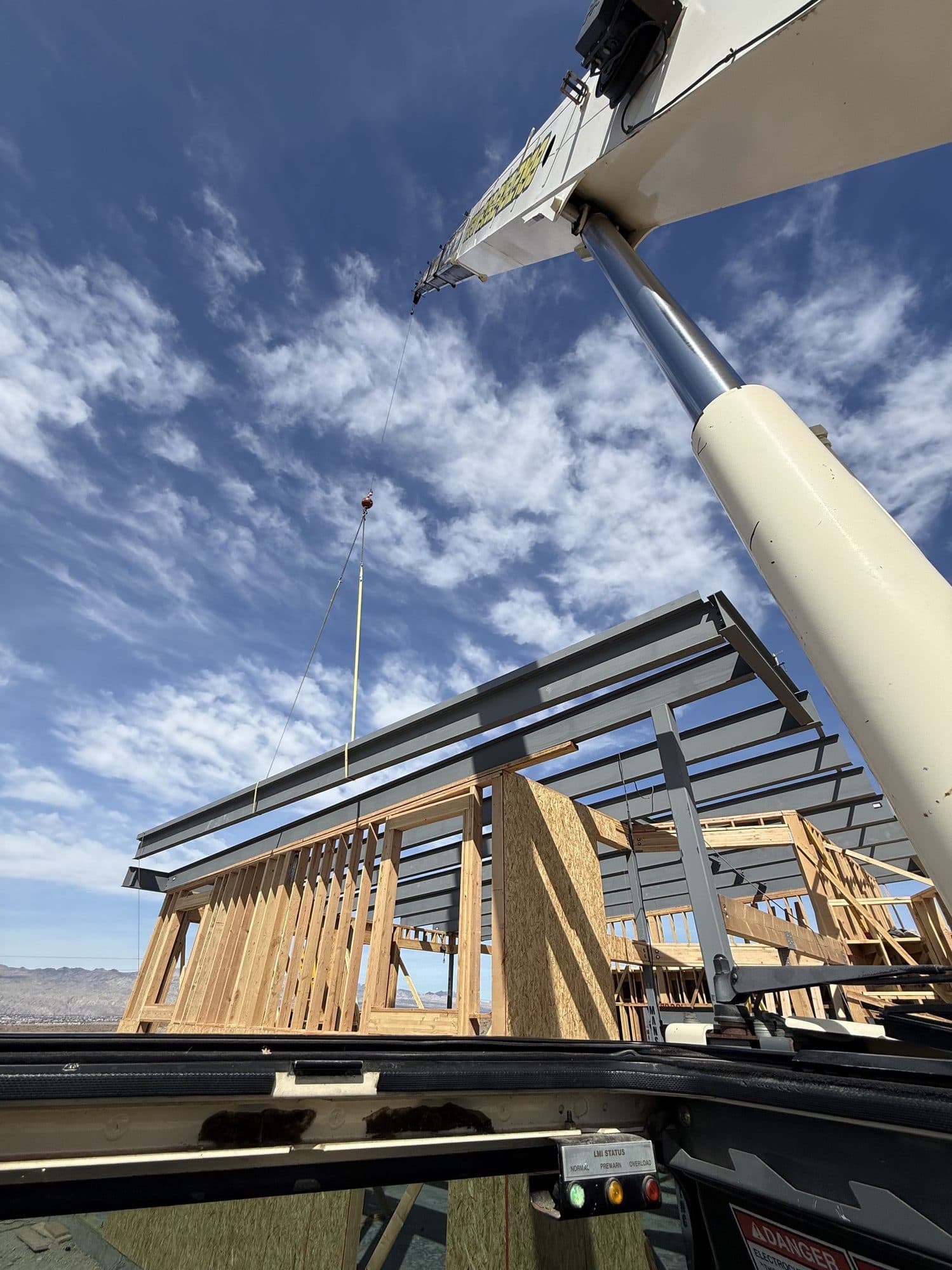
Operator view of a beam landing 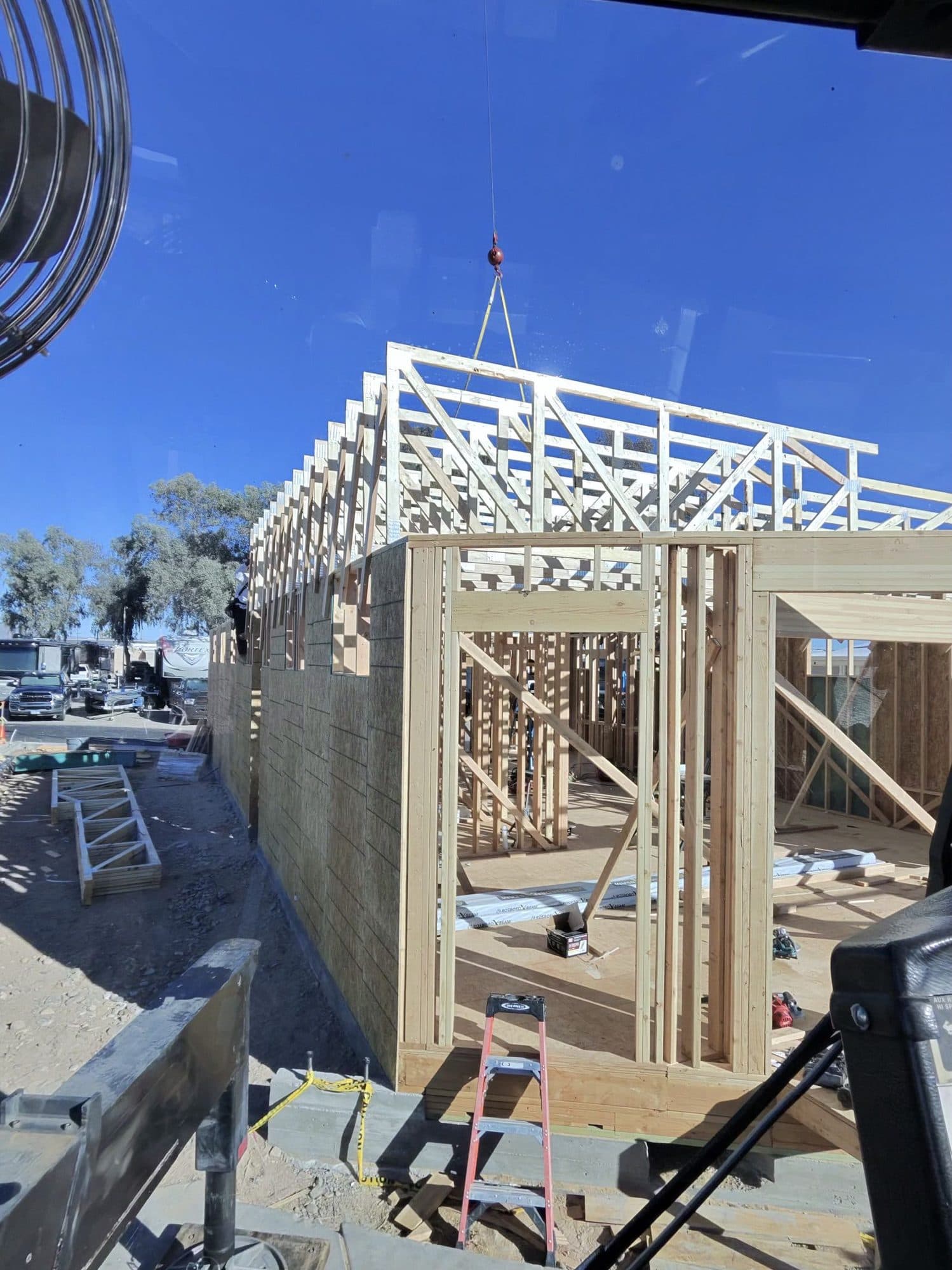
Trusses landing on a house frame 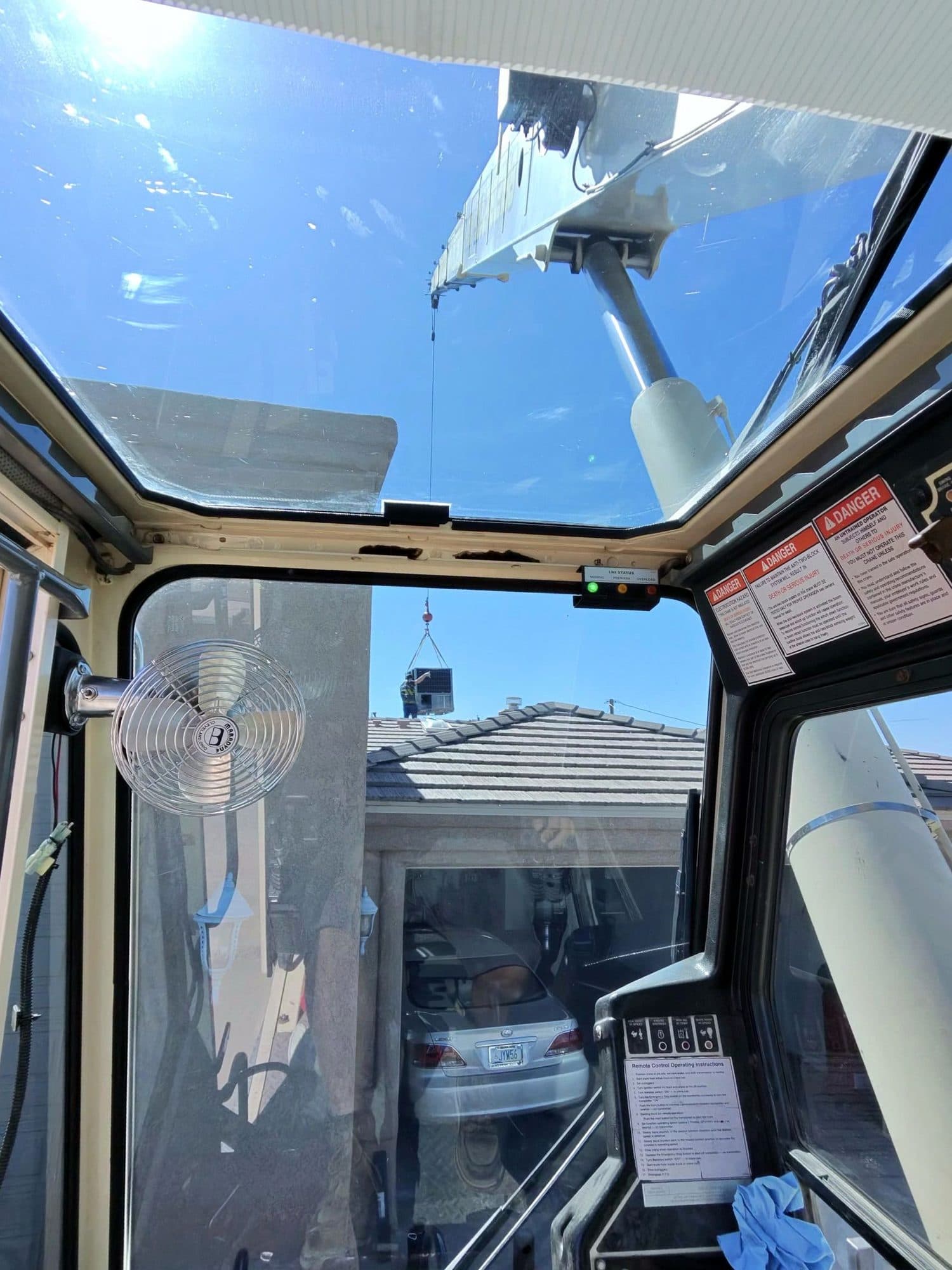
Rooftop unit lifted over a tile roof
Answers
Frequently Asked Questions
How accurately can a load be placed?
Closely enough to land on a chalk mark, provided the mark exists. Tag lines and a slow final approach are what make that possible. What makes it impossible is setting to a verbal description while everyone stands in different places.
What if it needs to move slightly after it is down?
Tell us before the rigging comes off and it is a thirty second adjustment. That is why nothing is unhooked until the person who owns the result has looked at it. Once it is bearing, moving it is a different job.
Do you take away the packaging?
The crating, banding, wrap and any timber we used under the load, yes. Where an item arrived with substantial packaging from a supplier, agree beforehand who is hauling it, because a pile of crating in a driveway is nobody's idea of finished.
Do you check the equipment is level?
With a level, before unhooking. Equipment sitting out of level causes problems that turn up weeks later, and by then nobody connects it to the day it was set. It costs a minute to get right at the time.
What state will the site be in when you leave?
The state it was in when we arrived, minus the thing that needed lifting. Cones, pads and cribbing back on the truck, dunnage collected, and a look over the surfaces the outriggers were on before we drive away.
More Reasons
- Damage Prevention FocusPads and cribbing under every outrigger, the whole swing path checked rather than just the endpoints, and fragile things moved before the boom goes up.
- Peace of Mind ResultsWhat we take responsibility for, what stays yours, and what finished actually looks like. A plain division of labour instead of a vague reassurance.
- Documented ProcessCondition photos before setup, the setup itself, and the finished placement. A record of what happened on your property that does not rely on memory.
- Safety First ProcessThe walk, the ground check, the load chart, the exclusion zone and the briefing. What actually happens before a load leaves the ground on a Havasu job.
- Safety First ProcessThe walk, the ground check, the load chart, the exclusion zone and the briefing. What actually happens before a load leaves the ground on a Havasu job.
- On Time and Clear CommunicationArrival windows instead of day ranges, a confirmation call the day before, and one phone number that reaches the person driving the truck to your job.
- Experienced OperatorsOver 20 years of operating experience shows up in small decisions, not in headlines. Reading ground, catching a bad pick early, and knowing when to say no.
- Owner Supervised QualityThe person who quotes your job is the person who runs the crane on it. No handoff, no relayed instructions, and one name attached to the outcome.
- Local Reliable ResponseBased on London Bridge Road, not dispatched from another county. What a night call actually sounds like and what can honestly be done before daylight.
- Peace of Mind ResultsWhat we take responsibility for, what stays yours, and what finished actually looks like. A plain division of labour instead of a vague reassurance.
Ready to schedule your lift?
Tell us the load, the site and the timing. We will confirm capacity, access and a window.