HVAC and Mechanical Lifts
Rooftop Equipment Lifts in Lake Havasu City
3 min readUpdated July 2026
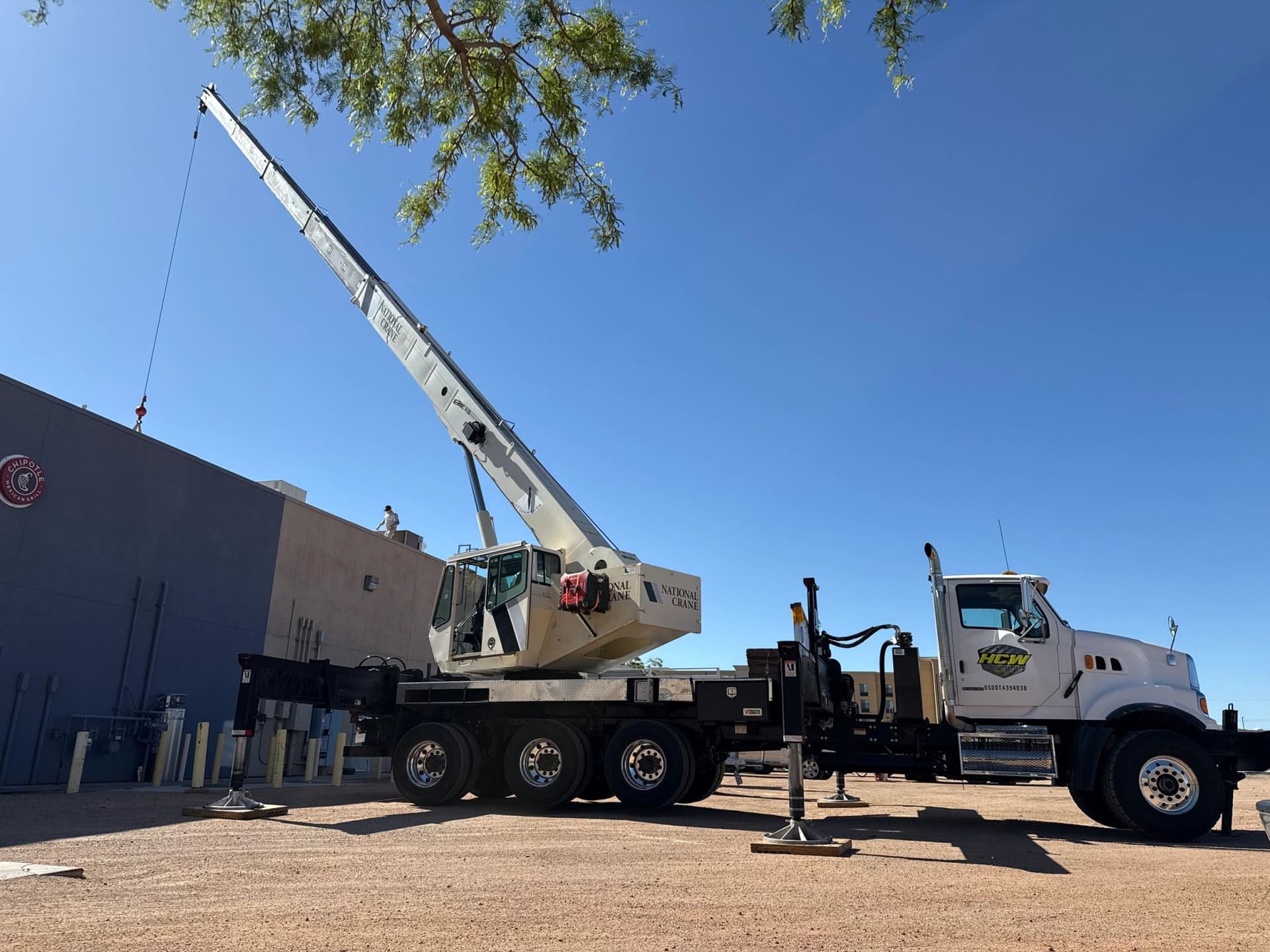
Rooftop equipment lifts cover anything that has to get onto a roof, including exhaust fans, kitchen hood equipment, evaporative coolers, ductwork, solar racking, and mechanical skids. HCW provides the crane, operator, and rigging, and coordinates with the crew receiving the load on the roof.
Everything That Is Not a Package Unit
Roofs collect equipment. Exhaust fans and makeup air units on restaurants, kitchen hood sections, evaporative coolers on older Havasu homes, condenser racks, duct sections, solar racking and panels, and one-off mechanical skids that nobody has a standard method for.
Each of those hangs differently. A fan curb assembly is light and awkward with a huge sail area. A hood section is long and flexible. A duct run is basically an empty box that dents if you breathe on it. A mechanical skid is heavy and compact with the mass all in one corner.
So there is no generic rooftop lift. What we ask about is weight, shape, where the mass sits, and whether the load has structure we can rig to or just skin.
Existing equipment on the roof is part of the picture too. A crowded roof means the landing point has to be threaded between units that are already running, ducts that are in the way, and gas piping nobody wants a load swinging near. On a busy roof the approach path is worth walking before setup.
Parapets, Sightlines, and Blind Sets
Most commercial roofs here have a parapet, and a parapet does two things. It forces the load higher before it can come in, which adds boom, and it hides the landing point from the operator once the load drops below the top of the wall.
That makes almost every commercial rooftop set a blind pick at the end. A spotter on the roof with a radio owns the last stage. Signals get agreed before setup and only that one person talks. On a roof with several people working, that rule has to be stated out loud.
Roof edges are also where people get careless. The receiving crew has to be able to work the load without backing toward an unprotected edge, and we plan the landing area far enough in that nobody is doing that.
Roof access for the crew is part of it too. Where the ladder goes, whether there is a hatch, and how tools get up all shape how long the day runs, even though none of it involves the crane.
Roof Surfaces in Summer Heat
A dark commercial membrane in a Havasu July is soft. Anything set down hard leaves an impression, anything dragged leaves a gouge, and a dropped fitting can go through it. Those become leaks in the next monsoon rather than on the day.
So we set loads down on dunnage or on the curb, never on the bare membrane, and never slide them. The receiving crew works from boards where they can. And we schedule early where the job allows it, because a cooler roof is a more forgiving one.
Tile and shingle roofs get treated the same way for different reasons. Nothing lands on the field of the roof. The flight path goes over the ridge and down onto the curb or the platform, and the crew stays on prepared walk areas.
Structural Load Where It Lands
A crane can put equipment anywhere on a roof. That does not mean the roof can hold it anywhere. Curbs and equipment platforms sit over structure for a reason, and a heavy skid set in the middle of a span is a structural question, not a rigging one.
We set where you tell us to set, and we will raise it if the landing point looks wrong. But the call on what the roof can carry belongs to your engineer or your contractor, and it should be made before the load is in the air.
The same applies to anything left temporarily. Equipment staged on a roof overnight is a load sitting somewhere it was not designed to sit, and it is also a load that wind can find. If something has to stay up there between visits, agree where it goes and how it gets secured before we set it.
How the job runs
Our Process
Step 1: Load and Landing Details
Weight, dimensions, sail area, and where on the roof it goes. Parapet height and roof height set the boom, and building setback sets the radius.
Step 2: Setup Position and Access
We find a spot that clears service drops, keeps a drive lane open where possible, and puts both the staged load and the landing point in one radius.
Step 3: Signals and Roof Briefing
One spotter named, radios checked, roof landing area agreed, and edge work discussed before anything leaves the ground.
Step 4: Lift Over the Parapet
The load goes high enough to clear the parapet with margin, comes in over the landing point, and stops. Then it comes down on the spotter's call.
Step 5: Set on Dunnage and Release
Load set on the curb, platform, or dunnage, never on bare membrane. Rigging stays on until the crew confirms it is stable and where they want it.
Scope
What Is Included
- Crane and operator sized to the roof height and setback
- Rigging matched to fans, hoods, duct, racking, and skids
- Spreader bars for long or flexible loads
- Tag lines for high sail area loads and windy mornings
- Radio spotter for blind sets behind a parapet
- Dunnage so nothing lands directly on hot membrane
- Early morning and night scheduling on commercial sites
Real HCW jobs
From the Job Site
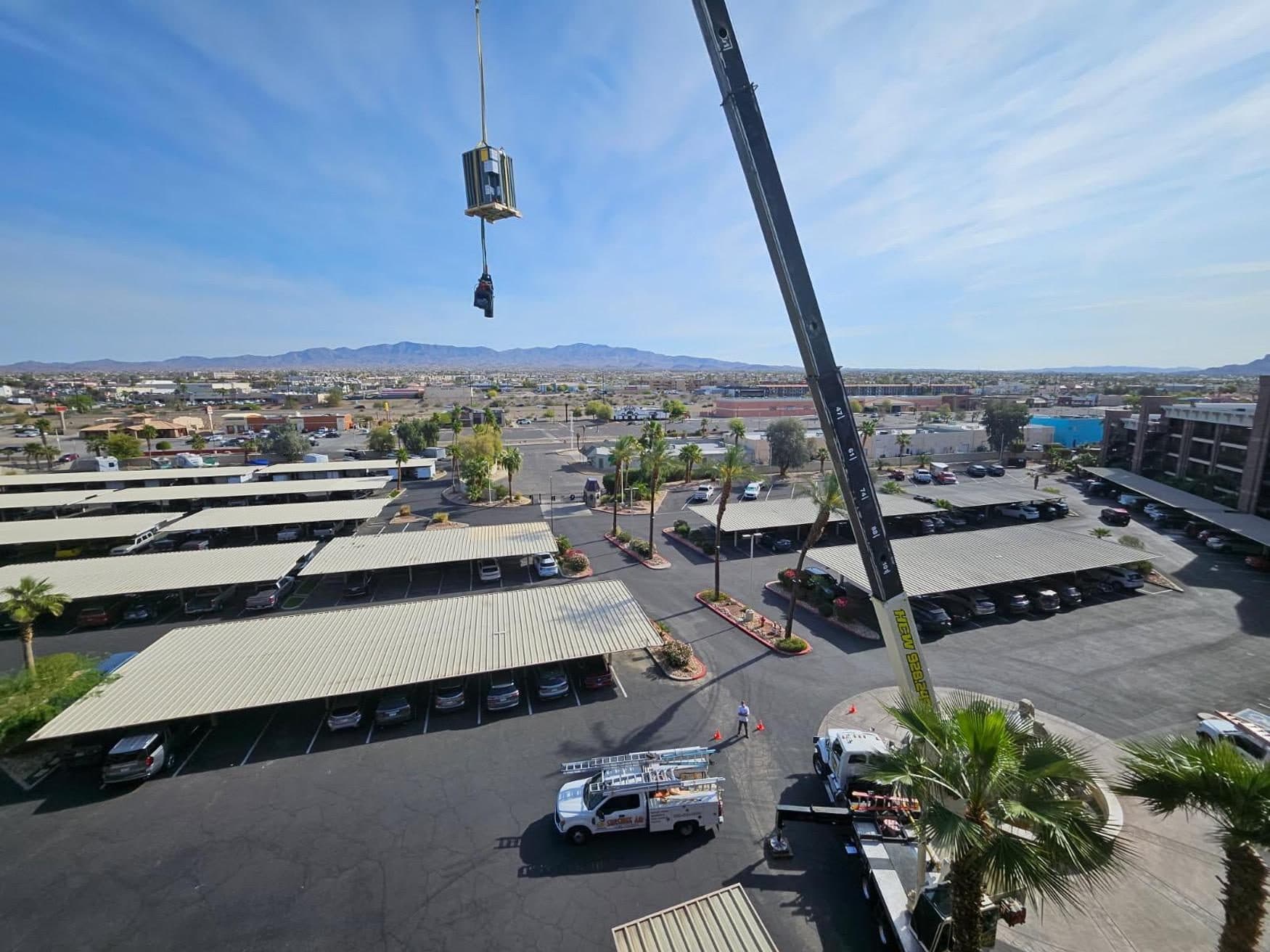
Rooftop HVAC unit in the air 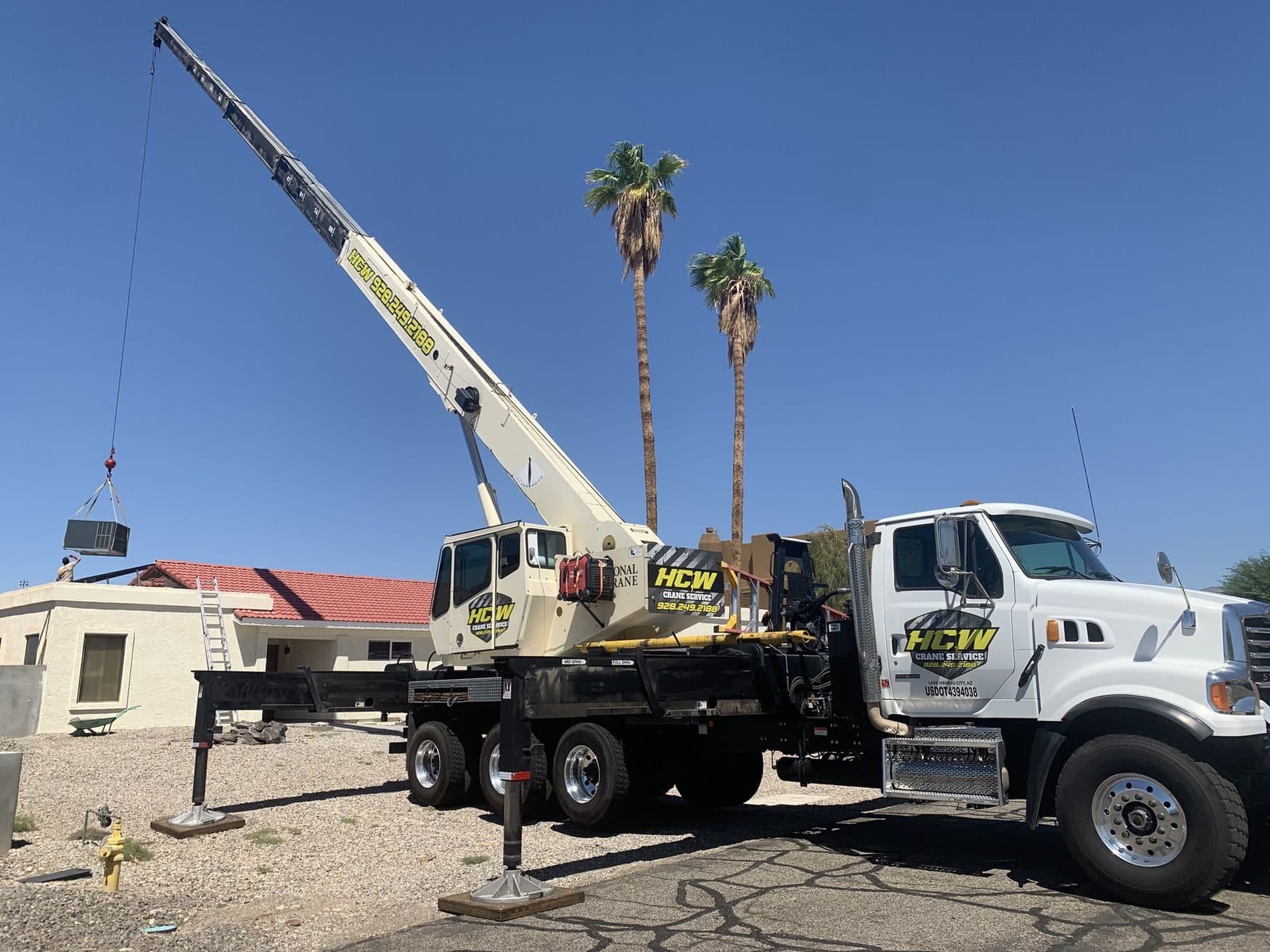
HVAC unit swung over a tile roof 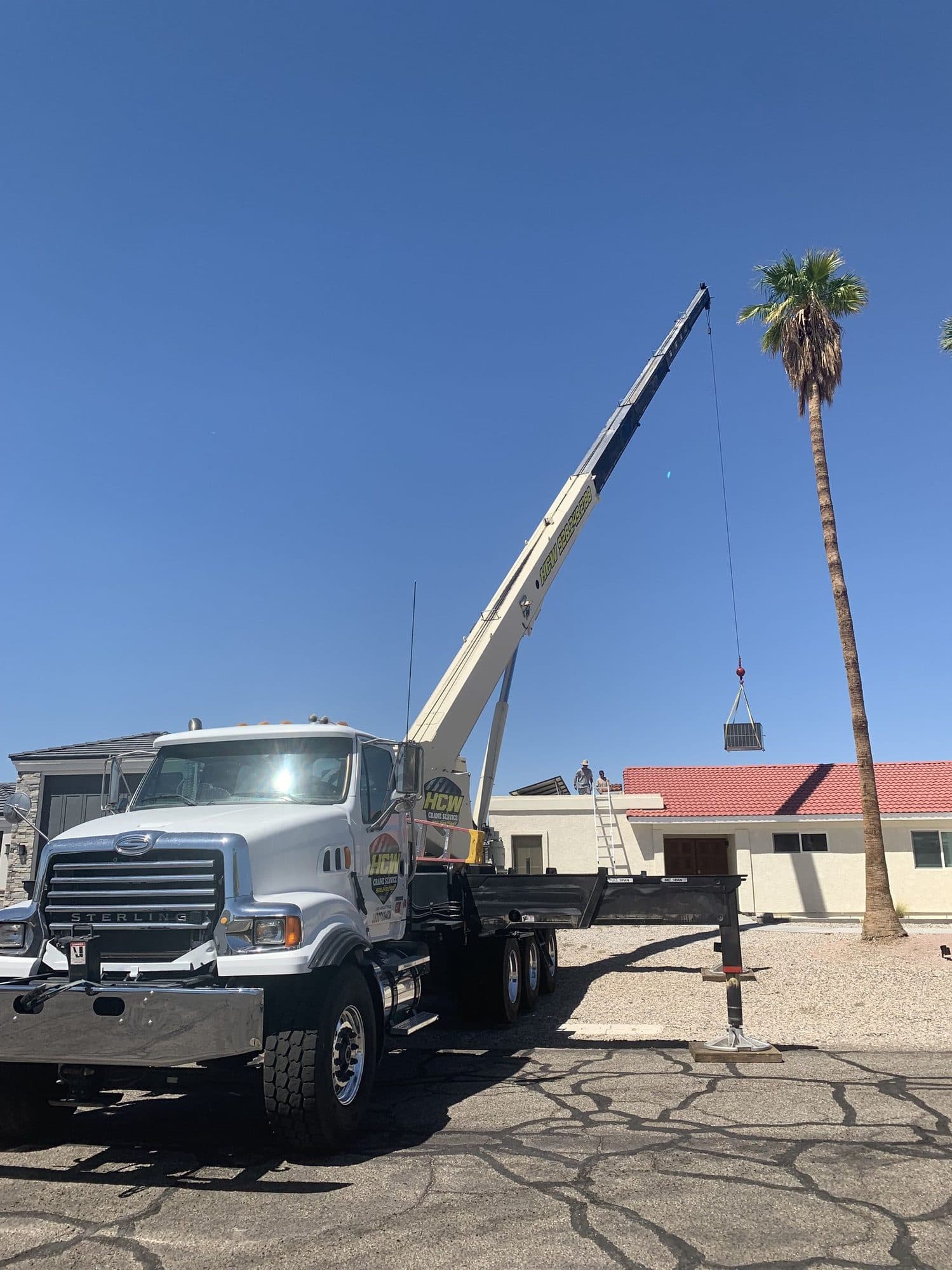
Rooftop unit headed for a tile roof 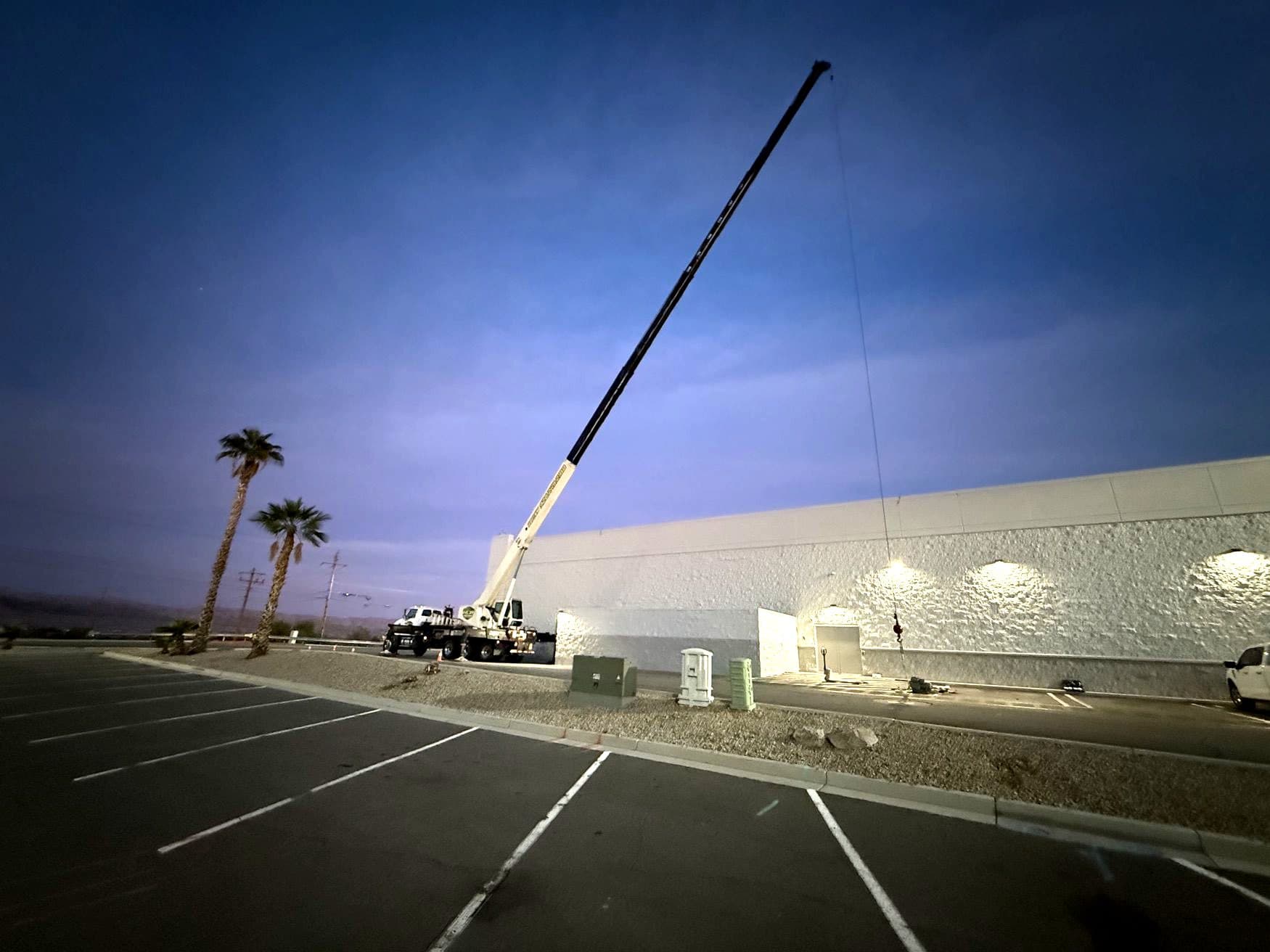
Early start at a commercial building
Answers
Frequently Asked Questions
Can you lift multiple items in one visit?
Yes, and that is usually the efficient way to do it. If all the landing points sit inside one working radius, we can run several picks from a single setup without repositioning.
How do you set a load you cannot see?
A spotter on the roof with a radio. He has continuous view of the load and the landing point, and he is the only person talking to the operator during the last stage.
Will the crane damage the roof membrane?
The crane never touches the roof. Damage risk comes from setting loads down on hot membrane or dragging them, so we land on dunnage or on the curb and we do not slide loads.
Do you know if my roof can take the weight?
No, and neither should any crane operator. That call belongs to your engineer or contractor. We will put the load where you specify and we will flag it if the landing point looks questionable.
Can you work at night on a commercial building?
Yes. Night work is common because the lot is empty, the roof is cool, and the business keeps running. The phone is answered 24 hours to set that up.
Related Services
- Package Unit PlacementSetting rooftop package units square on the curb, with the gasket seated and the duct openings lined up. Crane and operator for HVAC contractors.
- Mechanical Equipment LiftsPumps, generators, water heaters, compressors, and mechanical skids lifted into place. Off-center weight and rated lifting lugs are the whole problem.
- HVAC and Mechanical LiftsRooftop units, air handlers, condensers, and mechanical equipment set for HVAC contractors and homeowners.
- Package Unit PlacementSetting rooftop package units square on the curb, with the gasket seated and the duct openings lined up. Crane and operator for HVAC contractors.
- Air Handler PlacementAir handlers rarely land on an open roof. They go through an opening or into a mechanical room, which makes the last twenty feet the hard part.
- Condenser Unit PlacementCondensers are light and fragile. The coil fins bend if you look at them wrong. We set them over walls into side yards without touching the coil.
- Mechanical Equipment LiftsPumps, generators, water heaters, compressors, and mechanical skids lifted into place. Off-center weight and rated lifting lugs are the whole problem.
- HVAC Unit Removal and ReplacementA change-out is two picks and an open roof in between. Sequencing, curb inspection, and a weather check are what keep it to one visit.
Ready to schedule your lift?
Tell us the load, the site and the timing. We will confirm capacity, access and a window.