
Truss and Structural Placement
Precast Panel Placement in Lake Havasu City
2 min readUpdated July 2026
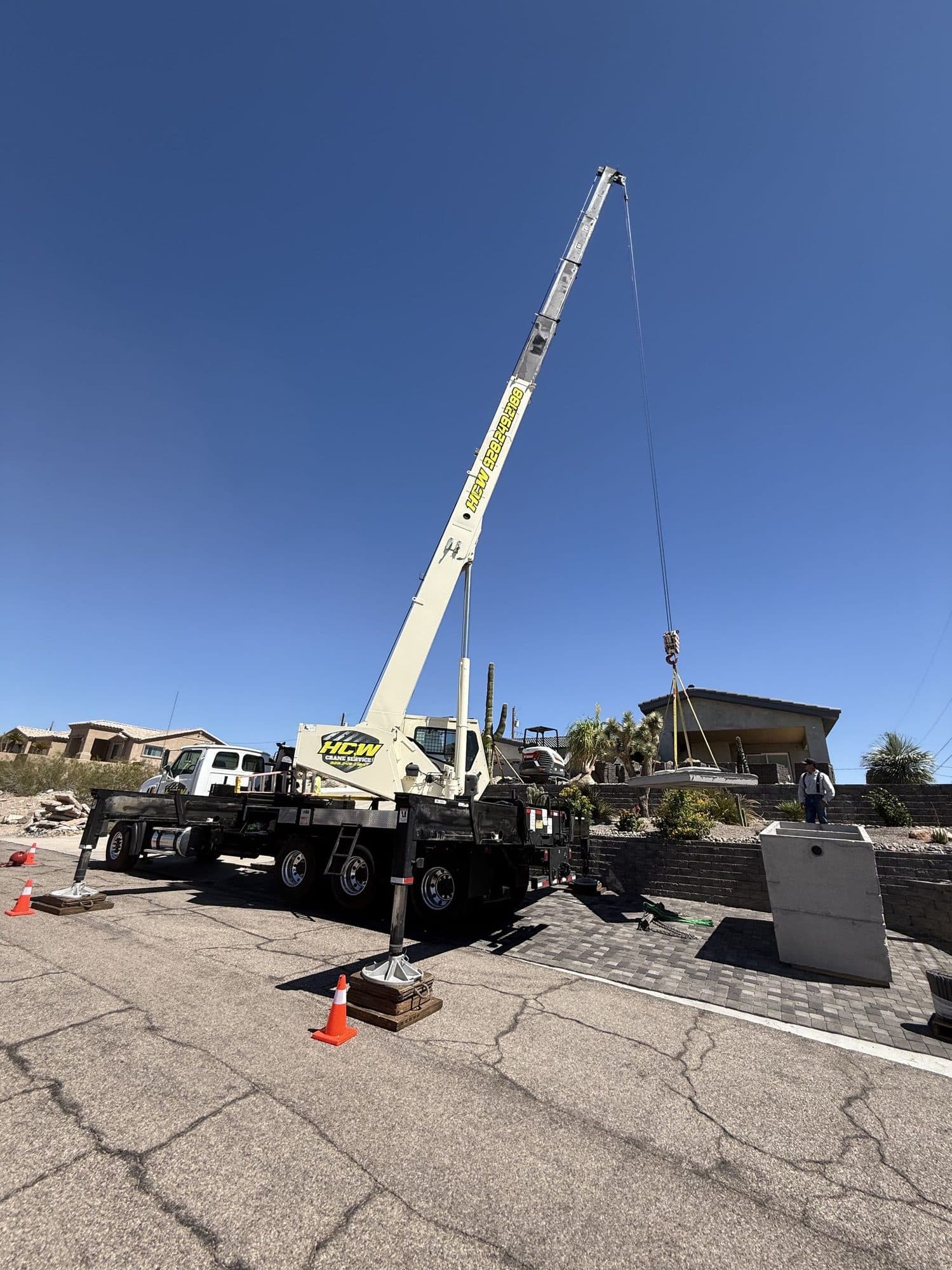
Precast panel placement means setting concrete panels using the manufacturer's cast-in lifting inserts, keeping the panel vertical through the lift, and holding it until the crew braces it to the slab. Panels present a large flat face, so wind control is the main hazard on this work.
Lift From the Inserts, Nothing Else
Precast panels come with cast-in lifting inserts positioned by the precast producer for a specific rigging arrangement. Those are engineered points and they are the only points. Slinging a panel some other way puts bending into a member designed to resist it in one direction only.
The rigging arrangement matters as much as the inserts. Panels are often designed to be lifted with a specific number of legs at specific angles, and changing that changes the forces at each insert. Where the producer supplies a lift drawing, we work to it.
Panels also flex during the change from flat to vertical if they are cast face-up and tilted. That transition is the moment a panel is most likely to crack, and it is done deliberately and slowly.
A Flat Face in Havasu Wind
A panel is essentially a large sail with a lot of weight behind it. Once wind gets on the face, it takes real force to control, and tag lines have to be long enough for the handlers to work well outside the drop zone.
This is the load type we are most conservative about scheduling. Early morning during monsoon season, and a genuine willingness to set a panel back down and wait rather than fight a gust with a piece of concrete swinging over a slab.
Panel edges are also fragile. A corner that clips a brace or another panel chips, and a chipped edge on an architectural panel is a visible defect on the finished building. Approach paths are planned to keep clearance from what is already standing.
Braced Before Release
A panel is not stable standing on its own. The crew sets braces to the slab with anchors as the panel comes into position, and the crane holds it plumb the whole time.
That means the brace anchors have to be in the slab and the braces staged before the panel arrives. Waiting on anchors with a panel hanging is the worst possible arrangement, and it is entirely avoidable with a few minutes of preparation.
Panel storage on site is worth planning as well. Panels stacked flat need blocking and drainage, and panels racked vertically need proper A-frames. A panel that gets damaged in the stack is a panel that will not go up, and the replacement lead time is not measured in days.
How the job runs
Our Process
Step 1: Get the Lift Drawing
Insert locations, rigging arrangement, panel weight, and the intended sequence. Precast is the load type where the producer's documentation matters most.
Step 2: Stage and Brace Prep
Panels staged in set order, brace anchors installed in the slab, and braces laid out. All done before the first panel leaves the ground.
Step 3: Tilt and Lift
The panel is brought to vertical slowly if it was cast flat, then lifted with the specified rigging. Two long tag lines on every panel.
Step 4: Set, Plumb, and Brace
Panel brought down onto its bearing, plumbed, and braced to the slab. The crane holds it plumb until the crew confirms the braces are anchored and tight.
Scope
What Is Included
- Crane and operator with rigging to the producer's arrangement
- Lifting only from cast-in rated inserts
- Long tag lines for wind control on large flat faces
- Slow controlled tilt from flat to vertical
- Hold time while panels are plumbed and braced to the slab
- Conservative wind scheduling during monsoon season
Real HCW jobs
From the Job Site
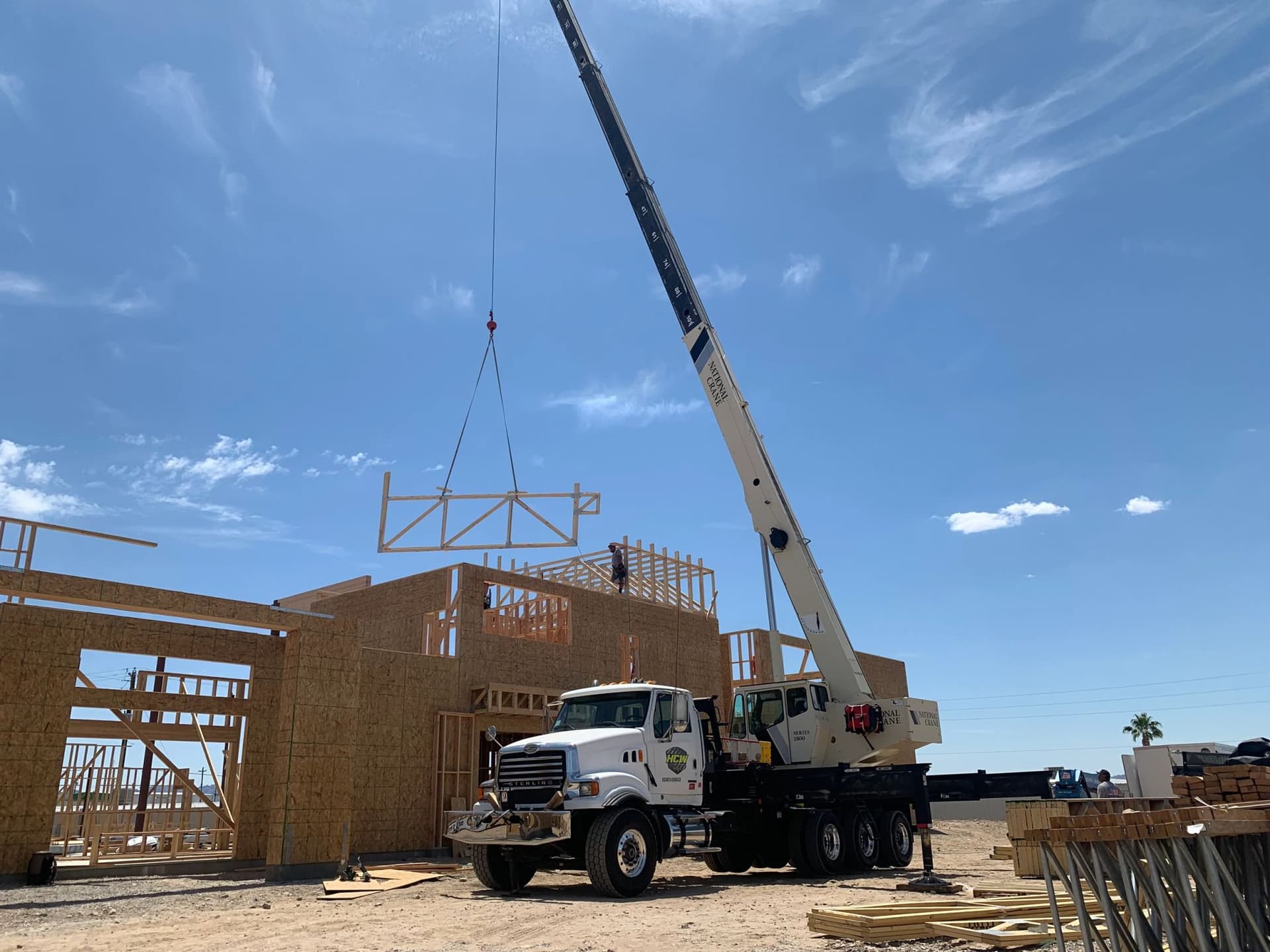
Roof truss set on a two-story frame 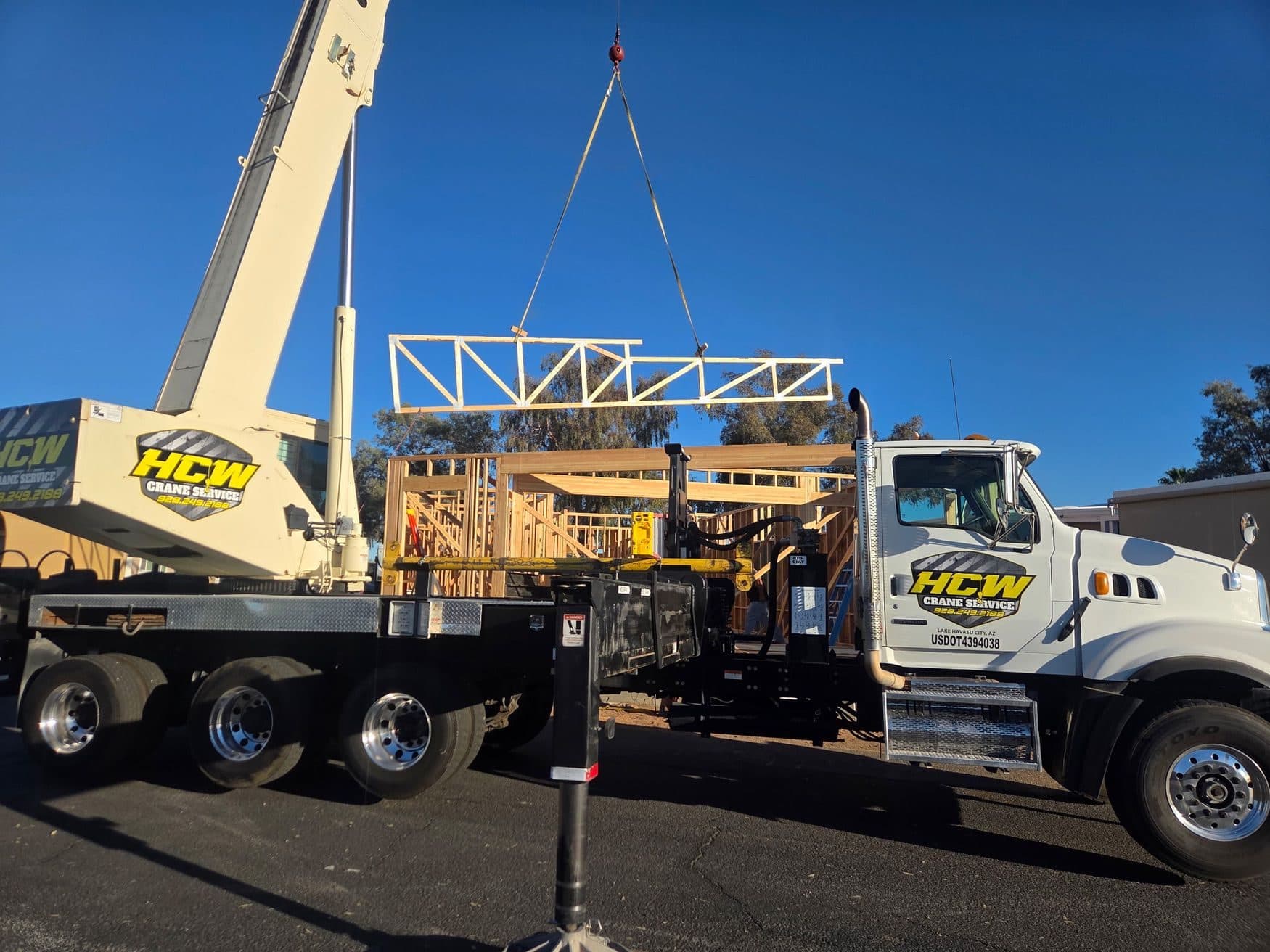
Roof truss lifted over new framing 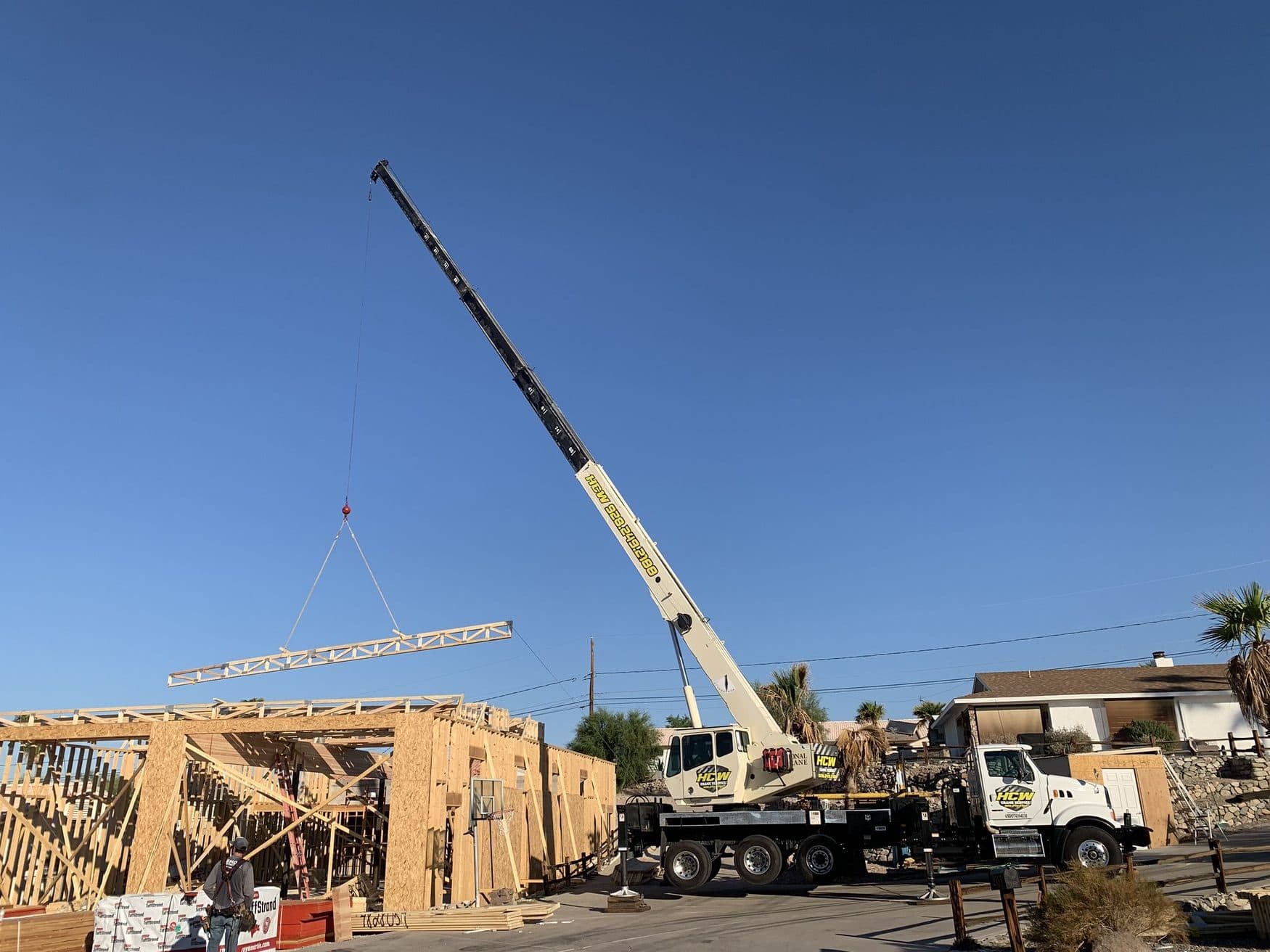
Roof truss lifted over new walls 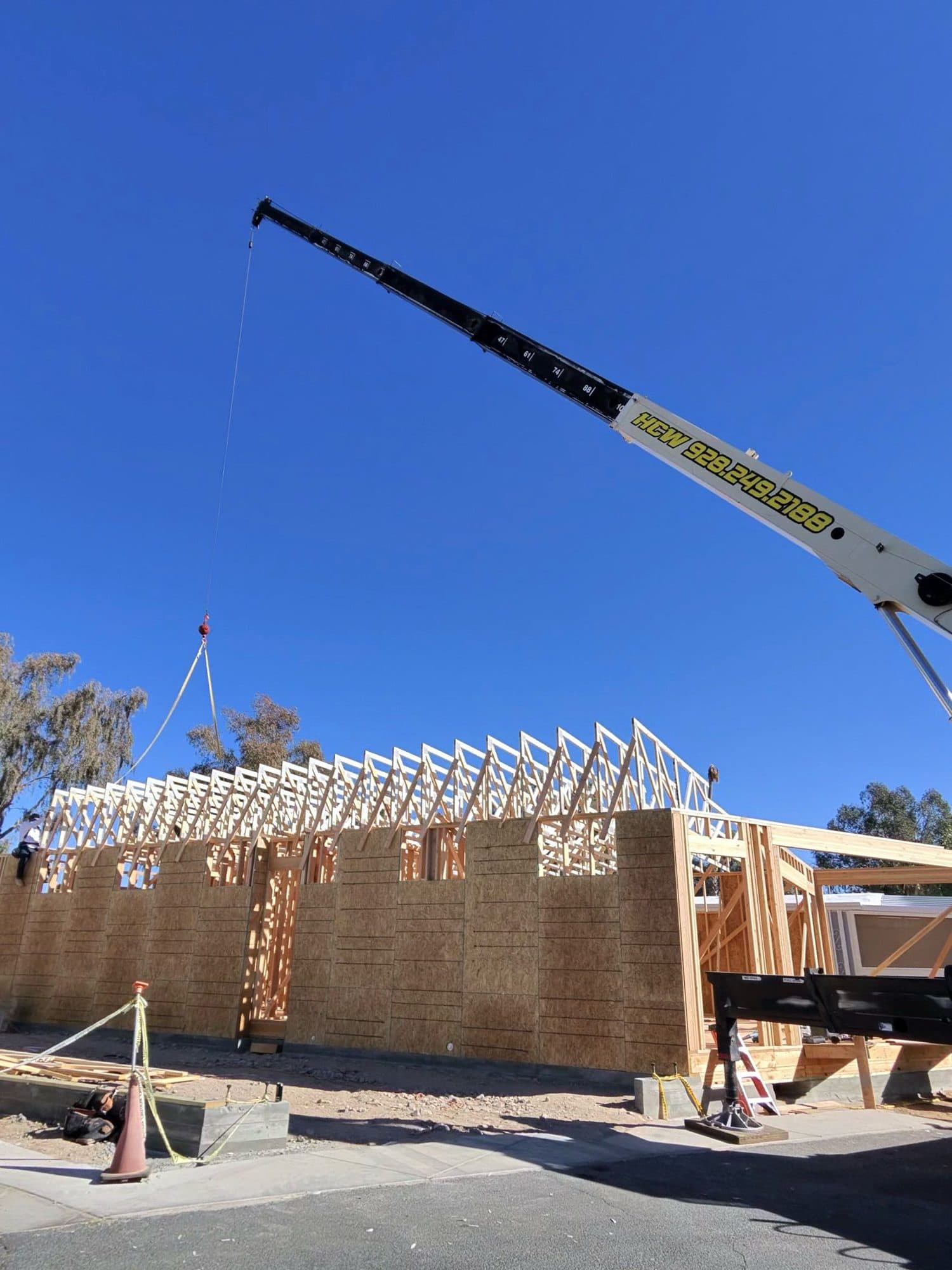
HCW boom over freshly set trusses
Answers
Frequently Asked Questions
Do you need a lift drawing from the precast supplier?
We want one. It gives insert positions, the intended rigging arrangement, and the panel weight. Rigging a panel differently than it was designed to be rigged changes the forces at every insert.
What wind is too much for a panel?
Less than you would think, because the face area is large. The operator makes the call on the day. Setting a panel back down and waiting is always preferable to fighting it in the air.
How long does the crane hold each panel?
Until the braces are anchored and tight. If the brace anchors and hardware are staged in advance, that is a short hold. If the crew is chasing anchors, it is not.
Can you set panels on a tight commercial site?
Depends on the setup room and the radius to each panel position. Send a site plan and panel weights and we will work out whether one crane position covers the run.
Related Services
- Modular Section PlacementFactory-built sections set onto foundations and piers. One pick per section, alignment marks that have to match, and rigging that will not rack the box.
- Beam and Column PlacementGlulam and steel beams onto post seats, columns plumbed on anchor bolts. The crane holds the member while your crew makes the connection.
- Truss and Structural PlacementRoof trusses, beams, columns, steel, precast, and modular sections set to your framing crew's pace.
- Roof Truss LiftingTrusses arrive banded and go up floppy. Spread pick points, two tag lines, and a crew that braces as it goes. Crane and operator supplied.
- Beam and Column PlacementGlulam and steel beams onto post seats, columns plumbed on anchor bolts. The crane holds the member while your crew makes the connection.
- Steel Member PositioningPurlins, joists, tube steel, and framing members positioned for bolted connections. Drift pins, tight tolerances, and steel that gets hot to touch.
- Modular Section PlacementFactory-built sections set onto foundations and piers. One pick per section, alignment marks that have to match, and rigging that will not rack the box.
- Structural Component LiftsCanopies, stair sections, mezzanine framing, headers, awnings, and retrofit steel. The odd structural pieces that do not fit a standard category.
Ready to schedule your lift?
Tell us the load, the site and the timing. We will confirm capacity, access and a window.