Lift Planning and Site Support
Reach and Radius Planning for Crane Work
2 min readUpdated July 2026
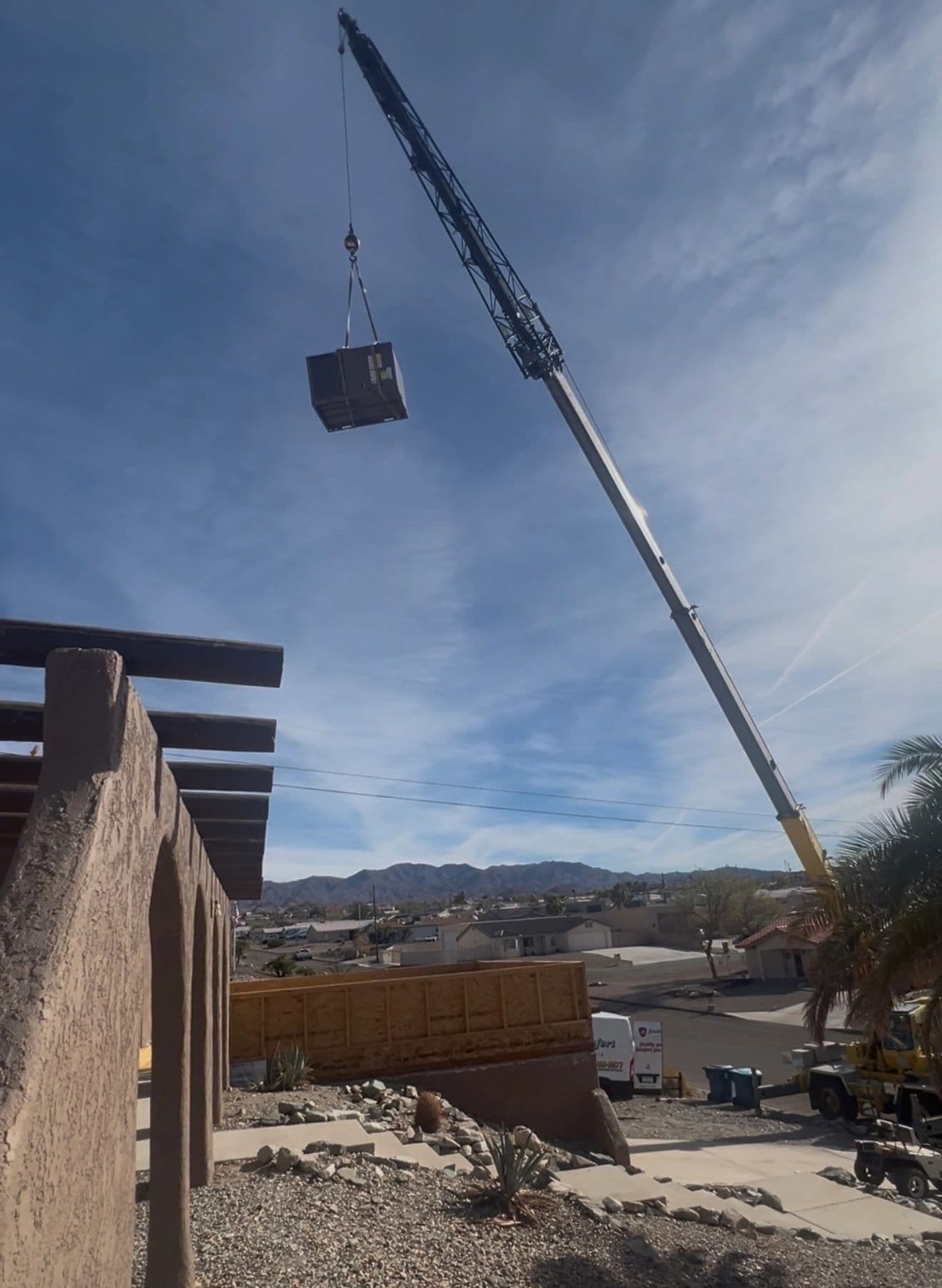
Reach and radius planning works out where a crane can physically set up on a property and how far the load must travel from the center of rotation. Radius drives capacity, so the setup spot matters as much as the crane. HCW Crane Service plans the swing path and tail swing along with it.
Radius starts at the center of rotation
Radius is measured from the crane's center of rotation, the point the whole upper works turns around, out to the middle of the load. Not from the bumper, not from the outrigger, not from where the operator sits. People pace it off from the front of the truck and come up short by several feet, and several feet at the far end of a chart is not a rounding error.
That measurement is the whole game, because capacity is weight at a radius. Setting up ten feet farther back than planned can cost a startling slice of what the crane could have picked. Setting up ten feet closer can be worth more than swapping to a larger machine. The cheapest capacity on any job is a better parking spot.
Where the truck can stand is a negotiation
The site decides the radius, not the crane. The driveway width votes. The block wall votes. The parked cars, the mailbox, the gas meter and the neighbor's boat trailer all get a vote. So does the slope, because a truck has to level up before the chart applies at all. What is left after all of that is the set of positions actually available.
Sometimes one obstruction is worth removing. Taking down a fence panel, moving two vehicles or pulling a gate off its hinges can buy the ten feet that changes the answer from no to routine. Maximum reach on our equipment is 142 feet, which matters when a load has to clear a two story house and land in the far corner of a walled back yard.
Swing path and the tail nobody thought about
The load has to travel, and the space it travels through gets planned as carefully as the two ends. That means picking a swing direction that keeps the load clear of the roof edge, the parapet, the light pole and the second story window, and keeping it away from anything overhead the whole way around rather than only where it lands.
Behind the machine, the counterweight swings too. The back of the crane sweeps around as the boom comes around, and that sweep reaches into the space beside the truck that everyone treats as empty. A parked car, a wall corner or somebody standing in the wrong spot is the usual casualty. Tail swing gets marked off before the boom moves.
How the job runs
Our Process
Step 1: Measure the available positions
We walk the property and find every spot a truck can level up with full outrigger spread. Width, slope and surface all narrow the list fast. Each candidate position gets measured to the landing point from where the center of rotation would sit, not from the curb line.
Step 2: Test each spot
Every workable position produces a different radius and therefore a different capacity. Those get compared against the load. Frequently the closest legal spot is the only one that works, which turns the plan into a conversation about what has to move to get the truck there.
Step 3: Plan the swing path
With the setup fixed, the route of the load gets drawn. Clearance over the roof edge, past the parapet, around the light pole and clear of any overhead line for the entire swing. Height needed at the highest point is checked against boom length, not just at the landing spot.
Step 4: Mark the tail swing zone
The area the counterweight sweeps behind and beside the truck gets identified and cleared before anything rotates. Vehicles get moved, cones go down and people are told where the boundary is. This is the space that gets forgotten, so it gets pointed out by hand.
Scope
What Is Included
- Radius measured from center of rotation to load
- Every workable setup position identified and compared
- Capacity checked at each candidate radius
- Swing path planned over roof edges and obstructions
- Tail swing area marked and cleared before rotation
- Advice on what to move to gain usable radius
Real HCW jobs
From the Job Site
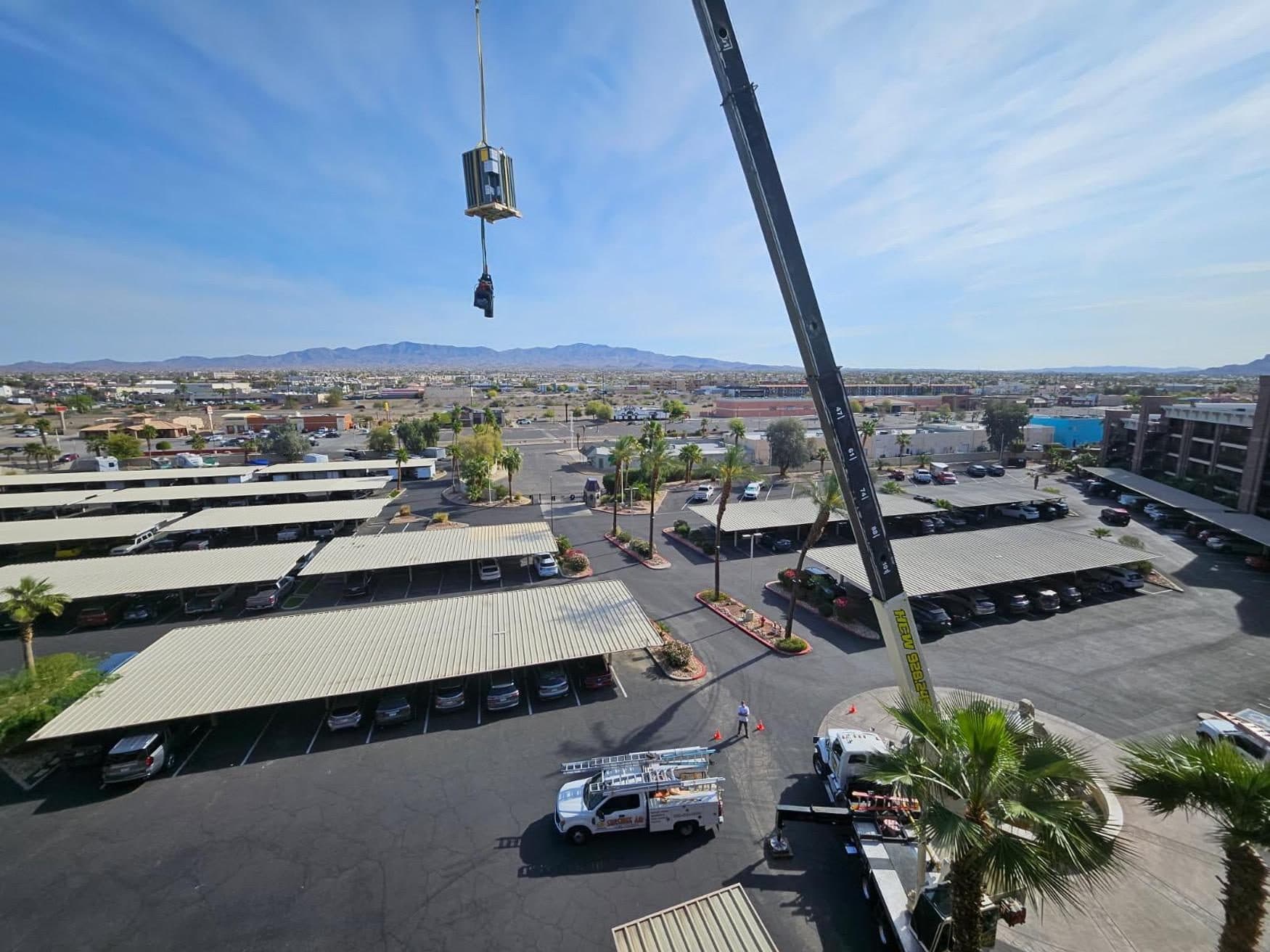
Rooftop HVAC unit in the air 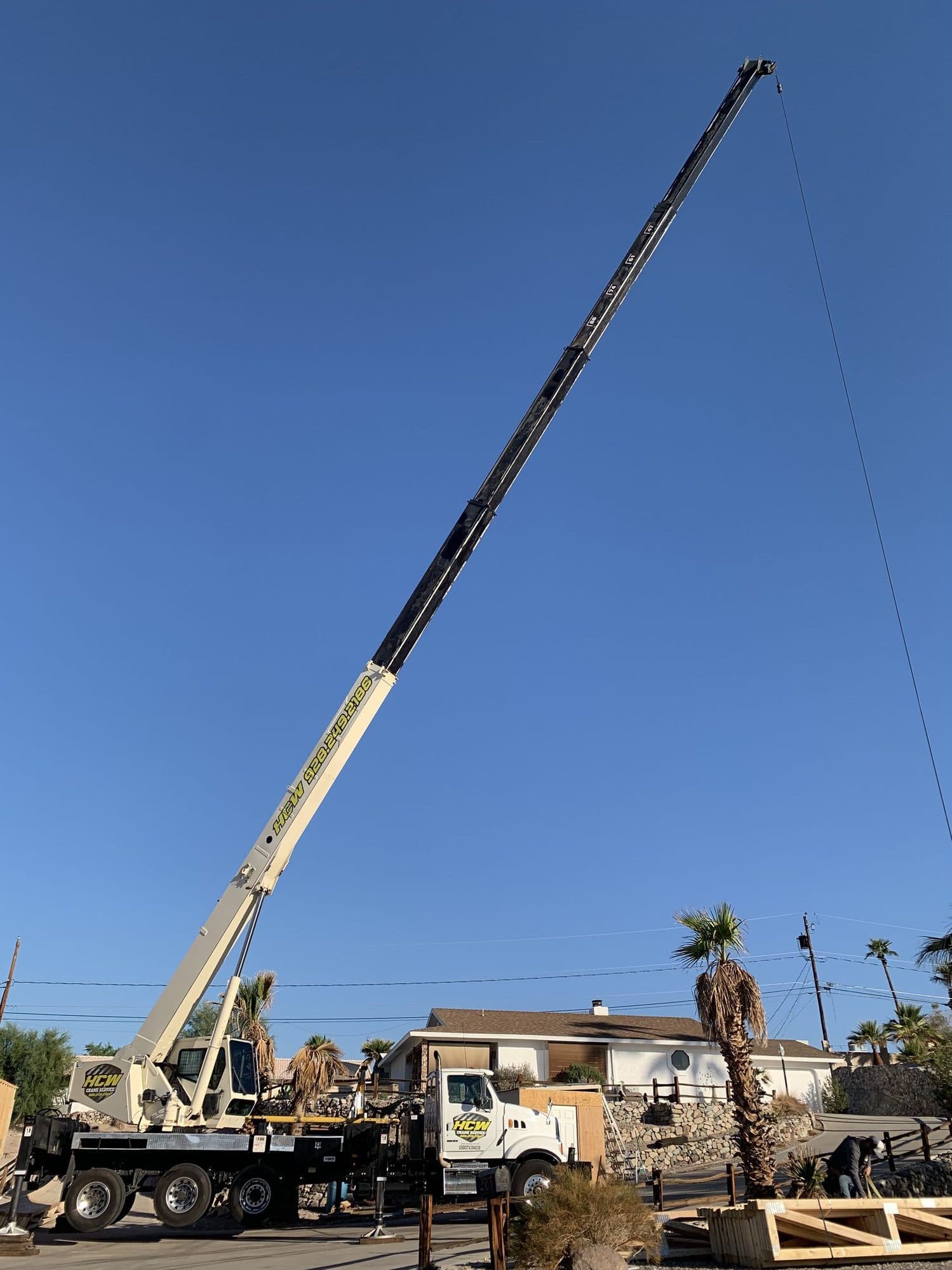
Telescopic boom at full reach 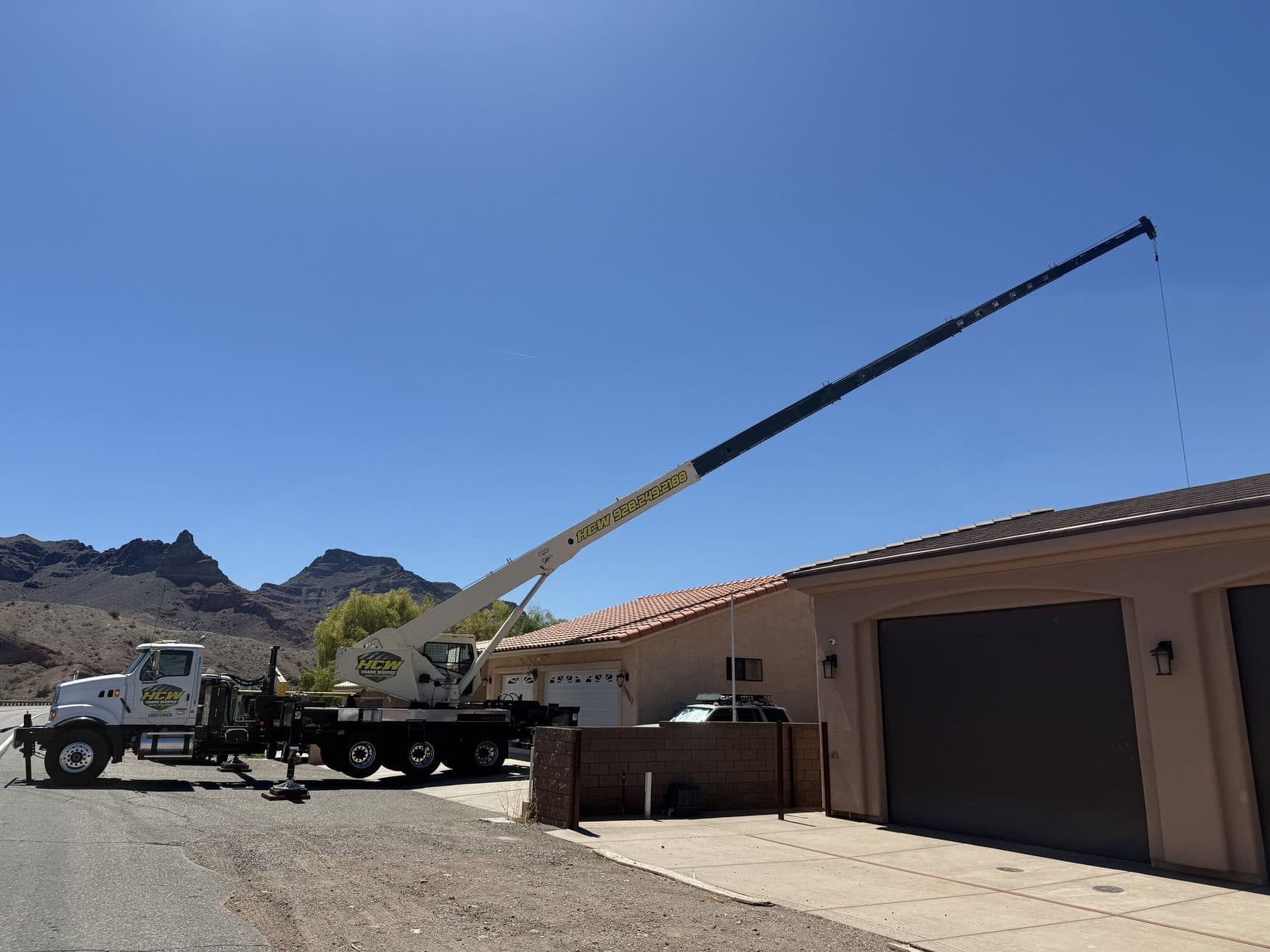
Long reach over a garage roof 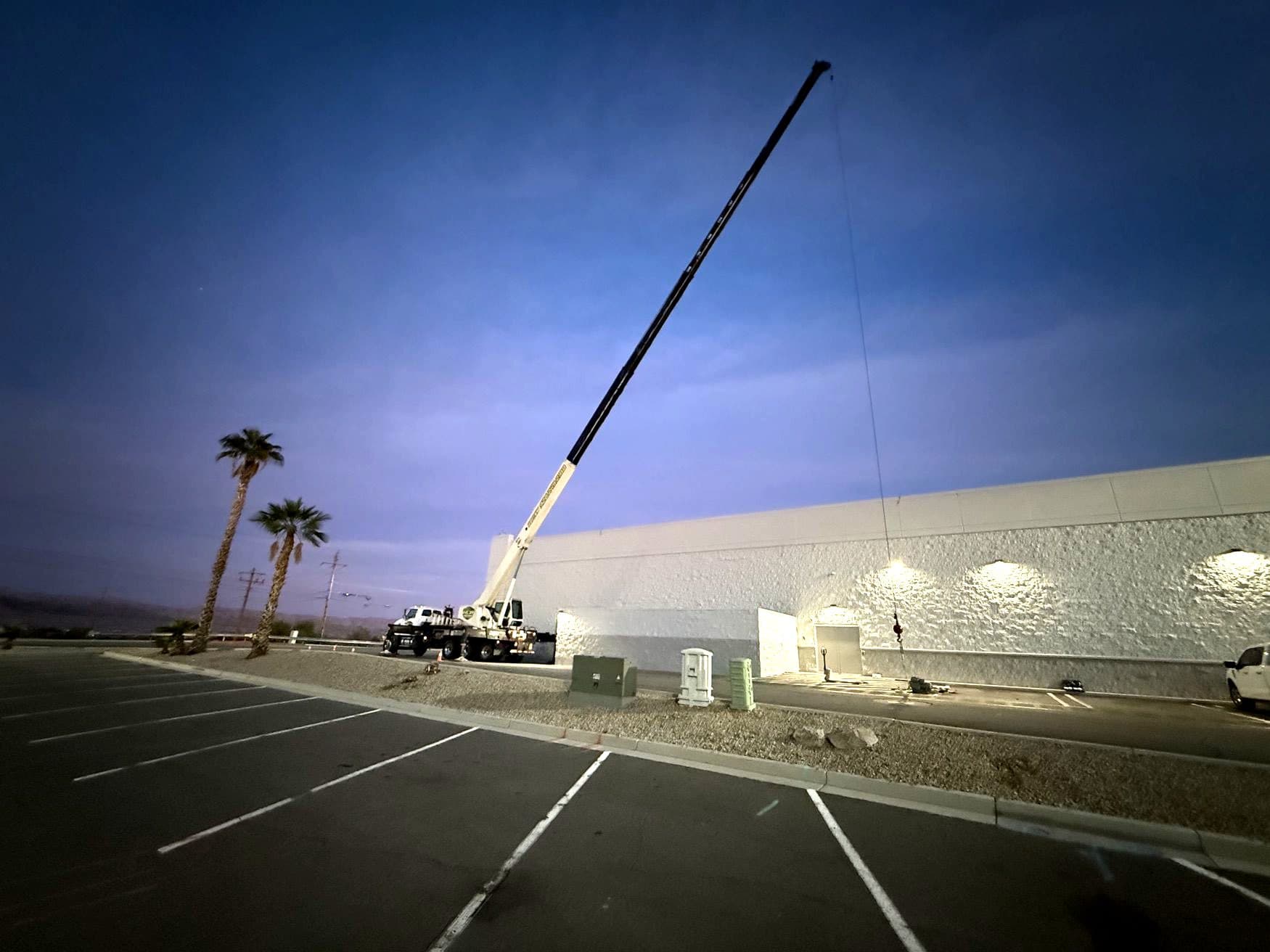
Early start at a commercial building
Answers
Frequently Asked Questions
Can you reach the back corner of my yard from the road?
Often yes, and that is exactly the question reach planning answers. It depends on the distance from where the truck can stand to that corner, the height needed to clear the house on the way, and what the load weighs. Send a photo from the roadway plus a rough distance and we can give you a real answer.
What is the maximum reach on your cranes?
142 feet. That covers the great majority of residential and light commercial work around here, including picks over a two story house into a walled back yard. Reach and capacity are different things though, so the load still has to fit the chart at whatever radius that reach puts it at.
Why do you need my cars moved if the crane parks in the driveway?
Two reasons. The outriggers need their full spread, which is wider than the truck, and the counterweight sweeps a circle behind the machine as the boom rotates. That tail swing reaches into space beside the truck that looks free. Clearing it is faster than working around it and much cheaper than repainting a fender.
Does moving the truck closer really make that much difference?
Yes, and it is usually the single most effective change available. Capacity climbs steeply as radius shrinks. On plenty of jobs, ten feet gained by pulling a fence panel or shifting a trailer does more for the pick than bringing a larger crane that then has to stand farther back anyway.
Related Services
- Capacity MatchingCrane capacity matching in Lake Havasu City. We read the load chart at your real radius and pick the 22 ton or 40 ton boom truck that fits the site.
- Site AssessmentCrane site assessment in Lake Havasu City. Gates, driveway slope, turnaround room, overhead lines and the landing point checked before the day of the lift.
- Lift Planning and Site SupportWeight, radius, ground and overhead worked out before the truck rolls, by the operator who runs the crane.
- Capacity MatchingCrane capacity matching in Lake Havasu City. We read the load chart at your real radius and pick the 22 ton or 40 ton boom truck that fits the site.
- Site AssessmentCrane site assessment in Lake Havasu City. Gates, driveway slope, turnaround room, overhead lines and the landing point checked before the day of the lift.
- Ground Condition EvaluationGround condition evaluation in Lake Havasu City. Outrigger bearing pressure, caliche crust, backfill, buried vaults and pads sized before the crane sets up.
- Power Line Clearance PlanningPower line clearance planning in Lake Havasu City. Minimum approach distance, full swing path clearance and utility coordination settled before a crane sets up.
- Pre-Lift Safety BriefingPre lift safety briefing in Lake Havasu City. Roles, signals, exclusion zone, stop authority and the abort plan agreed out loud before the outriggers go down.
Ready to schedule your lift?
Tell us the load, the site and the timing. We will confirm capacity, access and a window.