
Lift Planning and Site Support
Post-Lift Documentation and Job Records
2 min readUpdated July 2026
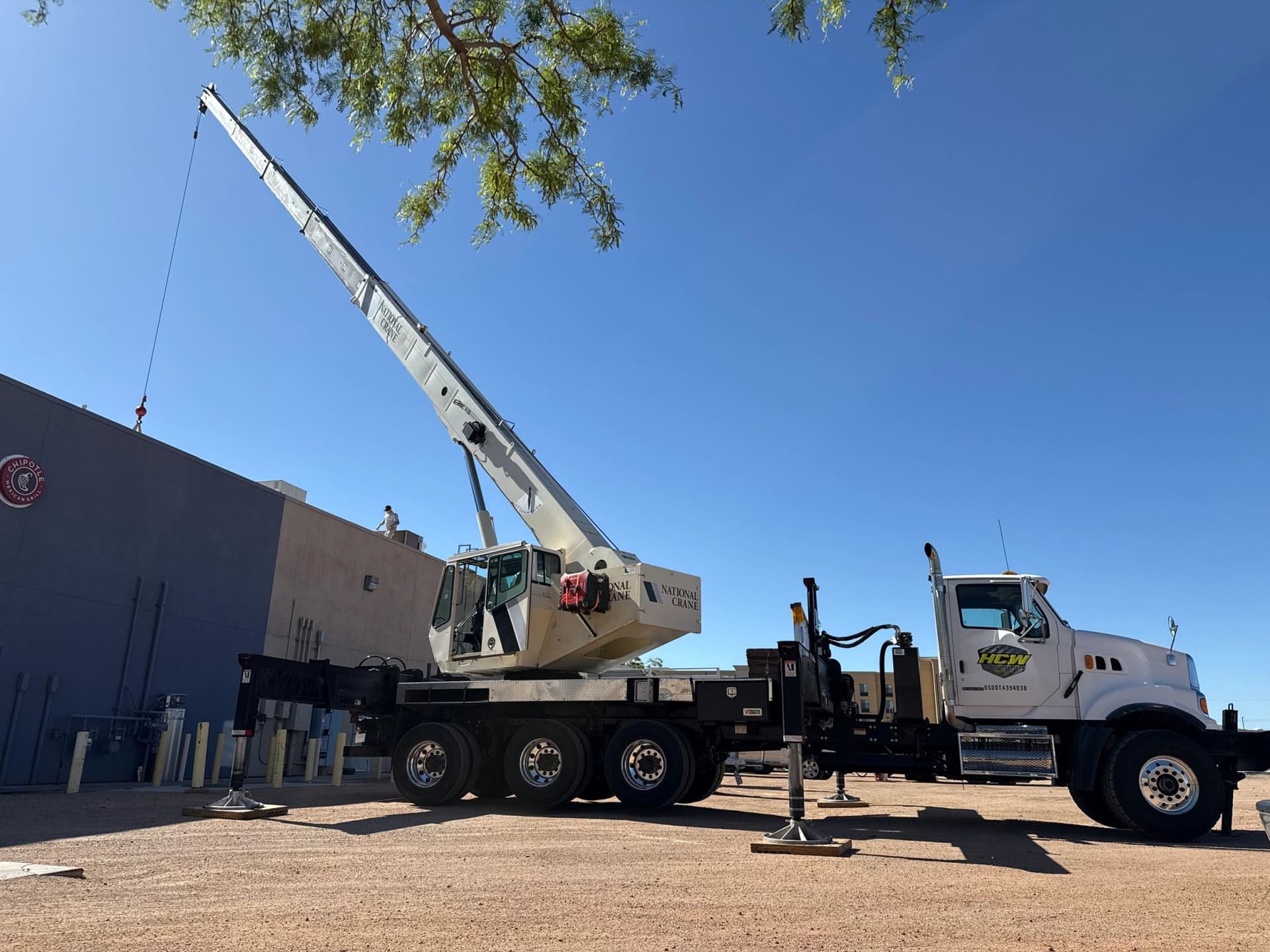
Post lift documentation is the record left behind after a crane job. It covers photos of the unit as set, the anchors or fasteners actually used, level readings on the finished installation and notes on anything found during the work. Records go to the customer before the truck leaves the property.
What gets recorded before we pull out
The truck does not leave until there is a record of what was done. Photos of the unit as it sits, taken from enough angles to show how it landed and how it relates to the pad, the curb or the frame under it. Close shots of the anchors or fasteners that ended up being used, which is not always what the drawing called for once the holes were open.
Level readings on the finished set get taken and written down. On rotating equipment and anything with vibration isolators, level is not cosmetic, and a reading recorded on the day is the difference between a known starting condition and an argument later. Anything found along the way goes in the notes too: a cracked curb, a pad out of square, rot under an old mount, an anchor that spun in the hole.
Why the record matters next week
A crane job is usually the middle of somebody else's project. The mechanical contractor turns up to make connections, an inspector comes through, or a service technician shows up a year later wondering why the unit sits the way it does. All of them ask who set it and how, and none of them were standing there when it happened.
A file with dated photos answers that in seconds. It also protects everyone if something was already wrong before the lift. A photo of a curb that was cracked when we arrived is worth having when the question comes up, and it is worth having for the customer as much as for us. If the lift uncovered damage, such as rot under an old mount or a cracked curb once the unit came off, the notes record what was found and who it was handed to.
Sent to your phone, not filed away somewhere
The photos go to the customer before the truck pulls off the property, not in an email three days later when they would already be too late to be useful. Getting them on site also means anything that looks wrong in a picture can be fixed while the crane is still standing there, which is a much shorter conversation than the alternative.
A copy stays with the job on our end as well. If you call back next season about the same unit, or about the same building, the earlier record is already there and the conversation starts from a known condition rather than from scratch. That is worth more on commercial buildings, where the person calling is often not the person who was standing in the parking lot the first time.
How the job runs
Our Process
Step 1: Photograph the finished set
Once the load is down and derigged, the unit gets photographed from several angles showing how it sits on the pad, curb or frame. Wide shots for context and close ones for detail. Anything that differs from what was planned gets its own picture rather than a mention.
Step 2: Record fasteners and anchors
What actually went in gets noted, since field conditions often change the plan once holes are open. Anchor type, size, where substitutions were made and why. If an anchor spun or a hole came out oversize, that is written down along with what was done about it.
Step 3: Take level readings
The finished installation gets checked with a level and the readings recorded. On equipment with isolators or rotating parts this matters, because a mount that sits slightly wrong shows up months later as a cracked bracket. A number written on the day removes the guesswork.
Step 4: Note findings and send
Anything discovered during the work goes in the notes: cracked concrete, an out of square pad, rot under an old mount, or a pad that was not level when the load landed. Photos and notes go to the customer before the truck pulls off the property.
Scope
What Is Included
- Photos of the unit as set from several angles
- Record of anchors and fasteners actually used
- Level readings taken on the finished installation
- Written notes on damage or defects found on site
- Damage found under or around the load noted and photographed
- Records sent to the customer before we leave
Answers
Frequently Asked Questions
Why do I need photos of my own equipment being set?
Because someone will ask. A mechanical contractor connecting to the unit, an inspector, or a warranty claim two years out all raise questions about how it was mounted. Dated photos taken the day it landed answer those without anybody relying on memory, and they cost nothing to take while the crane is still there.
What if you find something wrong with my pad or curb?
You hear about it on the spot and it goes in the notes with a photo. Out of square curbs and cracked pads turn up more often than people expect, especially on replacements where the old unit was hiding it. Depending on what it is, the load can often be held on cribbing while the right trade corrects it, rather than set on a problem.
Do you document the rigging as well as the lift?
Yes. The notes say which truck was used, how the load was rigged, what it weighed and where that number came from, and the radius it was set at. That matters most when the same piece gets moved again later, because the next crew can start from what actually worked.
How do I get the records?
They go to your phone before the truck leaves. That timing is deliberate, since anything that looks off in a photo can be sorted out while the crane is still standing on the property. A copy stays in our job file, so if you call about the same unit later we are both starting from the same pictures.
Related Services
- Lift Planning and Site SupportWeight, radius, ground and overhead worked out before the truck rolls, by the operator who runs the crane.
- Rigging and Construction LiftsCrane picks for material, machines, containers, signs, and landscape, rigged and run by the owner.
- Machinery PlacementMobile crane machinery placement in Lake Havasu City, Arizona. Lathes, presses, and shop equipment rigged to frame lift points and set on the pad.
- Capacity MatchingCrane capacity matching in Lake Havasu City. We read the load chart at your real radius and pick the 22 ton or 40 ton boom truck that fits the site.
- Reach and Radius PlanningReach and radius planning in Lake Havasu City. Where the boom truck can stand sets the radius, and radius decides what the crane can lift over your house.
- Site AssessmentCrane site assessment in Lake Havasu City. Gates, driveway slope, turnaround room, overhead lines and the landing point checked before the day of the lift.
- Ground Condition EvaluationGround condition evaluation in Lake Havasu City. Outrigger bearing pressure, caliche crust, backfill, buried vaults and pads sized before the crane sets up.
- Power Line Clearance PlanningPower line clearance planning in Lake Havasu City. Minimum approach distance, full swing path clearance and utility coordination settled before a crane sets up.
Ready to schedule your lift?
Tell us the load, the site and the timing. We will confirm capacity, access and a window.