
HVAC and Mechanical Lifts
Air Handler Placement in Lake Havasu City
2 min readUpdated July 2026
An air handler is the indoor half of a split system and normally lands in a mechanical room, an attic platform, or through a wall or roof opening rather than on an open curb. The crane sets it at the opening and the mechanical crew moves it into final position on rollers or a skid.
The Load Usually Cannot Fly to Its Final Spot
Unlike a rooftop package unit, an air handler generally lives inside something. A mechanical room, a closet, an attic platform, a penthouse. The crane can get it to a doorway, a hatch, or an opening in a wall, but the last stretch is a ground crew job with rollers, a skid, or a pallet jack.
So the useful planning question is where does the crane hand off. We set the unit down on a prepared platform, a set of dunnage, or the edge of an opening, in an orientation that lets the crew take it from there without turning it around.
Getting that orientation wrong is expensive in labor. A unit that arrives facing the wrong way in a corridor barely wider than the cabinet has to be walked around, and that is far harder than it sounds.
Rigging a Cabinet That Is Not Built to Be Lifted
Plenty of air handlers are light for their size and made of relatively thin sheet metal over an internal frame. Sling them across the cabinet and you dent the sides in before the unit ever leaves the ground.
The answer is usually to lift from the shipping skid or from a purpose-built pallet, so the force goes through the base structure rather than the skin. Where the manufacturer provides lifting brackets, those get used, and a spreader keeps the legs from pulling in.
Coil sections and blower sections shipped separately are a different problem again. They are awkward, they hang oddly, and they need to be kept upright. We rig each section for the way it actually needs to sit, not as one generic box.
Openings, Thresholds, and Blind Sets
Setting a unit into a roof opening or through a knocked-out wall panel is close-tolerance work with the operator's view blocked by the load and the structure. A spotter at the opening runs the last stage on radio.
The opening itself has to be ready. Edges protected, the receiving floor or platform capable of taking the point loads, and the path beyond it clear. We would rather wait ten minutes for that than set a unit half in an opening.
Weight distribution on the receiving floor is a real question on this work. A unit that is fine spread over a platform can be a problem sitting on two skid rails in the middle of a span. That is your engineer's call, and it is worth having made before the unit is at the opening.
How the job runs
Our Process
Step 1: Find the Handoff Point
We work out exactly where the crane sets the unit down and how the crew moves it from there. That decision drives orientation, rigging, and setup position.
Step 2: Rig Through the Base
Lift from the skid, the pallet, or factory brackets so the load goes through structure. Spreader bar where the sling legs would otherwise pull the cabinet in.
Step 3: Set at the Threshold
The unit is brought in slowly to the opening or platform with a spotter on radio, then lowered onto dunnage in the orientation the crew asked for.
Step 4: Hand Off and Stand By
Rigging comes off once the unit is stable. If a second section or a return trip up is needed, we stay set up rather than strike and reposition.
Scope
What Is Included
- Crane and operator with rigging for sheet metal cabinets
- Lifting from the skid, pallet, or factory brackets
- Spreader bars to keep sling legs off the cabinet sides
- Orientation set for the crew's move-in path
- Radio spotter for blind sets into openings and hatches
- Standby while additional sections are staged
Real HCW jobs
From the Job Site
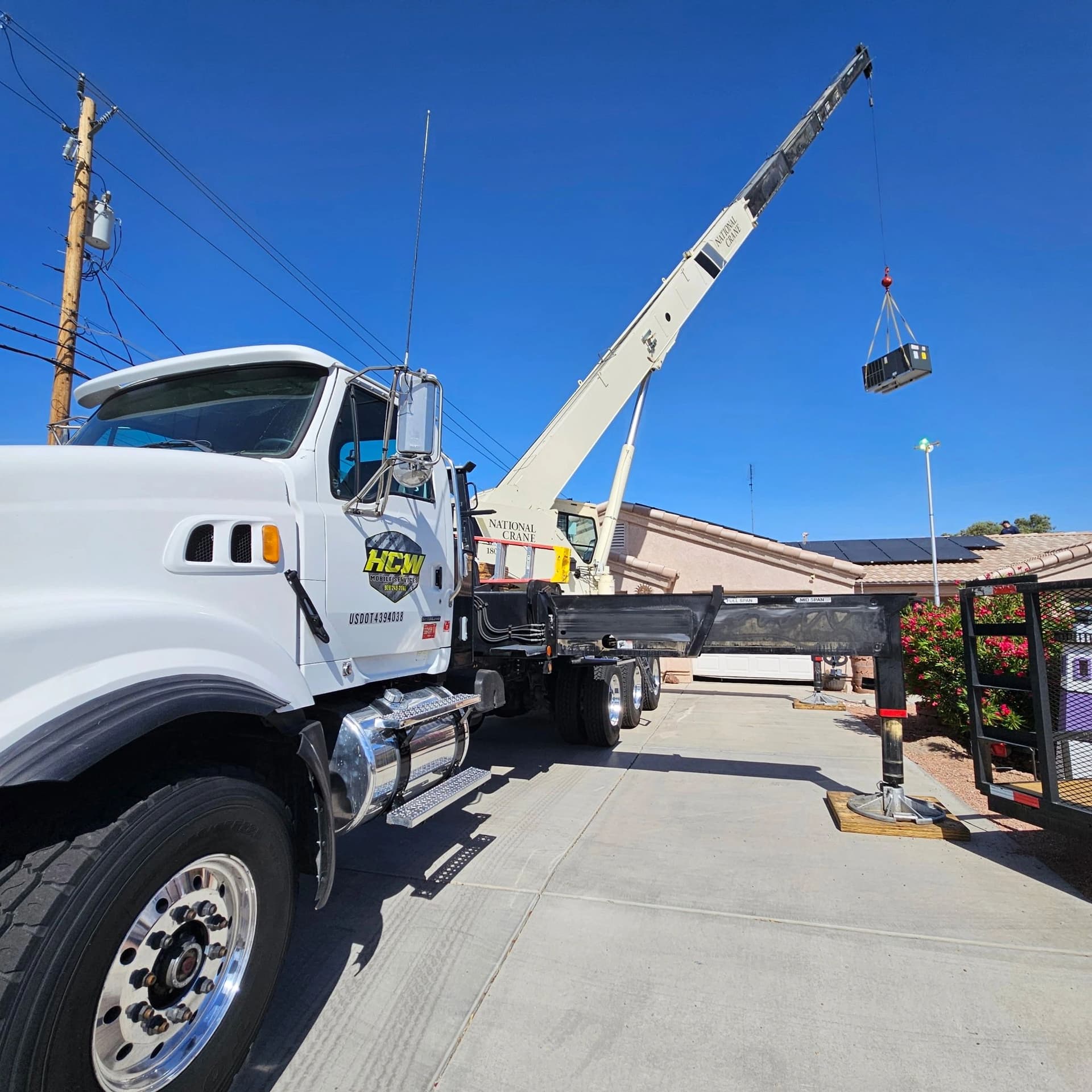
Rooftop unit lifted over a driveway 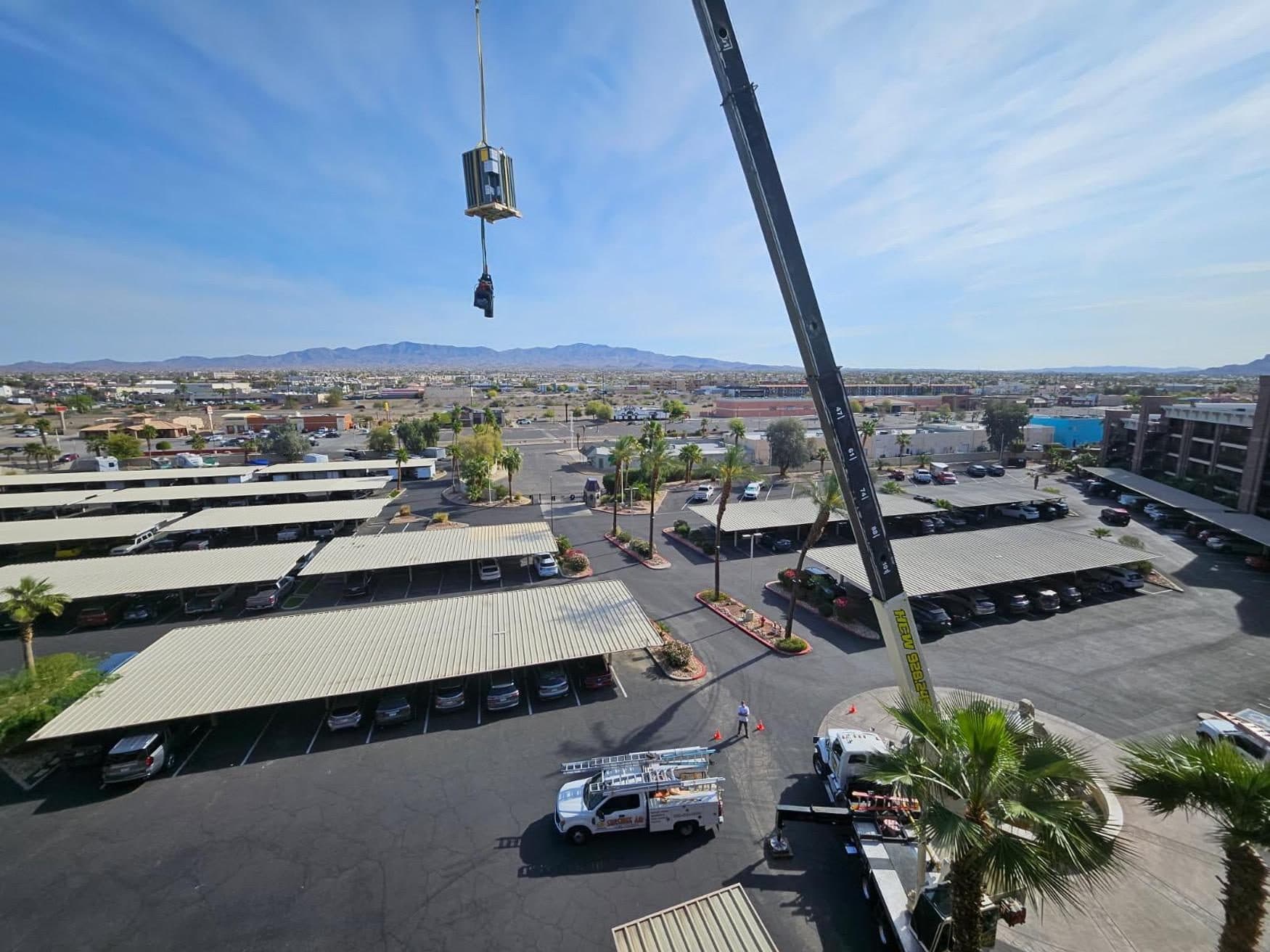
Rooftop HVAC unit in the air 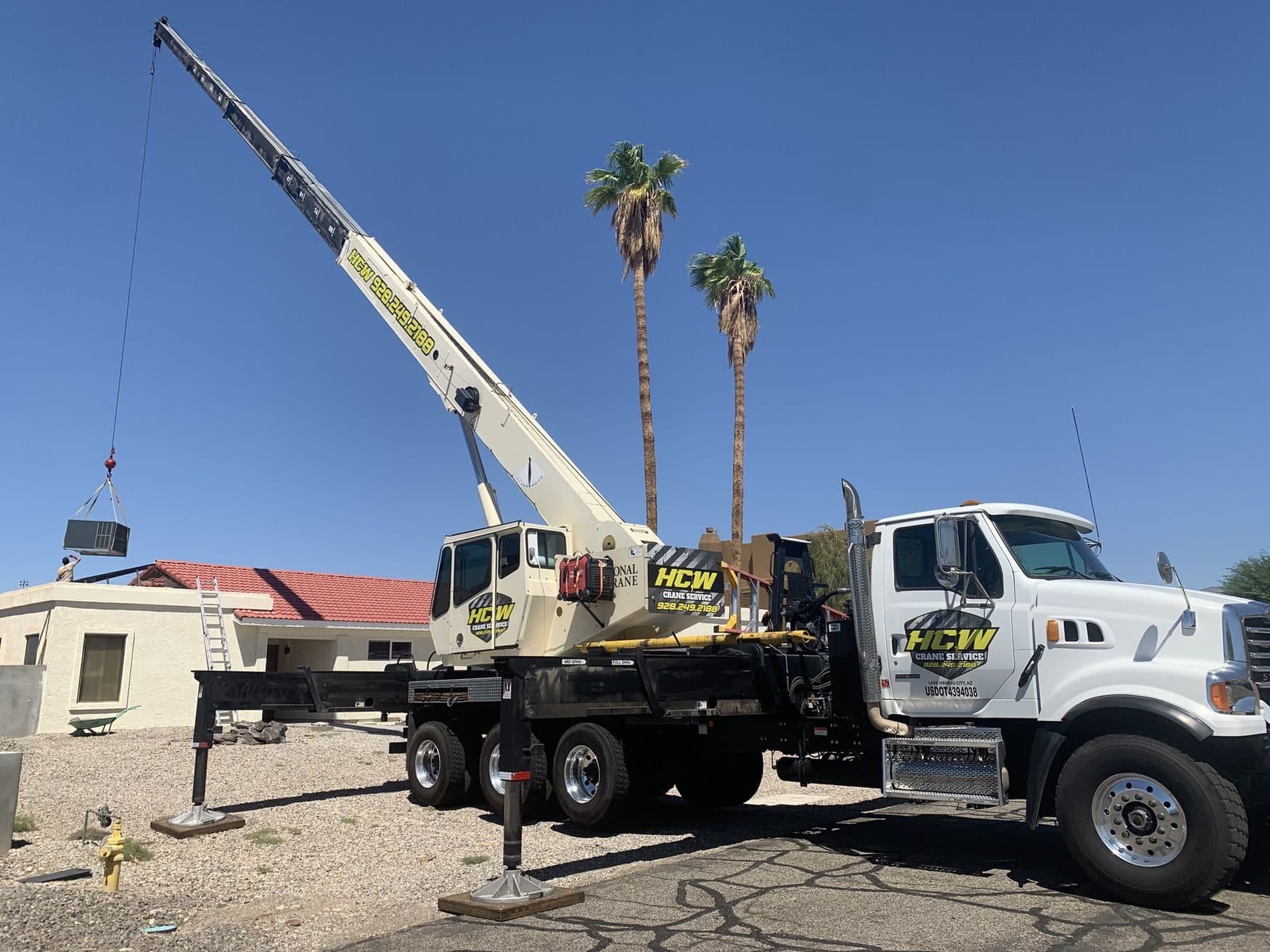
HVAC unit swung over a tile roof 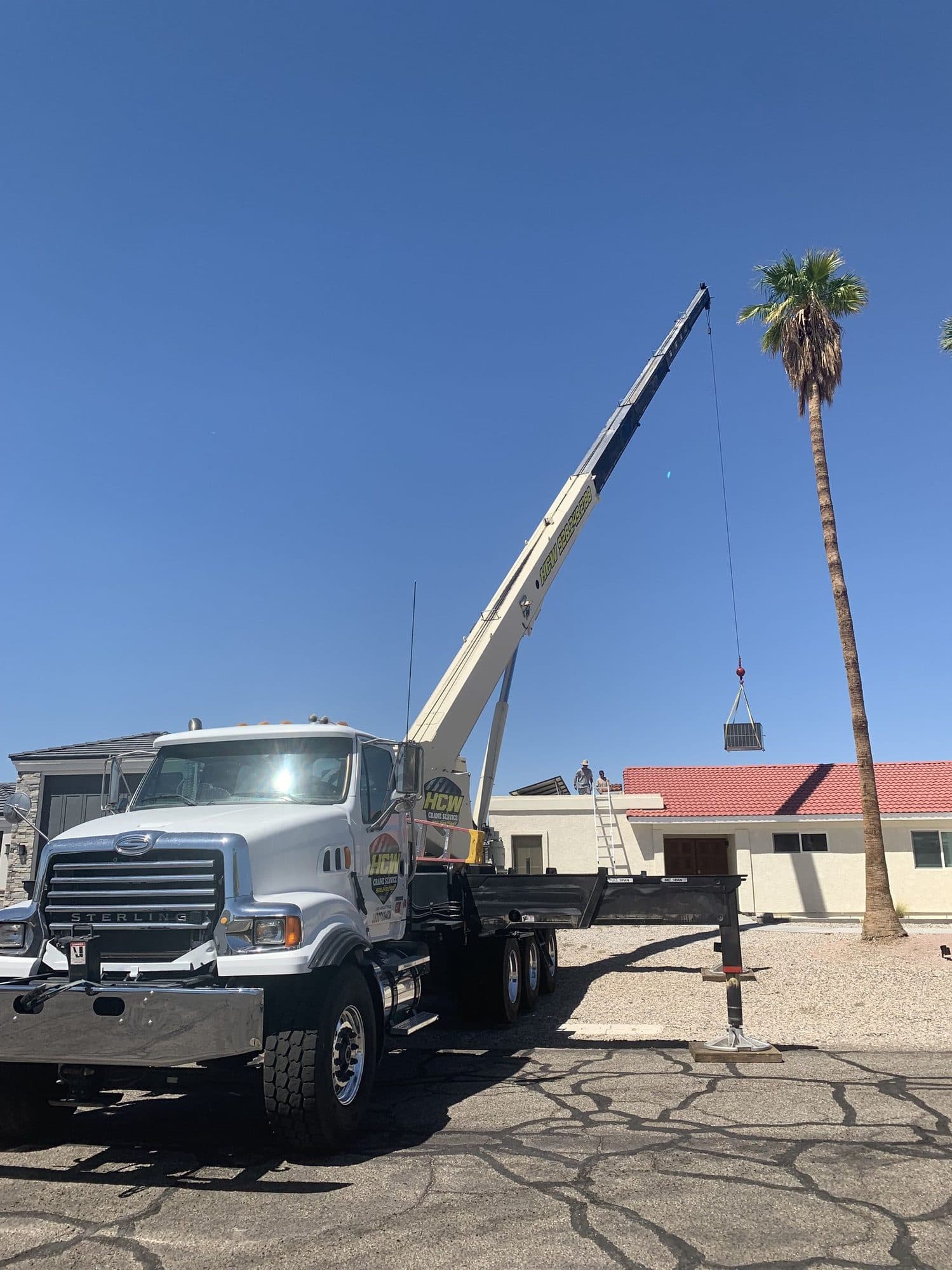
Rooftop unit headed for a tile roof
Answers
Frequently Asked Questions
Can the crane put the air handler in the mechanical room?
It can get it to the opening. The move from there into final position is a ground crew job with rollers or a skid, unless the room is genuinely open from above.
Should we leave the unit on its shipping skid?
Usually yes. The skid gives us a proper place to rig from and protects the cabinet base. Confirm with your installer whether they want it removed before or after the set.
What if the unit comes in sections?
We rig each section for how it needs to hang and stay upright, and set them in the order the crew wants them. Tell us the section count and weights up front so we plan one setup rather than two visits.
How much room do you need at the opening?
Enough to bring the unit in vertically and set it flat. If the opening is barely bigger than the cabinet, we plan a slow guided approach with a spotter and protection on the edges.
Related Services
- Condenser Unit PlacementCondensers are light and fragile. The coil fins bend if you look at them wrong. We set them over walls into side yards without touching the coil.
- Mechanical Equipment LiftsPumps, generators, water heaters, compressors, and mechanical skids lifted into place. Off-center weight and rated lifting lugs are the whole problem.
- HVAC and Mechanical LiftsRooftop units, air handlers, condensers, and mechanical equipment set for HVAC contractors and homeowners.
- Package Unit PlacementSetting rooftop package units square on the curb, with the gasket seated and the duct openings lined up. Crane and operator for HVAC contractors.
- Condenser Unit PlacementCondensers are light and fragile. The coil fins bend if you look at them wrong. We set them over walls into side yards without touching the coil.
- Rooftop Equipment LiftsExhaust fans, kitchen hoods, evaporative coolers, ductwork, and mechanical equipment lifted onto commercial and residential roofs.
- Mechanical Equipment LiftsPumps, generators, water heaters, compressors, and mechanical skids lifted into place. Off-center weight and rated lifting lugs are the whole problem.
- HVAC Unit Removal and ReplacementA change-out is two picks and an open roof in between. Sequencing, curb inspection, and a weather check are what keep it to one visit.
Ready to schedule your lift?
Tell us the load, the site and the timing. We will confirm capacity, access and a window.