
Resources
Preparing Your Site Before the Crane Arrives
In Short
Most delays start on the ground before the truck arrives. Clear the setup area, move vehicles, unlock access, and mark anything buried or fragile.
3 min readUpdated July 2026
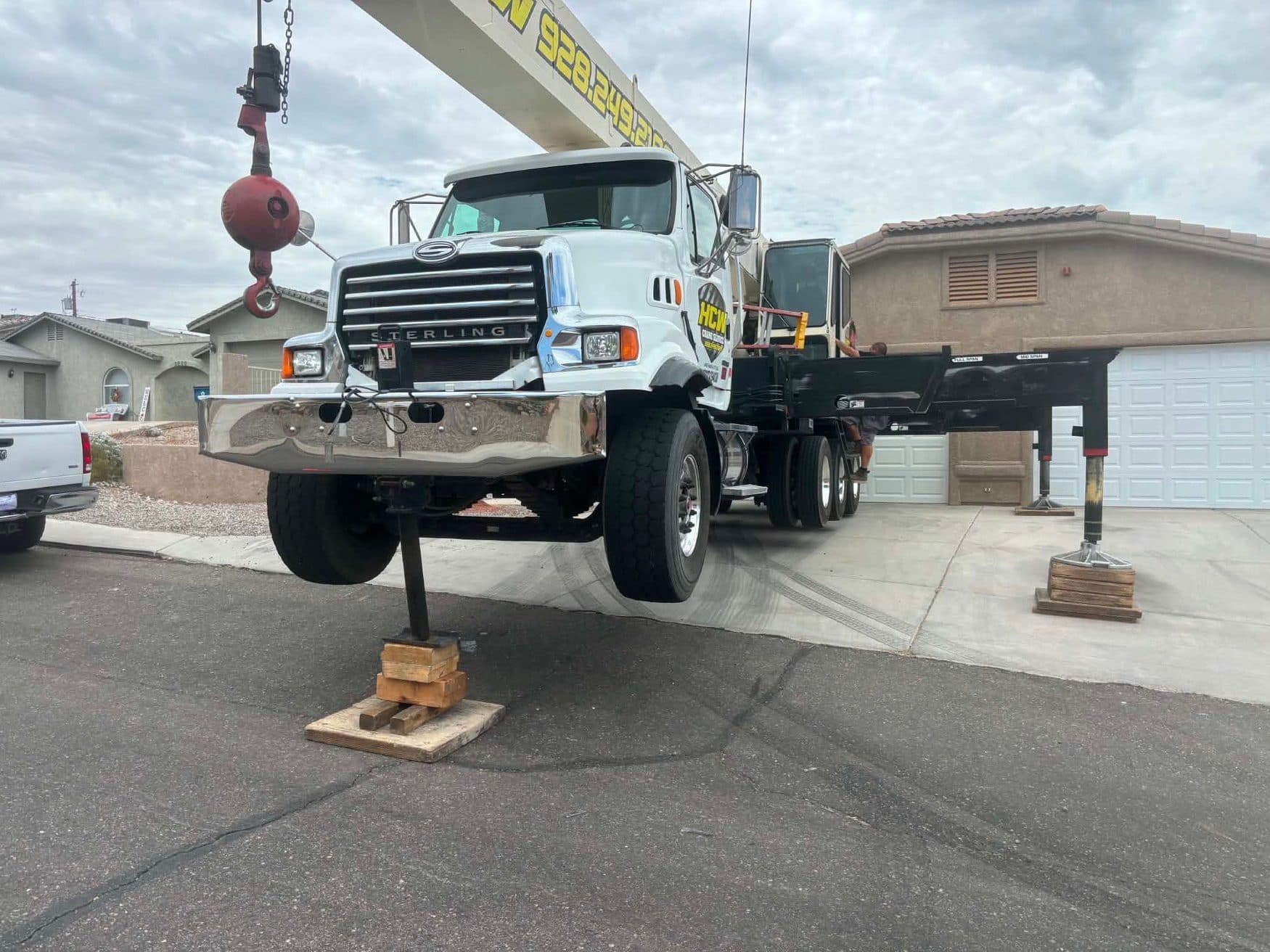
Preparing a site means clearing the truck's setup area, moving vehicles well clear of the swing path, unlocking gates and access routes, securing pets, and flagging anything buried or fragile such as irrigation lines, septic lids and pavers. Overhead lines and low branches should be reported before the day, not discovered on it.
Clear the Working Footprint, Not Just the Driveway
The area a crane needs is wider than the truck. Outriggers extend out to the sides, and the counterweight sweeps a circle as the machine rotates. Anything inside that circle has to be somewhere else before work starts.
The usual offenders are vehicles, trailers, trash containers, potted plants, patio furniture and the boat that lives beside the garage. Move them further than feels necessary. A car parked at the edge of the zone becomes a problem the moment the boom needs to swing the other way.
If the truck will set up in the street, check whether that block gets parked solid at certain hours. A working position that is available at seven in the morning may be gone by nine.
- Vehicles, trailers and boats moved off the property or well down the street
- Bins, planters, furniture and loose items out of the setup area
- Low branches trimmed back or reported in advance
- A clear route for the item from where it is delivered to where it will be rigged
Look Up, Then Look Down
Overhead lines are the hazard with the least margin for error, and they are the easiest thing to forget because nobody looks at them daily. Service drops to the house, lines crossing an alley, and cables running along a back fence all matter. Report them before the day. A photo taken from the setup area with the sky in frame is worth more than a sentence.
Underground is the other half. Irrigation lines, septic tanks and lids, leach fields, propane runs and shallow utility laterals all sit under ground that looks perfectly solid. If you know where they are, mark them with paint or flags. If you do not know, say so, and the truck will be positioned conservatively.
Recently disturbed ground is worth pointing out even when nothing is buried there now. A trench that was backfilled last year still settles differently from the ground beside it.
Surfaces, Gates and the Things That Get Damaged
Outrigger pads concentrate a lot of weight into a small footprint, so the surface underneath matters. Pavers, decorative concrete, stamped patios, pool decks and new driveways all need either avoiding or protecting with cribbing and mats.
Say up front if a surface is new. Concrete that has not fully cured is a different material from concrete that has. Nobody can tell by looking, and the person who knows the pour date is you.
Gates and fence panels come up on almost every backyard job. Sometimes a panel coming off makes a job simple. Sometimes the whole point of the crane is that nothing has to come off. Decide which it is in advance, and if a panel is coming off, arrange who is removing it and who is putting it back.
People, Pets and Who Is Making Decisions
Nobody stands under a suspended load, and nobody stands inside the swing path. That includes the customer, which surprises people who want to watch. There is always somewhere safe to watch from, and the operator will point it out.
Pets go inside and stay inside. Dogs react to hydraulics and diesel in ways their owners do not predict, and a loose dog stops a lift. Children go inside too, for the whole visit rather than the interesting parts.
Somebody needs the authority to make a call if the site is not what was described. Plenty of jobs here run for owners who are in another state for the season, and that works fine as long as they answer the phone. What does not work is a house sitter who cannot approve anything and an owner who is unreachable.
If You Are Not Going to Be There
Seasonal and out of state owners are a normal part of the work in this town, and a remote job can go perfectly well with a bit more preparation than a local one.
Send more photos than you think are needed, taken standing where a truck would park, and take one from the landing spot looking back. Leave gates unlocked or leave a code. Tell the neighbors, particularly if the truck has to occupy part of the street. Confirm that anyone else who needs to be there, such as an HVAC contractor or a spa dealer, actually has the same date.
Ask for photos of the finished work. It is a small thing and it closes the loop when you cannot see it yourself.
How the job runs
Our Process
Step 1: Walk the route a week out
Trace the path the load will take, from where it will be delivered to where it must land. Note anything in the way and anything you cannot move yourself.
Step 2: Send photos and measurements
Photograph the setup area including the sky, the landing spot, and the view between the two. Measure the flat distance between them.
Step 3: Mark what is hidden
Flag irrigation, septic lids, leach fields and any backfilled trench. Point out new concrete, pavers and decorative surfaces.
Step 4: Clear the site the day before
Move vehicles and loose items, unlock gates, remove a fence panel if that was agreed, and confirm any other trade is showing up on schedule.
Step 5: Secure people and pets on the day
Pets inside, children inside, and one person available who can make decisions. The operator will show you where it is safe to watch from.
Scope
What Is Included
- Review of your photos before the visit is scheduled
- Advice on where the truck can realistically set up
- Notice of anything on site that needs to change first
- Cribbing or mats where a surface needs protecting
- Cones and an exclusion zone marked out on arrival
- A safe vantage point pointed out if you want to watch
- Photos of the finished set on request
Answers
Frequently Asked Questions
How much flat space does the crane need?
Enough to extend the outriggers fully and rotate without hitting anything, which is wider than the truck itself. The exact footprint depends on which truck comes and how it has to be configured, so send photos and the operator will tell you what will work on your property.
Will the outriggers damage my driveway?
Not normally, because the weight gets spread with pads or mats sized to the surface. Risk goes up on new concrete, pavers, stamped finishes and anything over a buried line. Tell us what is new or decorative and it gets protected or avoided.
Do I have to take my gate off?
Often not, since lifting over the wall is usually the reason a crane was called. Sometimes removing a panel makes the job easier or cheaper in time. Decide before the day and agree who removes it and who reinstalls it.
Can you set up on dirt or gravel?
Usually yes, if the ground is firm and reasonably level. Around here that often means a shallow layer of soil over caliche, which supports a crane well. The problems are backfilled trenches, soft fill and wash sand, which look identical from the surface.
Can my kids and pets be outside while you work?
No. Pets and children stay indoors for the whole visit, not just the lift. There is always a safe place for adults to watch from and the operator will point it out on arrival.
I am out of state for the season. Can the job still happen?
Yes, and it happens often here. Send thorough photos, leave gates unlocked or provide a code, make sure you are reachable by phone during the visit, and confirm any other contractor involved has the same date. Photos of the completed work can be sent afterward.
More Guides
- Client Preparation ChecklistA short customer checklist for the day before a lift: measurements to take, photos to send, people to have there and what to unlock or mark.
- What to Expect on Lift DayA walkthrough of lift day from arrival to departure, including how long each stage takes, what you can do, and why setup takes longer than the pick.
- Ground Conditions and OutriggersA crane puts its weight through four small pads. Here is what makes ground good or bad for outriggers, and what caliche and buried trenches mean here.
- Power Line ClearanceOverhead power lines are the highest risk on a residential lift. How the operator spots service drops, sets clearance, and calls the utility.
- Common Mistakes to AvoidEight mistakes that actually delay or stop crane jobs, from guessing the weight to booking before the pad has cured, and what to do instead.
- How Mobile Crane Service WorksA mobile crane brings the machine and the operator to your site. Here is what happens from the first phone call through setup, the pick and pack up.
- Capacity and Reach ExplainedA 40-ton crane will not lift 40 tons at full boom. Here is what capacity ratings, load radius and 142 feet of reach actually mean for your job.
- What to Expect on Lift DayA walkthrough of lift day from arrival to departure, including how long each stage takes, what you can do, and why setup takes longer than the pick.
- HVAC Unit Crane Placement GuideHow rooftop package units and condensers get craned on and off, how the work is sequenced with your HVAC contractor, and what a curb mismatch means.
- Truss Lifting Process and SafetyHow roof trusses get set with a boom truck: staging bundles, spreader bars, bracing, wind limits and keeping the crane in one position along the wall line.
- Spa Placement Safety and MethodsHow hot tubs and swim spas get lifted over block walls and rooftops into backyards, including shell protection, spreader bars and pad preparation.
Ready to schedule your lift?
Tell us the load, the site and the timing. We will confirm capacity, access and a window.