
Resources
Crane Capacity and Reach, Explained Without the Jargon
In Short
A ton rating is capacity at the shortest radius. Capacity drops sharply as the load moves out. 142 feet is maximum reach, not reach with a load.
4 min readUpdated July 2026
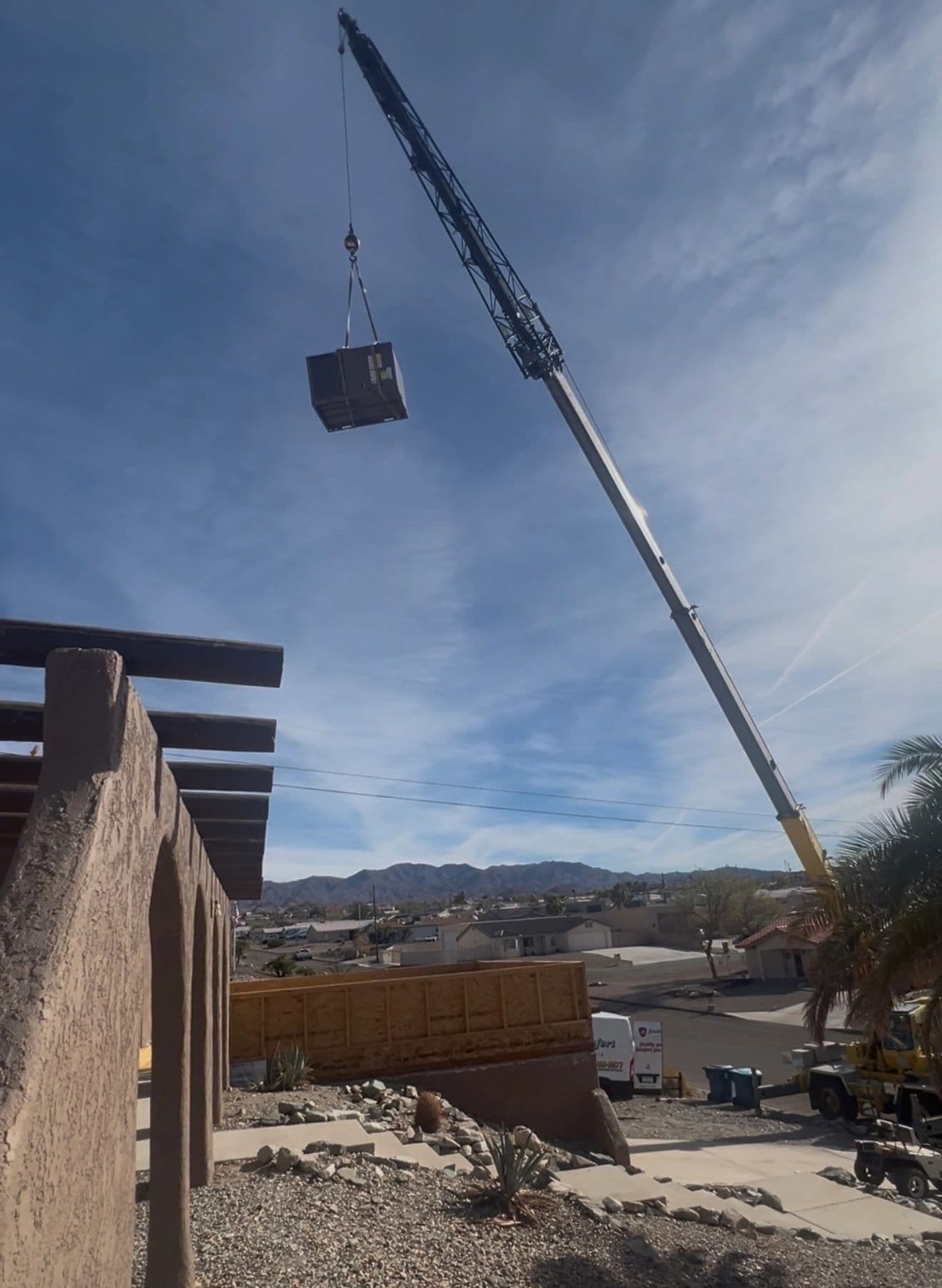
A crane's ton rating is its maximum capacity at the shortest working radius under ideal conditions. Capacity falls sharply as the load moves farther from the truck. Maximum reach of 142 feet is boom length, not the distance at which a heavy load can be handled. Weight, horizontal distance and setup room decide the crane together.
What a Ton Rating Actually Describes
When a crane is called a 22-ton or a 40-ton machine, that number is one specific measurement: the most it can handle at its shortest working radius, fully rigged, on firm level ground, with the outriggers all the way out. It is the best case, measured at the one point where the crane is strongest.
It is a headline number, not a promise about your job. Almost no real lift happens at the shortest radius, because the load has to go somewhere, and somewhere is always out away from the truck.
This is the single most common misunderstanding in the trade, and it is worth being blunt about. A 40-ton crane will not lift 40 tons out over a house. It will not lift anywhere near that. The rating tells you which machine is in the conversation, and nothing more.
Radius Is the Number Nobody Brings to the Call
Load radius is the horizontal distance from the center of the crane's rotation to the load hanging on the hook. Not the boom length. Not the height. The flat distance across the ground.
Capacity falls off as radius grows, and it does not fall gently. Doubling the distance out does far more than halve what the crane can handle, because the load is working on a longer lever against the machine. A weight that is routine at close radius can be out of the question at long radius on the same truck.
Height matters much less than people assume. Lifting a load straight up alongside the truck is comparatively easy. Reaching out over a two-story house with a block wall behind it, so the truck has to sit in the street and the landing spot is well back in the yard, is a completely different problem. The geometry decides it, not preference.
That is why the useful thing to measure before you call is not how tall the house is. It is how far back from the street the item has to land.
142 Feet Is Reach, Not Reach With a Load
Maximum reach on these trucks is 142 feet. That figure describes how far the boom can be extended. It does not describe what can hang on the end of it at that extension.
Think of it as the outer edge of where the hook can physically go. As the boom extends toward that edge, the amount it can carry keeps dropping. At the extremes, the boom is reaching for position and distance rather than for weight.
This is genuinely useful information, not a disappointment. A lot of jobs are about getting a modest load into a place with no other route: over a wall, across a pool, onto a second story balcony, down into a courtyard. For those jobs, the reach is the point and the weight is easy.
Weight, Distance and Room, Together
Three things decide which crane comes out, and none of them works on its own.
Weight is the obvious one. Horizontal distance from where the truck can safely sit to where the load has to land is the one customers rarely have ready. Setup room is the one nobody thinks about until the truck is on site, because outriggers need to extend, and how far they can extend changes what the machine is allowed to lift.
Those three interact in ways that surprise people. A light load a long way out can require the bigger truck. A heavy load close in may not. A job that would be simple from the driveway can become the hard version of itself when the driveway turns out to be over a utility trench and the truck has to work from the street instead.
- Weight of the item, including anything in it or on it
- Horizontal distance from the truck's working position to the landing spot
- How much room there is to extend the outriggers
- What has to be cleared on the way: roof, wall, wires, structure
- Whether the ground under the pads will carry the load
The Chart Governs, and the Operator Reads It
Every crane comes with a manufacturer's load chart. It lists what the machine is permitted to handle at each combination of boom length, radius and outrigger position. There is not one chart, there are several, because the numbers change with the configuration.
The operator reads the chart for the exact setup on the day, and deducts the weight of the hook block and the rigging before comparing anything to the load. The chart is the governing document. It is not a starting point for negotiation and it is not something judgment overrides.
This is also why a firm capacity answer over the phone, before anyone knows the radius, is not a real answer. What can be given quickly is a straight yes or no about whether the job is in range once you supply the weight, the distance and a few photos. If the numbers do not work, you get told that rather than finding out when the truck is already parked.
How the job runs
Our Process
Step 1: Get a real weight
Find the data plate, the model number or the dealer spec sheet. Include water, fluids, contents and any frame or skid the item is sitting on.
Step 2: Measure the horizontal distance
Pace or tape the flat distance from where a truck could park to where the item has to land. This is the number that decides more than any other.
Step 3: Photograph the working area
Shoot from the parking spot toward the landing spot, and include the sky. Overhead lines and roof geometry are easier to see in a photo than to describe.
Step 4: Match the configuration to the chart
The operator sets weight against radius, boom length and outrigger position on the load chart for the truck being considered, with rigging weight deducted.
Step 5: Confirm the truck and the plan
You get told which machine is coming, where it needs to sit, and anything on site that has to change before it can work from there.
Scope
What Is Included
- Straight answer on whether the job is in range for the equipment
- Selection between the 22-ton and 40-ton truck based on the configuration
- Load chart check for the exact boom, radius and outrigger setup
- Rigging and hook block weight deducted before the comparison
- Review of the working position options on your site
- Notice up front if the numbers do not work, rather than on the day
Answers
Frequently Asked Questions
Will a 40-ton crane lift 40 tons?
Only at its shortest working radius under ideal conditions, which is not where real lifts happen. Capacity drops sharply as the load moves away from the truck. The ton rating identifies the class of machine, not what it will do on your job.
What is load radius, in plain terms?
Load radius is the flat, horizontal distance from the center of the crane to the load hanging on the hook. It is measured across the ground, not along the boom. It is the number that most affects what the crane can handle.
Does 142 feet of reach mean you can lift at 142 feet?
It means the boom can extend that far. Capacity at long extension is far lower than the headline rating, because reach and lifting power trade against each other. Long reach is usually about getting a manageable load into a place with no ground route.
Is height or distance more important?
Horizontal distance matters far more than height. Lifting straight up beside the truck is comparatively easy. Reaching out over a house or a wall to a landing spot well back in a yard is what puts real demand on the machine.
Can you tell me the capacity over the phone?
Not as a number, because capacity only exists for a specific configuration. What can be answered quickly is whether your job is in range, once you supply the weight, the horizontal distance and photos of the setup area.
What happens if my item turns out heavier than I said?
The lift stops and gets re-planned. A test lift a few inches off the ground shows this before the load is anywhere it could do harm. Depending on how far off the number was, the job may proceed at a shorter radius, may need the other truck, or may not proceed that day.
More Guides
- Load Chart BasicsA load chart maps radius against boom length, and capacity falls as the load moves out. What the deductions are and why the chart governs the pick.
- Choosing the Right CapacityChoosing between the 22-ton and 40-ton boom truck is weight, distance and setup room together. Here is how the call gets made and what to send.
- Ground Conditions and OutriggersA crane puts its weight through four small pads. Here is what makes ground good or bad for outriggers, and what caliche and buried trenches mean here.
- Lift Planning BasicsWhat a lift plan contains, why even a small residential pick gets one, and what a written plan looks like when a project file needs documentation.
- How Mobile Crane Service WorksA mobile crane brings the machine and the operator to your site. Here is what happens from the first phone call through setup, the pick and pack up.
- How Mobile Crane Service WorksA mobile crane brings the machine and the operator to your site. Here is what happens from the first phone call through setup, the pick and pack up.
- Site Preparation ChecklistWhat to clear, move, unlock and check before a crane arrives. A prepared site keeps the visit short and stops problems being found at the worst moment.
- What to Expect on Lift DayA walkthrough of lift day from arrival to departure, including how long each stage takes, what you can do, and why setup takes longer than the pick.
- HVAC Unit Crane Placement GuideHow rooftop package units and condensers get craned on and off, how the work is sequenced with your HVAC contractor, and what a curb mismatch means.
- Truss Lifting Process and SafetyHow roof trusses get set with a boom truck: staging bundles, spreader bars, bracing, wind limits and keeping the crane in one position along the wall line.
- Spa Placement Safety and MethodsHow hot tubs and swim spas get lifted over block walls and rooftops into backyards, including shell protection, spreader bars and pad preparation.
Ready to schedule your lift?
Tell us the load, the site and the timing. We will confirm capacity, access and a window.