
Rigging and Construction Lifts
Pool, Boulder and Landscape Lifts in Lake Havasu City
2 min readUpdated July 2026
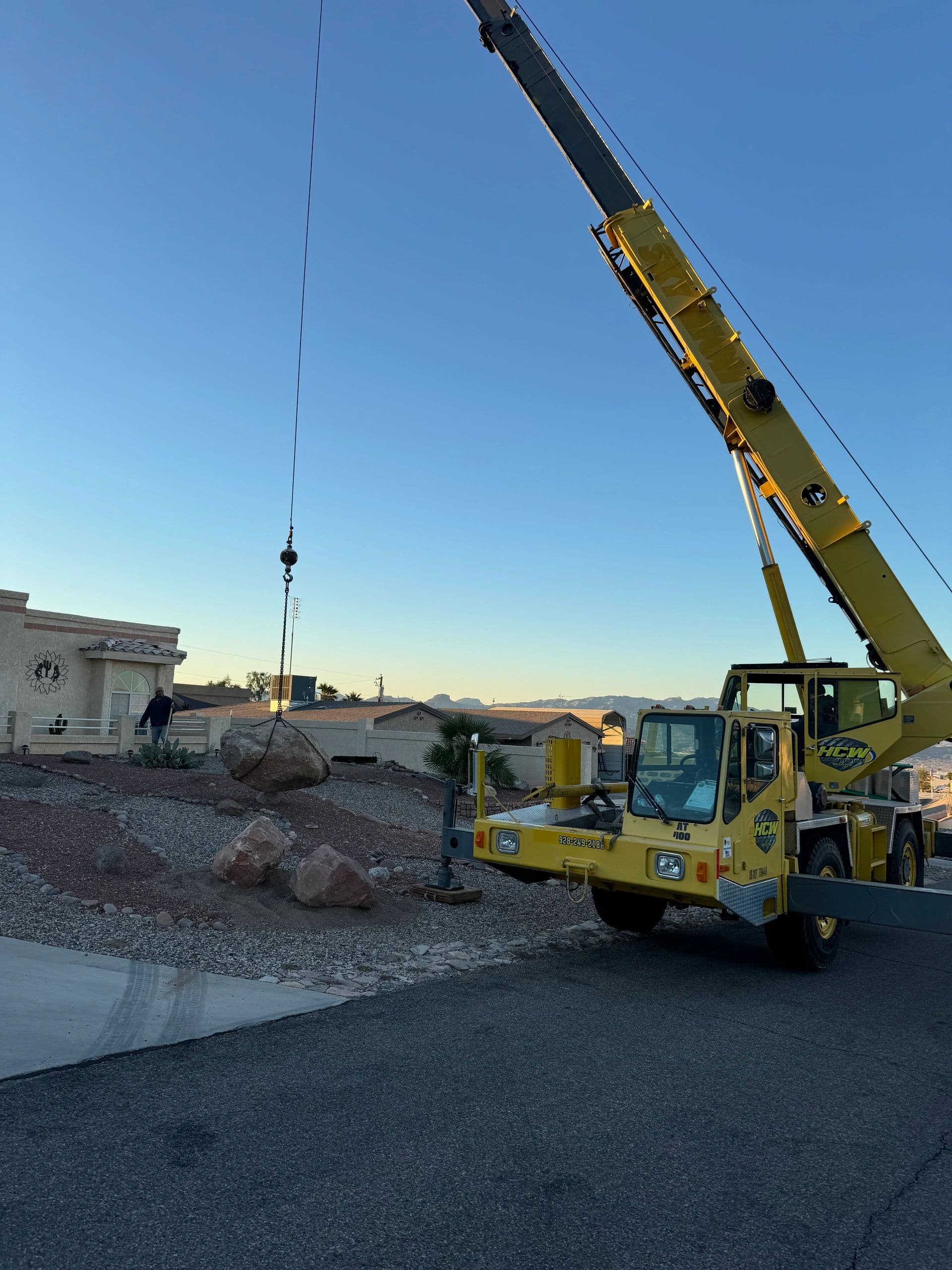
Pool, boulder and landscape lifts are crane picks that set boulders, fiberglass pool shells, water features, and landscape material in backyards and front yards that equipment cannot drive into. Boulder weight is figured from measurements and rock type, pool shells rig to the manufacturer's lift points, and everything goes over walls or houses rather than through them.
Boulders Have No Data Plate
A boulder is the one load where nobody hands us a number. It gets measured: length, width, and height, taped at the widest points. That volume, with the rock type, gives a weight estimate, and the plan carries margin on top of it because boulders are rarely the neat shape the measurements suggest.
Rigging is a basket of wide nylon slings under the rock, not chain. Chain slides on smooth rock and scars the face everyone is going to look at. Nylon grips better and does not mark it. The slings get set so the rock hangs the way it will sit, which takes a test lift and usually an adjustment.
The face matters. Desert landscape rock gets set with its best side toward the house or the street, and at the angle the landscaper wants. It is much easier to turn a boulder in the air than to drag it on the ground once it is down. We ask which way it faces before it leaves the truck.
Fiberglass Pool Shells Over the House
A fiberglass pool shell is big, fairly light, and flexible. It often has to go from the delivery trailer on the street, over the house, and down into a hole in the backyard. Capacity at that radius is usually fine. Control is the hard part, because a shell is a large surface that catches wind.
The manufacturer specifies lift points and usually a spreader bar setup. That gets followed exactly, because rigging a shell some other way can twist or crack it. Tag lines on opposite ends keep it from rotating, and the lift waits for calm air.
The hole has to be ready: dug, the base leveled and compacted, and the pool installer on site. A shell hanging over a yard waiting for someone to finish the base is exactly what nobody wants.
Water Features, Pavers, and Material Over the Wall
Precast water features, fire pit bowls, large planters, pavers by the pallet, and bulk bags of rock or gravel are all things a landscaper needs in a backyard and cannot get through a side gate. The crane takes them over the wall or over the house and sets them where they are going to stay, or where the crew can spread them.
Finished features get the same care as a finished sign: nylon slings padded where they touch, lift points used where the maker provides them, and a slow landing. Pallets and bulk bags go up by their own lift loops or in slings, with bulk bags checked for tears before they come off the ground.
Irrigation lines, lighting, and freshly laid pavers are easy to crush under an outrigger or a dropped load. The setup and the landing spots get planned around what the landscaper has already built.
Walls, Slopes, and Summer Heat
Nearly every yard in Havasu has a block wall, and most landscape lifts go over one. The truck parks in the street or driveway, and the radius from there to the landing spot decides which truck comes. On lake lots with a slope behind the house, outriggers get cribbed level and the ground gets checked before setup.
Rock in direct sun gets hot enough to burn by late morning, and landscape crews start early for good reason. Lifts get scheduled at first light in the summer.
How the job runs
Our Process
Step 1: Measurements and Photos
For boulders, the length, width, height, and rock type. For pool shells and features, the manufacturer's weight and lift points. Photos show where the truck parks, the path over the wall or house, and the landing spot.
Step 2: Landing Spot Ready
The landscaper or pool installer has the spot ready: the hole dug and based, the pad leveled, or the area cleared. Which way each boulder faces gets agreed before the day.
Step 3: Rigged and Test Lifted
Boulders go in a basket of nylon slings. Pool shells rig to the manufacturer's lift points with a spreader bar. Every load comes up a few inches first to check how it hangs.
Step 4: Set and Turned
The load travels over the wall or house and comes down slowly. Boulders get turned in the air to face the right way before they touch. The rigging comes off when it sits where it belongs.
Scope
What Is Included
- Boulder weight figured from measurements and rock type
- Nylon sling baskets that do not scar the rock face
- Pool shells rigged to the manufacturer's lift points
- Boulders turned in the air to face the right way
- Setup planned around irrigation, lighting, and pavers
- Outriggers cribbed level on sloped lake lots
- First light starts in summer heat
Real HCW jobs
From the Job Site
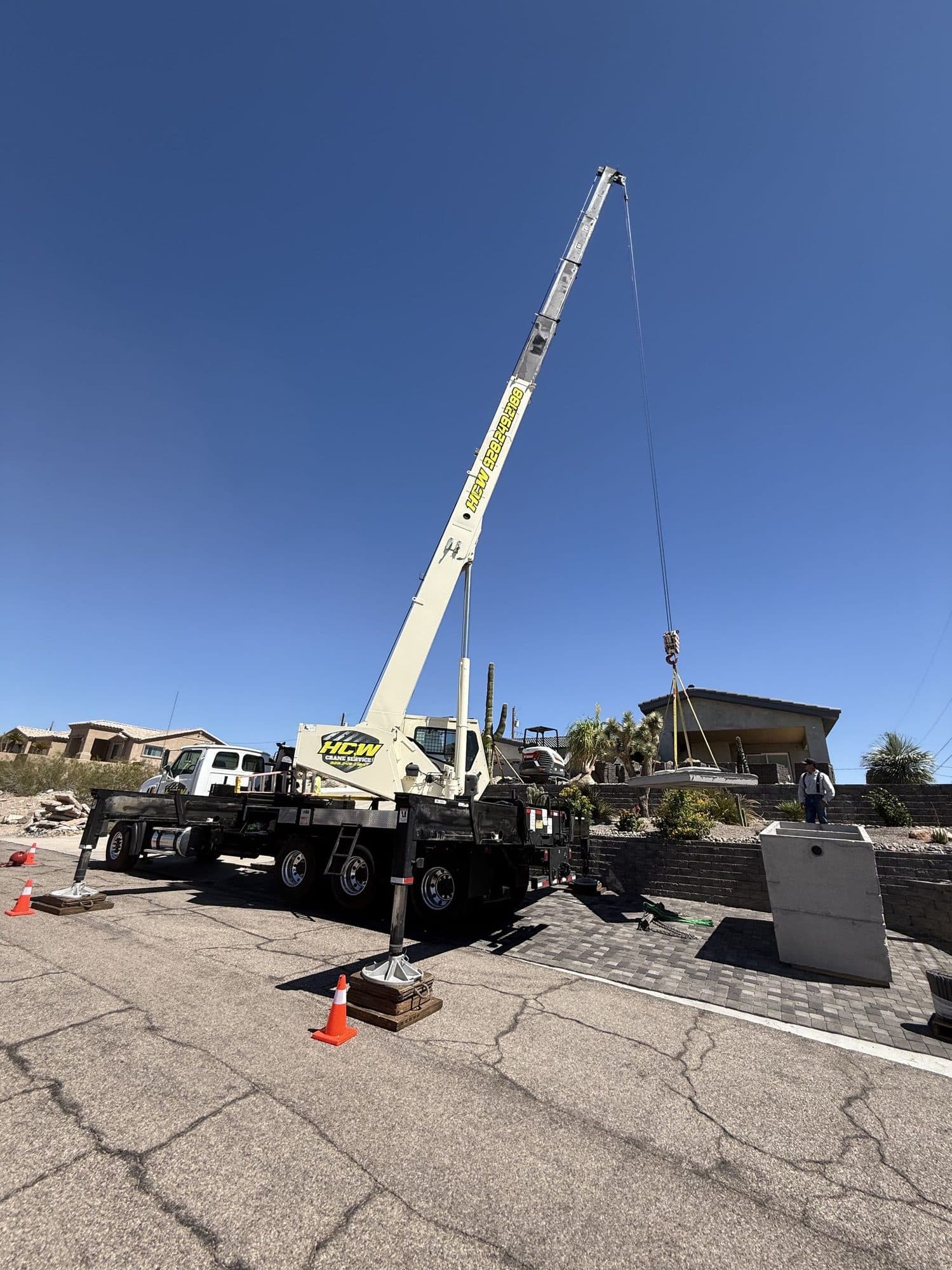
Precast concrete set in a yard 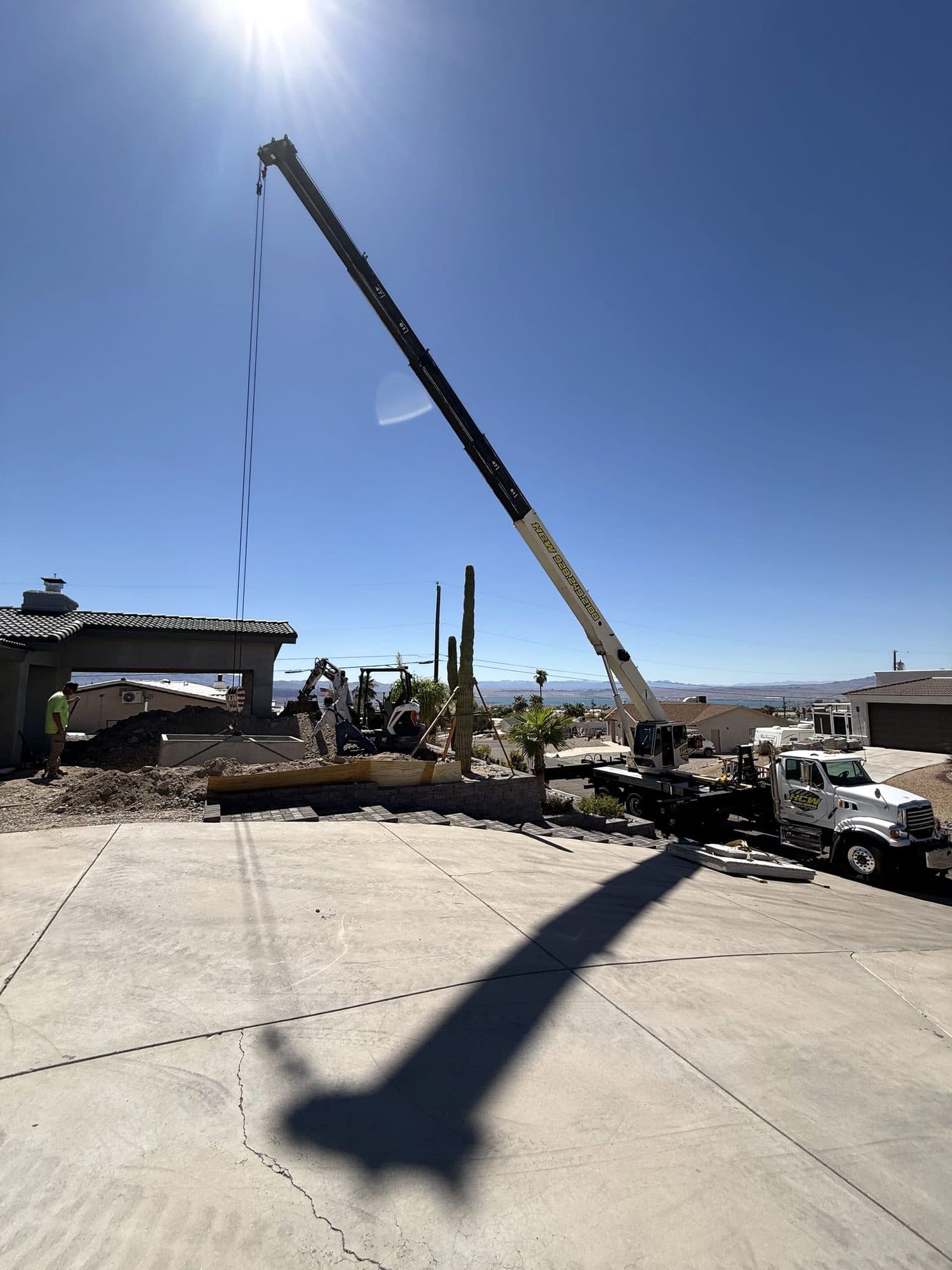
Landscape lift above the lake 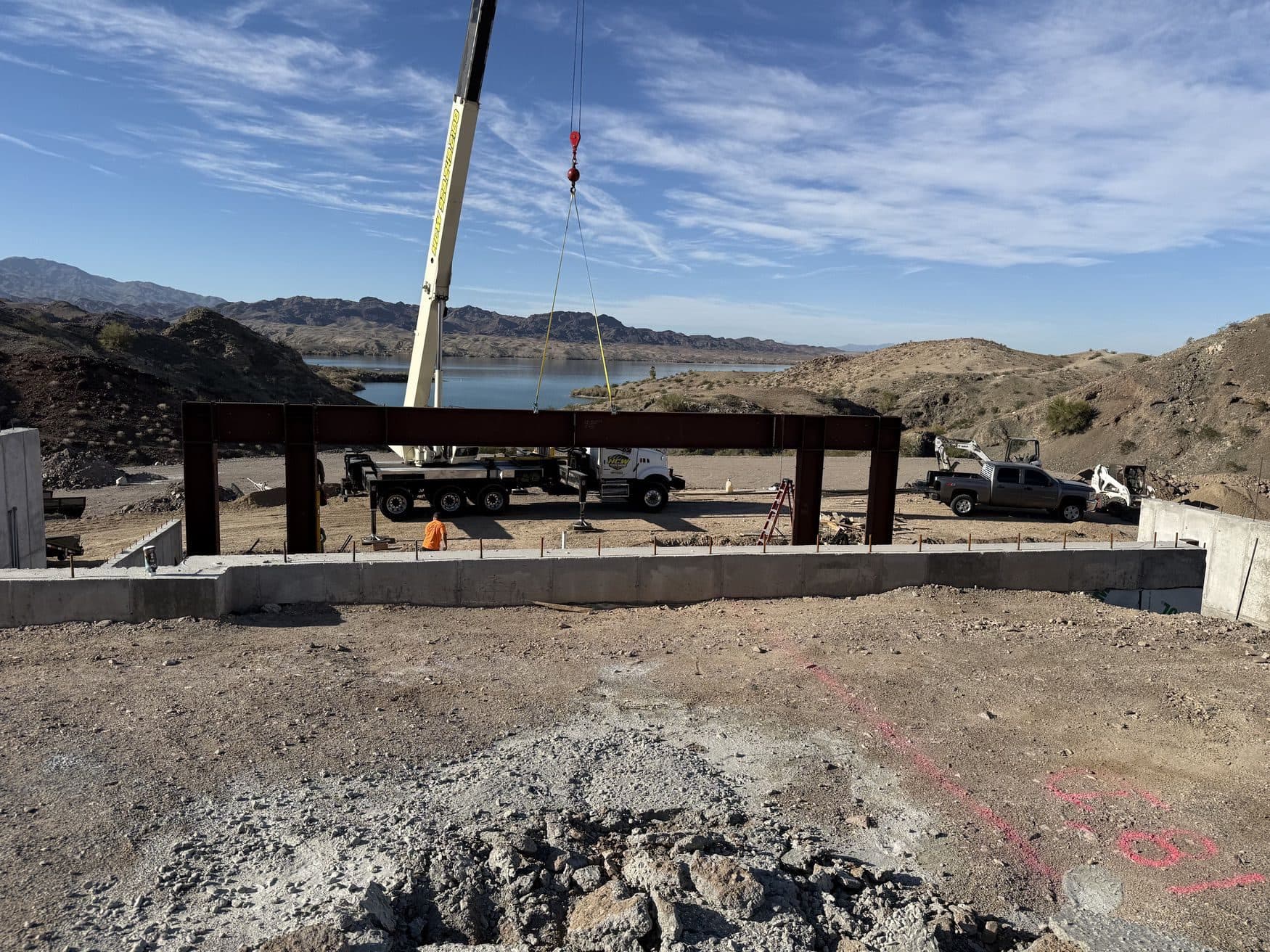
Steel portal frame above the lake 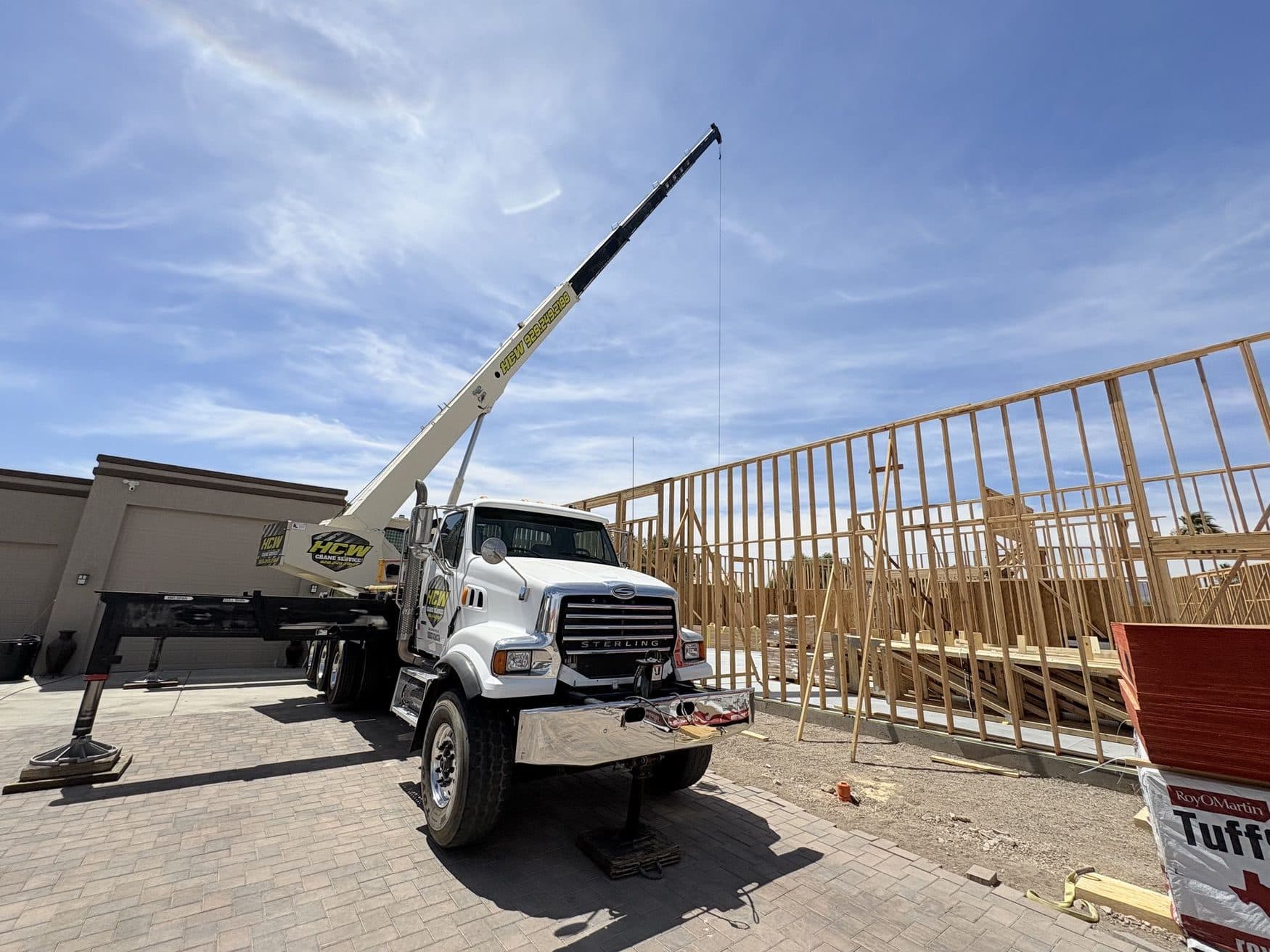
Crane staged at a framing job
Answers
Frequently Asked Questions
How do you know how much a boulder weighs?
We measure it. Length, width, and height at the widest points, with the rock type, give an estimate, and the plan carries margin because boulders are rarely a clean shape. Send photos with a tape measure in the frame, or measurements, and we can work out which truck it takes.
Can you set a boulder with the good side facing the house?
Yes. The rock gets turned in the air before it touches down, which is far easier than trying to rotate it on the ground. Tell us which face you want showing, or have the landscaper there to call it.
Can you lift a fiberglass pool over my house?
Often yes. Pool shells are large but not especially heavy, so reach usually works. Control is the harder part because a shell catches wind. It rigs to the manufacturer's lift points with a spreader bar, tag lines on each end, and it goes up in calm air.
Will the crane damage my new landscaping?
Not if we know where everything is. Tell us about irrigation, lighting, and freshly laid pavers. Outrigger pads and landing spots get planned around them, and the truck sets up in the street or driveway where possible.
Can you lift pallets of pavers and bags of rock over the wall?
Yes. Pallets and bulk bags go over the wall and land where the crew can spread them. Bulk bags get checked for tears first, and pallets are banded so nothing slides. It is usually faster than wheelbarrowing it through a side gate.
Related Services
- Over-Structure PlacementFlying a load over a house, a garage, or a block wall. Ridge clearance, a blind descent on the far side, and a spotter running the last stage.
- Tight Access LiftsNarrow streets, no side yard, overhead lines, and neighbors on both sides. How we work a lift where there is barely room to set up.
- Residential Specialty LiftsSafes, boulders, fountains, statuary, sheds, playsets, and pool equipment. The one-off household loads that will not fit through a gate.
- Ground Condition EvaluationGround condition evaluation in Lake Havasu City. Outrigger bearing pressure, caliche crust, backfill, buried vaults and pads sized before the crane sets up.
- Machinery Moving and SettingCrane machinery moving and setting in Lake Havasu City, Arizona. Shop machines picked out of one building, hauled, and set level in the next one.
- Truck Loading and UnloadingCrane truck loading and unloading in Lake Havasu City, Arizona. Flatbeds and step decks cleared where no forklift can reach, on the driver's schedule.
- Shipping Container PlacementShipping container placement in Lake Havasu City, Arizona. Twenty and forty foot boxes set behind walls and on level pads where a tilt bed cannot reach.
- Vehicle and Boat HoistingCrane vehicle and boat hoisting in Lake Havasu City, Arizona. Boats, side by sides, and project cars lifted over walls, onto stands, or onto trailers.
- Roofing Material LiftsCrane roofing material lifts in Lake Havasu City, Arizona. Concrete tile, shingle bundles, and underlayment staged on the roof where the roofer wants it.
Ready to schedule your lift?
Tell us the load, the site and the timing. We will confirm capacity, access and a window.