Industries We Serve
Crane Scheduling for Builders and Project Managers
2 min readUpdated July 2026
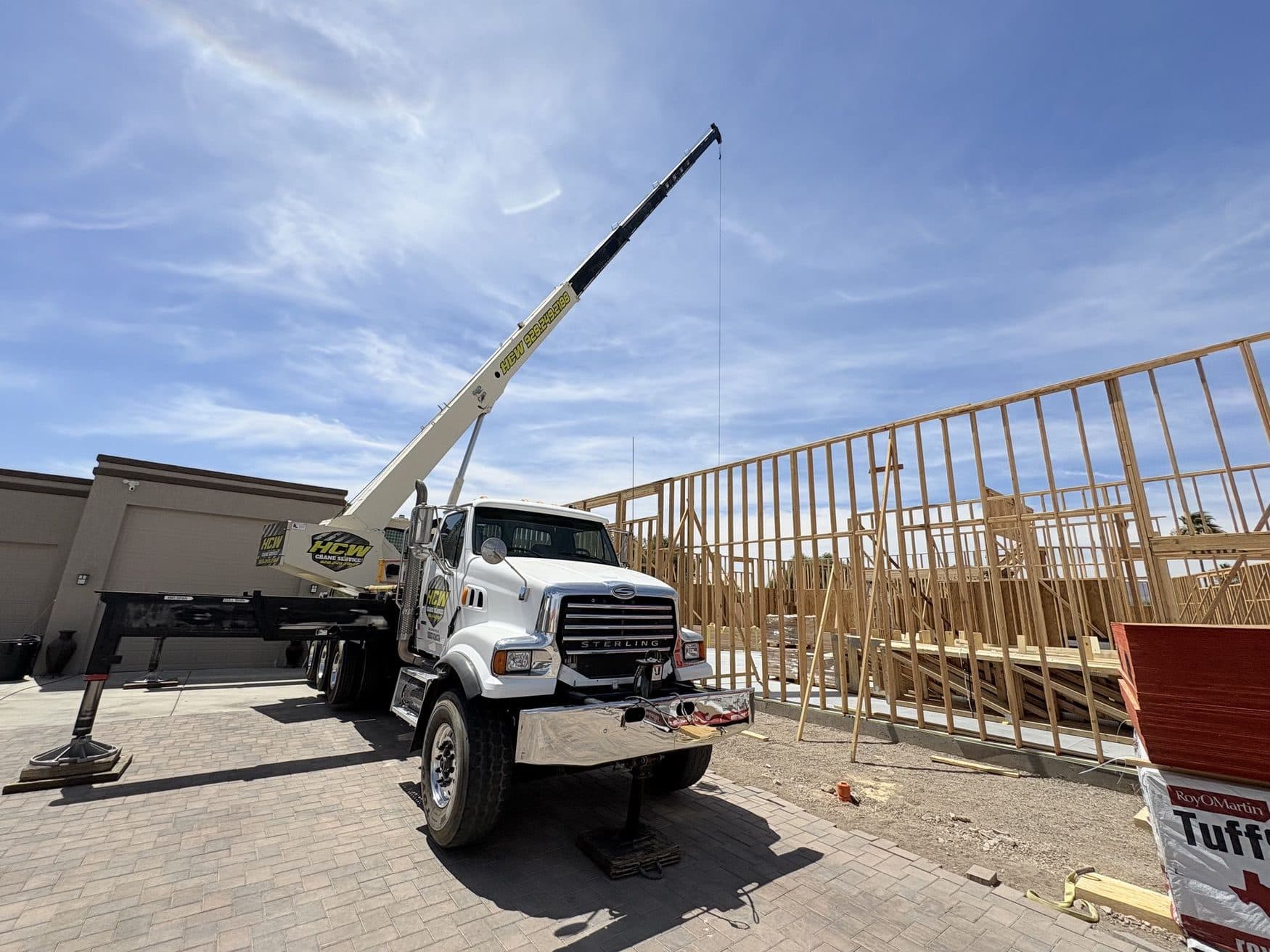
HCW Crane Service works with builders and project managers around Lake Havasu City who need the lift to hold its slot. Arrival windows are confirmed rather than estimated, the operator is the point of contact, and the person who quotes the lift is the person running it.
The Real Cost of a Crane That Slips
A crane is rarely the expensive line on a schedule. It is the load-bearing one. The framing crew, the delivery, the concrete, the inspection and sometimes the owner walk-through are all stacked behind it.
So when a lift slides three hours, the number that matters is not the crane. It is five crews standing still and a date that now has to be renegotiated with people who were not part of the problem.
Project managers already know this, which is why the question they ask is never about equipment. It is whether the operator understands that his slot is holding up somebody else's week.
How a Window Actually Gets Held
A window holds because of what happens before the day, not because of promises made on the phone. The night before, we know the address, the setup position, the heaviest piece and who is meeting us. If any of those are still unknown at that point, that is the risk, and we raise it then.
Scheduling one crew and one crane also means there is no dispatcher deciding whose morning gets sacrificed. The person who took your booking is the person driving to it.
The flip side is honest capacity. If a day is committed, you get told no rather than told maybe. A soft yes that collapses at seven in the morning is worse for your schedule than a clear no a week out.
What We Need From You to Hold It
Access is the item that breaks more lift days than weather does. A gate nobody has a key for, a delivery parked in the setup position, a pad that got trenched after the last visit. None of those are visible from a phone call.
So the pre-lift questions are specific. Who is on site and can make a decision. What has changed since we last looked. Is the material actually landing before we do. Is there anything now standing where the truck has to sit.
The answers take five minutes and they are the difference between arriving and starting, and arriving and waiting.
Weather Calls and Monsoon Season
Between roughly July and September the afternoon can turn over quickly. Wind arrives before the rain does, and wind is what stops a lift. Dust also matters, because visibility between the operator and the signal person is part of the safety plan.
We would rather move a lift a day than run it in conditions where the load is being pushed around. That call gets made as early as the forecast allows so you can move the trades behind it, not after your crew is already standing on a wall.
Summer heat has the same effect on planning. Starting at first light is the standard for a reason, and it also puts the lift ahead of the afternoon build-up.
How the job runs
Our Process
Step 1: Scope the Lift Before the Schedule
Heaviest piece, radius, setup room and site access. Those four decide whether the lift fits the day you are planning around it.
Step 2: Book a Window, Not a Day
You get an arrival time. If the job before yours runs long, you hear about it while you can still act on it.
Step 3: Confirmation the Day Before
Access, deliveries, ground conditions and contact person all get re-checked. Anything that changed gets raised then instead of on site.
Step 4: Set Up, Lift, and Clear the Site
Outriggers cribbed, exclusion zone marked, picks run in sequence, and the truck out of the way as soon as the sequence is finished.
Scope
What Is Included
- Confirmed arrival windows rather than day-long ranges
- One point of contact from quote through to the lift
- Pre-lift access and ground condition checks
- The owner on the controls for every lift
- Early weather and wind calls in monsoon season
- Sequenced picks planned around the trades behind you
Real HCW jobs
From the Job Site
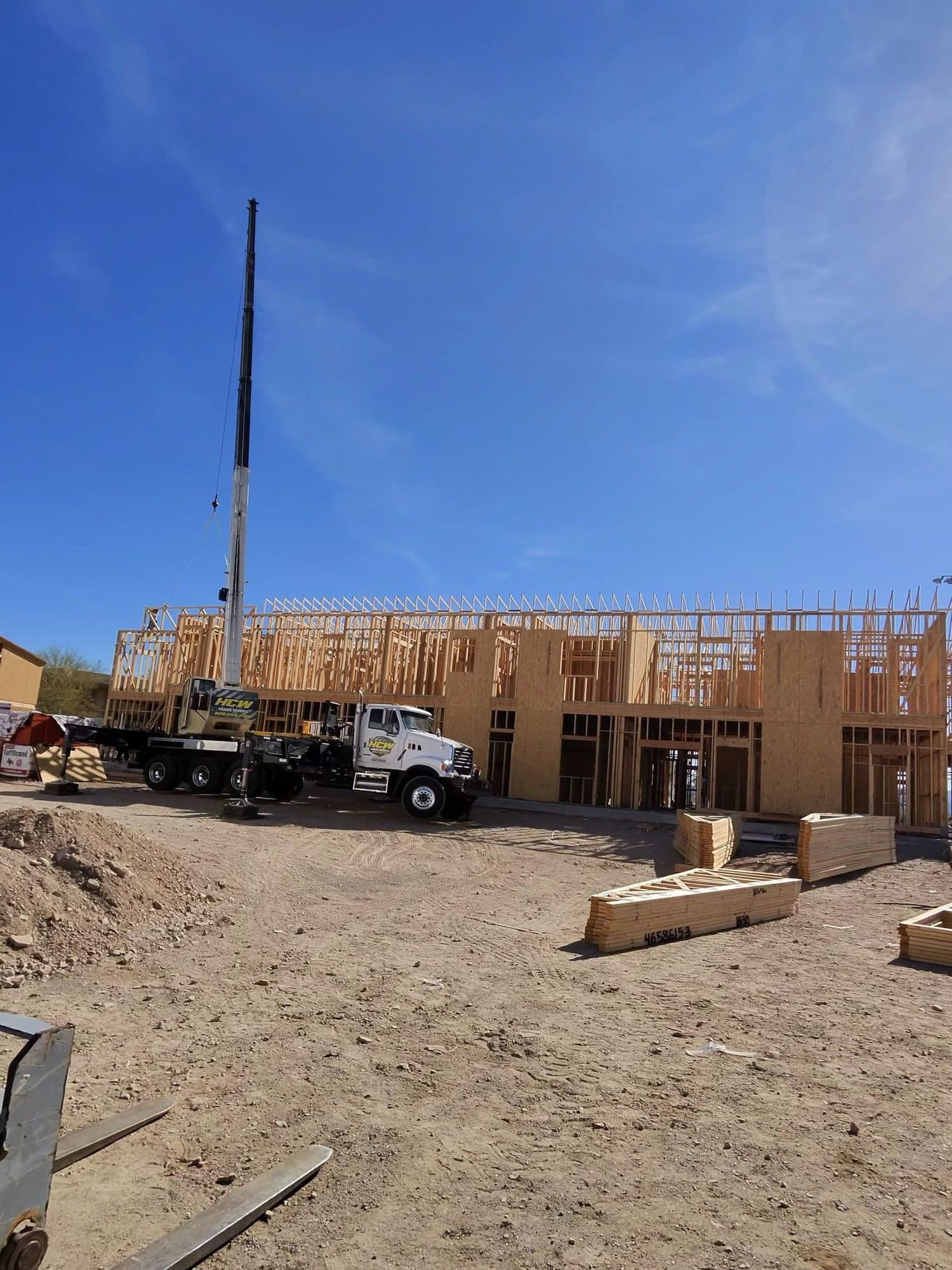
Boom truck at a large framing site 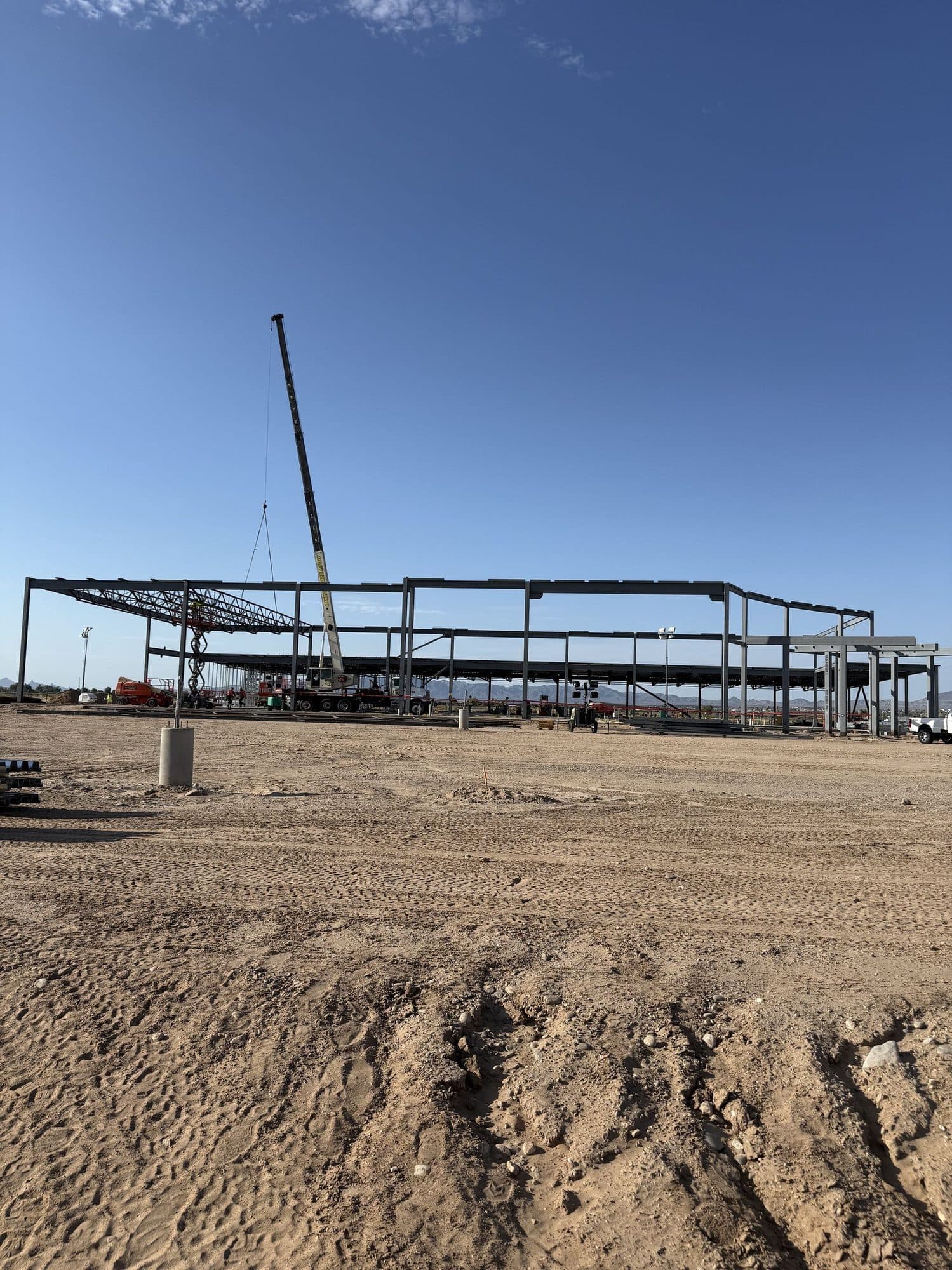
Large steel building going up
Answers
Frequently Asked Questions
Can you commit to a time or only a day?
A time. A day-long window is what a schedule looks like when nobody has planned the site yet, and it is the reason trades end up standing around. If we cannot commit to a time we will say why.
Who do I call on the morning of the lift?
The operator. There is no dispatcher between you and the person driving the truck, which means the answer you get is the actual answer rather than a relayed one.
How far out should we book?
As far as your schedule is real. A week is comfortable. Short notice works often, but the earlier we know, the more likely your preferred slot is still open.
What if the site is not ready when you arrive?
We work it out with whoever is in charge, and if the wait is long we will be straight with you about what it does to the rest of the day. That is exactly what the day-before confirmation exists to prevent.
Can you handle multiple lifts on one visit?
Yes, and it is usually the efficient way to do it. Group the picks that can be made from one setup position, and tell us about all of them up front so the setup gets chosen for the whole list.
Do you take on repeat work for a project?
Yes. Repeat work on the same site gets easier every visit because the access, the ground and the contacts are already known. Several local trades book that way.
Other Industries
- General and Residential ConstructionTruss days, beam sets and material staging for builders in Lake Havasu City. Cribbed outriggers for raw pads, and roofing load-ups on the same visit.
- Custom Home BuildersLong reaches over finished stone, steep view lots and owners who are watching. Careful setups for custom builds around Lake Havasu City, run by the owner.
- Modular BuildersSetting modular sections, park models and factory-built buildings onto piers and foundations around Lake Havasu, landed square so the marriage line closes.
- On Time and Clear CommunicationArrival windows instead of day ranges, a confirmation call the day before, and one phone number that reaches the person driving the truck to your job.
- HVAC and Mechanical ContractorsChangeout day runs on the crane. We hold the window, pull the old unit, set the adapter and the new one from one setup in Lake Havasu City.
- General and Residential ConstructionTruss days, beam sets and material staging for builders in Lake Havasu City. Cribbed outriggers for raw pads, and roofing load-ups on the same visit.
- Facility Managers and Maintenance TeamsA failed rooftop unit is a continuity problem. Overnight and early lifts, tenant-aware setups, and photo records you can put straight into your building file.
- Homeowners With Specialty Lift NeedsNever hired a crane before? Here is what happens in your driveway, what the truck touches, and how a load clears a block wall without hitting anything.
- Structural Steel, Precast and ModularPiece weight and radius decide the setup, not the badge on the truck. Steel, precast and modular sections set with margin and held until your crew connects.
- Industrial and ManufacturingMachinery moves, equipment swaps and rigging for light industry around Lake Havasu. Work scheduled into your downtime window, day, night or weekend.
Ready to schedule your lift?
Tell us the load, the site and the timing. We will confirm capacity, access and a window.