Industries We Serve
Crane Work for Structural Steel, Precast and Modular
2 min readUpdated July 2026
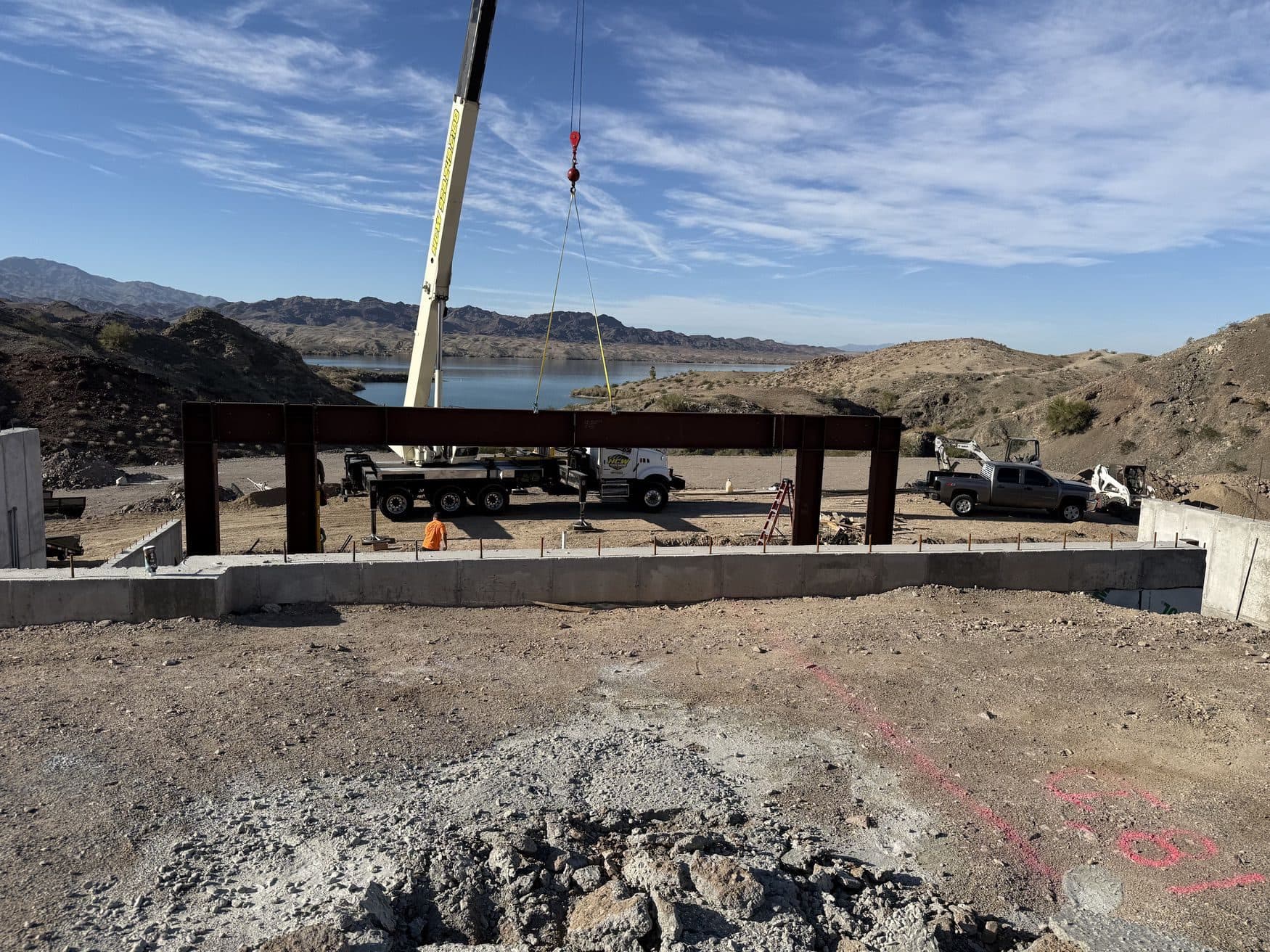
HCW Crane Service sets structural steel, precast sections and modular units on light commercial and residential projects around Lake Havasu City. Picks are planned from the heaviest piece at its working radius, and each piece stays on the hook until your crew has it bolted or braced.
Piece Weight and Radius Decide the Setup
The first number on a steel job is not the total tonnage. It is the heaviest single piece and how far out from the truck it has to land. A beam that is comfortable at twenty feet can be out of reach at fifty, on the same machine, on the same day.
That is why we ask for the shop drawing or the piece list rather than a description. Give us the heaviest member and where it goes, and the setup position follows from that. Everything else on the list is easier than that piece.
We would rather run a lift at a fraction of capacity than at the edge of it. A pick with margin behaves predictably. A pick at the limit leaves nothing for a gust, a bind or a load that weighed more than the ticket said.
Precast and Panels Behave Differently in the Air
A steel beam is compact and heavy. A precast panel or a modular wall section is a flat surface with a lot of area, and area is what wind acts on. The same weight behaves completely differently once it is off the ground.
Panels get tag lines on both ends and they get flown low and slow. In monsoon season we watch the wind through the morning rather than checking it once, because a breeze at eight can be a problem by eleven.
Rigging points matter as much as the crane does. Cast-in lifting inserts have ratings and orientations, and using them the wrong way is a failure that looks fine right up until it is not. If the inserts are unclear or damaged, we stop and sort it out before the piece leaves the trailer.
The Pick Point That Was Not on the Drawing
Steel jobs generate small rigging problems constantly. A beam with no obvious balance point. A column that has to be picked from one end and tipped upright. A piece with no lifting lug because nobody drew one.
Those are the things that stall a morning while the crane sits idle. Most of them get solved with the right rigging: a choker around the member, a spreader bar to keep a long piece level, or a two-point pick that lets it stand up under control.
For anything that has no safe place to rig, we will say so plainly. Connections, clips and plates belong to your steel crew or your steel supplier, and an engineer where the drawing calls for one. Our part is getting the piece there and holding it still.
How the job runs
Our Process
Step 1: Send the Piece List
Heaviest member, its landing point, and the delivery schedule. That is enough to decide the truck and the setup.
Step 2: Plan the Setup for the Worst Pick
The position gets chosen for the hardest piece on the list. Everything lighter is then easy from the same spot.
Step 3: Rig, Check and Fly
Rigging inspected, inserts and lifting points confirmed, tag lines on, and the load trial lifted clear of the trailer before it travels.
Step 4: Hold Until the Connection Is Made
Nothing is released until the crew has it bolted or braced and says so. The hook stays on for as long as that takes.
Scope
What Is Included
- Beam, column and joist setting
- Precast and panel placement with tag line control
- Modular and factory-built section setting
- Rigging inspection and trial lift before travel
- Spreader bar and two-point picks for long members
Real HCW jobs
From the Job Site
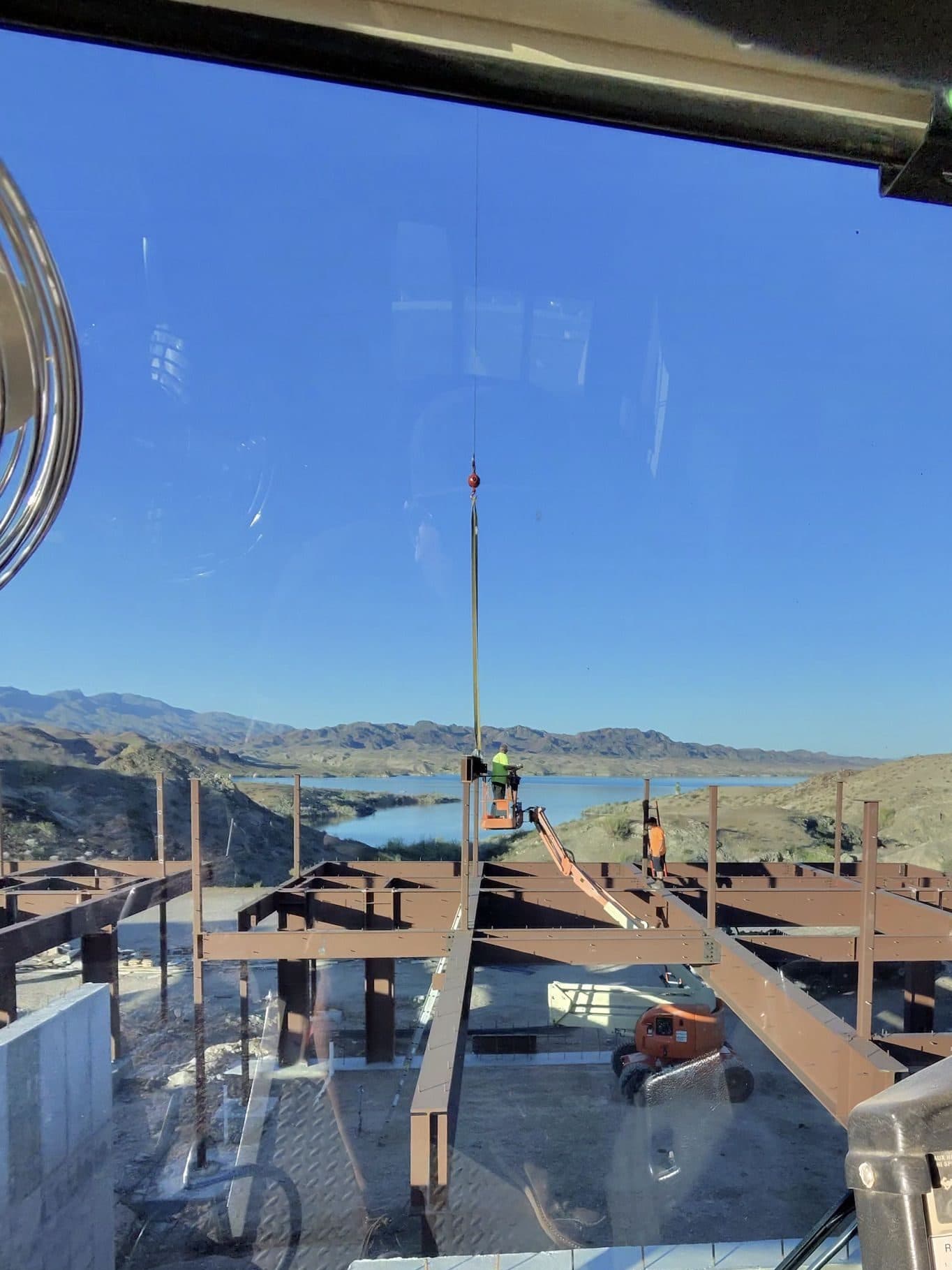
Steel framing above the lake 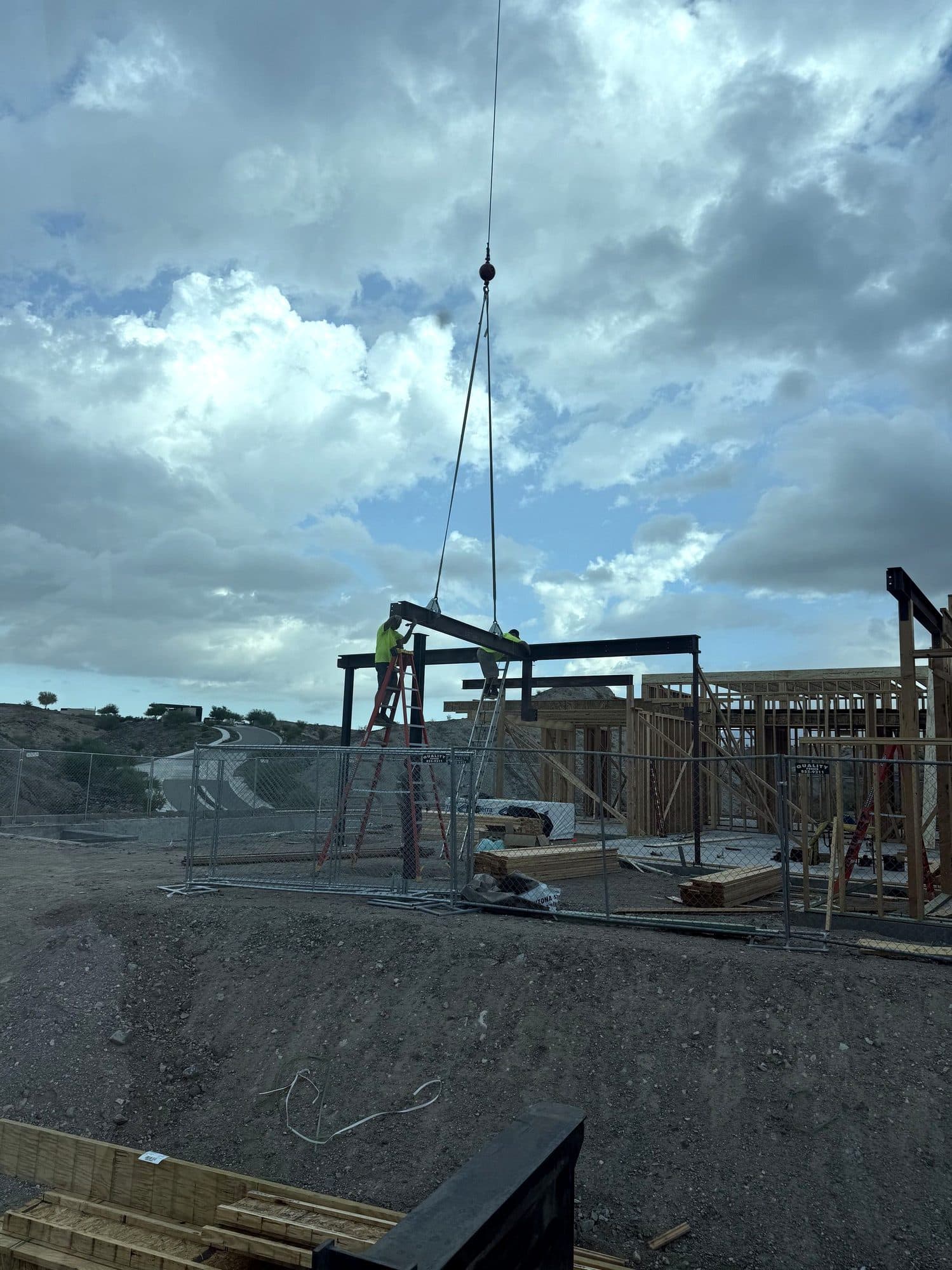
Steel beam set on a hillside frame 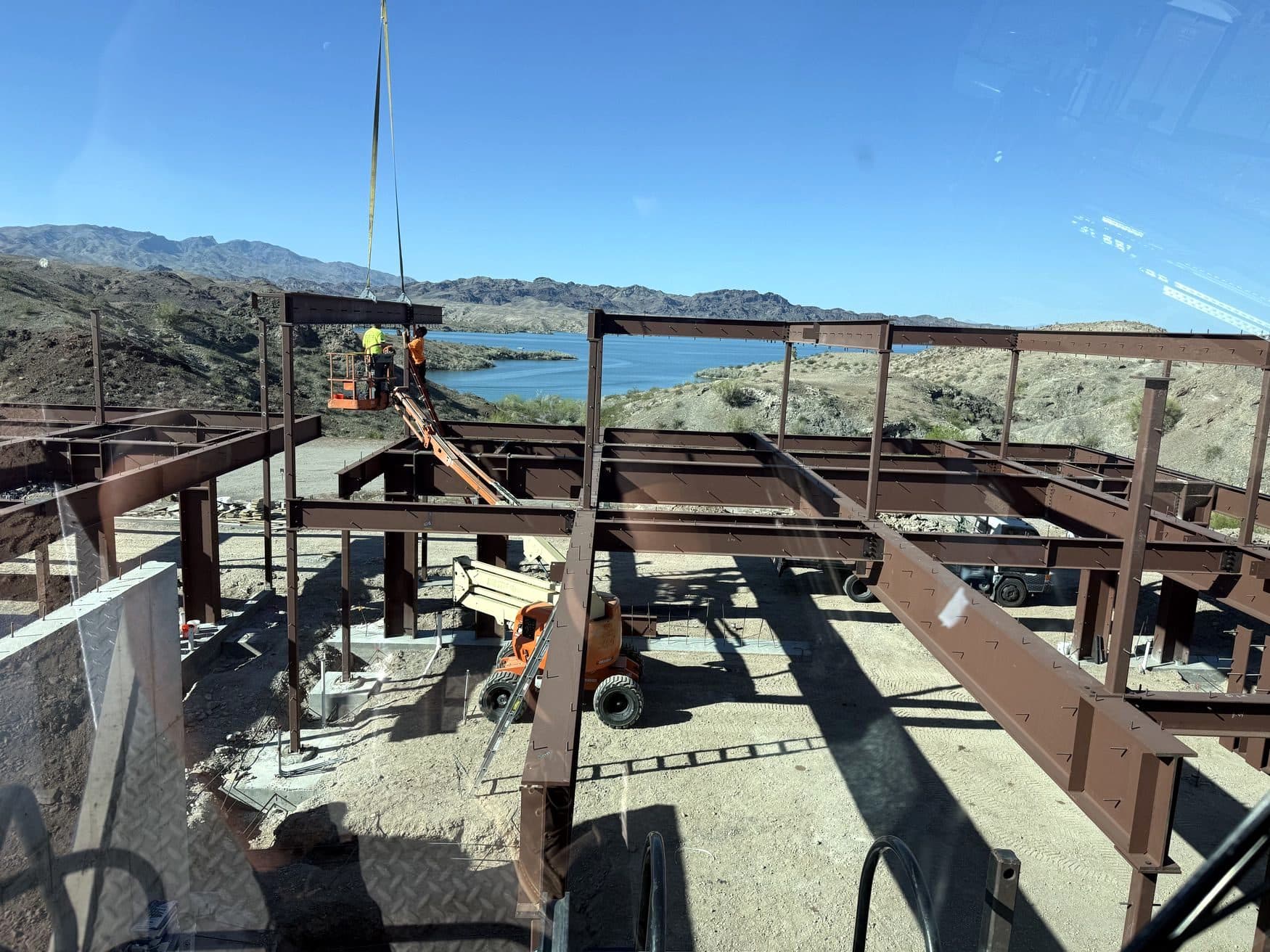
Steel frame with a lake view 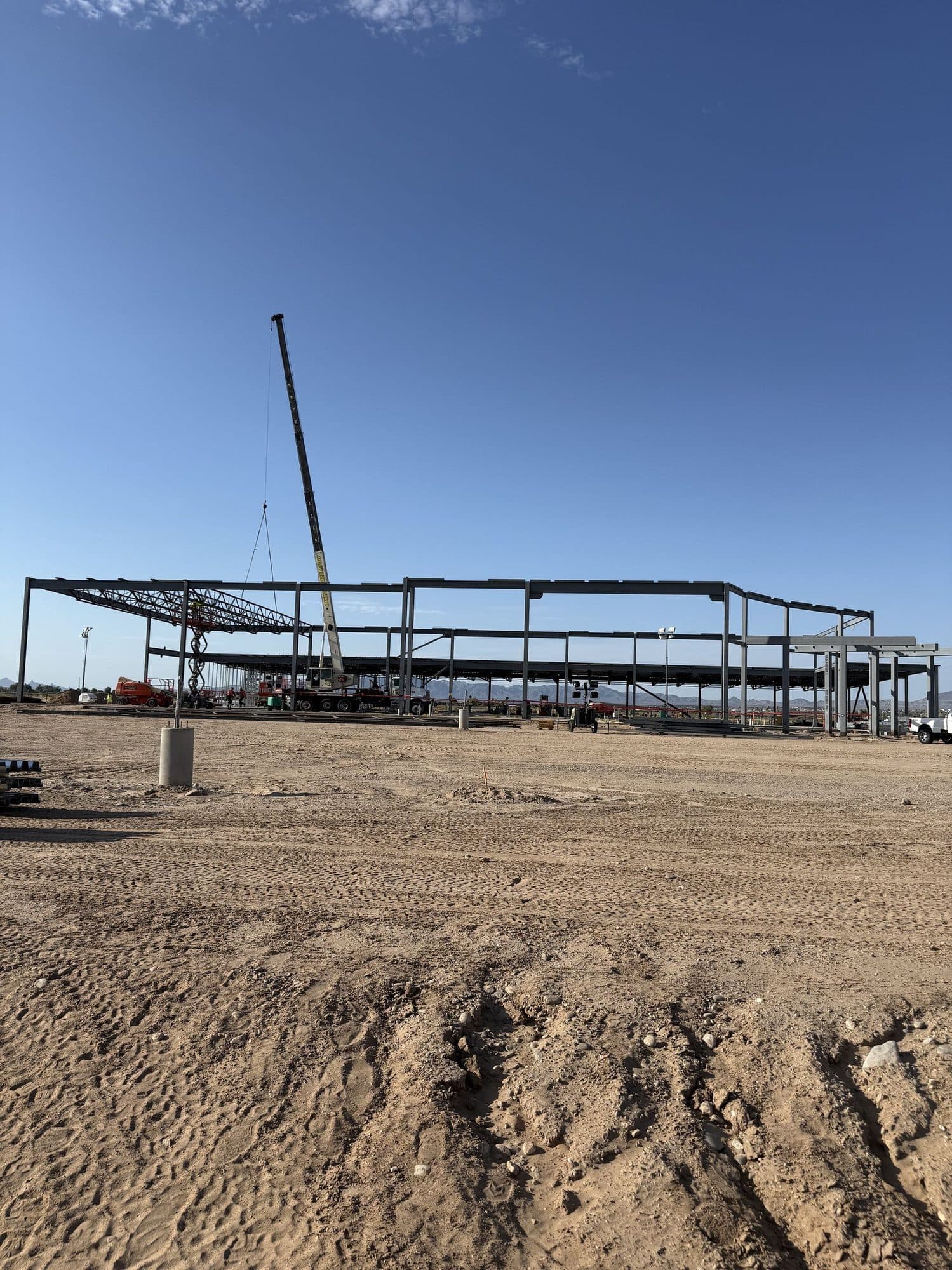
Large steel building going up
Answers
Frequently Asked Questions
Which crane will you bring for a steel job?
Whichever one gives margin on the heaviest piece at its working radius. Both a 22-ton and a 40-ton machine are available and the choice is arithmetic, not preference.
Can you work from a shop drawing?
Yes, and it is the fastest way to plan. Piece weights and landing points on paper beat any amount of description over the phone.
Do you provide the rigging?
We bring rigging suited to the pick. If the piece has cast-in inserts or supplied lifting hardware, we inspect it before use and we will refuse anything that looks damaged.
Do you make the connections?
No. We set the piece and hold it while your crew bolts, braces or connects it. The connection work belongs to your steel crew, and to an engineer where the drawing calls for one.
Other Industries
- General and Residential ConstructionTruss days, beam sets and material staging for builders in Lake Havasu City. Cribbed outriggers for raw pads, and roofing load-ups on the same visit.
- Modular BuildersSetting modular sections, park models and factory-built buildings onto piers and foundations around Lake Havasu, landed square so the marriage line closes.
- Industrial and ManufacturingMachinery moves, equipment swaps and rigging for light industry around Lake Havasu. Work scheduled into your downtime window, day, night or weekend.
- Experienced OperatorsOver 20 years of operating experience shows up in small decisions, not in headlines. Reading ground, catching a bad pick early, and knowing when to say no.
- HVAC and Mechanical ContractorsChangeout day runs on the crane. We hold the window, pull the old unit, set the adapter and the new one from one setup in Lake Havasu City.
- General and Residential ConstructionTruss days, beam sets and material staging for builders in Lake Havasu City. Cribbed outriggers for raw pads, and roofing load-ups on the same visit.
- Facility Managers and Maintenance TeamsA failed rooftop unit is a continuity problem. Overnight and early lifts, tenant-aware setups, and photo records you can put straight into your building file.
- Homeowners With Specialty Lift NeedsNever hired a crane before? Here is what happens in your driveway, what the truck touches, and how a load clears a block wall without hitting anything.
- Builders and Project ManagersOne late crane moves five trades. Confirmed arrival windows, the owner as your point of contact, and weather calls made early enough to act on.
- Industrial and ManufacturingMachinery moves, equipment swaps and rigging for light industry around Lake Havasu. Work scheduled into your downtime window, day, night or weekend.
Ready to schedule your lift?
Tell us the load, the site and the timing. We will confirm capacity, access and a window.