Mobile Crane Service
22-Ton Crane Service in Lake Havasu City
3 min readUpdated July 2026
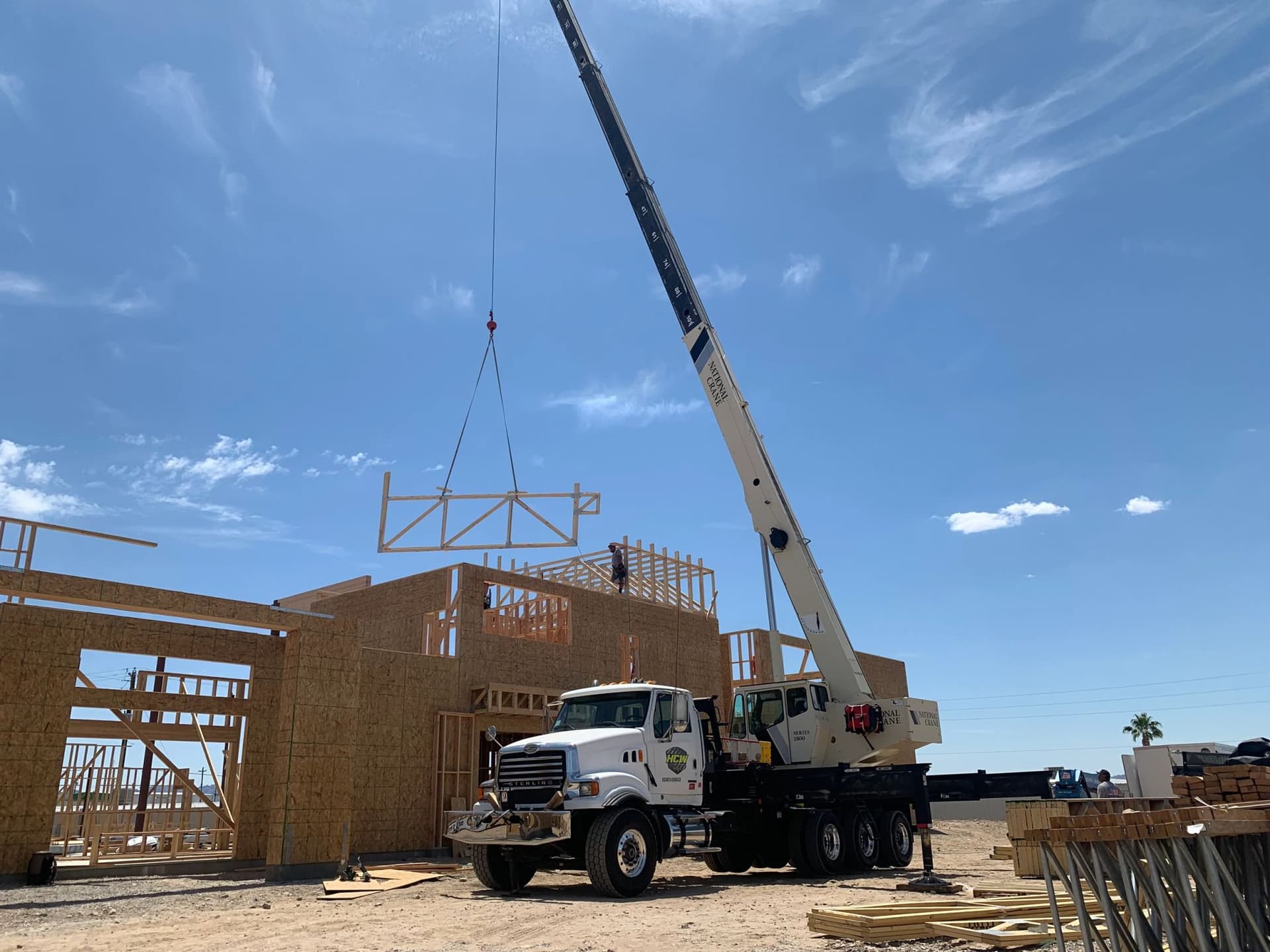
The 22-ton mobile crane is a boom truck with a smaller setup footprint than our 40-ton. It suits single-story rooftop units, spa sets over standard block walls, short truss runs, and any job where the street is narrow or the setup area is tight. An operator comes with it.
Owner Devan Decastro is NCCCO certified: Telescopic Boom Crane, Swing Cab (TLL). CCO ID 444146986.Verify on NCCCO(opens verifycco.org in a new tab)
Where the 22-Ton Is the Right Machine
Most residential lifts around Havasu fall inside this machine's window. A rooftop package unit on a single-story house, a condenser going to a side yard, a spa lifted over a six-foot block wall, a short run of trusses on a garage or a casita.
The pattern is short radius. When the crane can park close to where the load lands, capacity stays high and the 22-ton has plenty in hand. It is when the load has to travel a long way out from the truck that the math changes.
It also handles the awkward small stuff well. Safes, statuary, generators, water heaters, sheds, and equipment going into a fenced yard. Loads that are not heavy but are impossible to carry by hand through a gate.
Setup Footprint on a Residential Street
Older Havasu neighborhoods have narrow streets, tight cul-de-sacs, and driveways with no room on either side. The 22-ton needs less outrigger spread than the bigger truck, which often means one lane stays open and the neighbors can still get out.
Fewer cars have to move as well. On a job where the only setup spot is between two parked vehicles or up against a mailbox and a fire hydrant, the smaller spread is frequently what makes the pick possible at all.
Setup and teardown are quicker too. On a job that is one pick and gone, the difference between machines shows up mostly in time on site rather than in what the crane can lift.
The smaller machine is also easier on a property. Less counterweight and a narrower spread mean less pressure through each pad, which matters on a paver driveway or near a slab edge. On a finished lot that is a real advantage, not a technicality.
Honest Limits
Capacity falls as the boom goes out, and the 22-ton runs out sooner than the 40-ton does. A heavy commercial unit that has to land in the middle of a wide roof, a load going over a two-story house into a deep backyard, or a pick made from a street set well back from the building are all jobs where the smaller machine is the wrong tool.
We would rather tell you that on the phone than find it in your driveway. When the weight and the radius are close to the line, we bring the 40-ton. A crane that arrives and cannot make the pick has cost everybody a day.
The other limit is height. Tall parapets, two-story roofs, and anything that has to clear a ridge before it comes down the far side usually wants the longer boom.
None of that makes the 22-ton a lesser machine. For the majority of what gets lifted in this town it is the better tool, because access is the usual constraint and access is what it is good at. Capacity only becomes the deciding factor on the minority of jobs where the geometry is genuinely long.
Working From the Street or From the Driveway
Every residential job comes down to one of two setup positions. In the driveway, which gets the crane close and shortens the radius, or out on the street, which keeps the boom longer but keeps the machine off your concrete entirely. The 22-ton makes both of those workable more often than a bigger truck does.
Driveway setups are the usual choice on a deep lot or where the landing point sits well back. The trade is that outriggers go down on your concrete, so mats go under every pad and we look hard at slab edges, control joints, and anything that was poured thin. Stamped or colored driveways get extra cribbing as a matter of course.
Street setups are the better answer on a finished property or where the driveway is pavers. Nothing heavy crosses your surfaces at all. The cost is radius, and on a narrow street it also means cones, a couple of cars moved, and a short conversation with whoever lives on either side.
How the job runs
Our Process
Step 1: Confirm Weight and Radius
We work out how far the load has to travel from wherever the truck can legally and safely sit. That distance, not the weight alone, decides whether the 22-ton is the right machine.
Step 2: Check the Setup Spot
Street width, driveway slope, buried lids, and what has to move. On a tight street we often ask for two cars relocated and a trash bin pulled back before we arrive.
Step 3: Set and Level
Outriggers down onto mats, machine leveled, work area marked. On a sloped Havasu driveway the leveling step takes longer than people expect and it is not one to rush.
Step 4: Pick and Set
Rig, test lift, then a controlled move to the landing point. On short-radius residential picks the whole sequence is often under an hour once the crane is level.
Scope
What Is Included
- 22-ton boom truck with the operator on the controls
- Rigging matched to the load, including soft slings for finished surfaces
- Outrigger mats sized for driveways, pavers, and soft fill
- Radius and load chart check before we commit to the machine
- Coordination with your HVAC, framing, or pool crew
- An honest call if the job actually needs the 40-ton instead
Real HCW jobs
From the Job Site
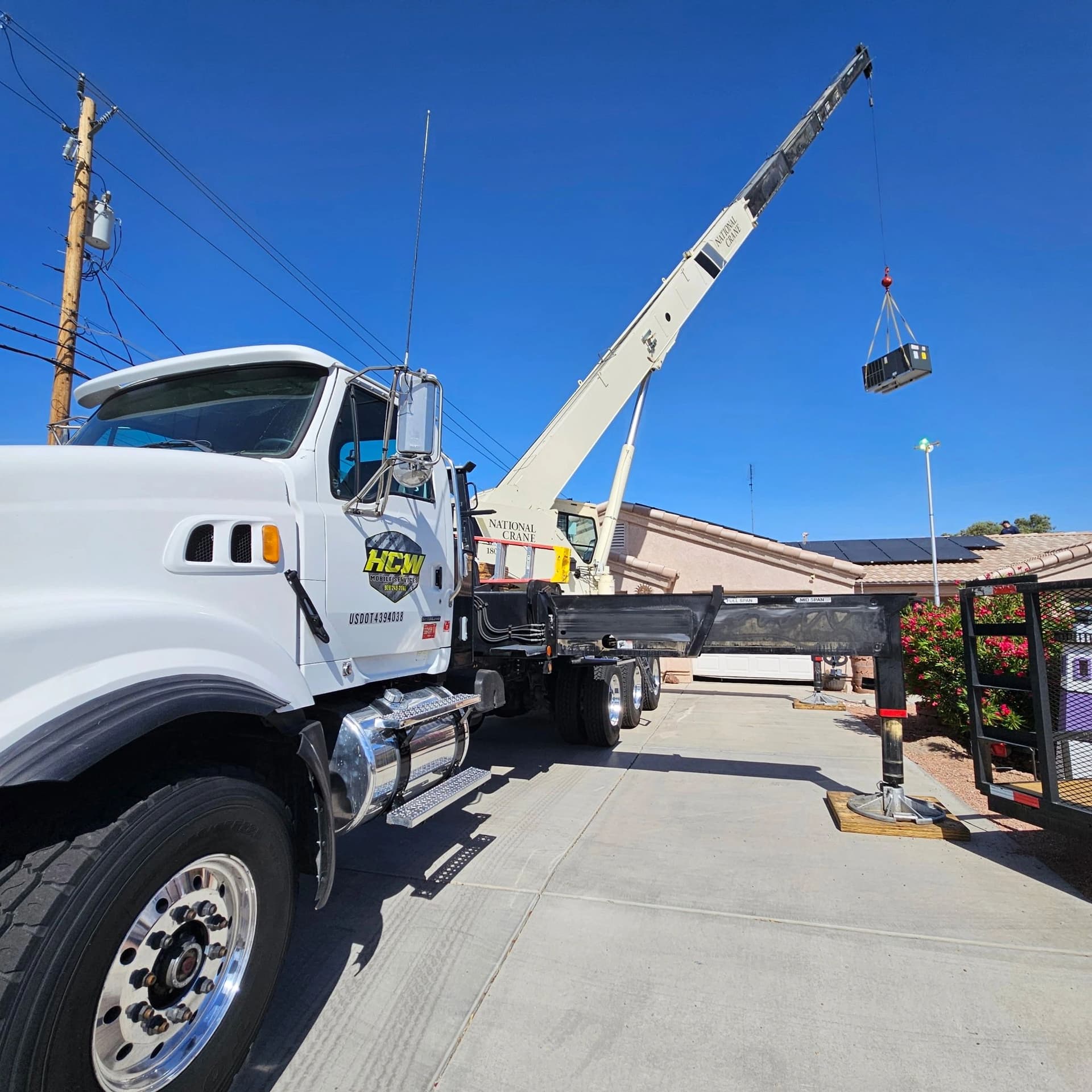
Rooftop unit lifted over a driveway 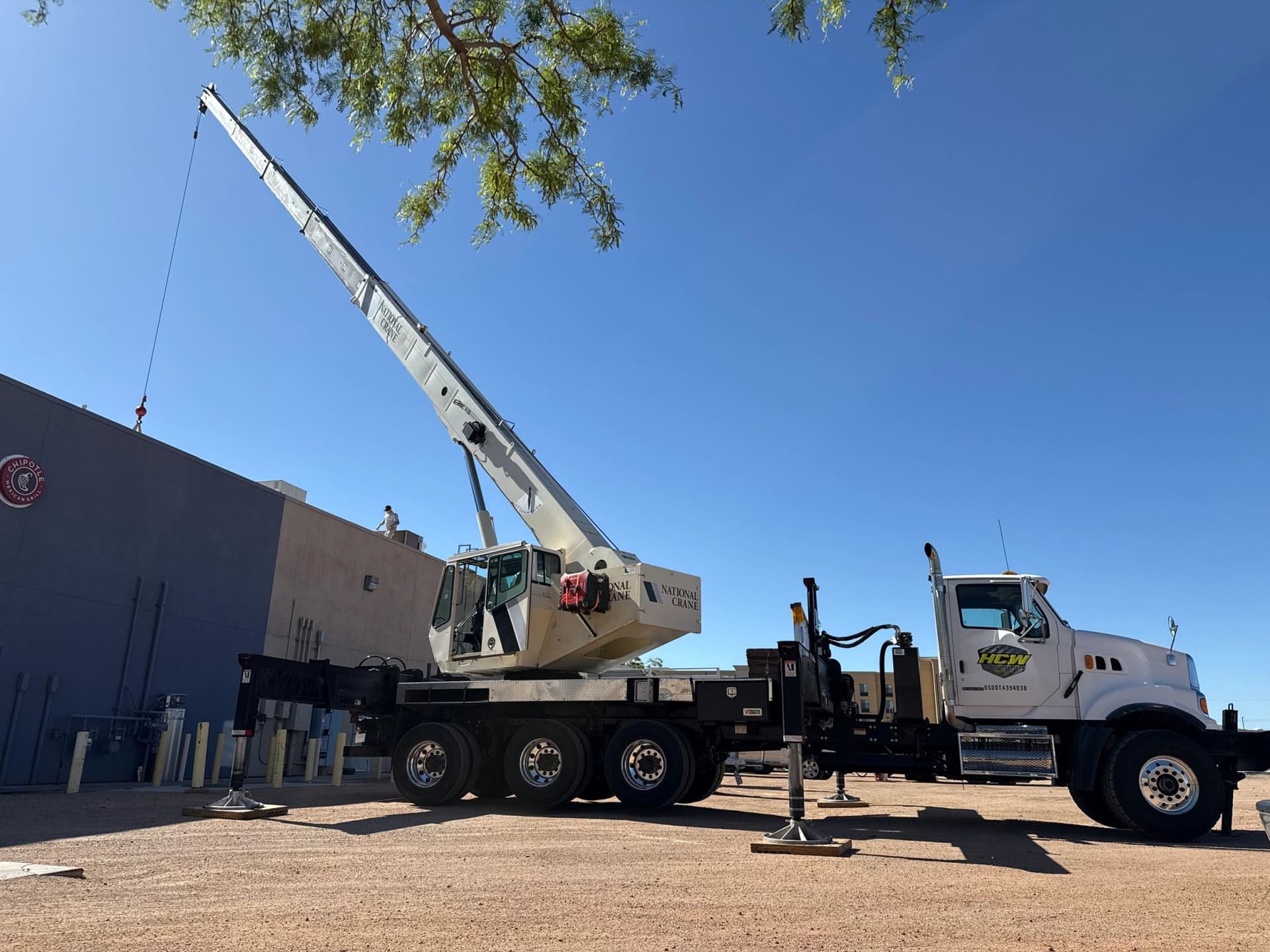
Outriggers set beside a commercial roof 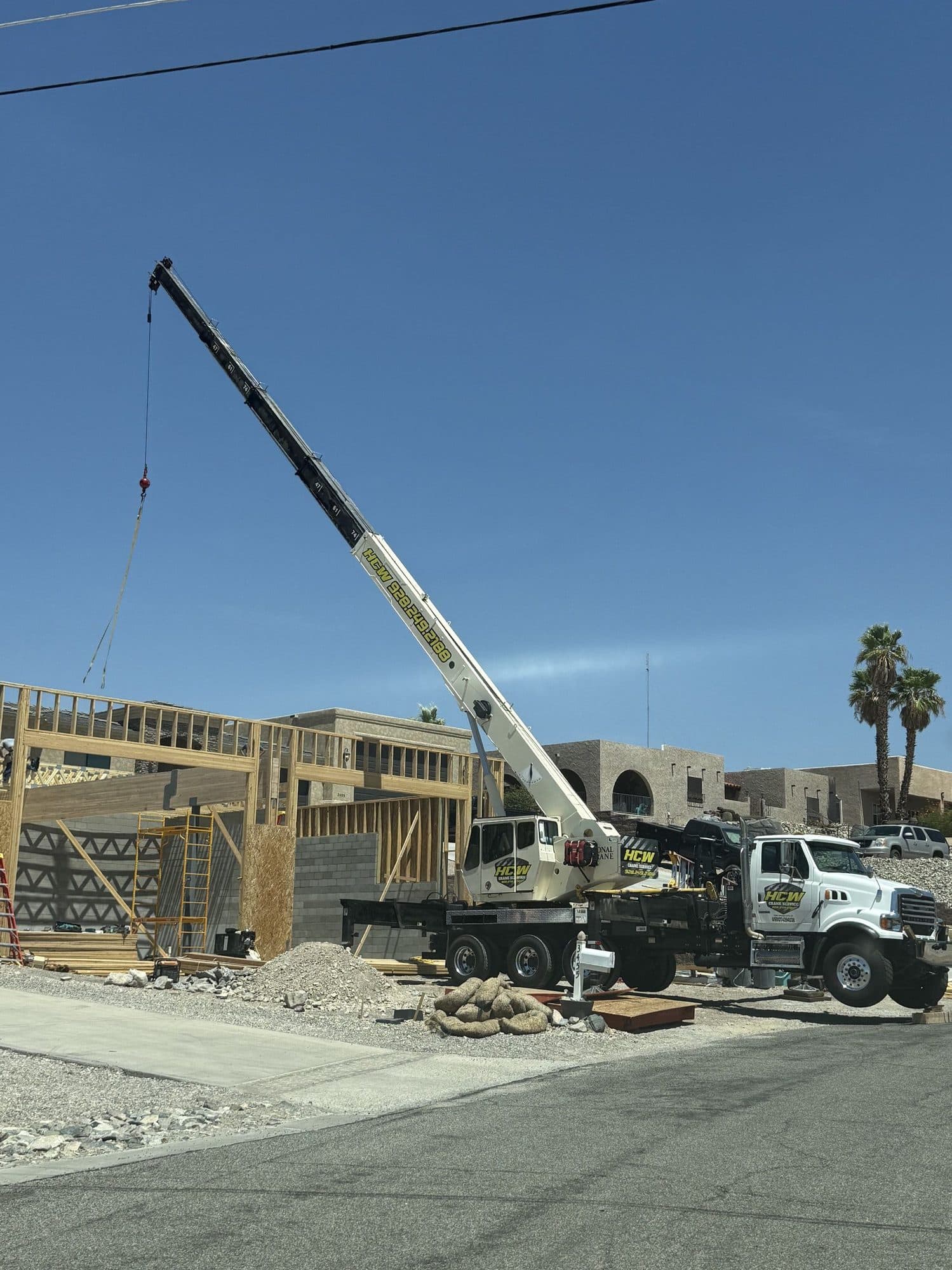
Boom truck working a framing site 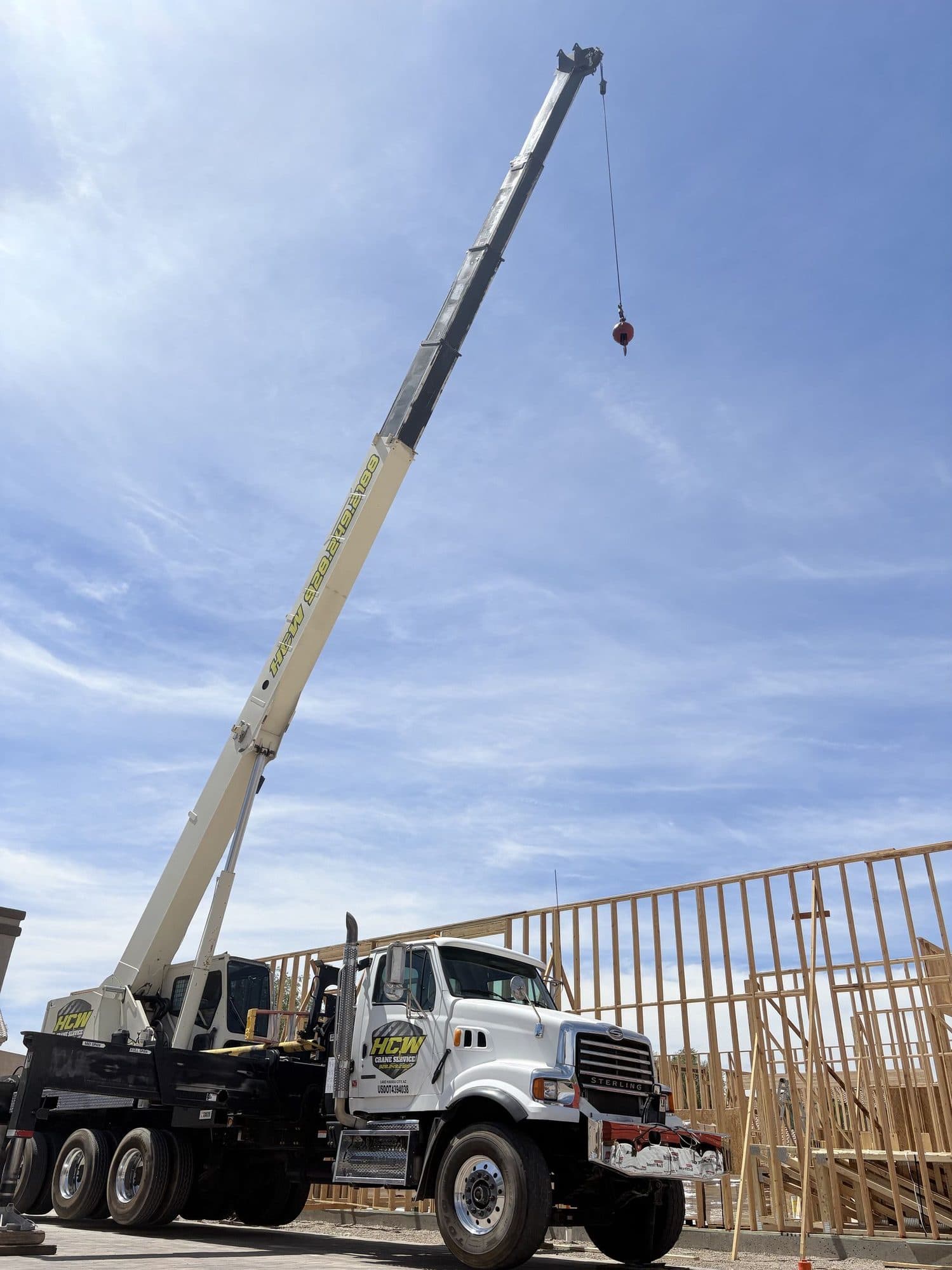
Boom raised beside new framing
Answers
Frequently Asked Questions
How do I know if the 22-ton is enough for my lift?
Give us the weight and the distance from the street or driveway to where the load has to land. Those two numbers answer it. If it is close, we send the 40-ton rather than gamble on a wasted trip.
Will it fit down my street?
Usually. It is a boom truck, so it drives in under its own power and does not need a trailer or assembly. Narrow cul-de-sacs and streets with cars on both sides are the ones we like to look at first.
Can it reach over my house?
Over a single-story house with a reasonable setback, generally yes. Over a two-story into a deep backyard is a job for the 40-ton. Send a photo from the street and we can usually tell you quickly.
How long will you be on site?
A single short-radius pick is often an hour or two including setup and teardown. Multiple picks, a tight setup, or waiting on another crew all add time.
Do you need my driveway, or can you work from the street?
Either, depending on the radius. Working from the street keeps the driveway clear but adds distance to the load. Whichever we use, the outriggers go on mats.
Related Services
- 40-Ton Crane ServiceOur 40-ton boom truck reaches up to 142 feet and holds weight far out from the truck. The machine for two-story picks and deep commercial roofs.
- Mobile Crane Service22-ton and 40-ton boom trucks with an operator on every call, reaching up to 142 feet.
- Tight Access LiftsNarrow streets, no side yard, overhead lines, and neighbors on both sides. How we work a lift where there is barely room to set up.
- Owner-Operated Crane ServiceThe owner takes the call, walks the site, and runs the crane. One person accountable for the lift from the first phone call to the final walkthrough.
- Crane With OperatorEvery crane goes out with an operator and the rigging to do the job. Here is exactly who does what on site, and what your crew is responsible for.
- 40-Ton Crane ServiceOur 40-ton boom truck reaches up to 142 feet and holds weight far out from the truck. The machine for two-story picks and deep commercial roofs.
- Hydraulic Crane ServiceBoth of our boom trucks are hydraulic. Smooth metered control, fast setup, and no assembly. Here is what that means for your lift and for desert heat.
- Telescopic Crane ServiceTelescopic boom trucks extend the boom in sections, so capacity changes with every foot you pull out. Here is how we plan a pick around that.
Ready to schedule your lift?
Tell us the load, the site and the timing. We will confirm capacity, access and a window.