Lift Planning and Site Support
Pre-Lift Safety Briefing on Every Job
2 min readUpdated July 2026
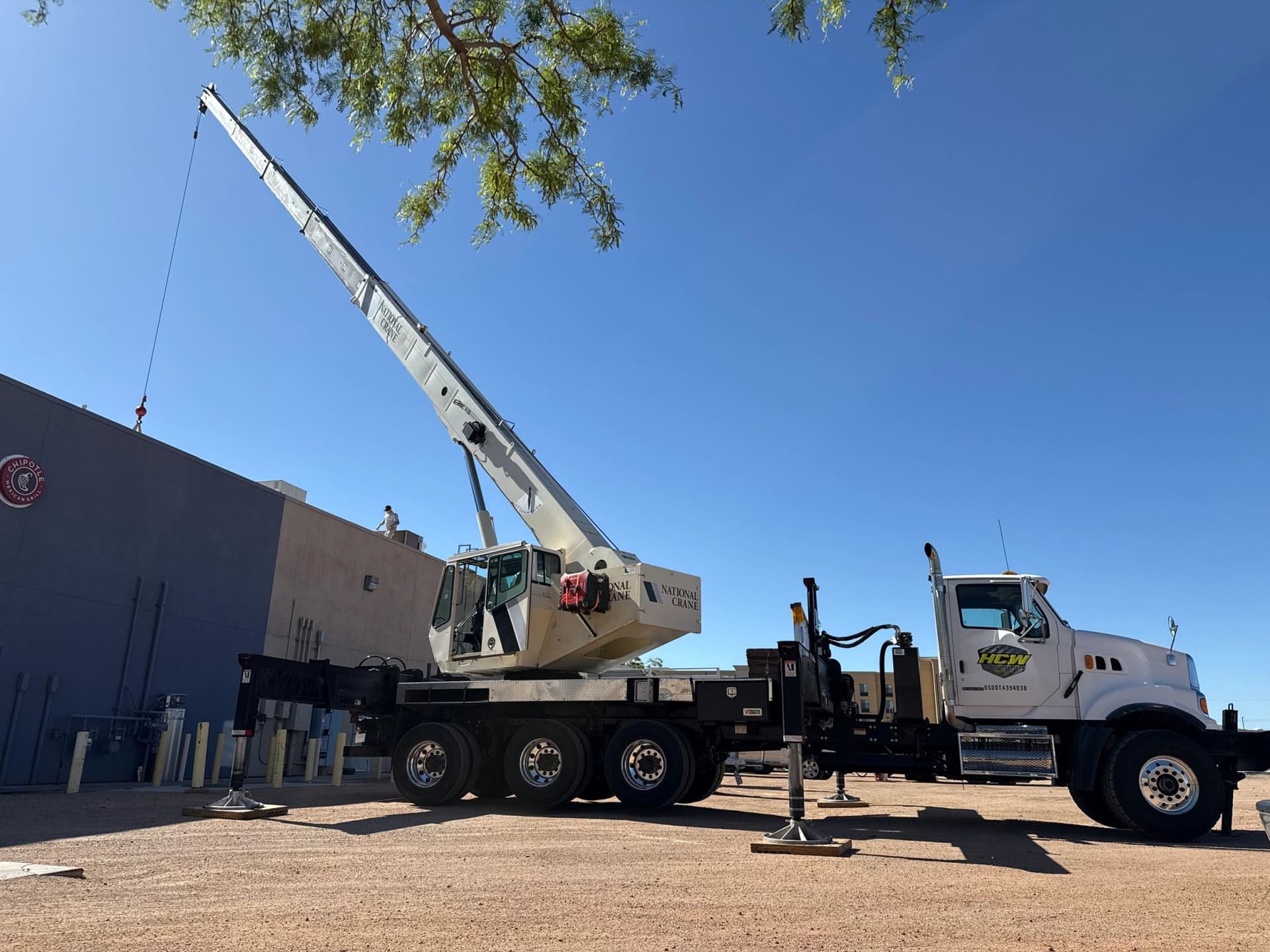
A pre lift briefing is a short conversation held before setup begins. It assigns roles, names the one person giving signals, sets the exclusion zone and agrees where the load goes if the pick has to stop partway. Everyone on the job hears the same sequence out loud before anything moves.
The talk before the outriggers go down
It takes a few minutes and it happens on every job, including the small ones. Everybody who will be within reach of the work stands in one place and hears the same thing at the same time. Not a form to sign, not a speech. A short run through of what is about to happen and who is doing which part of it.
Roles get named out loud with people attached to them. Who is on the tag line. Who is on the roof to receive. Who is opening the gate. Who is keeping the neighbors and the dog out of the way. Vague arrangements produce two people doing one job and nobody doing another, and that gets found out at the worst moment.
One voice, and a zone nobody stands in
One person gives signals. Everyone else stays off the radio and keeps their hands down, because a second set of signals in the operator's view is worse than none. The exception runs the other way: a stop signal is taken from anybody, immediately, no matter who they are or where they are standing.
The exclusion zone gets pointed out physically rather than described. Nobody stands or works under a suspended load, and that includes for the two seconds it takes to grab a tool, steady something or take a photo. It is the two second version that hurts people, because it never feels like being under a load, it feels like reaching in.
How the job runs
Our Process
Step 1: Gather everyone involved
Before the truck sets up, everybody who will be near the work stops what they are doing and comes together. That includes the delivery driver, the mechanical contractor, the homeowner and anyone helping. One conversation heard by all beats the same information passed on secondhand.
Step 2: Assign roles by name
Tag line, receiving crew, gate, spotter and signal person all get a specific person attached. People who have no role are told that clearly, along with where they should stand. Nobody leaves the huddle unsure whether a job belongs to them or to the person beside them.
Step 3: Set signals and the zone
The signal person is named and standard hand signals are agreed on, along with radio use and a check that the radios work. The exclusion zone gets walked and pointed out. The rule that a stop signal from anybody is honored immediately gets stated plainly rather than assumed.
Step 4: Agree the abort plan
We say out loud what triggers a stop, what happens if wind comes up mid pick and exactly where a load gets set down if the lift has to be abandoned partway. Then the full sequence is run through once so everyone is working from the same order before the first outrigger extends.
Scope
What Is Included
- Short briefing held before setup on every job
- Roles assigned by name, not by assumption
- One signal person named and standard signals agreed
- Exclusion zone walked and pointed out physically
- Stop authority given to everyone on site
- Abort plan and set down spot agreed in advance
Answers
Frequently Asked Questions
Do you do a briefing even on a small residential pick?
Yes, and it is shorter. A two person job still needs both people to know who signals, where the exclusion zone is and where the load goes if something changes. Small jobs are where assumptions get made, because everyone feels the situation is obvious. It takes about three minutes and it costs nothing.
Who should be at the briefing from my side?
Anyone who will be within reach of the work while the crane is running. That usually means the person receiving the load, the mechanical contractor if there is one, the delivery driver and whoever owns the property. If someone shows up after the briefing, they get the short version before they walk into the area.
Can I stand and watch the lift?
From outside the exclusion zone, absolutely. Plenty of people want to see their unit go over the house and it is worth watching. What does not happen is anyone standing under the load or inside the tail swing area behind the truck. We will show you where the boundary sits before we start.
What actually happens if someone calls a stop?
Everything stops. The load holds where it is or comes back down to a safe spot, and then we find out what the person saw. There is no requirement to be right and no argument about it afterwards. A stop that turns out to be unnecessary costs a couple of minutes and that is a trade worth making every time.
Related Services
- Signal Person AssistanceSignal person assistance in Lake Havasu City. Standard hand signals, radio checks and one voice for blind picks over rooflines and into walled back yards.
- Rigging SupportRigging support in Lake Havasu City. Sling angles, hitch types, spreader beams, edge protection and center of gravity settled before the load leaves the ground.
- Lift Planning and Site SupportWeight, radius, ground and overhead worked out before the truck rolls, by the operator who runs the crane.
- Capacity MatchingCrane capacity matching in Lake Havasu City. We read the load chart at your real radius and pick the 22 ton or 40 ton boom truck that fits the site.
- Reach and Radius PlanningReach and radius planning in Lake Havasu City. Where the boom truck can stand sets the radius, and radius decides what the crane can lift over your house.
- Site AssessmentCrane site assessment in Lake Havasu City. Gates, driveway slope, turnaround room, overhead lines and the landing point checked before the day of the lift.
- Ground Condition EvaluationGround condition evaluation in Lake Havasu City. Outrigger bearing pressure, caliche crust, backfill, buried vaults and pads sized before the crane sets up.
- Power Line Clearance PlanningPower line clearance planning in Lake Havasu City. Minimum approach distance, full swing path clearance and utility coordination settled before a crane sets up.
Ready to schedule your lift?
Tell us the load, the site and the timing. We will confirm capacity, access and a window.