Why Choose HCW
What Our Safety Process Actually Looks Like
3 min readUpdated July 2026
Before any load moves, HCW Crane Service walks the site with whoever is in charge, checks what the ground under the outriggers is made of, matches the weight and radius against the load chart, marks an exclusion zone, and briefs everyone on the sequence and who is signalling.
The Walk Before Anything Comes Off the Truck
Every job starts with a walk, done with whoever is running the site rather than alone. It takes about five minutes and it is the reason most jobs finish without a surprise.
Four things get looked at. Where the load starts. Where it has to end up. What sits between those two points, at height and on the ground. And what the surface under the outriggers is actually made of, which is rarely obvious from looking at it.
Anything found on that walk changes the plan while changing it is still cheap. A gate that has to open, a car that has to move, a soft patch nobody mentioned. Discovering those with the boom already up is how a two hour job turns into a lost morning.
What Gets Checked, In What Order
The order matters because each step depends on the one before it. Ground first, because the setup position is decided by it. Then the truck gets levelled and outriggers go down onto pads and cribbing, spread fully unless there is a reason they cannot be.
With the position fixed, the radius is known. Weight and radius together are what the load chart answers, and that is a look-up, not an opinion. If the number is close to the limit, the setup moves rather than the judgement getting stretched.
Rigging is inspected before it is used. Slings for cuts and heat damage, shackles for the right pin, hooks for a working latch. Then the load comes up a few inches and stops, so the rigging can settle and the balance can be seen before anything is committed.
- Ground condition and outrigger position
- Truck levelled, outriggers on pads and cribbing
- Weight and radius checked against the chart
- Rigging inspected, then a trial lift a few inches off
- Swing path and overhead obstructions confirmed clear
The Exclusion Zone and the Briefing
The area under the load and inside the swing radius gets marked and it stays empty. Not mostly empty. Empty. That is cones, tape, a vehicle parked across an entrance, or a person posted where the public can walk in, depending on the site.
Then everyone involved hears the same short briefing. What is being lifted, where it is going, the path it takes, who is signalling, and where each person stands while it happens. Two minutes, out loud, with everybody present.
Naming one signal person is the part people underestimate. Two sets of hands giving directions to a boom is how loads get bumped into things. Everyone else talks to that one person and that one person talks to the operator.
Who Stops the Lift
Anyone. That is not a courtesy, it is the rule that makes the rest of it work. If a homeowner, a framer, a delivery driver or a passer-by sees something wrong, the lift stops and gets looked at before it starts again.
The operator stops it for the usual reasons too. Wind that has come up since the plan was made. A load that weighs more than the paperwork said. Rigging that has shifted on the trial lift. Someone who has wandered inside the zone. A boom that would end up closer to a power line than the plan allowed.
Stopping costs minutes. Not stopping costs whatever was underneath. That trade has never been close, and it is why nothing here runs on the assumption that the day is going to go the way it was drawn.
How the job runs
Our Process
Step 1: Walk It With the Person in Charge
Load, destination, everything in between, and the ground. Five minutes, before any equipment is deployed, with the person who can make decisions about the site.
Step 2: Set Up and Verify Capacity
Level the truck, spread and crib the outriggers, then check weight against radius on the chart. If it is tight, the setup moves rather than the plan being stretched.
Step 3: Mark the Zone and Brief Everyone
The area under the load is closed and stays closed. One signal person is named out loud and everybody hears the sequence before it starts.
Step 4: Trial Lift, Then Fly
The load comes up a few inches and stops so rigging can settle and balance can be checked. Only then does it travel, slowly, on tag lines.
Scope
What Is Included
- Site walk with the person responsible for the site
- Ground assessment and cribbed outrigger setup
- Weight and radius checked against the load chart
- Rigging inspection and a trial lift before travel
- Marked exclusion zone with a single named signal person
- Stop authority held by anyone on site, not just the operator
From the cab
The View From the Operator's Seat
These were taken from inside the crane cab on real HCW jobs.
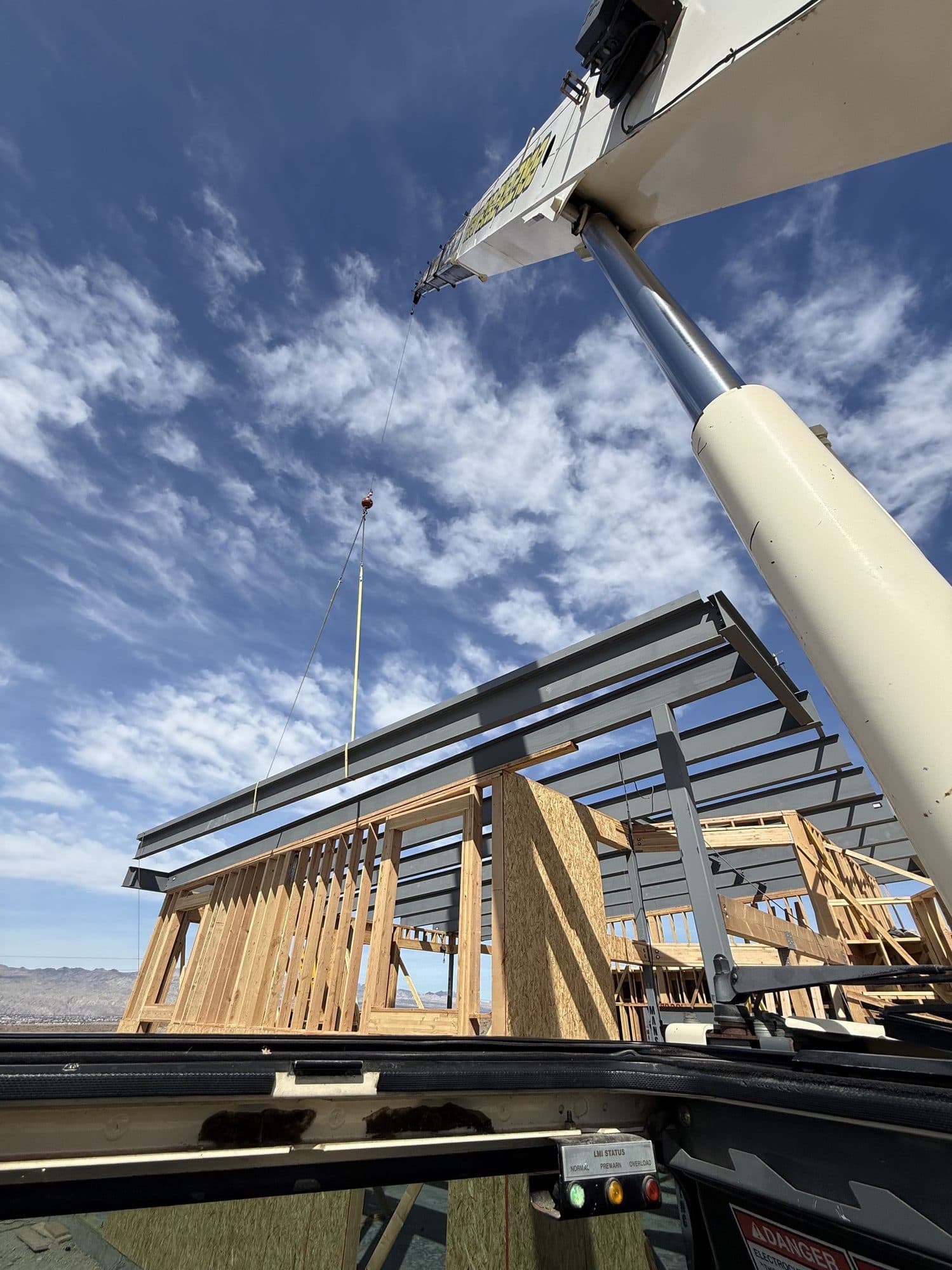
Operator view of a beam landing 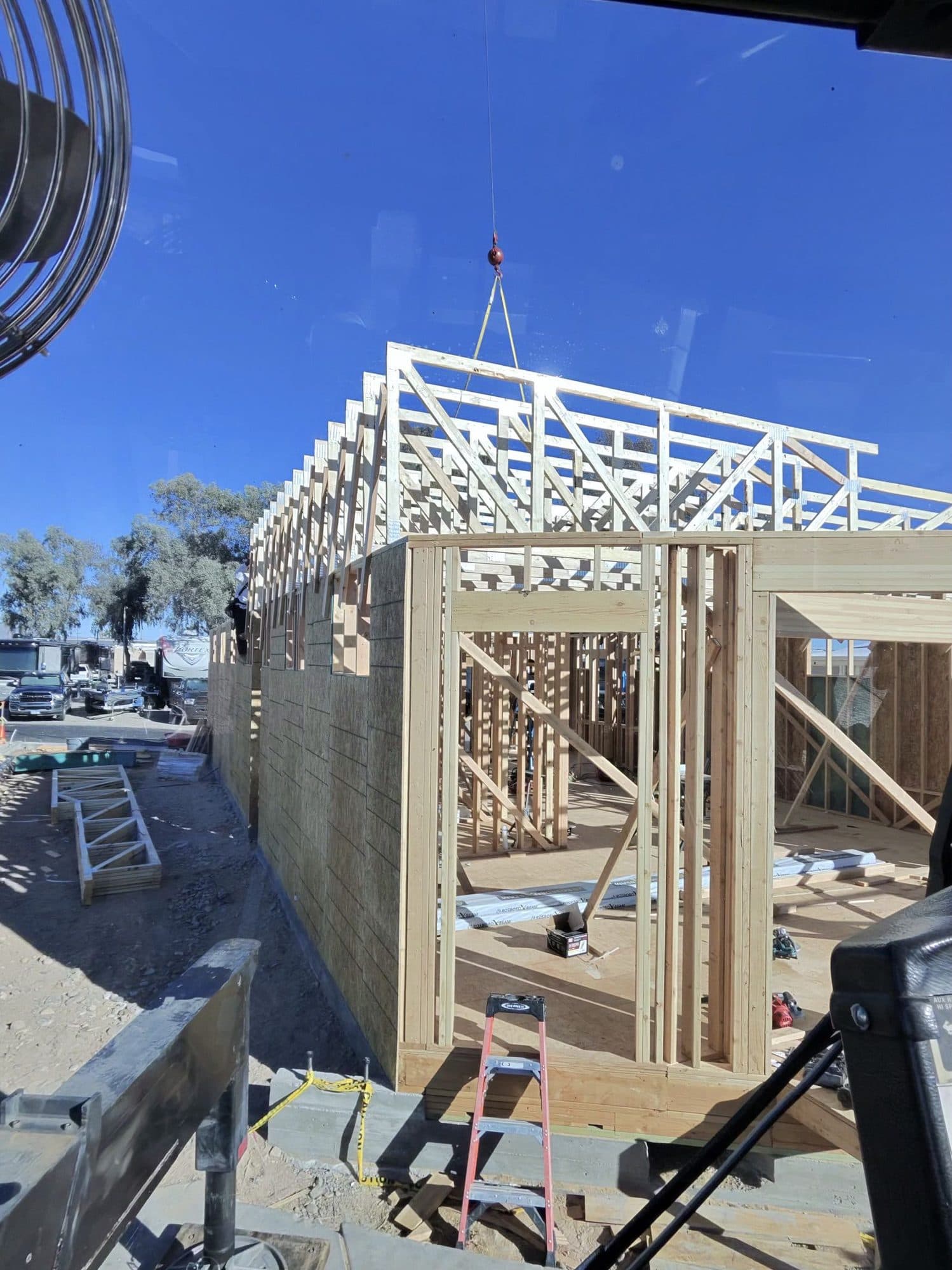
Trusses landing on a house frame 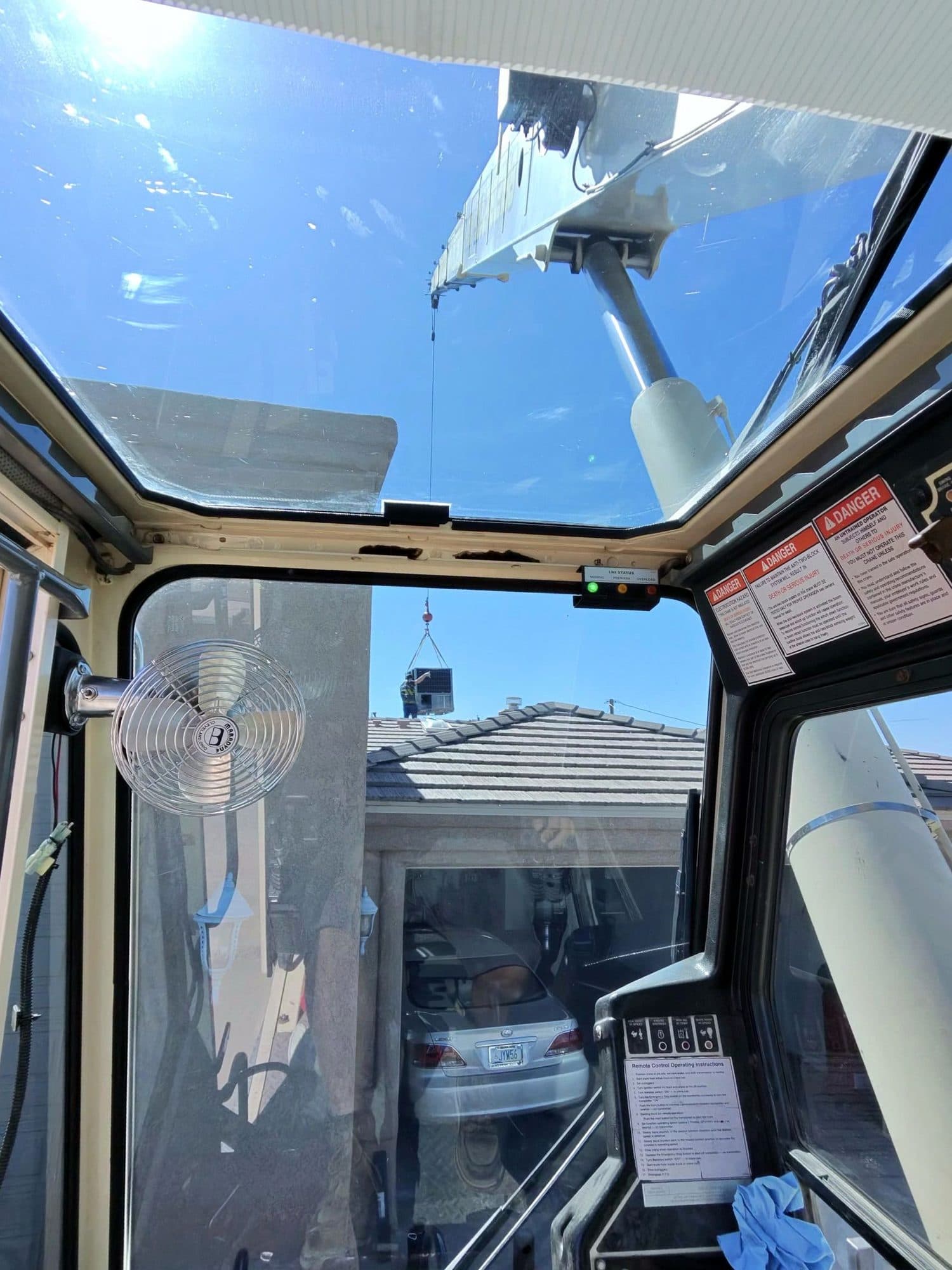
Rooftop unit lifted over a tile roof
Answers
Frequently Asked Questions
How long does the setup take compared with the lift?
Longer, usually by a lot. On a single-item residential job the lift itself can be a few minutes and the walk, setup and briefing take most of the visit. That ratio is deliberate and it is not something we compress to save time.
What actually stops a lift once it has started?
Wind that has changed since the plan. A load heavier than expected. Rigging shifting on the trial lift. Anyone entering the closed zone. A boom position that would put it closer to a conductor than agreed. Any of those and it stops until it is sorted.
Do you need our crew to do anything for safety?
Two things. Nominate one person to signal, and keep everyone else outside the marked zone. Beyond that, if anybody on your side sees something wrong, we want to hear it immediately rather than afterwards.
What if you decide the job cannot be done safely?
Then it does not get done that day and we will tell you why in plain terms. Sometimes there is another approach, like a different setup position or a different truck. Sometimes there is not, and pretending otherwise helps nobody.
Is the ground really that big a factor?
It is the most common problem in this town. Caliche has a hard crust with anything underneath it, and a backfilled trench looks identical to undisturbed dirt. Outriggers concentrate a huge load into four small squares, so cribbing is standard rather than occasional.
More Reasons
- Damage Prevention FocusPads and cribbing under every outrigger, the whole swing path checked rather than just the endpoints, and fragile things moved before the boom goes up.
- Experienced OperatorsOver 20 years of operating experience shows up in small decisions, not in headlines. Reading ground, catching a bad pick early, and knowing when to say no.
- Documented ProcessCondition photos before setup, the setup itself, and the finished placement. A record of what happened on your property that does not rely on memory.
- Owner Supervised QualityThe person who quotes your job is the person who runs the crane on it. No handoff, no relayed instructions, and one name attached to the outcome.
- On Time and Clear CommunicationArrival windows instead of day ranges, a confirmation call the day before, and one phone number that reaches the person driving the truck to your job.
- Experienced OperatorsOver 20 years of operating experience shows up in small decisions, not in headlines. Reading ground, catching a bad pick early, and knowing when to say no.
- Owner Supervised QualityThe person who quotes your job is the person who runs the crane on it. No handoff, no relayed instructions, and one name attached to the outcome.
- Local Reliable ResponseBased on London Bridge Road, not dispatched from another county. What a night call actually sounds like and what can honestly be done before daylight.
- Peace of Mind ResultsWhat we take responsibility for, what stays yours, and what finished actually looks like. A plain division of labour instead of a vague reassurance.
- Damage Prevention FocusPads and cribbing under every outrigger, the whole swing path checked rather than just the endpoints, and fragile things moved before the boom goes up.
Ready to schedule your lift?
Tell us the load, the site and the timing. We will confirm capacity, access and a window.