Industries We Serve
Crane Service for General and Residential Construction
2 min readUpdated July 2026
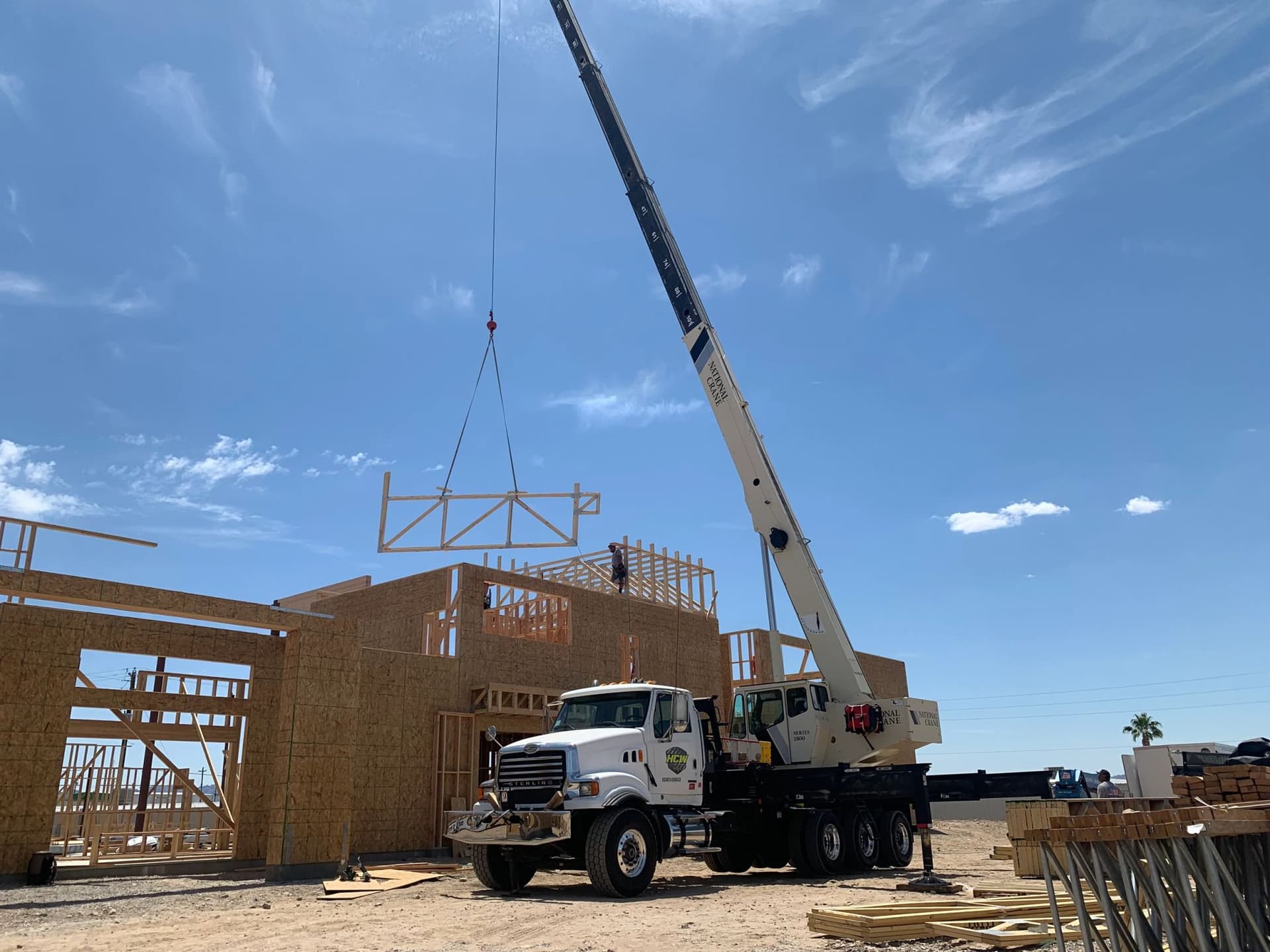
HCW Crane Service sets trusses, beams and factory-built sections for general and residential builders around Lake Havasu City. Picks are planned around the framing crew rather than the other way around, outriggers get cribbed for raw or backfilled ground, and roofing material or beams can be staged during the same visit.
Truss Day Is a Crew-Size Decision
A truss package that six framers wrestle up by hand over two days goes up in a morning with a crane and three men on the walls. Every framer already knows that. The argument is settled.
What actually decides how the morning goes is staging. Trusses banded in the order they get set save an hour of ground sorting. Trusses dumped wherever the delivery truck could reach cost that hour right back. Ask us before the delivery and we will tell you where to have them dropped.
Gable ends and long-span girders are the pieces that catch people out. They are heavier, they flex, and they usually want a spreader or a two-point pick. If those are in the package, mention them on the first call.
What the Ground Under the Outriggers Is Made Of
A finished driveway tells you what it will hold. A raw pad does not. Caliche looks like solid rock until it is wet, and a trench that got backfilled last week looks exactly like the ground beside it.
So before the truck sets up we walk the pad and ask what has been dug and when. Water and sewer runs, footing overdig, the soft spot where the scraper turned around. Outriggers concentrate a large load into four small squares, and ground that carries a loaded pickup will not always carry that.
Cribbing and bigger pads solve most of it. Now and then the answer is to set up farther away and reach in, which costs capacity. That is a trade worth making at seven in the morning instead of discovering it halfway through a pick.
Working Around the Rest of the Schedule
On a live build the crane is never the only thing happening. Concrete is coming, the lumber drop is booked, an inspector may be walking the lot. If the crane parks in the only path to the pour, the whole day stalls.
We would rather know the entire morning than just our slice of it. Ten minutes on the phone about who else is arriving and when is worth more than any amount of boom.
It also decides our arrival time. Sometimes the right move is to be set up and lifting before anyone else shows. Sometimes it is to stay clear until the pour is finished and the trucks are gone.
Extra Picks While the Boom Is Already Up
Almost every build has a few loads besides the trusses. Sheathing bundles for the roof deck. A steel beam or a glulam that goes in with the framing. Pallets of tile or shingles the roofer wants spread across the deck rather than stacked in one spot.
None of that justifies a second crane visit. Tell us what else is on the ground when you book the truss day, and it goes up after the last truss is braced, from the same setup.
Roofing load-ups get sized to what the framing can carry in one spot. The roofer says where the material should land and it lands there, not wherever was easiest to drop it.
How the job runs
Our Process
Step 1: Send Us the Package
Truss layout, beam weights, or a photo of the delivery ticket. We are looking for the heaviest single piece and how far out it has to land.
Step 2: We Look at the Pad and the Access
Setup position, overhead lines, what has been trenched, and where the material is going to be staged before we arrive.
Step 3: We Set Up Before the Crew Starts
Outriggers down and cribbed before your framers are on the walls, so the first pick happens when they are ready rather than twenty minutes later.
Step 4: We Stay Through the Sequence
Bracing goes in as we go. Nothing gets released until the crew has it held and says so out loud.
Scope
What Is Included
- Roof truss and floor truss setting
- Beam, header and glulam placement
- Wall panel and factory-built section lifts
- Material staging to upper floors and roof decks
- Roofing material load-ups on the same visit
- Cribbing and outrigger pads for raw or backfilled ground
Real HCW jobs
From the Job Site
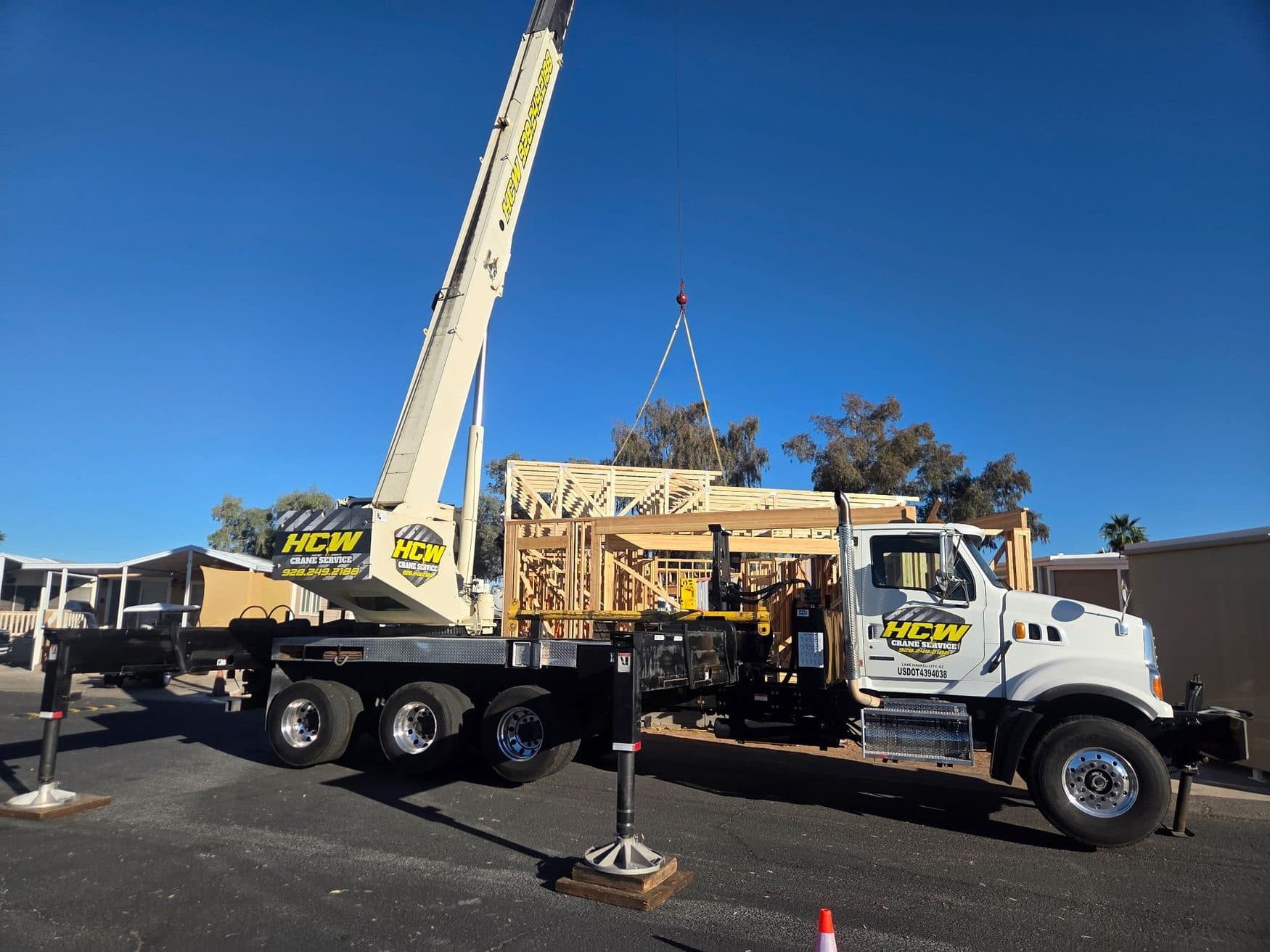
Full rig set up for a truss lift 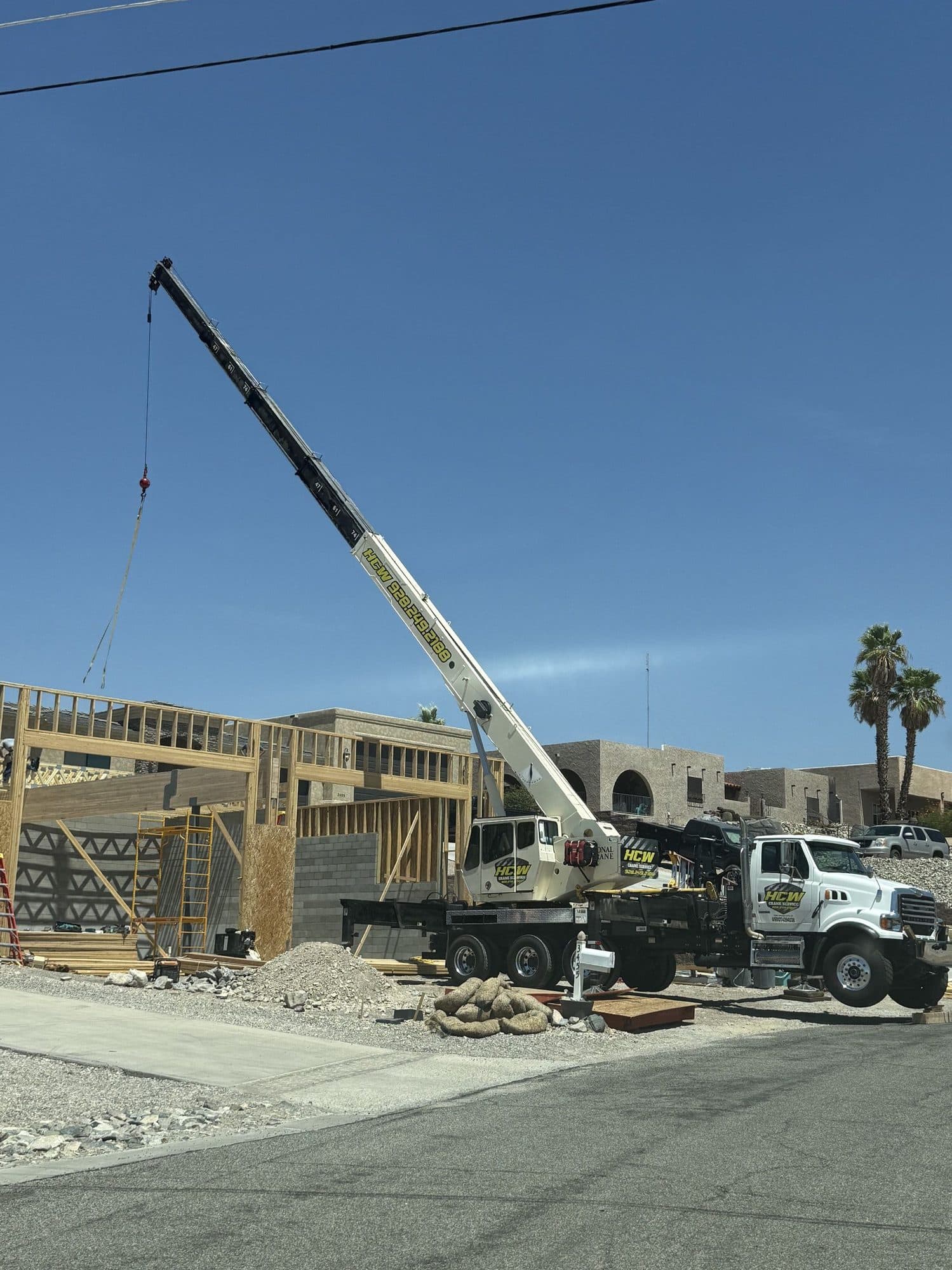
Boom truck working a framing site 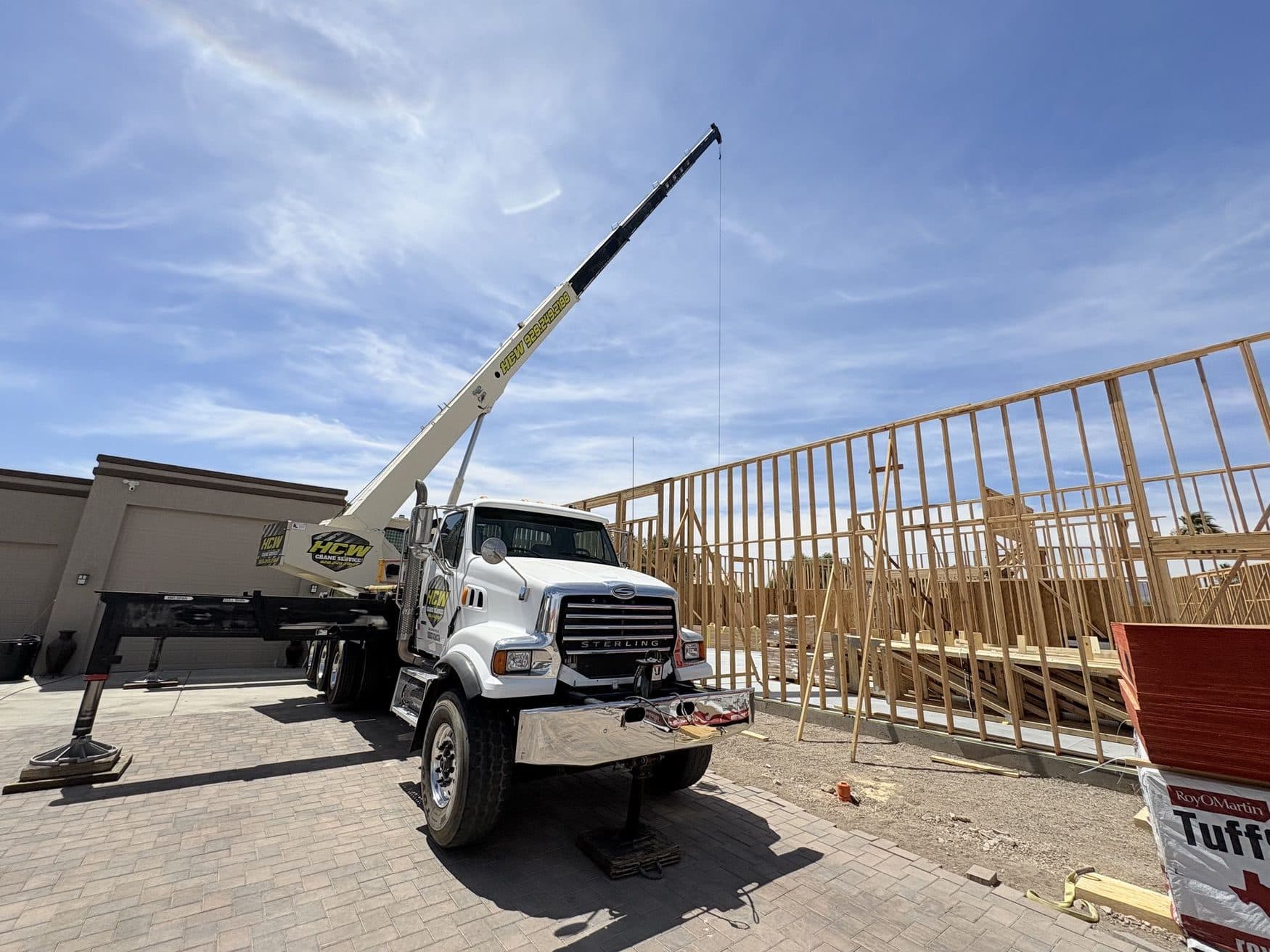
Crane staged at a framing job 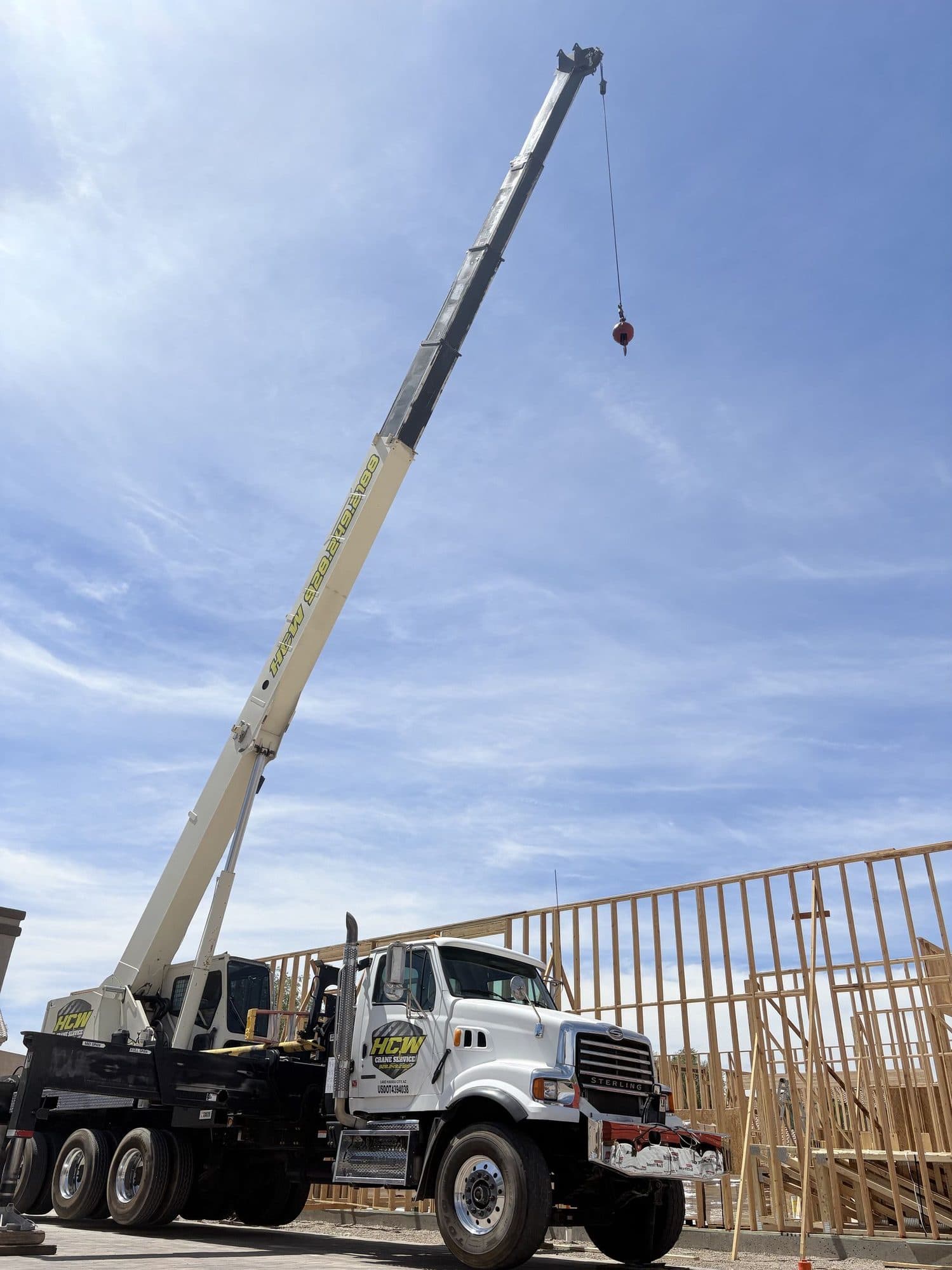
Boom raised beside new framing
Answers
Frequently Asked Questions
Do you set trusses on two-story and split-level lots?
Yes. A lot of Havasu is built into slope, so the ridge can sit well above the street. What we need to know is the height difference between where the truck sits and where the truss lands.
Can you work off the street if the pad is not compacted?
Often that is the better plan. Setting on pavement and reaching in costs some capacity but removes the ground question entirely. We work out which is safer when we see the site.
How long do you hold the crane on site?
As long as the sequence takes. What we ask for in return is that the crew is ready when we are set. Waiting for a delivery that has not landed is the single most common way a truss day runs long.
Do you need a spotter or signal person from our crew?
One person, and only one. Multiple people signalling a boom is how loads get bumped. We agree on who that person is before the first pick and everyone else talks to them.
Can you place material we did not plan for while you are here?
Usually, if it is within the capacity we set up for and it does not require moving the truck. Ask before we start breaking down rather than after.
What about power lines over the lot?
They get identified on the walk and they set the boundary for where the boom goes. If clearance is tight we move the setup rather than working close to it. There is no version of that where we cut it fine.
Other Industries
- Builders and Project ManagersOne late crane moves five trades. Confirmed arrival windows, the owner as your point of contact, and weather calls made early enough to act on.
- Custom Home BuildersLong reaches over finished stone, steep view lots and owners who are watching. Careful setups for custom builds around Lake Havasu City, run by the owner.
- Structural Steel, Precast and ModularPiece weight and radius decide the setup, not the badge on the truck. Steel, precast and modular sections set with margin and held until your crew connects.
- Safety First ProcessThe walk, the ground check, the load chart, the exclusion zone and the briefing. What actually happens before a load leaves the ground on a Havasu job.
- HVAC and Mechanical ContractorsChangeout day runs on the crane. We hold the window, pull the old unit, set the adapter and the new one from one setup in Lake Havasu City.
- Facility Managers and Maintenance TeamsA failed rooftop unit is a continuity problem. Overnight and early lifts, tenant-aware setups, and photo records you can put straight into your building file.
- Homeowners With Specialty Lift NeedsNever hired a crane before? Here is what happens in your driveway, what the truck touches, and how a load clears a block wall without hitting anything.
- Builders and Project ManagersOne late crane moves five trades. Confirmed arrival windows, the owner as your point of contact, and weather calls made early enough to act on.
- Structural Steel, Precast and ModularPiece weight and radius decide the setup, not the badge on the truck. Steel, precast and modular sections set with margin and held until your crew connects.
- Industrial and ManufacturingMachinery moves, equipment swaps and rigging for light industry around Lake Havasu. Work scheduled into your downtime window, day, night or weekend.
Ready to schedule your lift?
Tell us the load, the site and the timing. We will confirm capacity, access and a window.