Rigging and Construction Lifts
Roofing Material Lifts in Lake Havasu City, Arizona
2 min readUpdated July 2026
Roofing material lifts are crane picks that put tile, shingles, underlayment, and other roofing material on the roof instead of in the driveway. The roofer decides where each pallet or stack goes so the load sits over bearing walls, and the crane sets it there directly. Starting early keeps the crew off a hot roof.
Why the Material Goes Up by Crane
Concrete tile is the common roof in Lake Havasu City, and it is heavy. Carrying it up a ladder a few pieces at a time is slow, hard on the crew, and hard on the tile. Putting the pallets on the roof by crane gets the material to the people installing it in one morning.
The crane can reach over a garage, over a front courtyard, or over a block wall to a roof the supplier's boom truck cannot get to. Supplier trucks often have a short boom and have to park right against the house, which is not always possible on a narrow street or a lot with a steep driveway.
Reroofs add the other direction. Old tile and underlayment come off, and bins or bundles of tear off can come down by crane rather than being dropped or carried. That gets discussed with the roofer as part of the same plan.
Where the Load Sits on the Roof
A pallet of tile is a concentrated load on a small area of roof. Set it in the middle of a span and the framing takes a load it was never designed for. Set it over a bearing wall or along the ridge where the roofer wants it, and the roof carries it the way it was meant to.
That is the roofer's call, not ours. The roofer knows the framing, knows which way the rafters or trusses run, and knows how they want the material spread for the install. We set each lift exactly where they mark it, and nothing sits in a spot they have not approved.
Material usually gets broken into smaller stacks on the roof rather than one full pallet in one place. The crane can set several smaller lifts across the roof faster than the crew can move a full pallet by hand.
Heat, Wind, and a Crew on the Roof
Roofing in summer happens early. Tile and underlayment in direct sun get hot enough to burn by late morning, and a crew on a roof in the afternoon is at real risk. Material lifts get scheduled at first light so the pallets are staged before the heat and the crew can work the cooler hours.
Underlayment rolls and bundles of lighter material catch wind. On a monsoon afternoon they are the first thing to become unsafe to lift. Morning is calmer, which is another reason to start early.
People on the roof stay clear of the load until it is set. The roofer's crew guides it with tag lines from a safe position and only moves in to unhook once it is down and stable.
How the job runs
Our Process
Step 1: Material and Roof Details
We ask for the material type, the number of pallets or bundles, the supplier's weights from the delivery ticket, and photos of the house and street. The roofer marks where each load goes.
Step 2: Delivery Coordinated
The supplier delivery gets timed with the crane, or the material is dropped the day before where the crane can reach it. Either way, the crane is set up before the material has to move.
Step 3: Rigged and Lifted
Pallets go up in slings with the material banded and wrapped so nothing slides out. Each lift goes to the spot the roofer marked, over bearing walls or along the ridge.
Step 4: Staged and Cleared
Loads get set across the roof as marked. If tear off is coming down, bins or bundles come down to the dumpster or the trailer in the same visit.
Scope
What Is Included
- Weights taken from the supplier's delivery ticket
- Loads set only where the roofer marks them
- Material banded and wrapped before lifting
- Early morning starts in summer heat
- Tag lines and a clear zone for the crew on the roof
- Tear off brought down in the same visit when planned
Real HCW jobs
From the Job Site
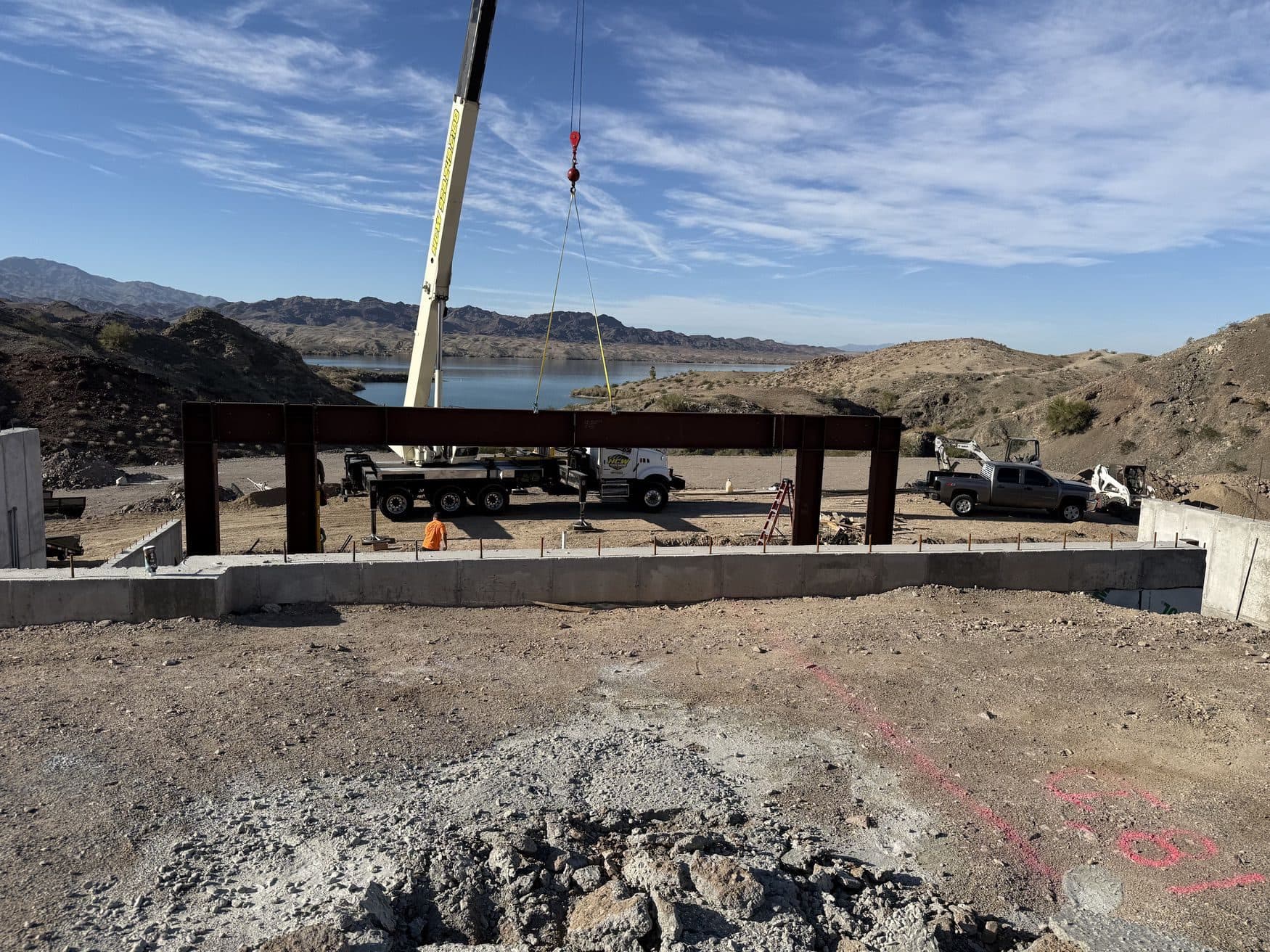
Steel portal frame above the lake 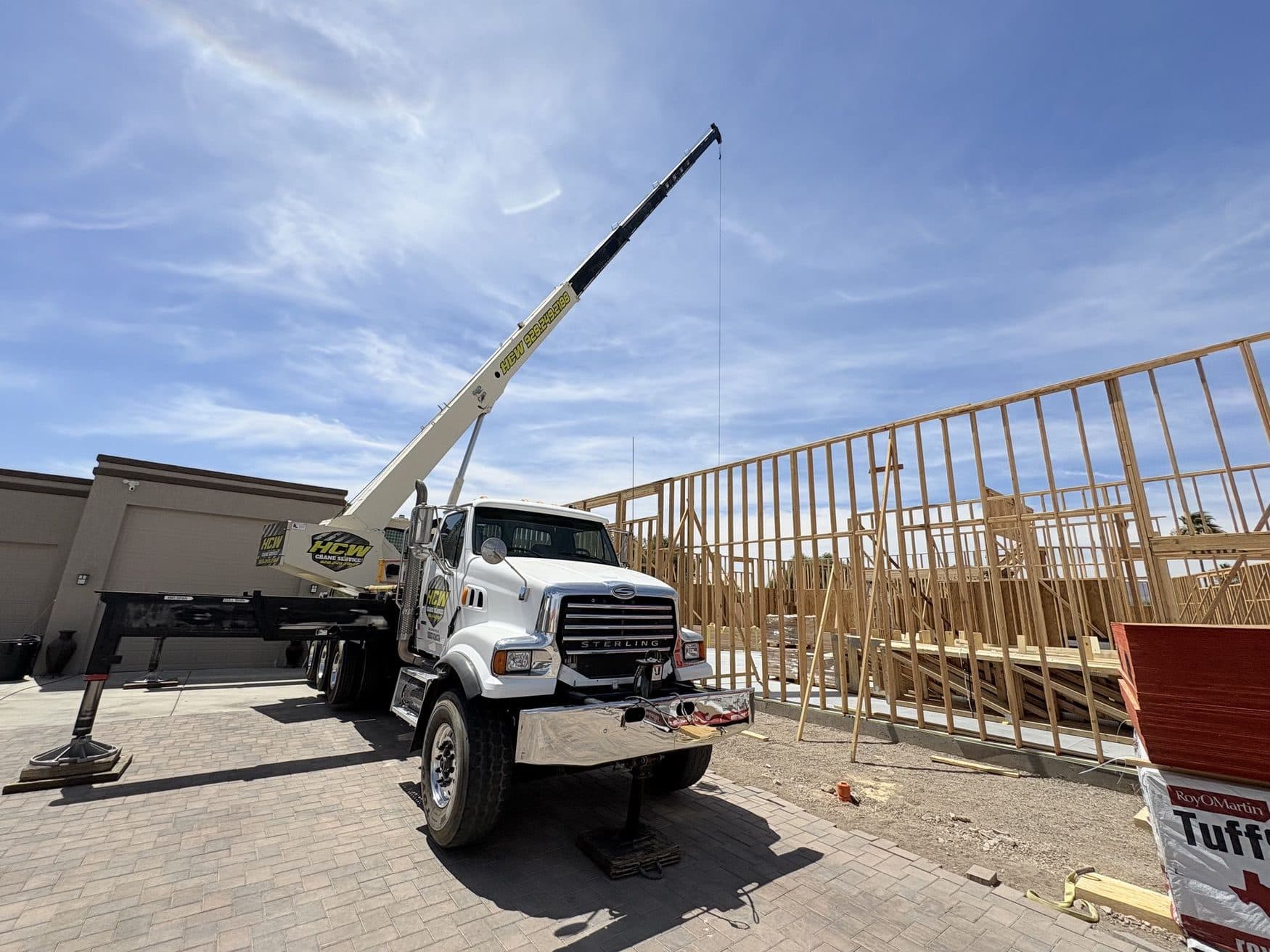
Crane staged at a framing job 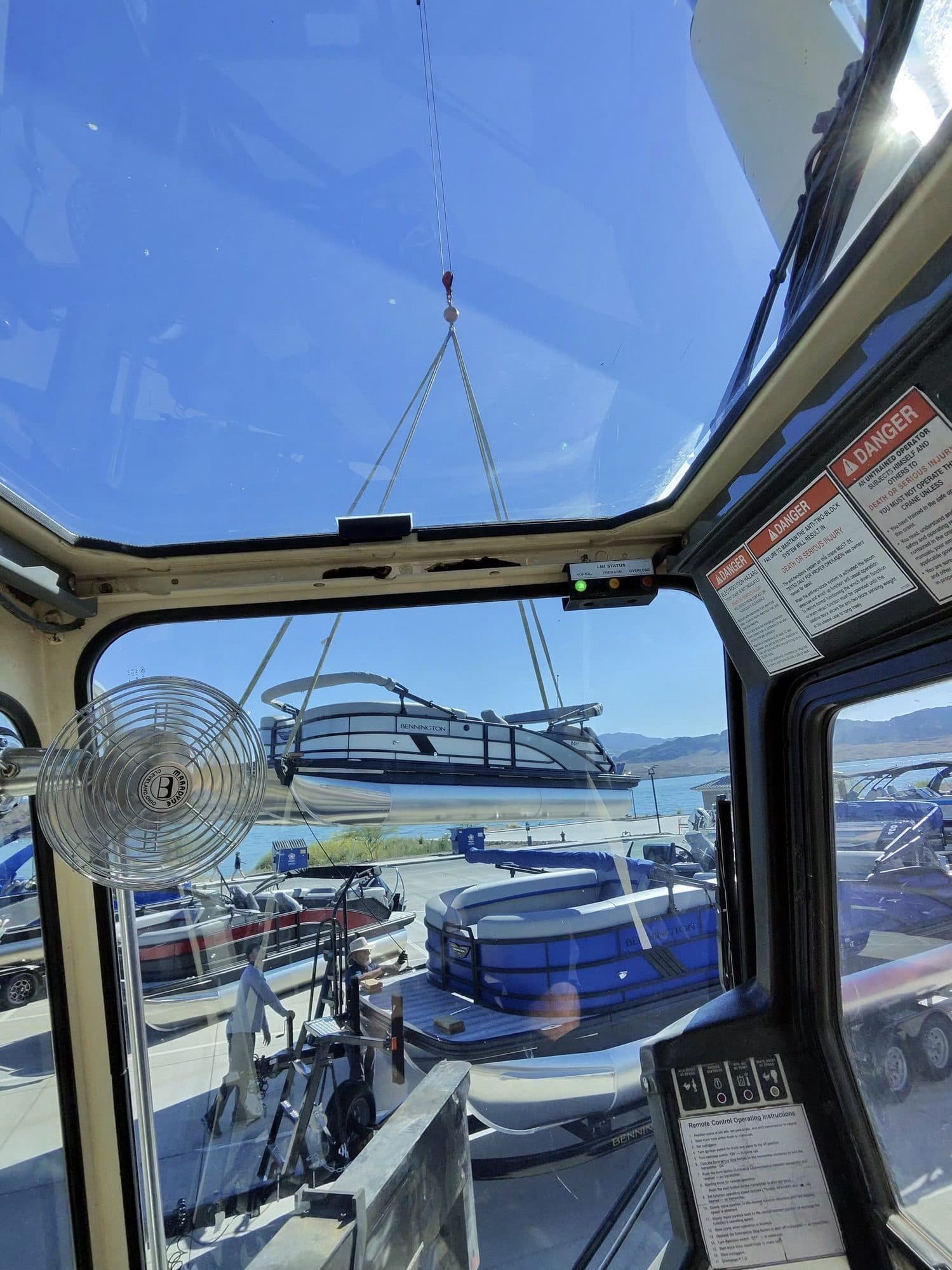
Pontoon lifted at a lakeside lot 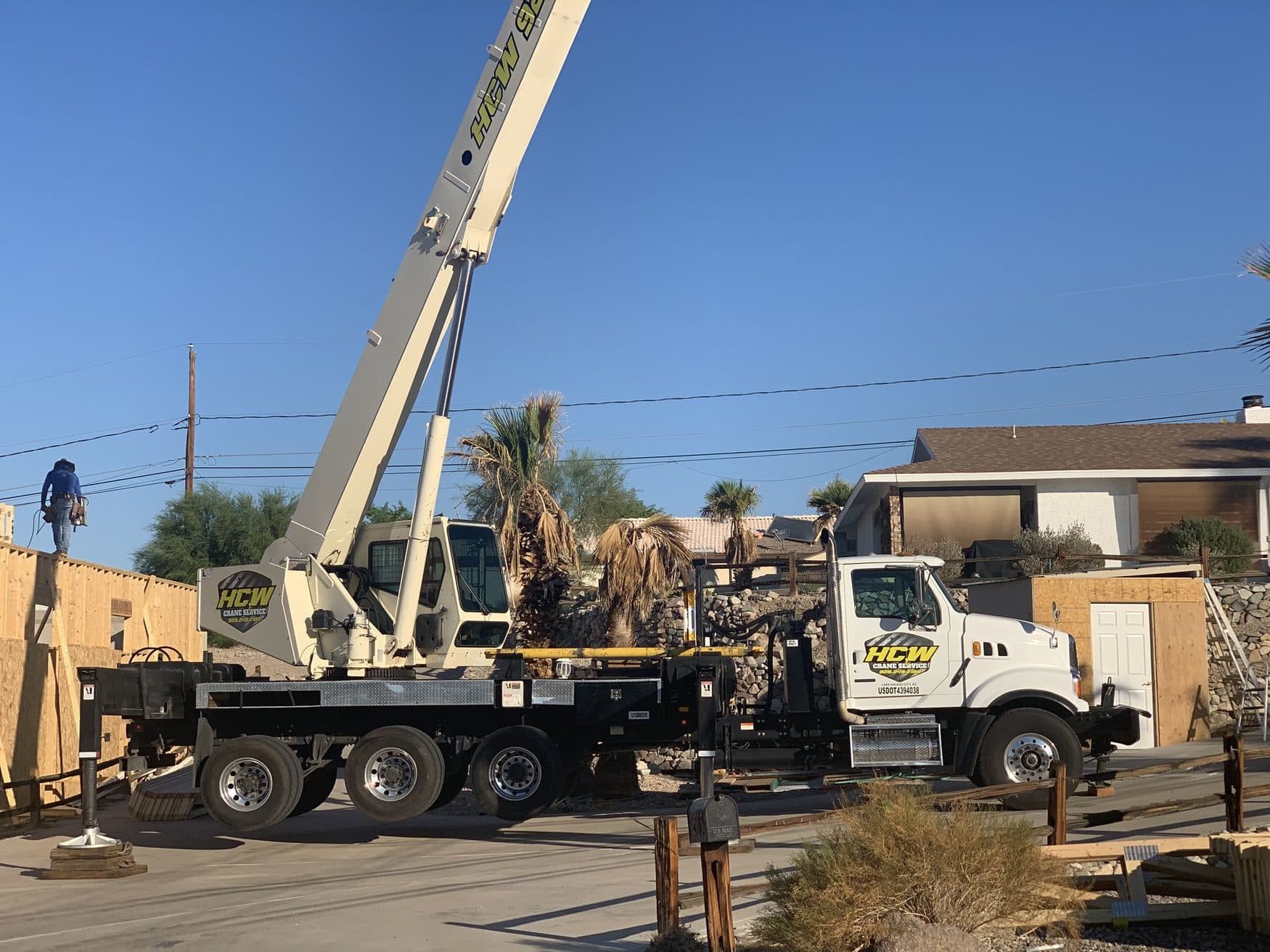
Crane set beside new wall framing
Answers
Frequently Asked Questions
Where do you put the pallets on the roof?
Wherever the roofer marks, which is usually over bearing walls or along the ridge. The roofer knows the framing and how they want material spread for the install. We do not set a load anywhere they have not approved.
Can the supplier's truck do this instead?
Sometimes. Supplier boom trucks have shorter reach and need to park close to the house. When they cannot, because of a narrow street, a steep driveway, a courtyard, or a wall, a crane with more reach sets the material from further away.
How early can you start?
First light is normal in the summer. Tile and underlayment get too hot to handle by late morning, and wind builds in the afternoon during monsoon season. Starting early means the material is staged before the heat and the crew can work the cooler hours.
Can you bring the old tile down too?
Yes, if it is planned with the roofer. Tear off goes into bins or bundles and comes down to the dumpster or the trailer. It is often easier to do in the same visit as the new material going up.
Will a pallet of tile damage my roof?
Not when it sits over a bearing wall or along the ridge where the roofer places it, and when the material is spread in smaller stacks rather than one full pallet in one spot. The roofer makes that call before the lift.
Related Services
- Solar Panel and Racking LiftsCrane solar panel and racking lifts in Lake Havasu City, Arizona. Panel pallets and rail bundles set on the roof or ground mount where installers need them.
- Roof Truss LiftingTrusses arrive banded and go up floppy. Spread pick points, two tag lines, and a crew that braces as it goes. Crane and operator supplied.
- Rooftop Equipment LiftsExhaust fans, kitchen hoods, evaporative coolers, ductwork, and mechanical equipment lifted onto commercial and residential roofs.
- Over-Structure PlacementFlying a load over a house, a garage, or a block wall. Ridge clearance, a blind descent on the far side, and a spotter running the last stage.
- Machinery Moving and SettingCrane machinery moving and setting in Lake Havasu City, Arizona. Shop machines picked out of one building, hauled, and set level in the next one.
- Truck Loading and UnloadingCrane truck loading and unloading in Lake Havasu City, Arizona. Flatbeds and step decks cleared where no forklift can reach, on the driver's schedule.
- Shipping Container PlacementShipping container placement in Lake Havasu City, Arizona. Twenty and forty foot boxes set behind walls and on level pads where a tilt bed cannot reach.
- Vehicle and Boat HoistingCrane vehicle and boat hoisting in Lake Havasu City, Arizona. Boats, side by sides, and project cars lifted over walls, onto stands, or onto trailers.
- Solar Panel and Racking LiftsCrane solar panel and racking lifts in Lake Havasu City, Arizona. Panel pallets and rail bundles set on the roof or ground mount where installers need them.
Ready to schedule your lift?
Tell us the load, the site and the timing. We will confirm capacity, access and a window.