
Resources
Crane Placement for Rooftop HVAC Units and Condensers
In Short
Old unit off, new unit on, same visit. The usual complication is a curb mismatch, because a replacement rarely matches the old footprint.
4 min readUpdated July 2026
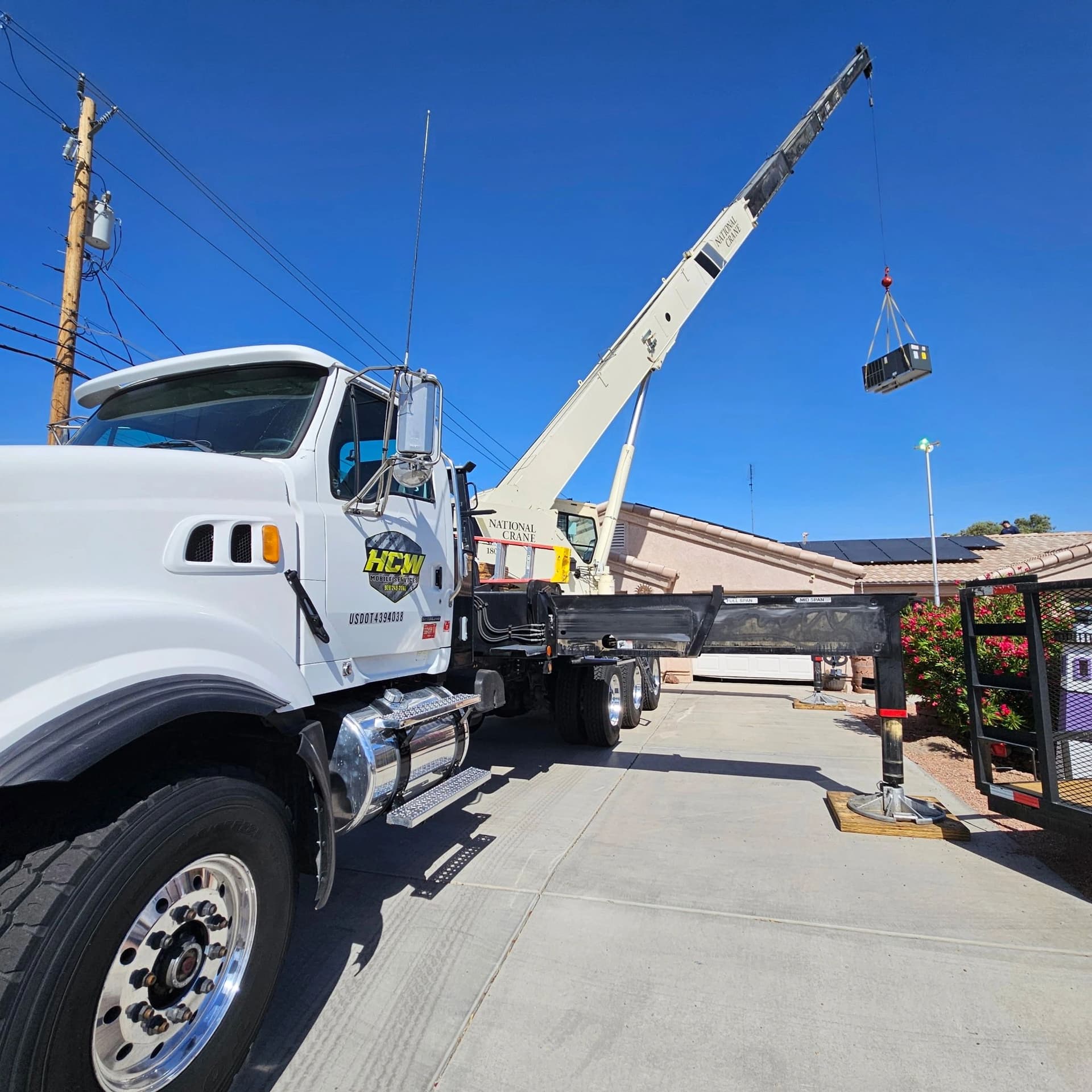
Rooftop HVAC placement means craning the old package unit or condenser off the roof and setting the replacement, normally in one visit. The most common complication is that a new unit does not match the existing roof curb, which requires an adapter curb or a steel stand before the unit can be set.
Two Different Jobs Wearing the Same Name
Rooftop package units and ground level condensers get talked about together, but they are not the same lift. A package unit is heavy, bulky and lands on a curb in a specific orientation with duct openings that have to line up. A condenser is lighter, often goes onto a pad or a stand, and is usually a question of access rather than capacity.
The one that generates most crane calls is the package unit swap on a commercial building or a larger home. The old unit has to come off before the new one can go on, so the roof is open in between, and how long it stays open depends entirely on how well the visit was sequenced.
Split system condensers on residential jobs are usually about getting past a block wall or onto a second story landing, not about weight.
The Curb Mismatch Nobody Budgets For
Replacement units almost never share the footprint of the unit they are replacing. Manufacturers change dimensions between generations, and a like for like swap is the exception rather than the rule.
That leaves the roof opening in the wrong shape for the new unit. Somebody has to make up the difference with an adapter curb or a steel stand that spans the existing opening and presents the right footprint to the new equipment.
This is where the visit either stays a single visit or turns into three. The crane can only set what is on site. If the adapter is not ready, the new unit sits on the roof or in the parking lot until one is made, and then the crane has to come back to finish. The fix is to have the adapter built by the HVAC contractor or a steel shop ahead of time and on site, so it can be set first while the truck is already there.
The practical advice is simple. Get the dimensions of both units before the day. If they do not match, say so on the first call, and the adapter becomes part of the plan instead of a surprise on a hot roof.
Sequencing With the HVAC Contractor
The crane is one trade among several on these jobs, and the order matters more than the individual steps.
Electrical and gas get disconnected by the mechanical contractor before anything is rigged. The old unit is unbolted and freed from the curb. Only then does the crane pick it, set it down where it can be dealt with, and turn to the new unit. If an adapter is needed it goes on next, then the new unit lands, gets set square, and the contractor reconnects.
The most common time waste is the crane waiting on a disconnect, or the roof crew waiting on the crane because the new unit was not staged where it could be reached. Both are avoidable with one conversation the day before about who is doing what and in what order.
On an occupied commercial building there is a further layer: the parking area under the flight path has to be cleared and kept clear, and building tenants need warning that a section of lot is out of use for a few hours.
Protecting the Roof You Are Landing On
Tile roofs are common here and tile breaks under a dropped strap as easily as under a boot. Where a load has to travel over tile, the path gets planned so it does not, and where somebody has to be on the roof, the route is agreed rather than improvised.
Flat commercial roofs have their own issues. Membrane can be cut by a dragged edge, and a set down on a soft spot leaves a mark that shows up as a leak months later. Setting the unit straight onto the curb, rather than onto the roof and then shuffling it across, is the way to avoid that entirely.
Parapets and screen walls change the geometry. A unit that would land easily on an open roof can require noticeably more reach when it has to clear a screen wall on the way in, which is the sort of thing that should be known before the truck is chosen.
Timing It Around a Havasu Summer
Rooftop units fail in July, because July is when they are working hardest. That means a large share of this work happens in the worst possible conditions, on a dark roof surface, in the part of the year when the roof is hot enough to be a hazard in itself.
The response is to start early. First light starts are standard on summer rooftop work, and a swap that begins at six in the morning is a different job from the same swap beginning at eleven. Being open 24 hours also means an after hours start is possible when a building cannot lose cooling during business hours.
The other seasonal factor is monsoon wind. A package unit is a large flat object on the end of a boom and it catches air well. Afternoon gusts in late summer are a real scheduling constraint, and another reason the early start is not just about comfort.
How the job runs
Our Process
Step 1: Confirm both units and the curb
Get weights and footprint dimensions for the old and new equipment, and establish whether the new unit fits the existing curb or needs an adapter.
Step 2: Plan the truck position and flight path
Work out where the truck sits, what the load has to clear, and which part of the lot or driveway has to stay empty during the swap.
Step 3: Disconnect and free the old unit
The mechanical contractor disconnects power and gas and releases the unit from the curb before any rigging goes on.
Step 4: Old unit off, adapter fitted if needed
The old unit is picked and set down. If the footprints do not match, the adapter curb or stand is set on the existing curb while the crane stays set up.
Step 5: Set the new unit and hand over
The new unit is landed square on the curb or adapter, checked for orientation and duct alignment, then released to the contractor for reconnection.
Scope
What Is Included
- Removal of the existing unit and placement of the replacement in one visit
- Load chart check for the reach needed over any parapet or screen wall
- Coordination with your mechanical contractor on sequence and timing
- Setting an adapter curb or steel stand first when footprints do not match
- Roof and tile protection along the working path
- Cleared and coned flight path over parking or driveway areas
- Early morning and after hours starts available in summer
Answers
Frequently Asked Questions
Can you take the old unit down and set the new one in the same trip?
Yes, and that is the normal way it runs. The old unit comes off, the new one goes on, and the truck only mobilizes once. Both units need to be on site and the disconnect has to be done before the crane arrives.
What happens if the new unit does not fit the old curb?
An adapter curb or a steel stand bridges the difference. Your HVAC contractor or a steel shop builds it ahead of time, and the crane sets it on the old curb before the new unit goes on, all in the same visit.
Who disconnects the power and the gas?
Your mechanical or electrical contractor does. The crane does not disconnect or reconnect equipment. Have that finished before the truck arrives so the crane is not set up and waiting.
Can you work on an occupied commercial building?
Yes. The area under the flight path has to be cleared of vehicles and kept clear, and tenants should be told which section of lot is out of use. Early morning or after hours starts are often the easiest way to keep disruption down.
Will the crane damage my tile roof?
The load is routed so it does not travel over tile where that can be avoided, and any foot traffic on the roof follows an agreed path. Landing a unit directly onto its curb, rather than setting it down and sliding it, is what keeps tile and membrane intact.
Can you lift a condenser over a block wall into a side yard?
Yes. That is a common residential job here, where the wall has no gate wide enough for the unit. The lift is usually about reach and clearance rather than weight, so the deciding factor is how far back the pad sits from where the truck can park.
More Guides
- HVAC Lift and Placement BundleOld rooftop unit off, new unit on, and the curb adapter or stand lifted up with it, all on one crane visit. Lake Havasu City and nearby Arizona.
- Over-Structure PlacementHow a crane lifts a load over a house, garage or block wall and lands it on the far side when there is no ground route into the yard.
- Planning a Roof Load-UpHow to plan a roof load-up by crane: where stacks land, how the load is spread over bearing walls, when it happens around tear-off, and what to send ahead.
- What to Expect on Lift DayA walkthrough of lift day from arrival to departure, including how long each stage takes, what you can do, and why setup takes longer than the pick.
- Capacity and Reach ExplainedA 40-ton crane will not lift 40 tons at full boom. Here is what capacity ratings, load radius and 142 feet of reach actually mean for your job.
- How Mobile Crane Service WorksA mobile crane brings the machine and the operator to your site. Here is what happens from the first phone call through setup, the pick and pack up.
- Capacity and Reach ExplainedA 40-ton crane will not lift 40 tons at full boom. Here is what capacity ratings, load radius and 142 feet of reach actually mean for your job.
- Site Preparation ChecklistWhat to clear, move, unlock and check before a crane arrives. A prepared site keeps the visit short and stops problems being found at the worst moment.
- What to Expect on Lift DayA walkthrough of lift day from arrival to departure, including how long each stage takes, what you can do, and why setup takes longer than the pick.
- Truss Lifting Process and SafetyHow roof trusses get set with a boom truck: staging bundles, spreader bars, bracing, wind limits and keeping the crane in one position along the wall line.
- Spa Placement Safety and MethodsHow hot tubs and swim spas get lifted over block walls and rooftops into backyards, including shell protection, spreader bars and pad preparation.
Ready to schedule your lift?
Tell us the load, the site and the timing. We will confirm capacity, access and a window.