Heavy Lifting and Equipment Placement
Commercial Equipment Lifts in Lake Havasu City, Arizona
2 min readUpdated July 2026
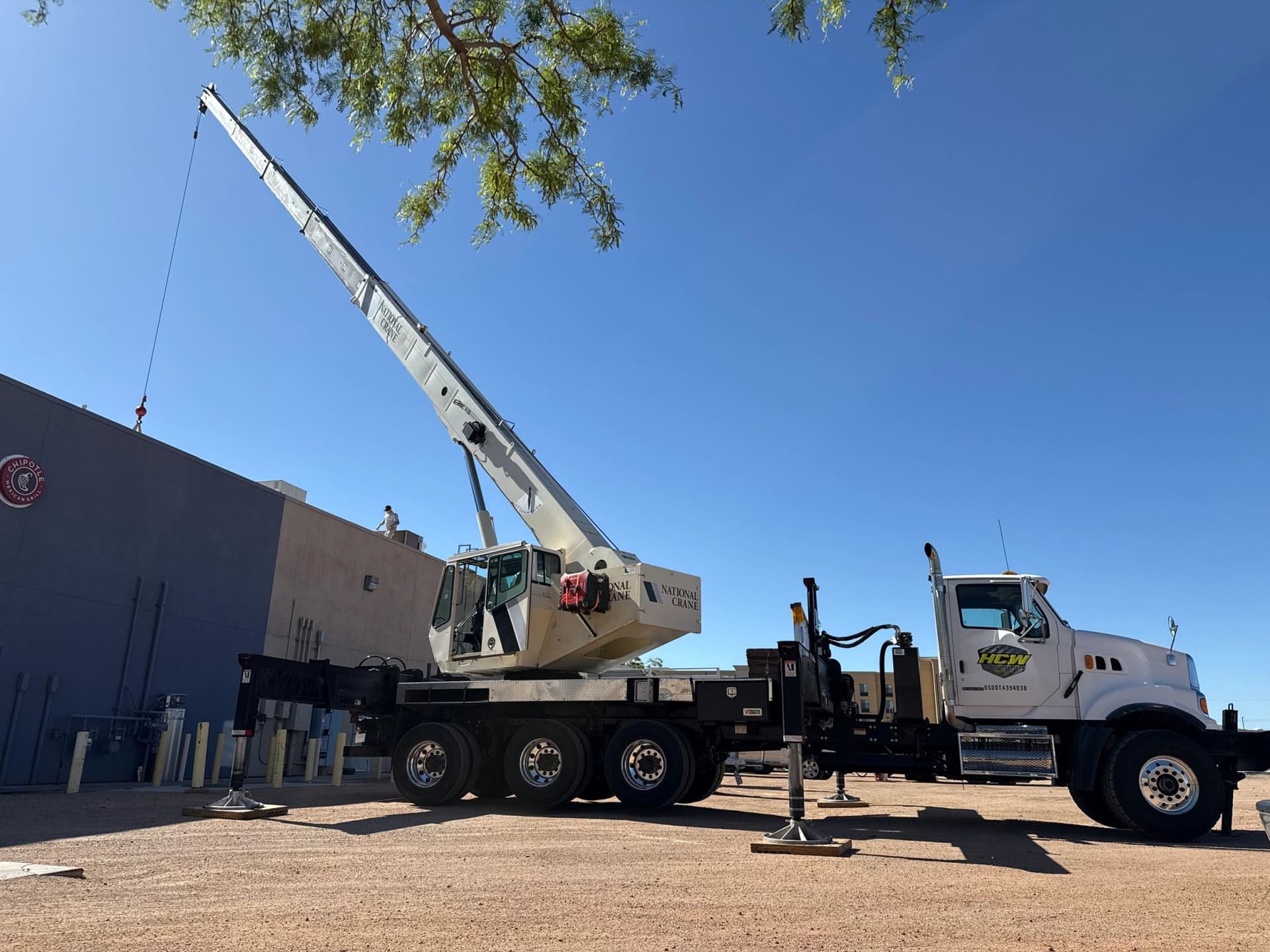
Commercial equipment lifts are crane picks over an occupied building, usually setting rooftop units at a store, restaurant, or medical office. The work gets scheduled around business hours, the swing path is kept off the entrance, and roof protection goes under the cribbing before anything lands on a membrane.
Picking Over a Store That Is Still Open
The business does not close for a crane. So the pick gets scheduled where it costs the least, which is early in the morning before the doors open or in the evening after close. We answer the phone at any hour, so a five in the morning start is a normal request rather than a favor.
The swing path never crosses the front door. Not with a load, not empty, not for a moment. The truck gets set so the load travels over parking, over landscape, or over the roof itself, and never over the walkway customers use. That single rule decides where the outriggers go more often than weight or reach does.
In the lot, cones and a spotter close off the setup area and the drop zone. Delivery trucks arrive on their own schedule and do not know a crane is working, so somebody has to be standing out there to turn them around instead of finding out when one parks directly under the boom.
Landing on a Roof That Belongs to Somebody Else
Membrane roofs puncture easily. Cribbing set straight onto a single ply membrane, or a curb dragged an inch sideways across it, becomes a leak that shows up in the next storm and that nobody can trace back. Protection goes down under the cribbing and the landing zone first, and the roofer or the building owner confirms where a load is allowed to sit.
Structure matters as much as the membrane. A rooftop unit belongs over a curb or over framing, not in the middle of a deck span. Whoever designed the opening knows where that is, and we want it answered before the unit is hanging over the parapet rather than while it is.
Coordination is the other half of the job. The roofer, the mechanical contractor, or the equipment installer has to be standing on that roof when the load arrives, not called afterward. A unit sitting on cribbing waiting for somebody to drive across town is a crane holding still and a parking lot still coned off.
Orientation is worth agreeing on ahead of time as well. A condenser landed with the service side facing a parapet, or a hood fan set with the discharge pointed the wrong way, means a second pick to spin it. Two minutes of pointing at the curb before the load leaves the ground saves that. The loads that come across most often are these.
- Walk in cooler and freezer panel sections
- Kitchen makeup air units and hood exhaust fans
- Rooftop condensers and package HVAC units
- Medical and dental office equipment going into a suite
How the job runs
Our Process
Step 1: Scheduled Around Business Hours
The pick gets set for before opening or after close, whichever disrupts less. Store management, the mechanical contractor, and anyone who needs roof access agree on the time first. Everyone who has to be there gets the same start time, because a crane waiting is the expensive part.
Step 2: Lot Closed and Path Set
Cones, signs, and a spotter close the setup area and the drop zone before outriggers go down. The swing path gets routed over parking or roof and away from the entrance. Delivery drivers and customers get redirected by a person, not by a cone they will drive past.
Step 3: Roof Protection and Landing Confirmed
Protection goes under the cribbing and across the landing zone on any membrane roof. The roofer or the owner confirms where the load may sit and which structure carries it. Curb location and unit orientation get agreed before the load leaves the ground.
Step 4: Unit Landed and Handed Off
The unit comes over the parapet high, then down slow on the winch with tag lines controlling rotation. It lands on the curb or the protected zone with the installer standing there. The hook releases only after the crew has it, and the lot reopens once the truck is packed.
Scope
What Is Included
- Pick scheduled before opening or after close
- Swing path routed away from the customer entrance
- Cones, signs, and a spotter closing the setup area
- Protection placed under cribbing on membrane roofs
- Landing point confirmed with the roofer or building owner
- Trades on the roof and ready when the load arrives
Real HCW jobs
From the Job Site
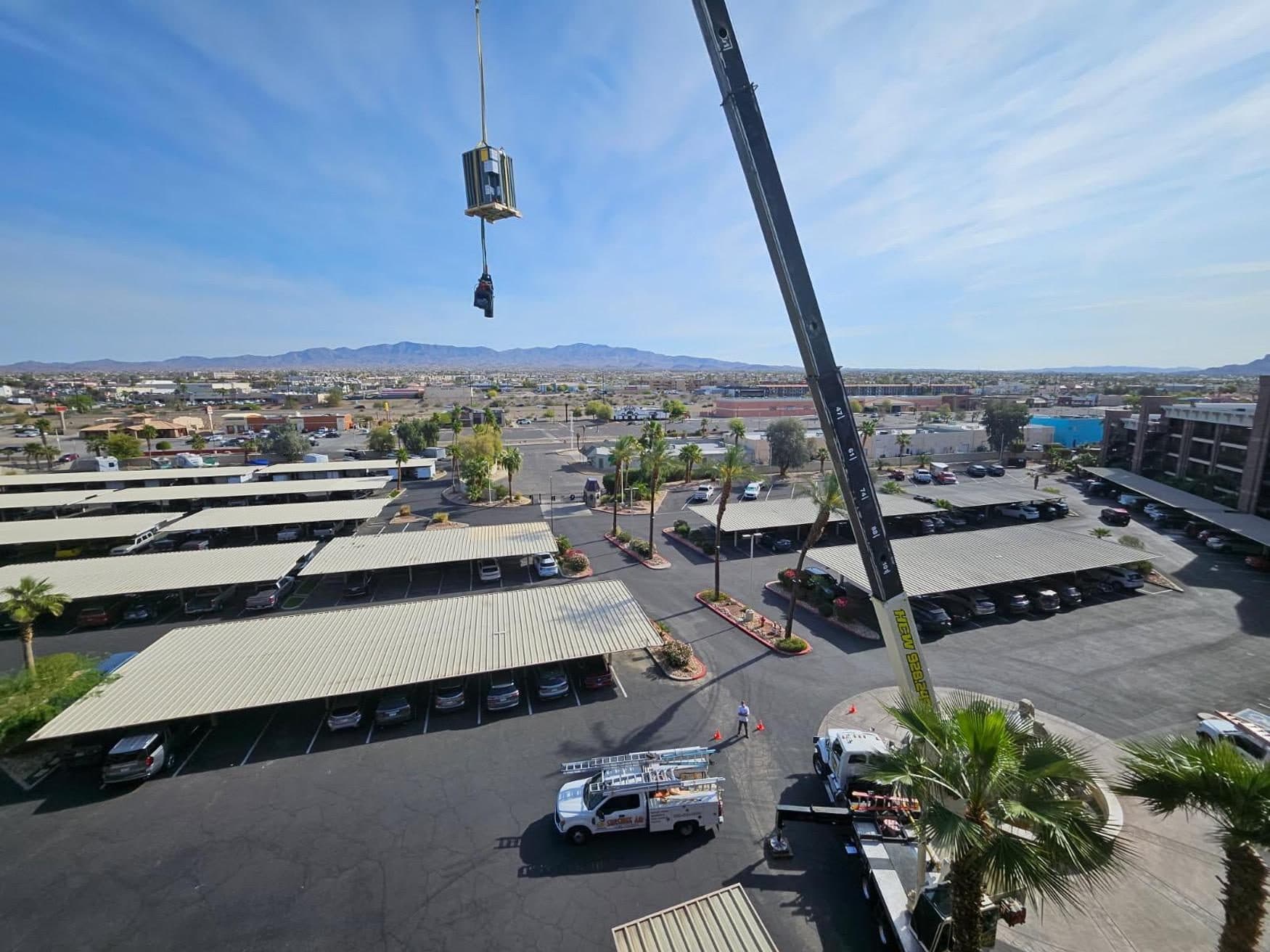
Rooftop HVAC unit in the air 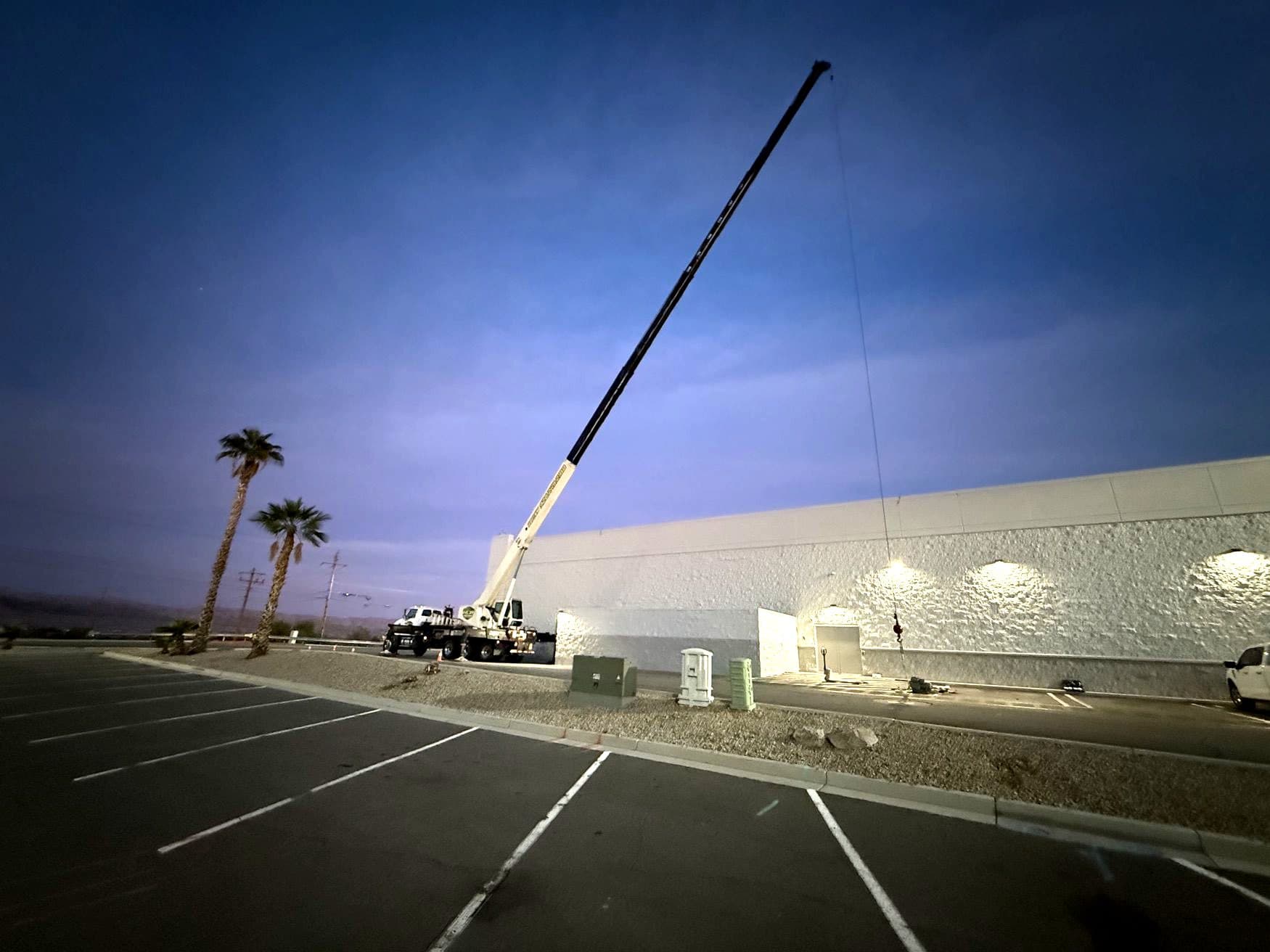
Early start at a commercial building 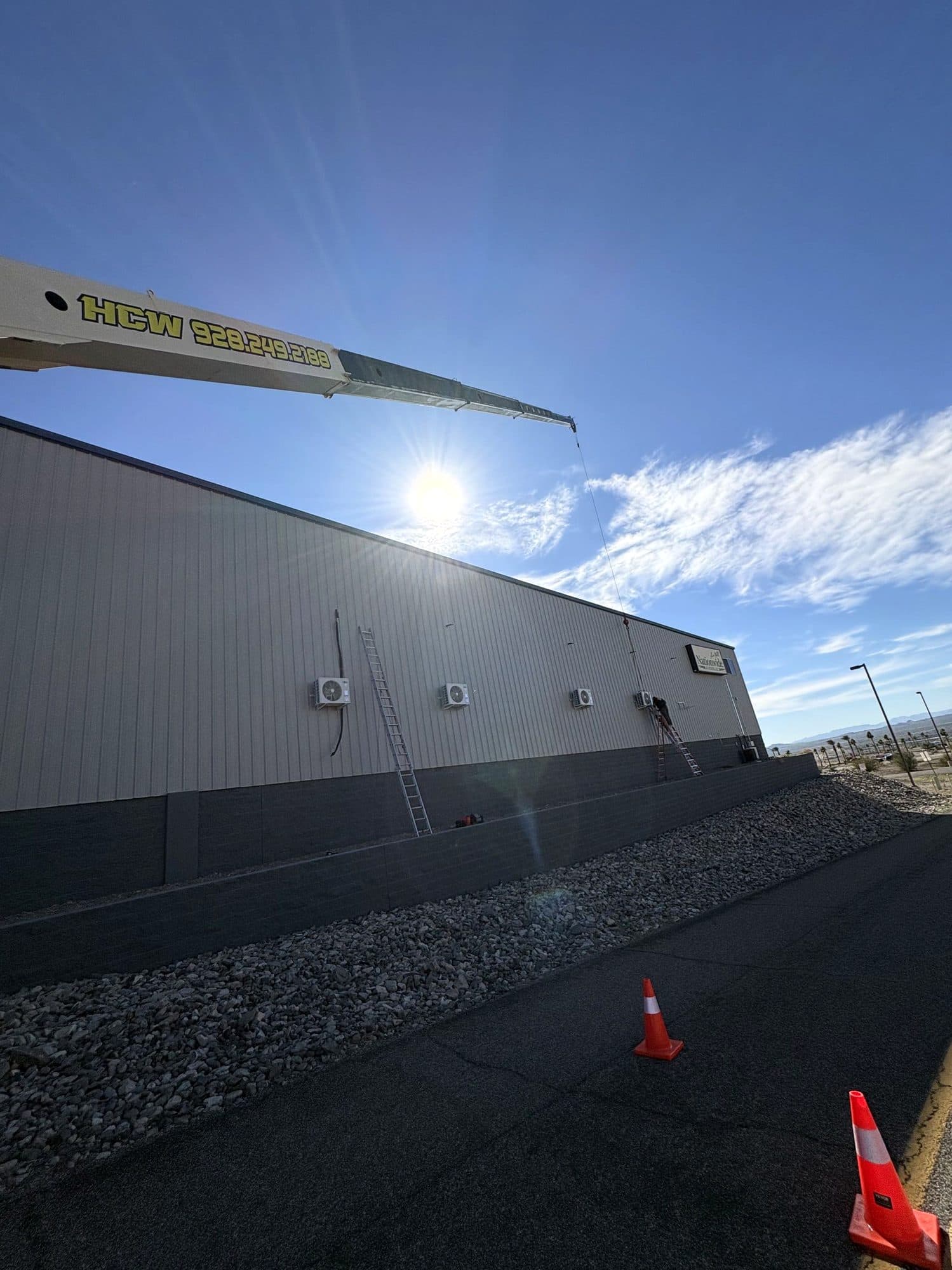
Boom reaching along a commercial wall 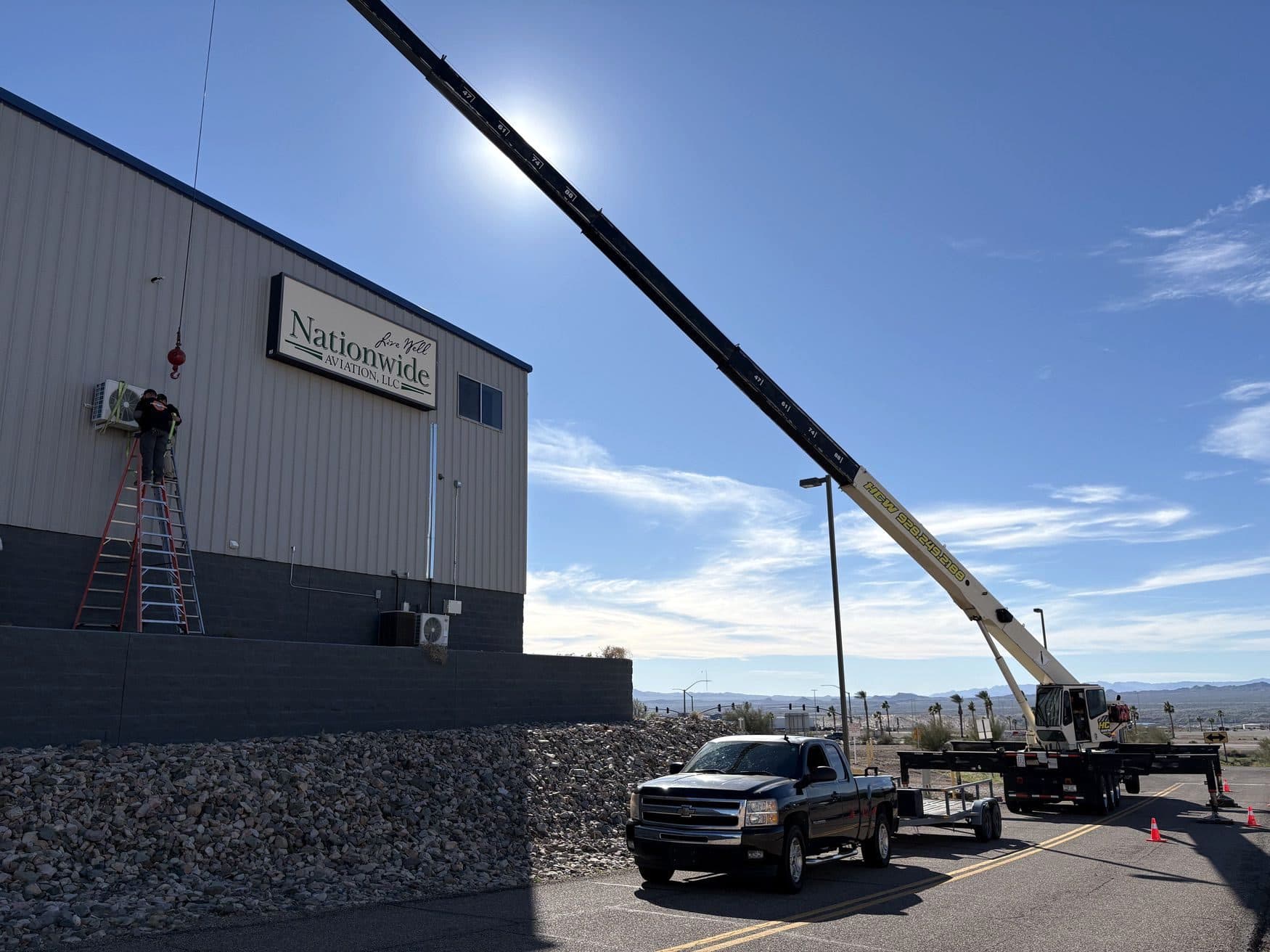
Condenser set on a building wall
Answers
Frequently Asked Questions
Do we have to close the store?
Almost never. The pick gets scheduled before opening or after close, and the setup is arranged so the swing path stays off the entrance and off the walkway. Part of the parking lot gets coned off for the truck and the drop zone, and a spotter keeps traffic out of it while the boom is up.
Will the crane damage our roof?
Not if the landing is set up first. Protection goes under the cribbing and across the landing area on a membrane roof, and the load comes down on a curb or over framing rather than mid span. The roofer or the building owner confirms the spot beforehand, which also keeps any roof warranty intact.
How much parking lot do you need?
Enough for the truck plus fully extended outriggers on all four corners, with room around it for the drop zone and the load path. Half extended outriggers cut capacity, so squeezing the setup is not a fix. Send a photo of the lot and the building and we will mark where the truck has to sit.
Can you do it at night?
Yes, and evening picks after close are common at restaurants and stores. Calls get answered any hour. Night work needs lighting on the setup area and the roof landing zone, and it needs the same trades standing by. Wind is usually calmer after dark, which helps on a tall unit with a lot of side area.
Who needs to be on site when the load arrives?
The mechanical contractor or installer who is receiving the unit, somebody with roof access, and a manager who can speak for the building. If a membrane is involved, the roofer too. The crane holding a rooftop unit while somebody phones around looking for a key is the most avoidable delay there is.
Related Services
- Heavy Lifting and Equipment PlacementMobile crane work that sets heavy equipment in its final position, once.
- Reach and Radius PlanningReach and radius planning in Lake Havasu City. Where the boom truck can stand sets the radius, and radius decides what the crane can lift over your house.
- Site AssessmentCrane site assessment in Lake Havasu City. Gates, driveway slope, turnaround room, overhead lines and the landing point checked before the day of the lift.
- Urgent Placement ServiceUrgent crane placement in Lake Havasu City for loads already on site. When to set a piece now, and when staging it clear is the smarter move.
- Machinery PlacementMobile crane machinery placement in Lake Havasu City, Arizona. Lathes, presses, and shop equipment rigged to frame lift points and set on the pad.
- Generator PlacementGenerator placement in Lake Havasu City, Arizona. We level the pad, spread the sling angle, and land the genset clean over the conduit stub ups.
- Transformer PlacementPad mount and oil filled transformer placement in Lake Havasu City, Arizona. Rigged to the base lugs, hung plumb, and landed over the vault window.
- Tank and Vessel LiftsCrane lifts for poly and steel tanks in Lake Havasu City, Arizona. Empty tanks act like sails, so wind, tag lines, and cradle slings govern the pick.
- Industrial Equipment PositioningIndustrial equipment positioning in Lake Havasu City, Arizona. Short picks to tight tolerance inside a working plant, done inside the shutdown window.
Ready to schedule your lift?
Tell us the load, the site and the timing. We will confirm capacity, access and a window.