Why Choose HCW
What Twenty Plus Years of Operating Actually Buys
2 min readUpdated July 2026
The owner of HCW Crane Service has over 20 years of crane operating experience. In practice that means recognising problems before they develop: ground that will not hold, a load whose weight does not match the paperwork, a rigging arrangement that will rotate, and jobs that should not be attempted as described.
Experience Is Pattern Recognition, Not Speed
People assume an experienced operator is a faster one. That is backwards. What experience mostly produces is caution applied in the right places, which looks slower at the start of a job and much faster by the end of it.
The useful part is having seen the failure modes before. A ground surface that looks solid and is not. A load that is heavier on one end than the sheet suggested. A wrap on an awkward shape that will slip once it takes weight. None of those announce themselves.
That is 20 plus years of operating experience, and it belongs to the person on the machine rather than to a company history. It is the reason the walk at the start of a job produces useful questions instead of a nod.
Reading a Load Before It Leaves the Ground
The first few inches of a lift tell you most of what you need to know. The load comes up, stops, and gets watched. Does it hang level. Does it want to turn. Is the strain even across the rigging. Did anything shift when it took weight.
An operator who has done this for two decades reads those inches quickly and knows what each answer means. A load that lifts one corner first is telling you the balance point is not where you thought, and the fix is to set it down, not to keep going and manage it in the air.
The same applies to the machine. Hydraulics behave differently at a hundred and fifteen degrees than they do in February. Knowing what normal feels like is the only way to notice when something is not.
Knowing When the Job Does Not Work
The hardest thing to buy in this trade is a straight no. An operator who wants the work can always find a way to make a marginal lift sound reasonable, and the customer has no way to evaluate it.
Experience makes that no cheaper to give. When you have seen enough jobs, the ones that do not work are recognisable early, and there is no ego attached to saying so.
So sometimes the answer is that the reach is not there, that the ground will not carry it, that the clearance from a service drop cannot be made safely, or that what is being asked for needs different equipment than exists here. That answer is worth more than a booking.
How the job runs
Our Process
Step 1: Ask the Questions That Matter
Weight, radius, height, ground and access. Experience shows first in knowing which five questions decide a job before anyone drives anywhere.
Step 2: Verify Rather Than Assume
Paperwork weights get treated as estimates. Ground gets checked rather than trusted. Rigging gets inspected each time rather than because it was fine last week.
Step 3: Read the First Few Inches
The trial lift is where a problem shows up. Hang, balance, rotation and strain get watched before the load travels anywhere.
Step 4: Adjust or Stop
If something reads wrong, the load goes back down and gets re-rigged. Managing a bad pick in the air is not a skill worth having.
Scope
What Is Included
- Over 20 years of hands-on crane operating experience
- The owner on the controls for every lift
- Load and rigging assessment before every pick
- Honest assessment when a job does not work as described
- Judgement applied to ground, wind and heat conditions
- An operator on every crane, since this is not a bare rental
From the cab
The View From the Operator's Seat
These were taken from inside the crane cab on real HCW jobs.
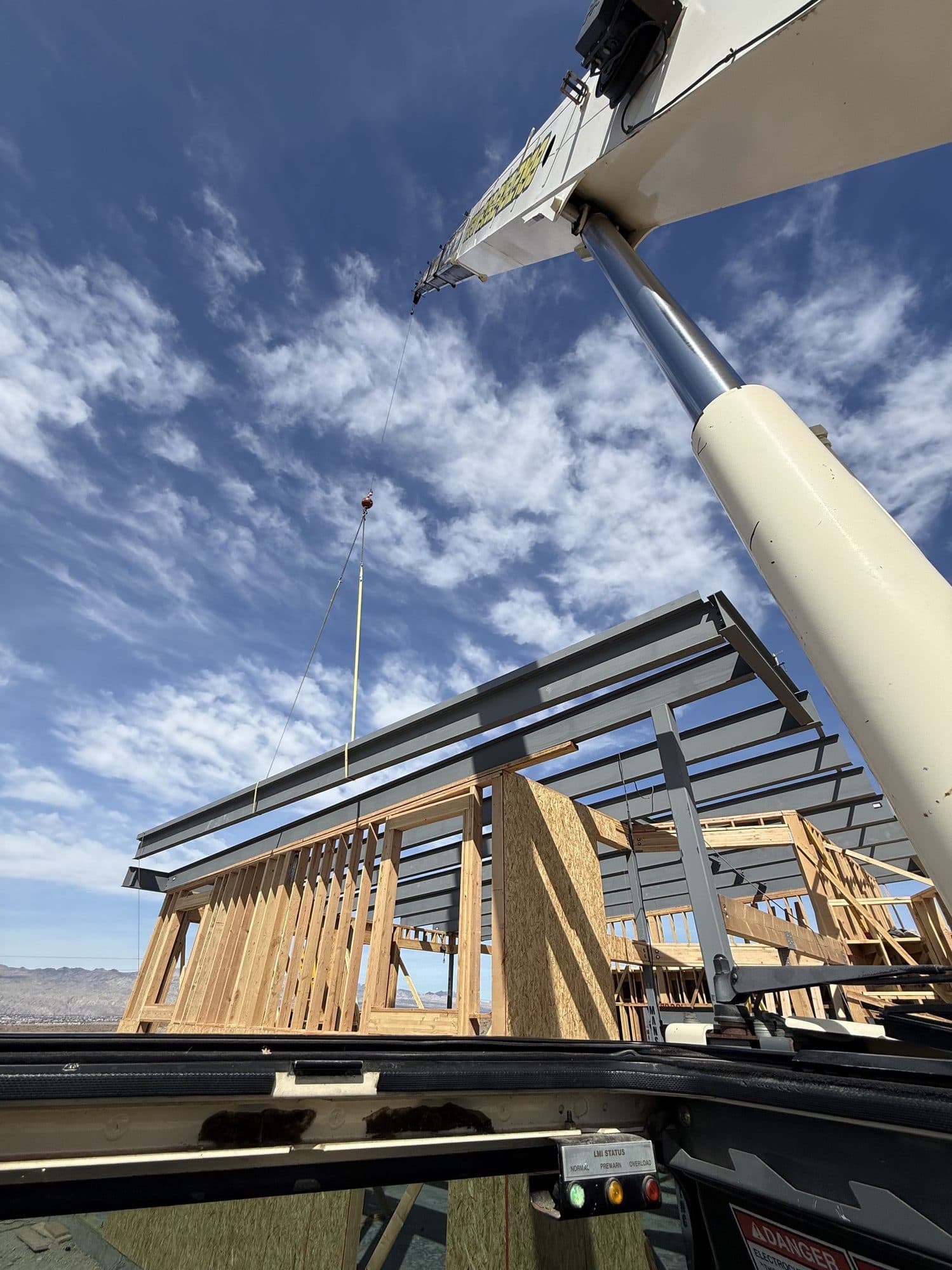
Operator view of a beam landing 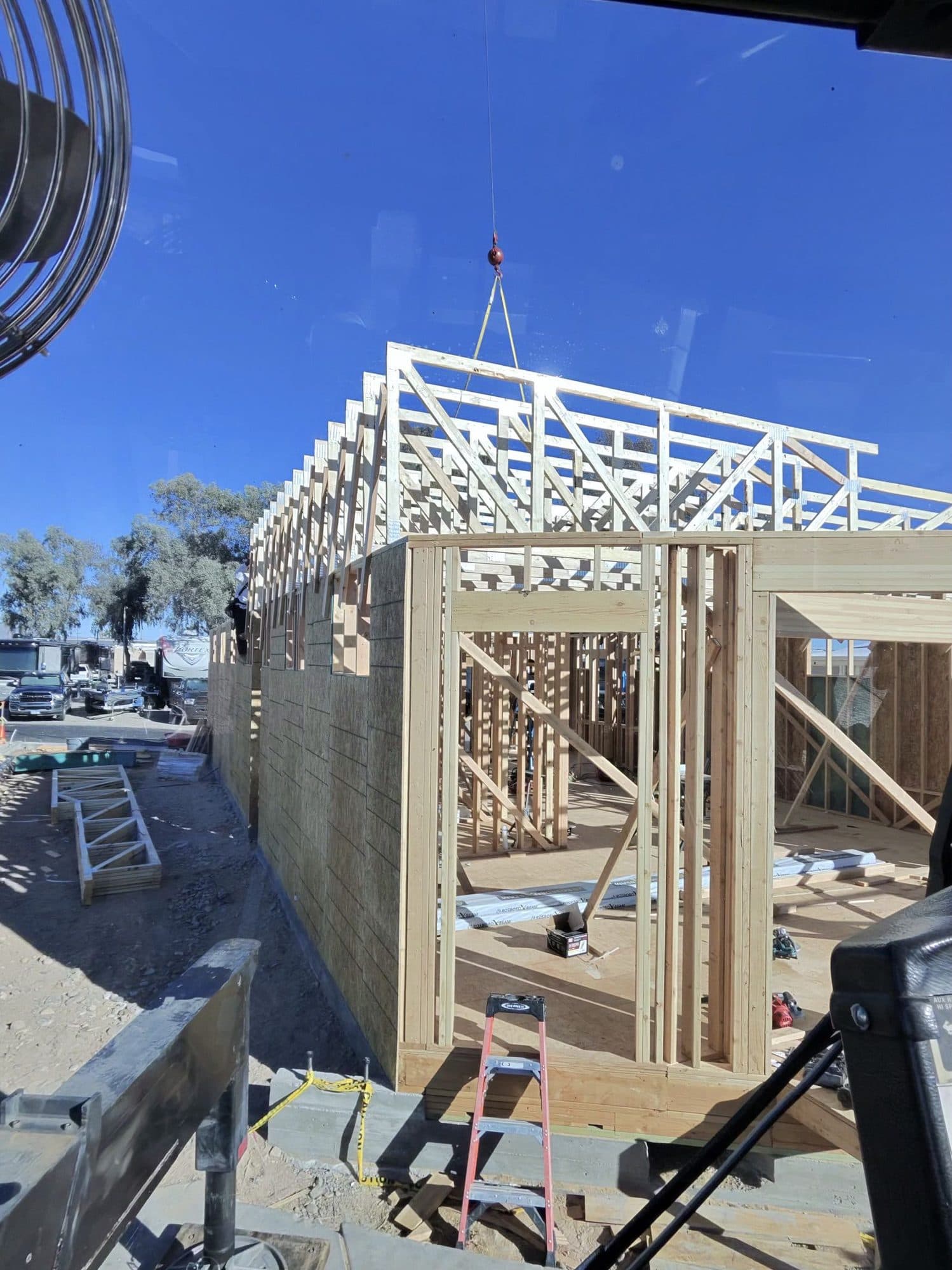
Trusses landing on a house frame 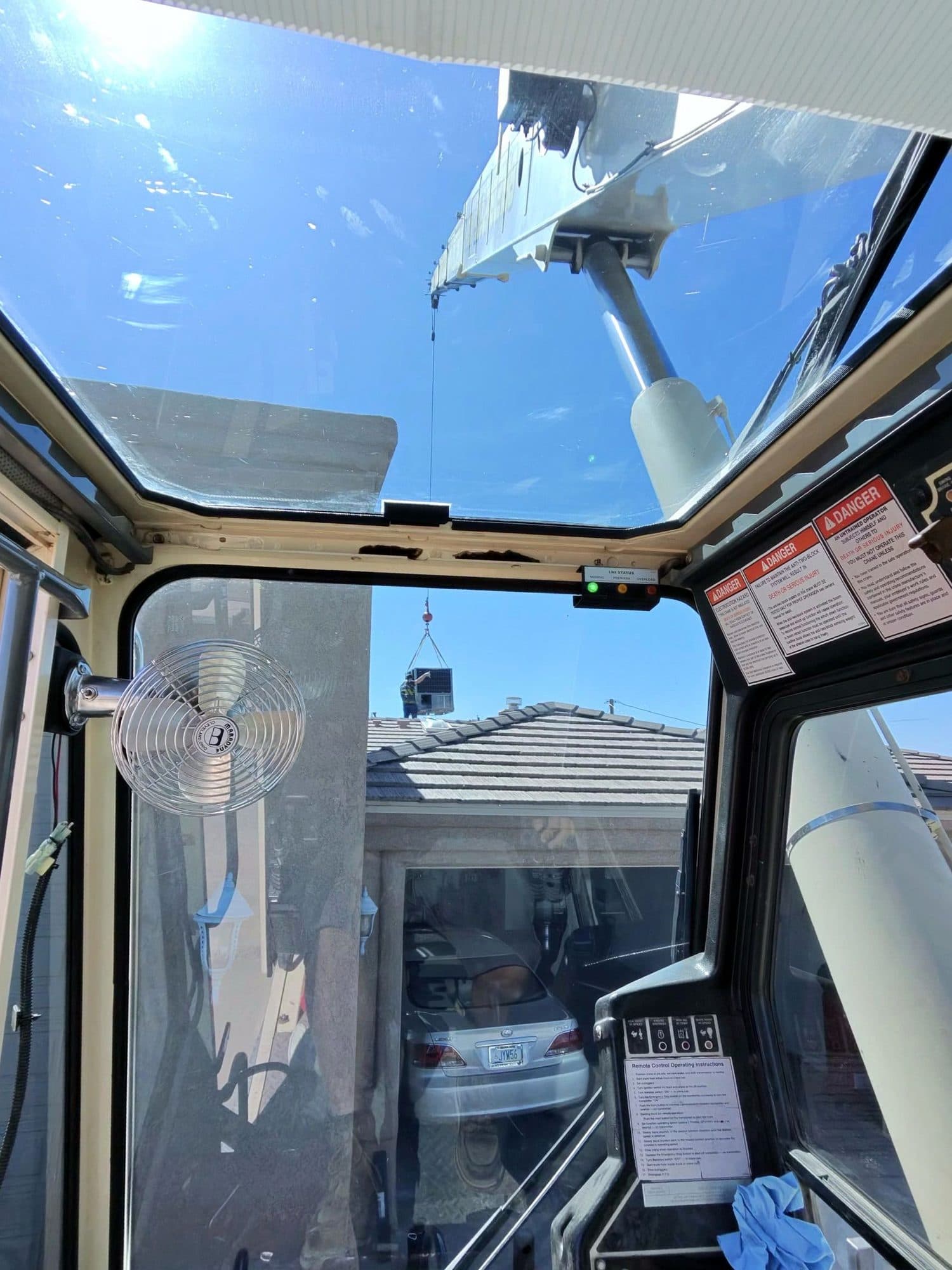
Rooftop unit lifted over a tile roof
Answers
Frequently Asked Questions
Is the 20 plus years the company or the operator?
The operator. That is an important distinction and we would rather be precise about it than let it be read as a company age. The experience belongs to the person who shows up and runs the machine.
Can I rent the crane without an operator?
No. Every crane goes out with the operator on it. The machine is the easy part to hire in this trade. What you are actually paying for is the judgement about where to set it up and whether the pick should happen at all.
Does the owner run every lift personally?
Yes. The person who takes your call and quotes the job is the person on the controls when the load goes up. Nothing gets lost between the quote and the lift, because there is no handoff to lose it in.
How do you decide which crane to bring?
By the heaviest piece at its working radius, plus how much room there is to set up. A 22-ton and a 40-ton machine are available and the choice is arithmetic. Bringing the bigger truck to a site it cannot fit on helps nobody.
What if you have not done my exact type of job before?
Then we say so and we work through it properly rather than pretending familiarity. Most lifts come down to weight, radius, ground and clearance regardless of what is on the hook, but where something is genuinely unusual it deserves an honest conversation.
More Reasons
- Safety First ProcessThe walk, the ground check, the load chart, the exclusion zone and the briefing. What actually happens before a load leaves the ground on a Havasu job.
- Owner Supervised QualityThe person who quotes your job is the person who runs the crane on it. No handoff, no relayed instructions, and one name attached to the outcome.
- Damage Prevention FocusPads and cribbing under every outrigger, the whole swing path checked rather than just the endpoints, and fragile things moved before the boom goes up.
- Local Reliable ResponseBased on London Bridge Road, not dispatched from another county. What a night call actually sounds like and what can honestly be done before daylight.
- Safety First ProcessThe walk, the ground check, the load chart, the exclusion zone and the briefing. What actually happens before a load leaves the ground on a Havasu job.
- On Time and Clear CommunicationArrival windows instead of day ranges, a confirmation call the day before, and one phone number that reaches the person driving the truck to your job.
- Owner Supervised QualityThe person who quotes your job is the person who runs the crane on it. No handoff, no relayed instructions, and one name attached to the outcome.
- Local Reliable ResponseBased on London Bridge Road, not dispatched from another county. What a night call actually sounds like and what can honestly be done before daylight.
- Peace of Mind ResultsWhat we take responsibility for, what stays yours, and what finished actually looks like. A plain division of labour instead of a vague reassurance.
- Damage Prevention FocusPads and cribbing under every outrigger, the whole swing path checked rather than just the endpoints, and fragile things moved before the boom goes up.
Ready to schedule your lift?
Tell us the load, the site and the timing. We will confirm capacity, access and a window.