
Why Choose HCW
What Gets Recorded and Why It Is Worth Having
2 min readUpdated July 2026
HCW Crane Service photographs the existing condition before anything is deployed, the setup once the truck is positioned, and the finished placement before leaving. Those go to the customer. It creates a factual record of what happened on the property, which matters most to facility managers, property managers and absent owners.
Six Months Later Nobody Remembers
Most disputes in this trade are not about bad faith. They are about memory. Was that crack in the wall cap there before. Did the unit get set square. Was the pad already chipped at the corner. Two honest people can disagree completely about a morning neither one wrote anything down about.
A photograph settles that in a second, and it settles it in whichever direction the truth points. That is the reason it is worth the two minutes it costs.
It also removes an awkward conversation from the front of a job. Nobody has to ask a homeowner to warrant the condition of their own driveway. The camera does it without anyone having to be suspicious about anything.
What Gets Recorded on a Job
The set is small and consistent, which is what makes it useful. Existing condition of the surfaces and structures near the work, taken before any equipment comes off the truck. The setup once the outriggers are down and cribbed. The finished placement from a couple of angles.
Where a job involved rigging to a customer's own equipment, the pick points get photographed before the lift. Once the load is set, nobody can see how it was slung, and a photograph is the closest thing to showing what was actually done.
Notes from the walk go with it when they matter. Ground condition, why a particular setup position was chosen, anything found on site that changed the plan.
Who Actually Uses This
Facility and property managers, mostly. They are the ones who have to close out a work order and answer a question from somebody above them who was not on site. A photo attached to the file is a better answer than a recollection.
Absent owners are the other group. Half this town belongs to people who are somewhere else for part of the year, and a finished placement photo is the only way they can see that the work was done and done properly.
Builders and project managers use it differently, mainly for sequence. A dated photo of a set component is a clean record of when a milestone actually happened.
What This Is Not
Documentation is a record of what happened. It is not a substitute for competence, and it should not be sold as one. A tidy file behind a badly run lift is worth nothing.
It is also not a credential. We are not going to hand you paperwork implying something about qualifications, because that would be a claim rather than a record. What you get is a straightforward account of the work on your property, with photographs, from the person who did it.
If you need something specific in your file, ask before the job. It is easier to take the photograph at the right moment than to reconstruct it afterwards.
How the job runs
Our Process
Step 1: Photograph Before Deploying
Existing condition of driveways, walls, roofs and anything near the work, taken before the first outrigger goes down.
Step 2: Record the Setup
The truck in position, outriggers cribbed and the zone marked. It shows how the lift was actually arranged, not how it was intended.
Step 3: Capture the Result
Finished placement from more than one angle, and the rigging on the load before it leaves the ground, since that is work you cannot see once it is set.
Step 4: Send It Over
You get the set after the job. Ask beforehand if you need a specific view for your file and it will be taken at the right point.
Scope
What Is Included
- Existing condition photographs before any setup
- Setup and outrigger position recorded
- Finished placement images from multiple angles
- Images of the rigging before the load leaves the ground
- Notes on ground conditions and setup decisions
- Images sent to you after the job for your own records
From the cab
The View From the Operator's Seat
These were taken from inside the crane cab on real HCW jobs.
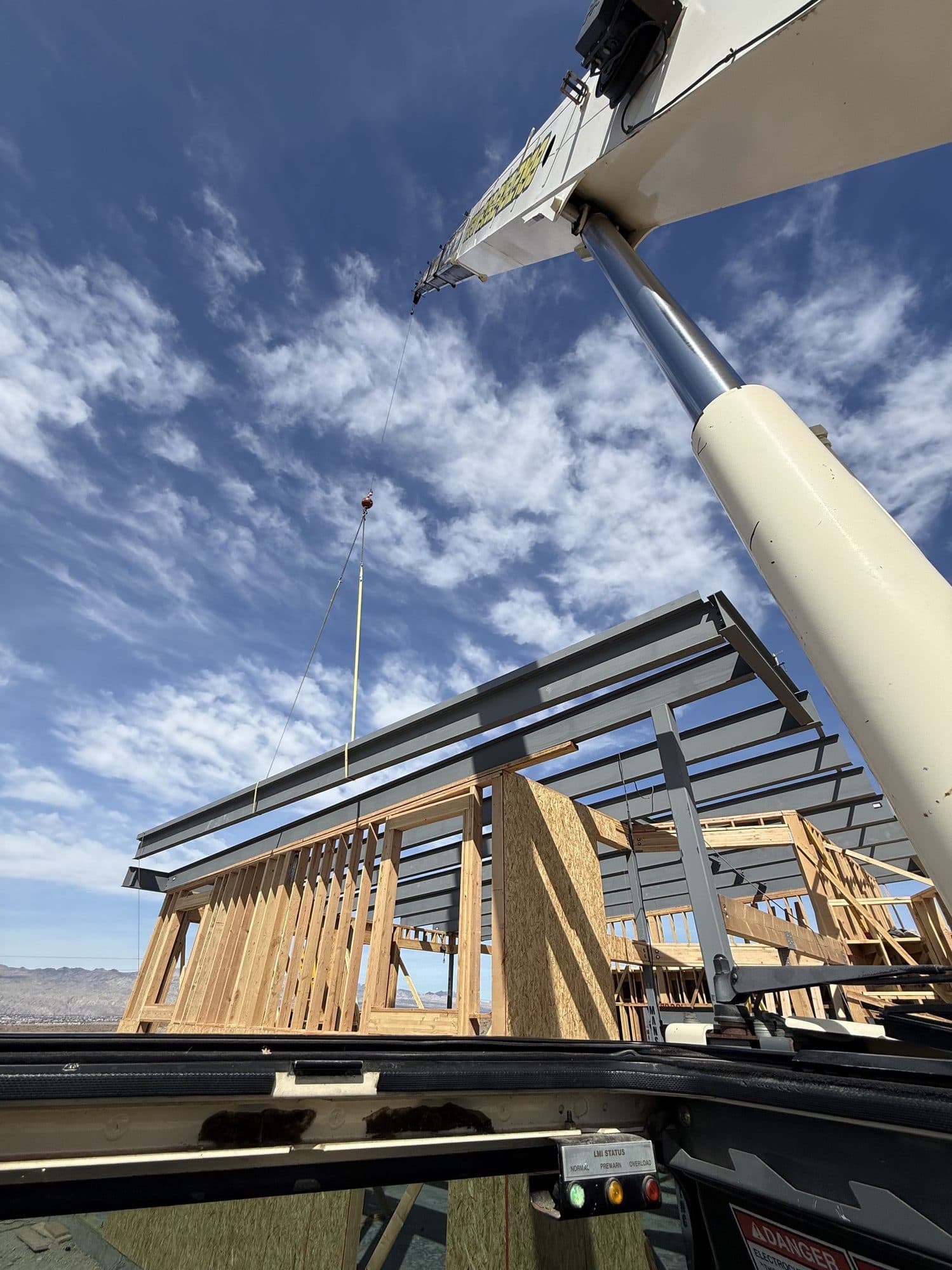
Operator view of a beam landing 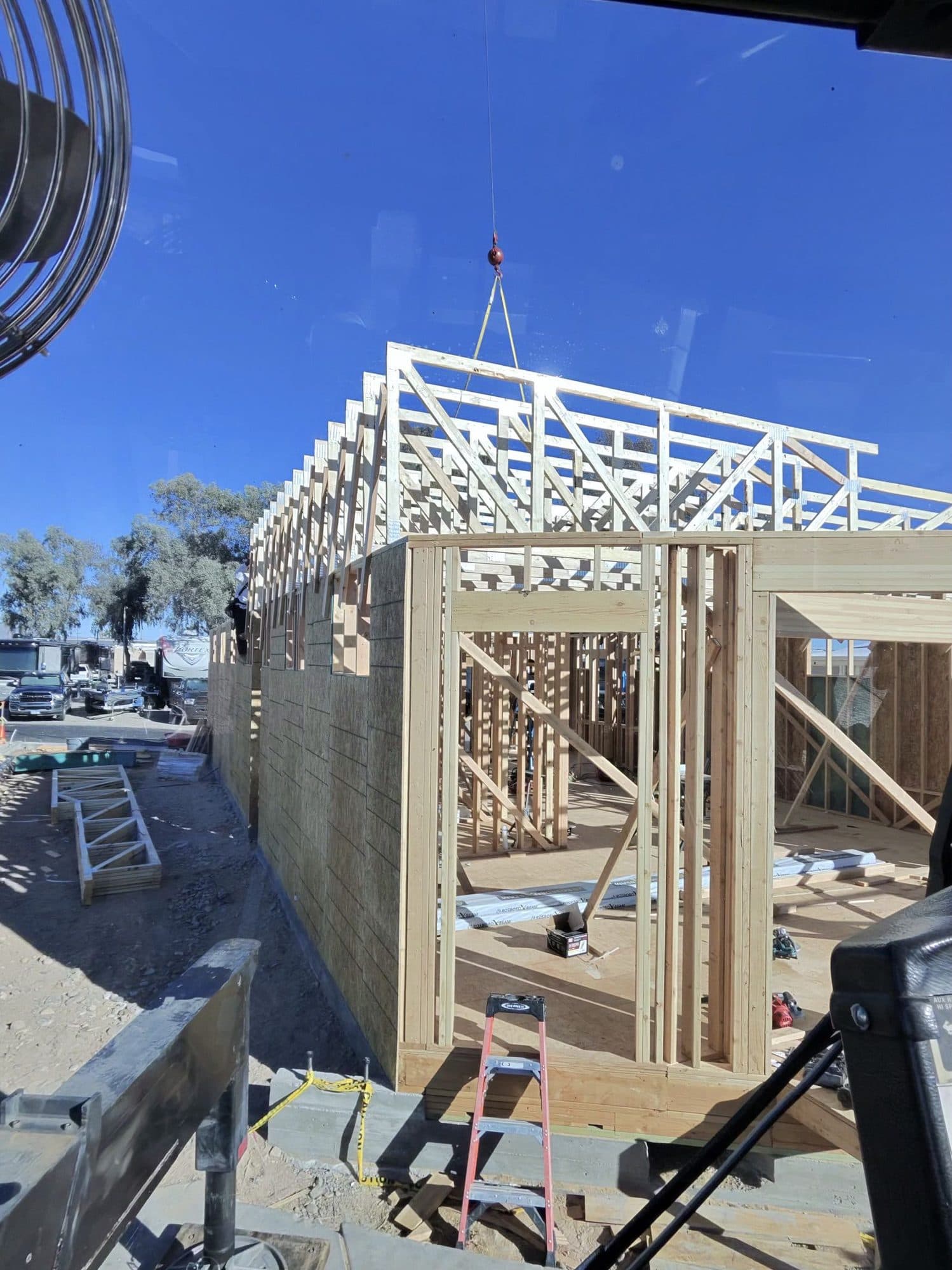
Trusses landing on a house frame 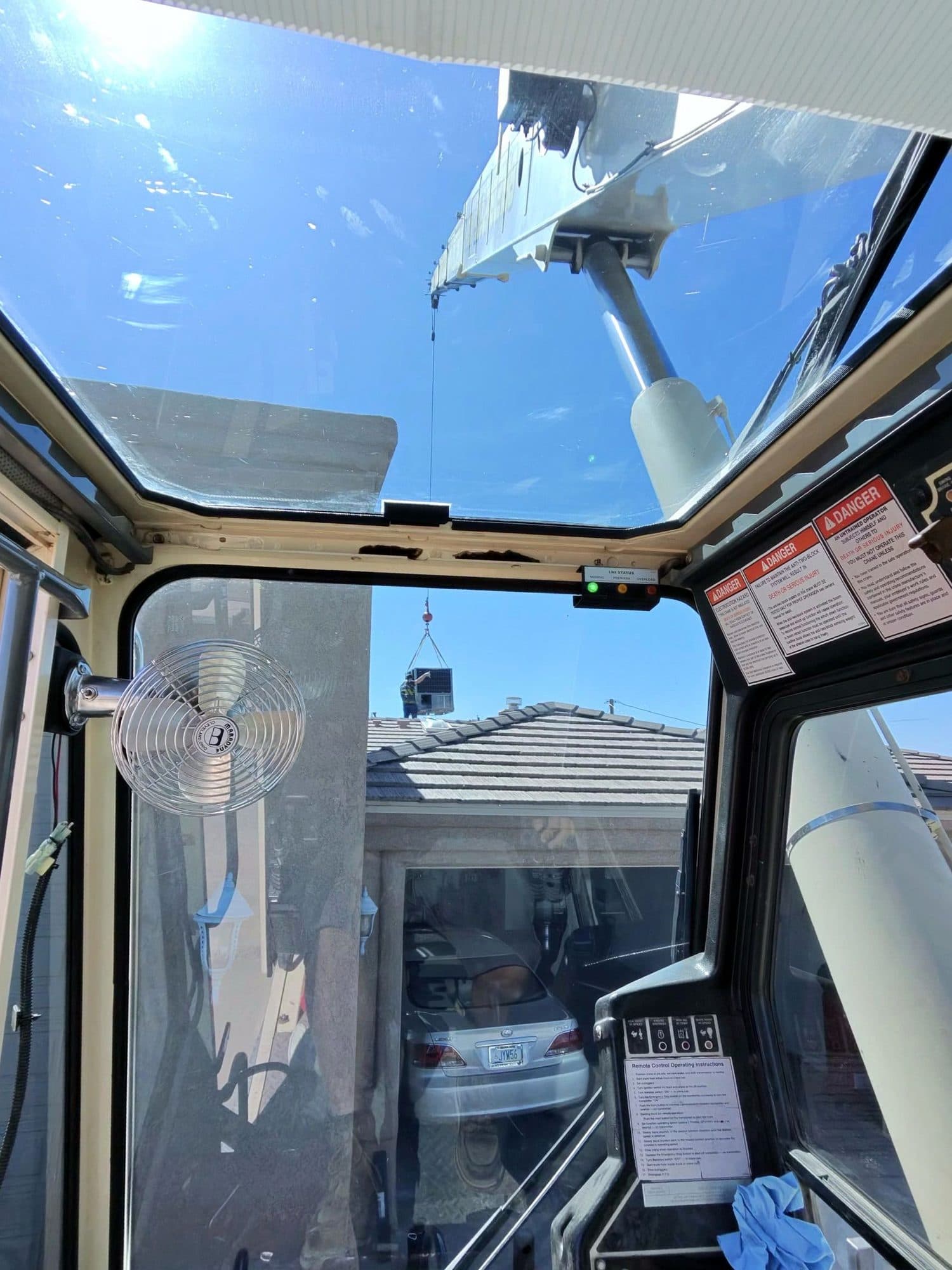
Rooftop unit lifted over a tile roof
Answers
Frequently Asked Questions
Do I have to ask for photos?
No, they get taken either way. Ask beforehand only if you need a particular view or angle for your own file, because it is far easier to take the right photograph during the job than to recreate it once the truck has gone.
Why photograph the rigging?
Because it is the one thing a customer cannot judge afterwards. Once the load is set and the slings are off, how it was picked is invisible. A photograph of the rigging before the lift is the only honest way to show what was actually done.
Is this a formal lift plan document?
It is a record of the job rather than a formal engineered document. If your organisation requires specific paperwork for a lift, tell us what it is when you call so we can be straight with you about what we can and cannot provide.
Do you keep copies?
Yes, which is useful on repeat work at the same property. Knowing what a site looked like on the last visit saves time and occasionally answers a question about something that happened between visits.
Can you document a job for our maintenance records?
That is the common use. Condition, setup, rigging and placement, sent over after the visit so it can be attached to a work order while the details are still current rather than reconstructed at the end of a quarter.
More Reasons
- Clean Professional PlacementA load set on the marks, checked for level before anything is unhooked, and every pad, sling, block and piece of packaging taken off the site with us.
- Damage Prevention FocusPads and cribbing under every outrigger, the whole swing path checked rather than just the endpoints, and fragile things moved before the boom goes up.
- Owner Supervised QualityThe person who quotes your job is the person who runs the crane on it. No handoff, no relayed instructions, and one name attached to the outcome.
- Peace of Mind ResultsWhat we take responsibility for, what stays yours, and what finished actually looks like. A plain division of labour instead of a vague reassurance.
- Safety First ProcessThe walk, the ground check, the load chart, the exclusion zone and the briefing. What actually happens before a load leaves the ground on a Havasu job.
- On Time and Clear CommunicationArrival windows instead of day ranges, a confirmation call the day before, and one phone number that reaches the person driving the truck to your job.
- Experienced OperatorsOver 20 years of operating experience shows up in small decisions, not in headlines. Reading ground, catching a bad pick early, and knowing when to say no.
- Owner Supervised QualityThe person who quotes your job is the person who runs the crane on it. No handoff, no relayed instructions, and one name attached to the outcome.
- Local Reliable ResponseBased on London Bridge Road, not dispatched from another county. What a night call actually sounds like and what can honestly be done before daylight.
- Peace of Mind ResultsWhat we take responsibility for, what stays yours, and what finished actually looks like. A plain division of labour instead of a vague reassurance.
Ready to schedule your lift?
Tell us the load, the site and the timing. We will confirm capacity, access and a window.