
Mobile Crane Service
Telescopic Crane Service in Lake Havasu City
2 min readUpdated July 2026
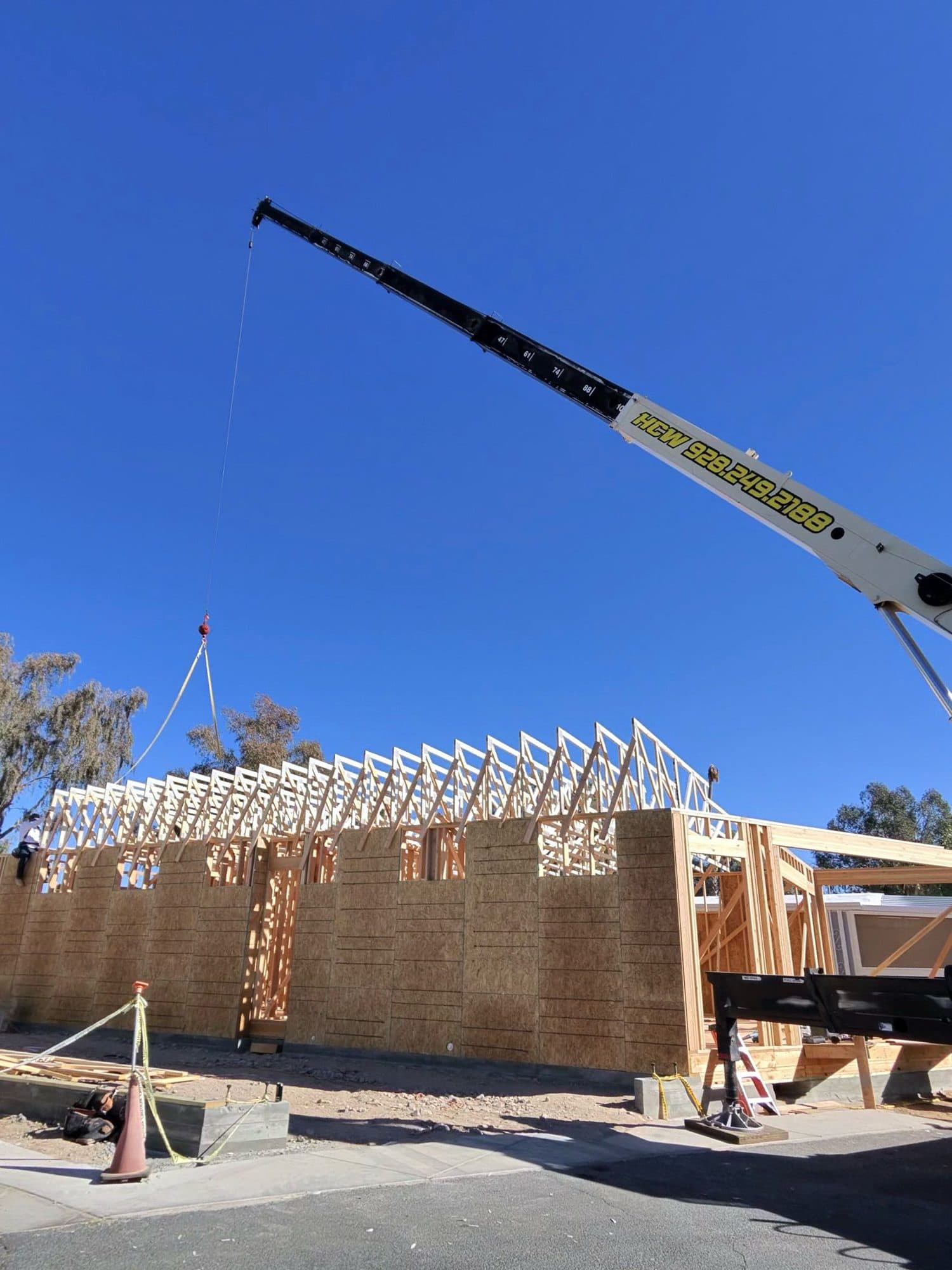
A telescopic crane has a boom made of nested sections that slide out to length. Both HCW cranes are telescopic boom trucks. The important consequence is that lifting capacity falls as the boom extends, so a pick is planned against the specific length and radius the job needs, not a headline tonnage.
Owner Devan Decastro is NCCCO certified: Telescopic Boom Crane, Swing Cab (TLL). CCO ID 444146986.Verify on NCCCO(opens verifycco.org in a new tab)
Boom Length Is Part of the Load Chart
A telescopic boom is several sections nested inside one another. Pull them out and you gain reach. You also add leverage against the machine, and the load chart drops accordingly. The same crane on the same ground can be strong and weak in the same afternoon depending on how far the boom is out.
That is why we ask how far the load has to travel before we ask anything else about the machine. Extension and radius together set the number. Weight alone tells us almost nothing about whether a pick works.
It also means we do not simply run the boom all the way out for comfort. Every foot of extension you do not need is capacity given away for nothing, so we position the truck to keep the boom as short as the job allows.
That is worth knowing if you are comparing options. A machine parked twenty feet closer can often do a job that the same machine cannot do from further back, so a bit of thought about the setup position is frequently more useful than a bigger crane.
Extending, Retracting, and Working the Sequence
On a long pick we usually plan the extension before the load leaves the ground rather than telescoping out with the load hanging. Fewer things change mid-lift that way, and the load chart we planned against is the one we are actually working to.
Some jobs genuinely need to extend or retract under load, for instance threading a load past a parapet and then reaching further in. When that is the case, it is planned deliberately and taken slowly, because capacity is changing while the load is in the air.
Retracting to travel matters too. A telescopic boom truck pulls in, drops the boom into its rest, raises the outriggers, and drives away. There is nothing to disassemble, which is why a second pick across town on the same day is realistic. It is also why we ask about gates, slopes, and turning room even when the pick itself is simple. Getting the truck into the right position is the part that decides the boom length, and the boom length is what decides whether the job works at all.
Boom length is not something anybody should have to think about from the customer side. Give us the distance and the height and we will work the rest out. It only becomes your problem when a weight or a measurement turns out to be wrong.
How the job runs
Our Process
Step 1: Measure the Real Radius
From the center of where the crane will sit to where the load lands. That distance and the required height set the boom length we plan for.
Step 2: Position to Shorten the Boom
Where the ground and access allow, we park closer so less boom is needed. Shorter boom means more capacity and a quieter load.
Step 3: Extend Before the Pick
Boom goes to working length, then rigging goes on. Keeping the extension fixed through the lift keeps the plan and the chart aligned.
Step 4: Retract and Travel
Boom back in, rest secured, outriggers up. The truck leaves under its own power, so back-to-back jobs in a day are normal.
Scope
What Is Included
- Telescopic boom truck with operator, 22-ton or 40-ton
- Radius and boom length planned before the crane arrives
- Truck positioned to minimize extension where the site allows
- Reach up to 142 feet on the 40-ton machine
- Same-day second setups, since there is nothing to assemble
Real HCW jobs
From the Job Site
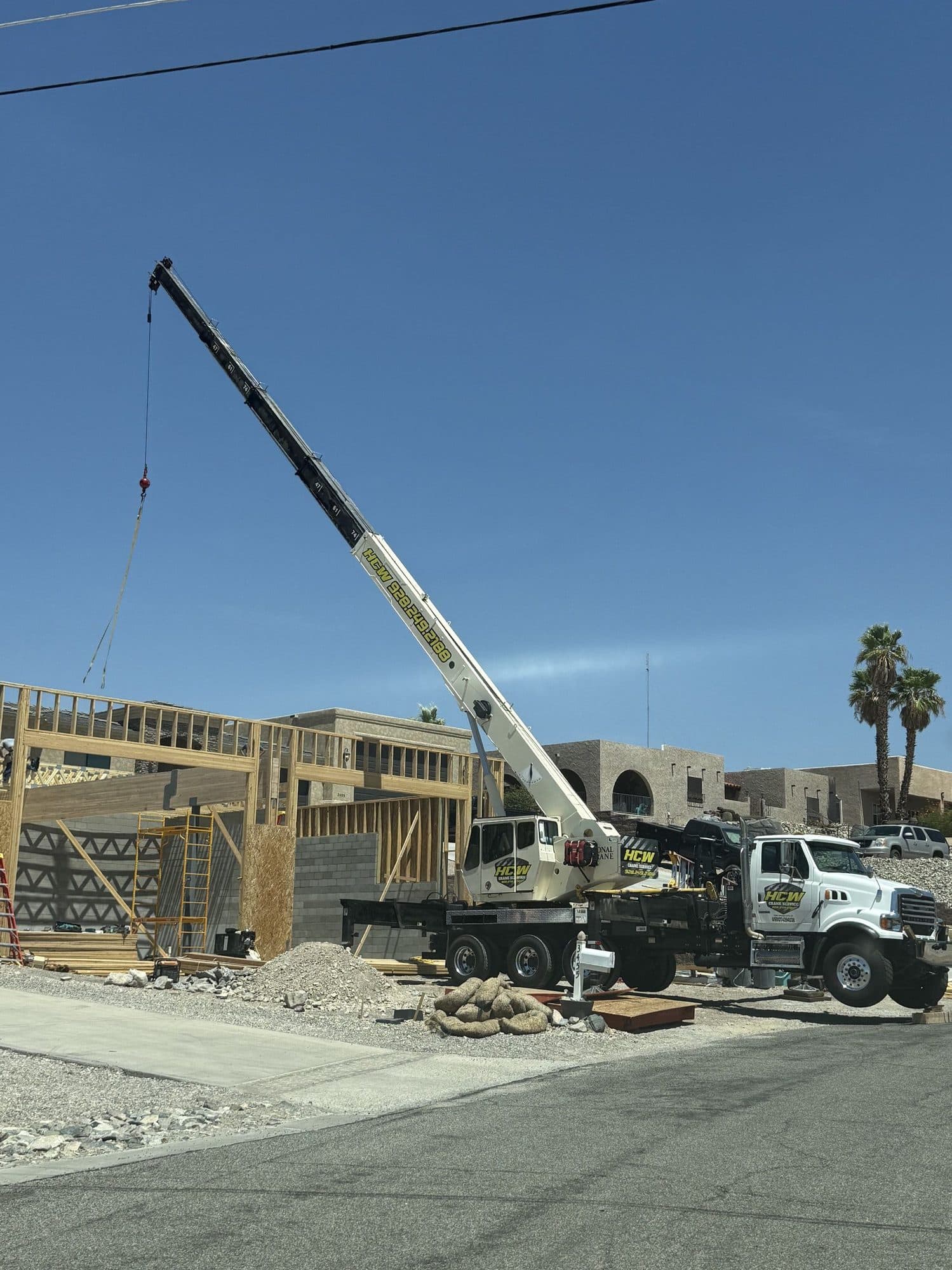
Boom truck working a framing site 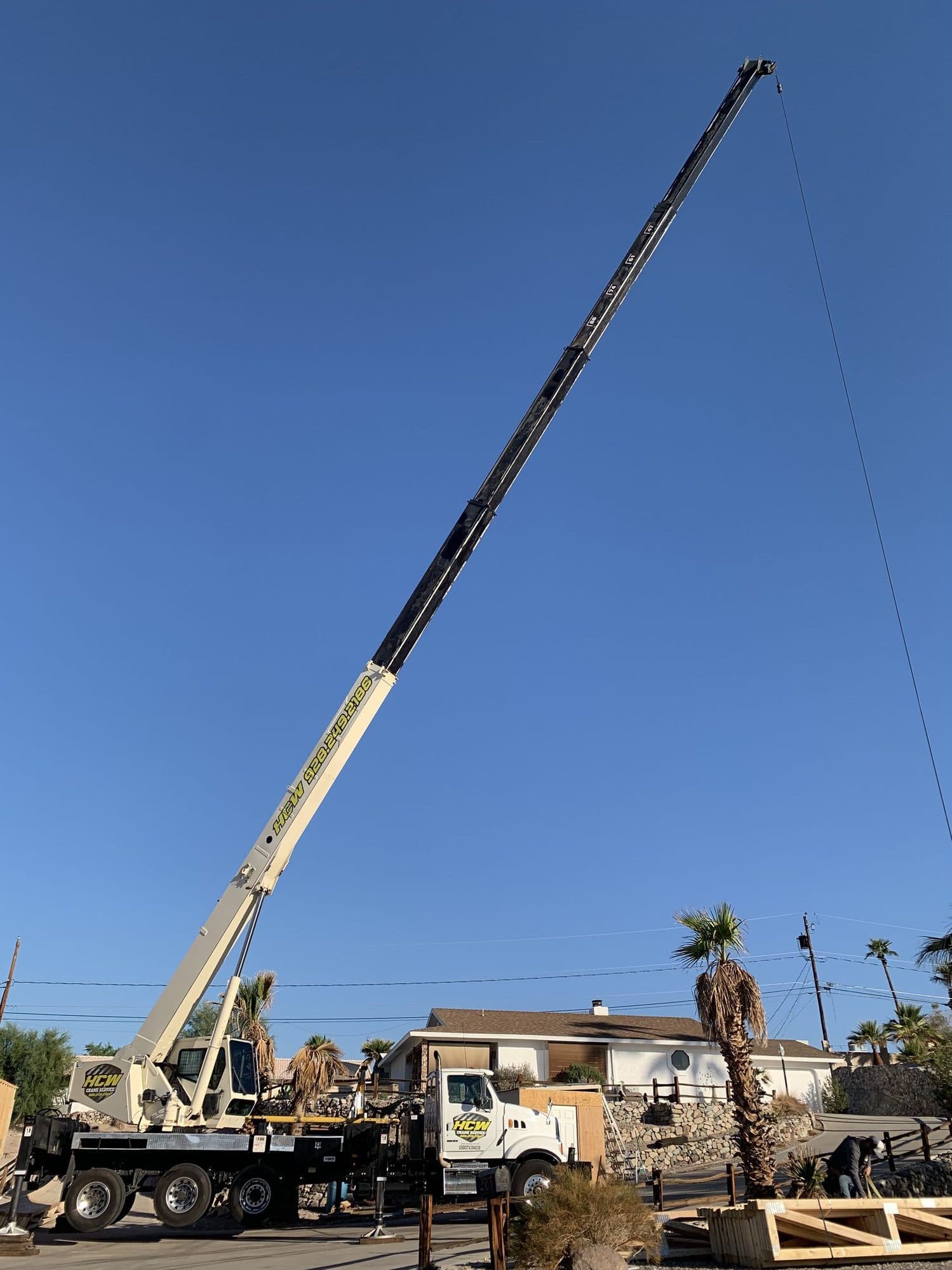
Telescopic boom at full reach 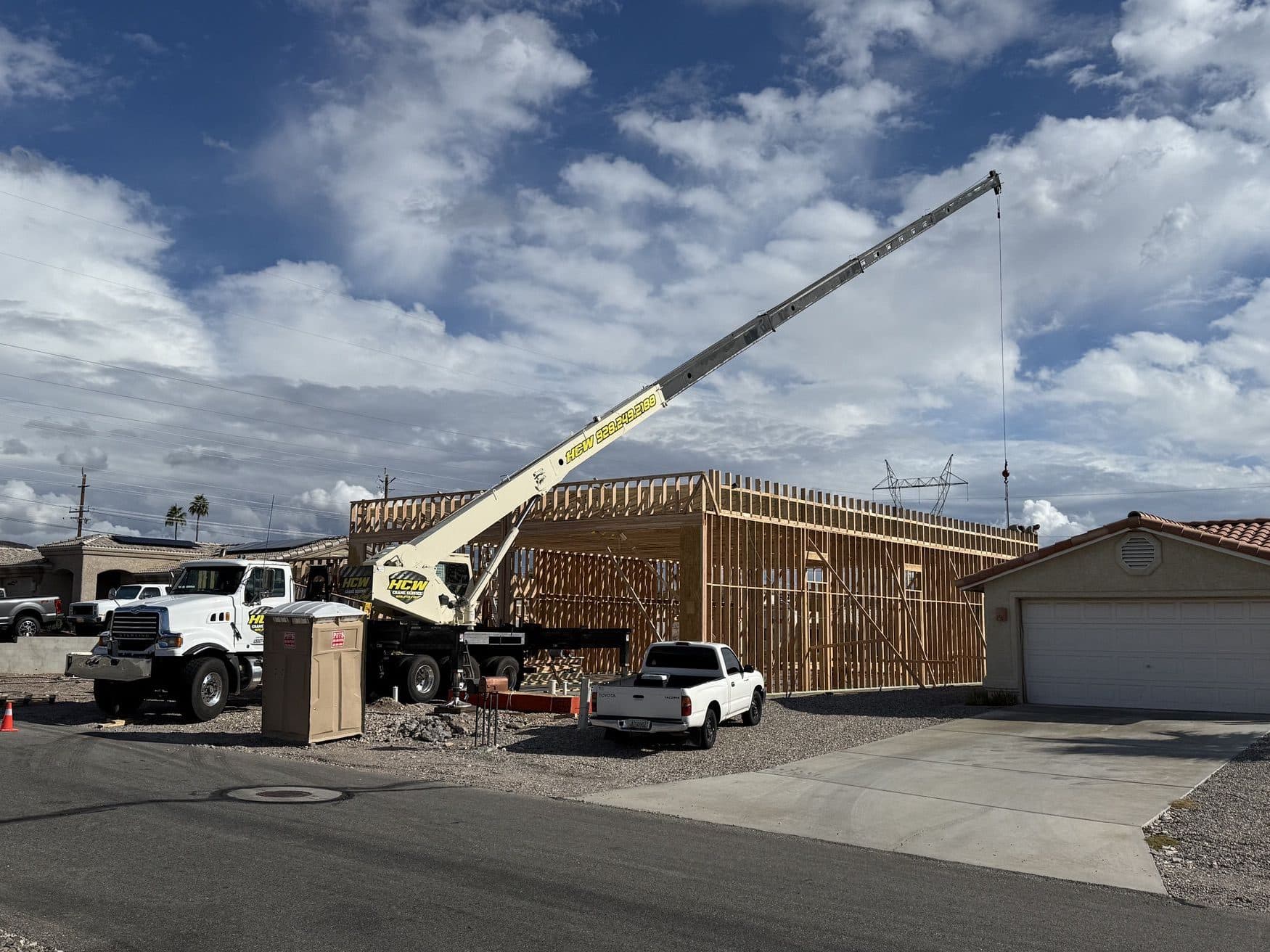
Boom set up beside new wall framing 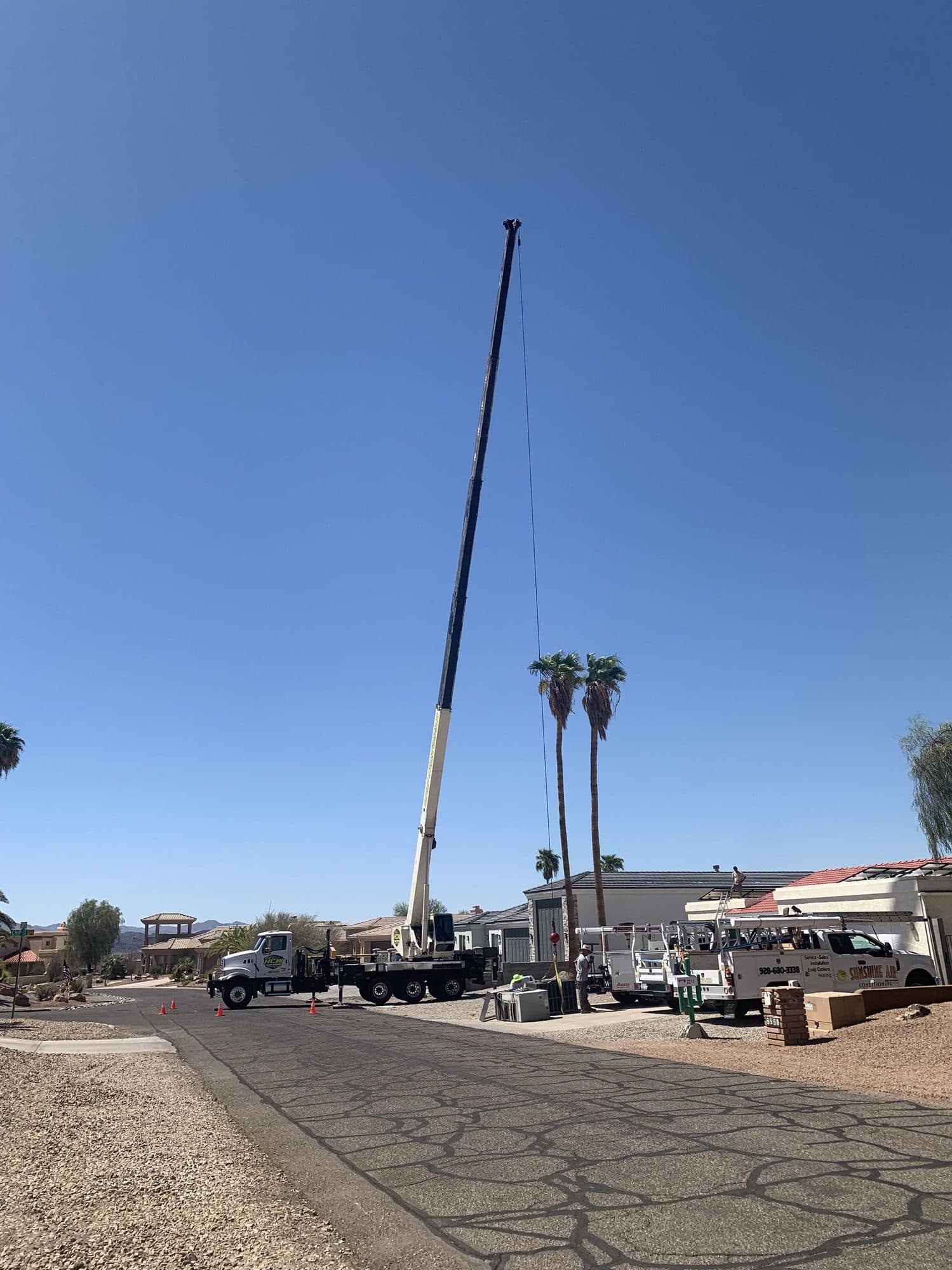
Full boom extension on a home
Answers
Frequently Asked Questions
Why does capacity drop when the boom extends?
Leverage. A load out at distance applies far more turning force against the machine than the same load held in close. The chart accounts for that, and it drops steeply, which is why radius is the first thing we ask about.
Can you extend the boom while the load is hanging?
Sometimes, when the job needs it, and always deliberately and slowly. Most picks are planned so the boom is already at working length before the load leaves the ground.
How long does a telescopic crane take to set up?
Minutes rather than hours, because there is nothing to assemble. Site prep, ground checks, and cribbing on soft or finished surfaces take longer than the machine itself.
Do you need a separate truck to bring the crane?
No. Both machines are boom trucks. They drive to the site, set up, work, and drive away. There is no trailer, no escort, and no assembly crew.
Related Services
- Hydraulic Crane ServiceBoth of our boom trucks are hydraulic. Smooth metered control, fast setup, and no assembly. Here is what that means for your lift and for desert heat.
- Boom Crane ServiceBoth HCW cranes are boom trucks. They drive to your site, set up on outriggers, make the pick, and leave. No trailers, no assembly, no crew required.
- 40-Ton Crane ServiceOur 40-ton boom truck reaches up to 142 feet and holds weight far out from the truck. The machine for two-story picks and deep commercial roofs.
- Owner-Operated Crane ServiceThe owner takes the call, walks the site, and runs the crane. One person accountable for the lift from the first phone call to the final walkthrough.
- Crane With OperatorEvery crane goes out with an operator and the rigging to do the job. Here is exactly who does what on site, and what your crew is responsible for.
- 22-Ton Crane ServiceOur 22-ton boom truck is the tight-street machine. Smaller setup footprint, quicker to place, and the right call for most single-story residential lifts.
- 40-Ton Crane ServiceOur 40-ton boom truck reaches up to 142 feet and holds weight far out from the truck. The machine for two-story picks and deep commercial roofs.
- Hydraulic Crane ServiceBoth of our boom trucks are hydraulic. Smooth metered control, fast setup, and no assembly. Here is what that means for your lift and for desert heat.
Ready to schedule your lift?
Tell us the load, the site and the timing. We will confirm capacity, access and a window.