Mobile Crane Service
Crane With Operator in Lake Havasu City
3 min readUpdated July 2026
A crane with operator means the machine and the person running it arrive together, along with the slings, shackles, and tag lines the pick needs. HCW Crane Service does not rent bare equipment. Your crew describes the load and receives it. The operator plans the lift, rigs it, and runs the crane.
Owner Devan Decastro is NCCCO certified: Telescopic Boom Crane, Swing Cab (TLL). CCO ID 444146986.Verify on NCCCO(opens verifycco.org in a new tab)
Why the Operator Comes With the Machine
Running a boom truck is not driving a truck. It is reading a load chart against the actual radius and boom extension, judging what a load will do when it leaves the ground, and knowing what a machine feels like just before it tells you something is wrong.
Handing that to someone who runs a crane twice a year is how loads get dropped and how outriggers punch through fill. So the crane and the operator are one package. There is no version of this where the keys change hands.
It also removes a pile of logistics from your side. No transport arrangements, no operator to hire for the day, no rigging to buy or rent for a load you will never lift again.
Who Does What on the Ground
The operator owns the crane, the rigging, and the flight path. That means selecting slings, setting pick points, deciding when the load moves, and stopping it when it should not. Nobody else touches those calls.
Your crew owns the load at both ends. Somebody who knows the equipment tells us where the pick points are and what is fragile. Somebody at the landing point receives it, guides it onto the curb or the pad, and confirms it is seated before we come off the load.
One person gives signals, and only one. Three people waving at a crane is how a load ends up somewhere unplanned. On a noisy site or a blind pick we use radios instead of hand signals, and we agree on who is talking before the load leaves the ground.
Nobody stands under a suspended load, and nobody rides the hook or the load. That is not negotiable and it is worth saying out loud before the first pick, because on residential jobs people wander.
Rigging Comes on the Truck
Slings, shackles, spreader bars, and tag lines come with us and get matched to the specific load. Soft synthetic slings on a finished surface that will scuff. Wire or chain where the load has sharp edges that would cut webbing. A spreader when a straight two-leg sling would crush a cabinet or a panel inward.
Pick point selection matters more than sling size on most residential loads. A spa, a sheet metal air handler, and a banded truss bundle all fail in different ways if you sling them wrong, and none of those failures is about the sling being too light.
If the load has engineered lifting lugs or inserts, we use them. If it does not, we find a way to carry it that puts the force through structure rather than through skin, trim, or a plastic pan.
Working Alongside Your Trade
Most of our work is with another crew already on site. HVAC techs waiting on a curb, framers on a wall waiting for the next truss, a pool contractor with a pad that cured yesterday, a mechanic with an engine hanging over a bay.
The useful part of a crane call is timing. We want your crew ready when the load leaves the ground and not a minute before. That takes one short conversation at the start of the day about sequence, who is where, and what the signal is to move.
If we get there and the receiving end is not ready, we will say so rather than hold a load in the air. Suspended time is the least productive and least safe part of any lift.
It also helps to know what your crew can and cannot do. Some outfits have people who rig every week and know exactly what they want. Others have never worked under a crane. Both are fine, but they run differently, and a minute of honesty about which one you are makes the whole day smoother.
How the job runs
Our Process
Step 1: Load Details First
We need weight, dimensions, and pick points. Photos of the data plate and of the landing spot answer most questions in one message and save a site visit.
Step 2: Roles Agreed on Arrival
Before setup, we settle who gives signals, who receives the load, and where the work area boundary sits. Two minutes here prevents the most common problems on a residential lift.
Step 3: Rig and Test Lift
Rigging goes on, tag lines get attached, and the load comes up a few inches. We stop there and check that it hangs level and nothing has slipped before it goes anywhere.
Step 4: Controlled Move and Set
Boom, swing, and hoist at a speed the load stays quiet at. The signal person keeps eyes on the landing point. The load sets down, and the receiving crew confirms it before the hook comes off.
Step 5: Clear and Confirm
Rigging comes off, the area opens back up, outriggers come up, and we walk it with you. If your crew still has connections to make, we can stay on standby rather than pack up.
Scope
What Is Included
- Operator on the controls, included on every call
- Slings, shackles, and spreader bars selected for the load
- Tag lines and load control through the full flight path
- A short roles and signals briefing before the first pick
- Test lift and hang check before any load travels
- Coordination with your trade so nobody waits on anybody
Real HCW jobs
From the Job Site
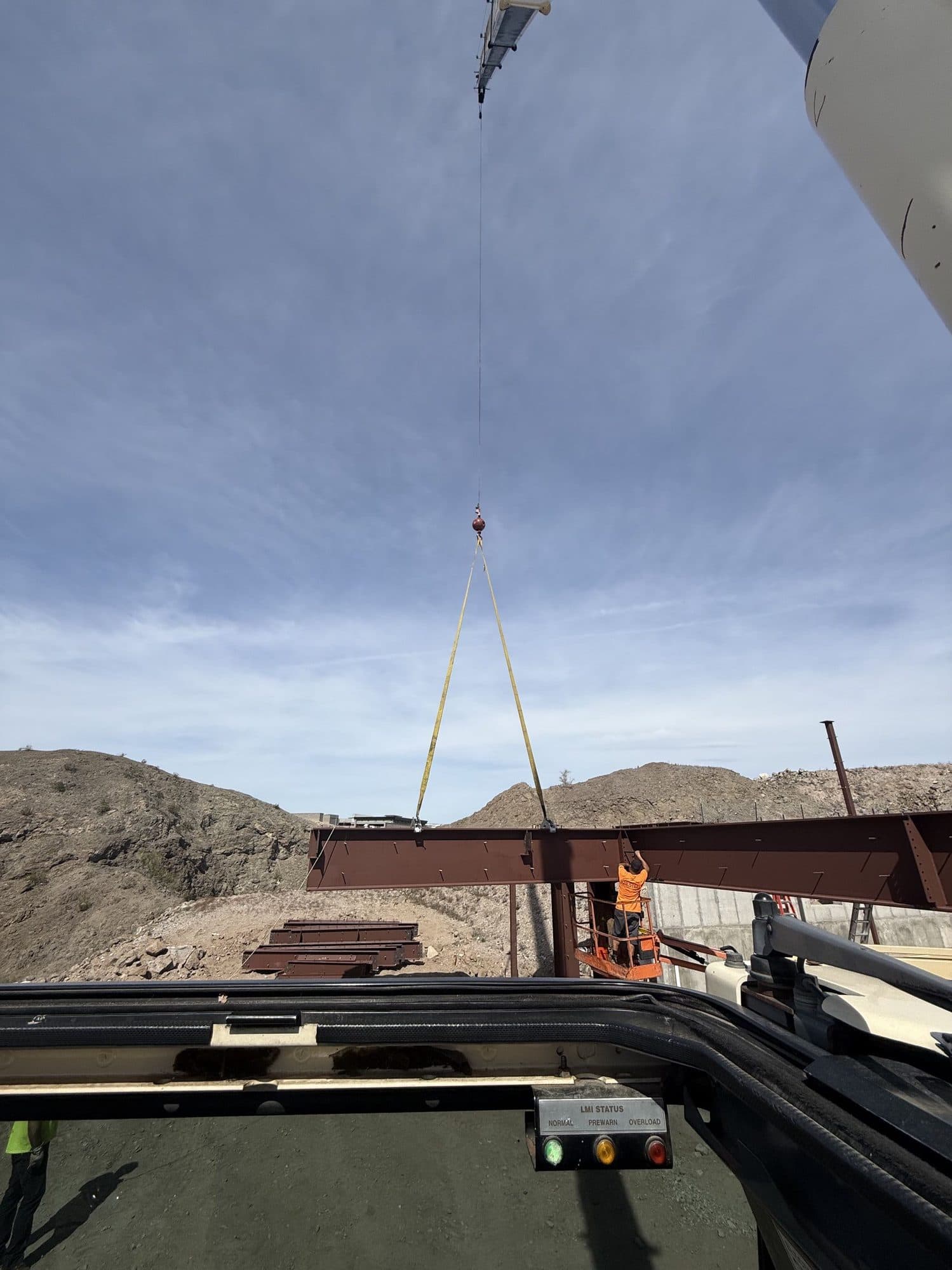
Guiding a beam from the cab 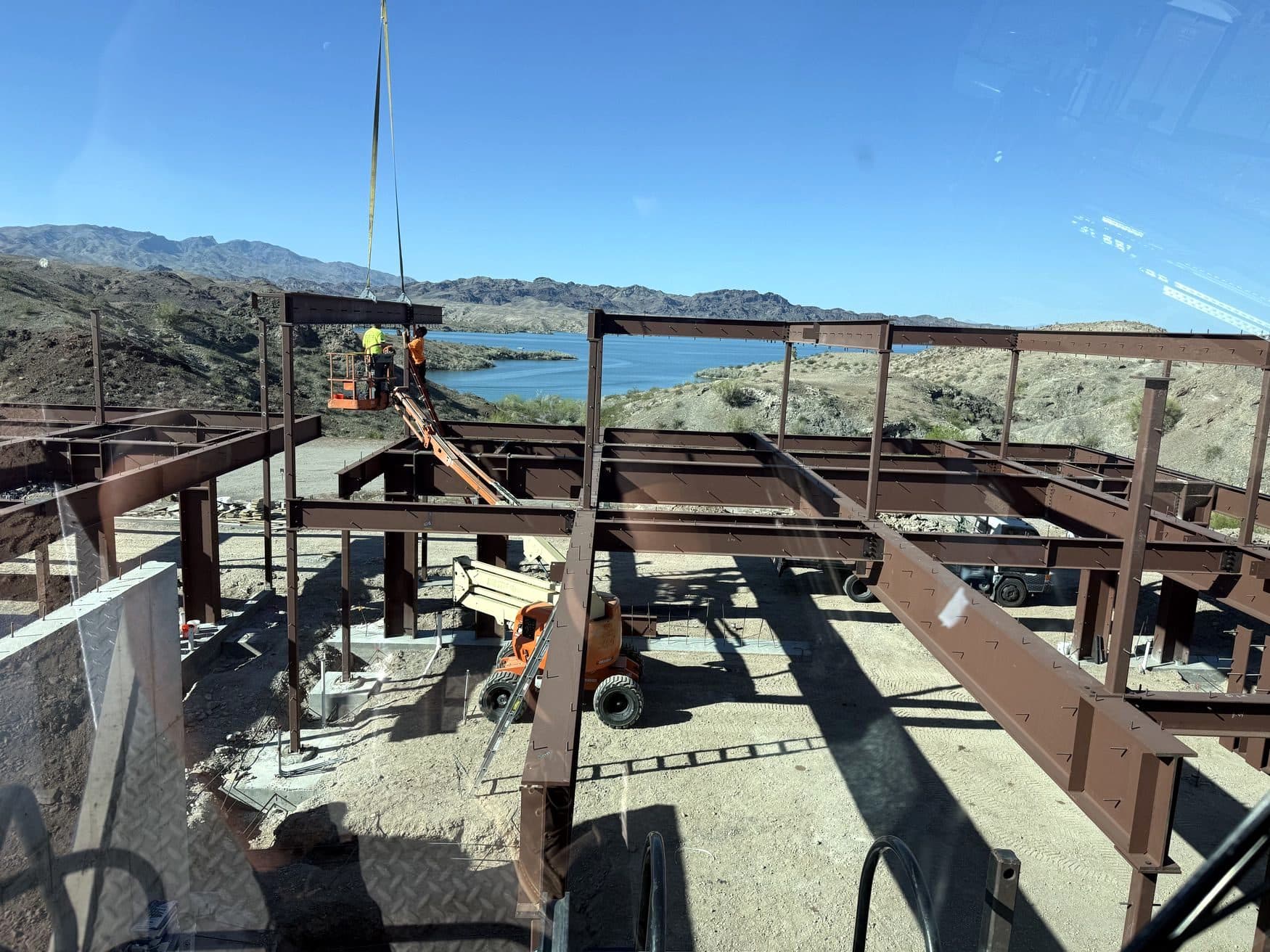
Steel frame with a lake view 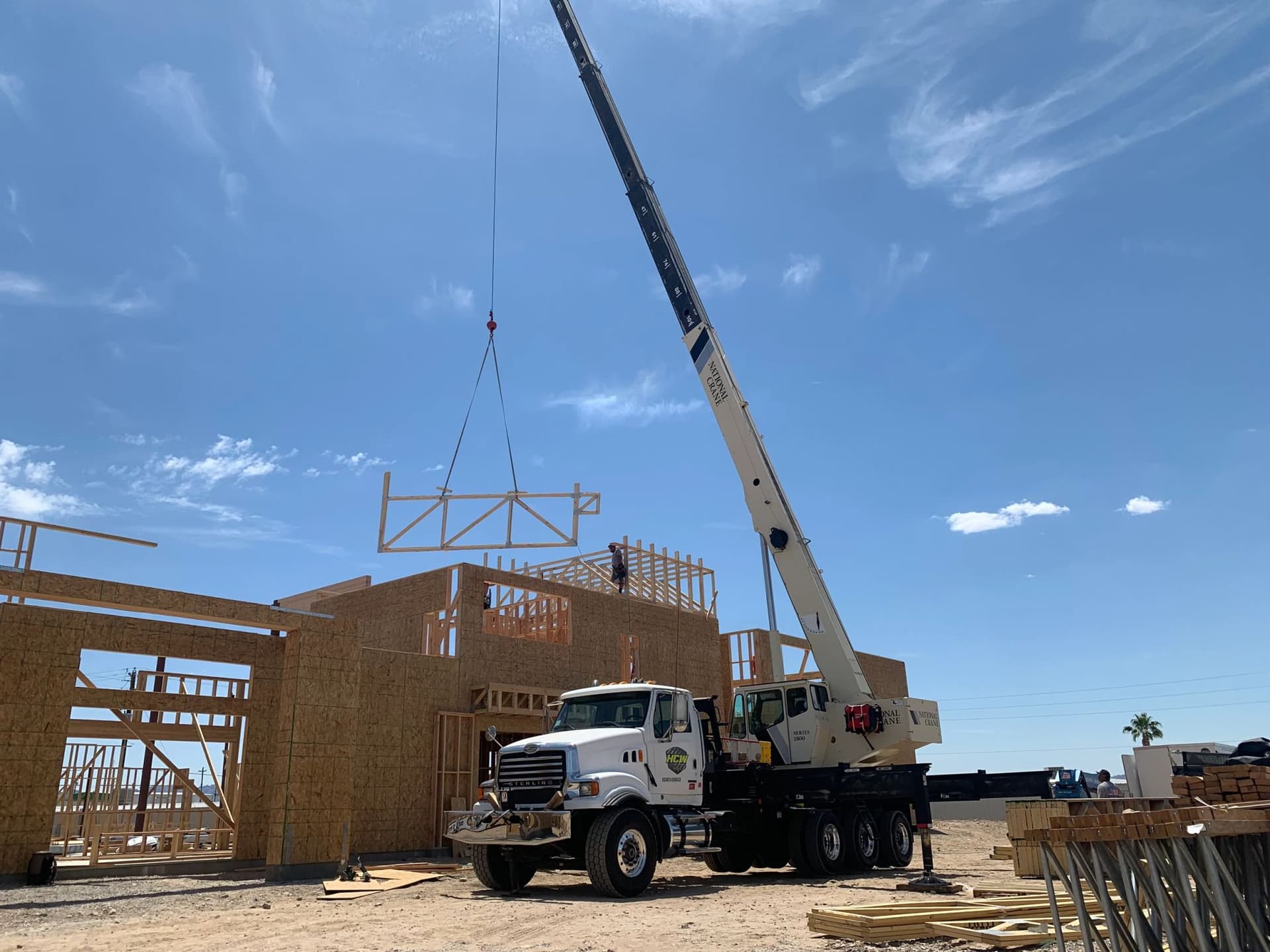
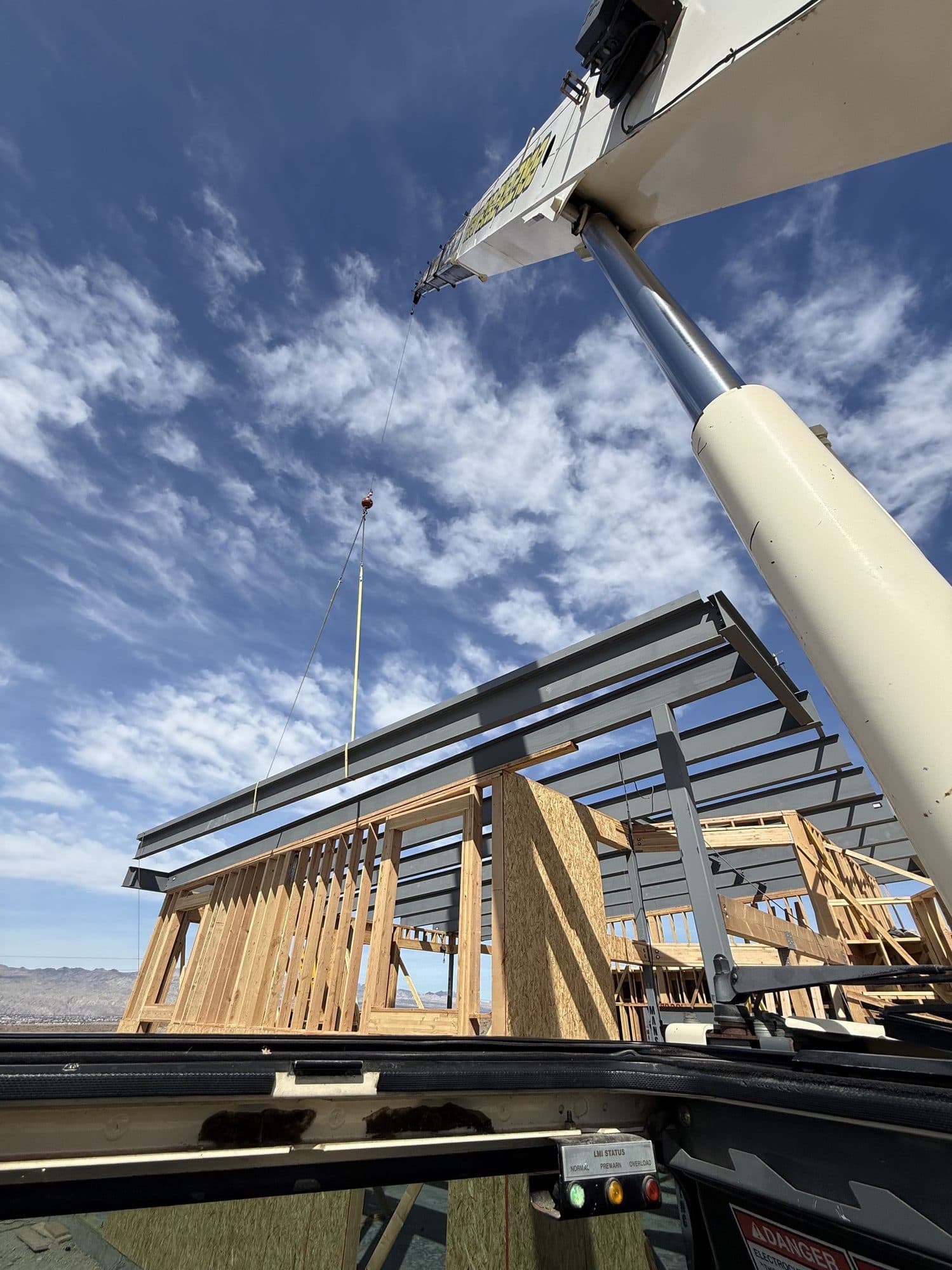
Roof truss set on a two-story frame 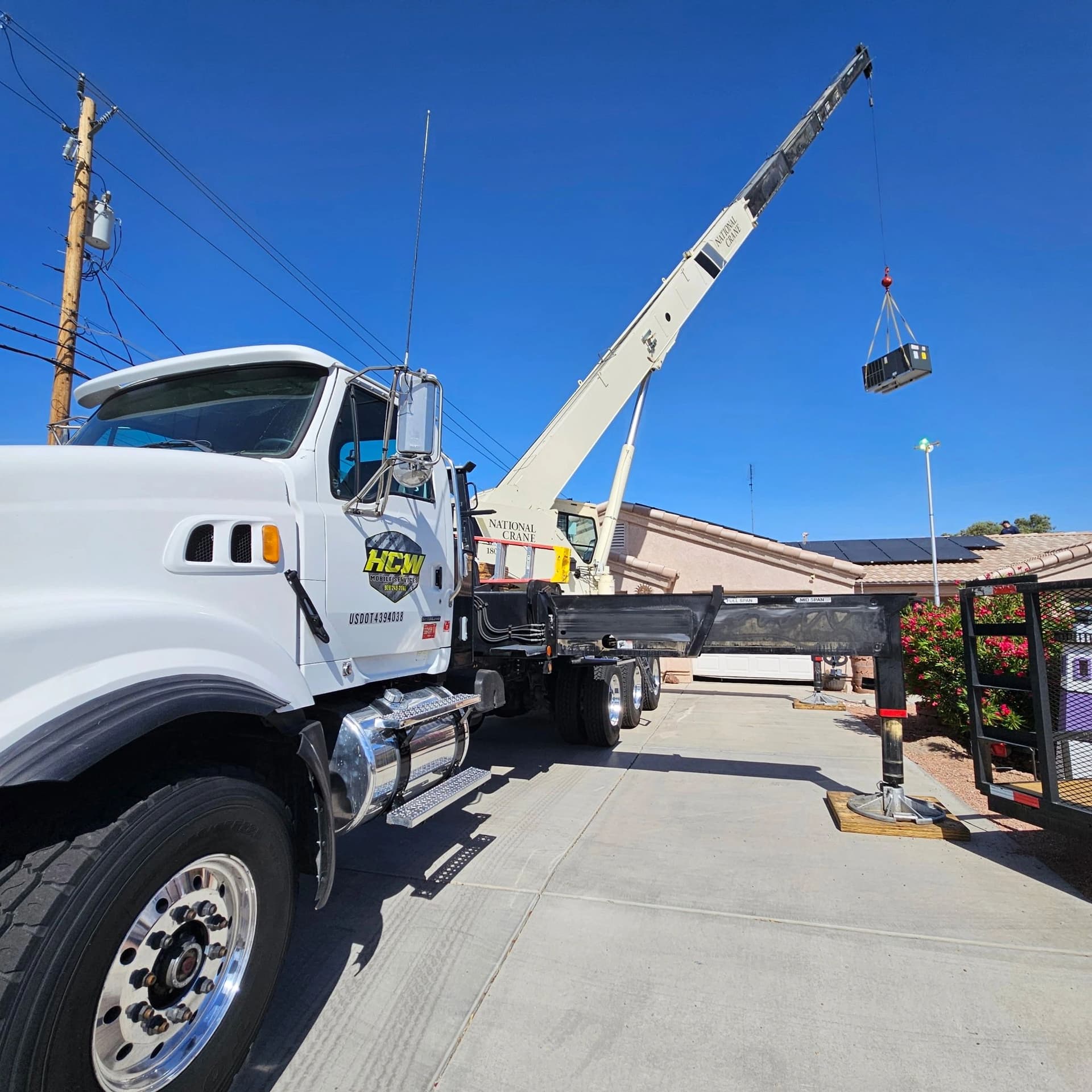
Rooftop unit lifted over a driveway
Answers
Frequently Asked Questions
Can my employee run your crane?
No. The operator stays on the controls. That is not a formality, it is how the machine gets run by someone who knows its load chart, its quirks, and what it does at full extension.
Do I need to supply slings or chains?
No. Rigging comes on the truck and gets chosen for your load. If your equipment has manufacturer lifting lugs or a lift kit, have that available and we will use it.
How many of my people need to be there?
Usually one who can identify pick points and one at the landing point. On a roof set that is often the same HVAC tech going up and down. More hands do not speed up a crane lift.
Can we guide the load by hand?
With tag lines, from outside the drop zone, yes, and that is often useful. Hands directly on a suspended load is not something we do. Tag lines give the same control without putting anybody underneath it.
What if my crew is running behind on the day?
Tell us early. Shifting a start time is easy. A crane sitting rigged and waiting is the worst outcome for everybody, so we would rather move the slot than run the clock in a driveway.
Related Services
- Owner-Operated Crane ServiceThe owner takes the call, walks the site, and runs the crane. One person accountable for the lift from the first phone call to the final walkthrough.
- Mobile Crane Service22-ton and 40-ton boom trucks with an operator on every call, reaching up to 142 feet.
- 40-Ton Crane ServiceOur 40-ton boom truck reaches up to 142 feet and holds weight far out from the truck. The machine for two-story picks and deep commercial roofs.
- Owner-Operated Crane ServiceThe owner takes the call, walks the site, and runs the crane. One person accountable for the lift from the first phone call to the final walkthrough.
- 22-Ton Crane ServiceOur 22-ton boom truck is the tight-street machine. Smaller setup footprint, quicker to place, and the right call for most single-story residential lifts.
- 40-Ton Crane ServiceOur 40-ton boom truck reaches up to 142 feet and holds weight far out from the truck. The machine for two-story picks and deep commercial roofs.
- Hydraulic Crane ServiceBoth of our boom trucks are hydraulic. Smooth metered control, fast setup, and no assembly. Here is what that means for your lift and for desert heat.
- Telescopic Crane ServiceTelescopic boom trucks extend the boom in sections, so capacity changes with every foot you pull out. Here is how we plan a pick around that.
Ready to schedule your lift?
Tell us the load, the site and the timing. We will confirm capacity, access and a window.