Industries We Serve
Crane Work for Custom Home Builders in Lake Havasu
2 min readUpdated July 2026
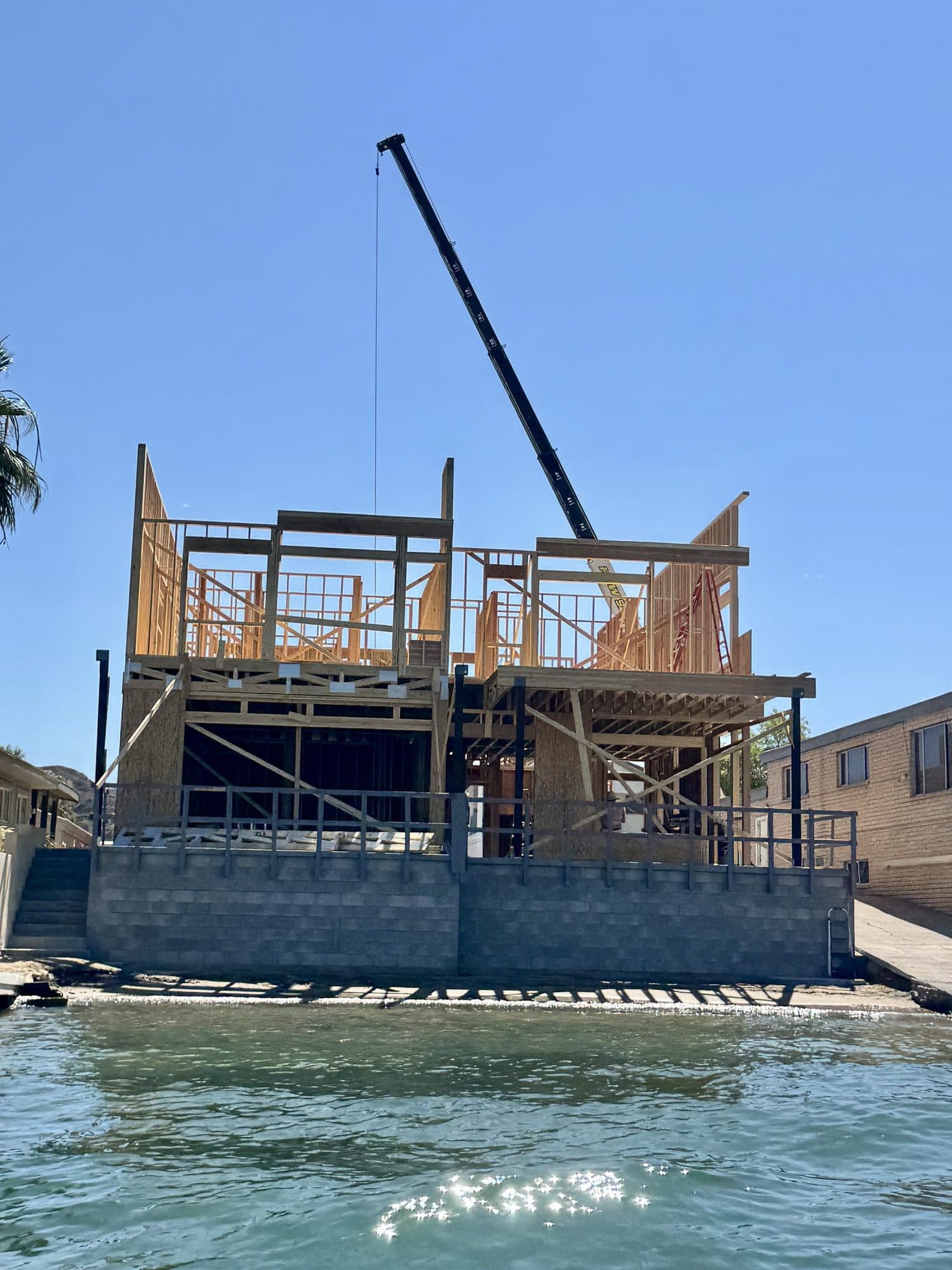
Custom home builders around Lake Havasu City call HCW Crane Service for lifts onto steep view lots and over finished work. Setups are planned to protect stone, pavers and hardscape that are already installed, and the operator handles the lift with the owner and the crew both watching.
Everything Below the Load Is Already Paid For
On a production build the ground under a lift is dirt. On a custom home it is imported stone, a poured driveway with a finish on it, planters, lighting, glass and a roof that took four weeks to detail.
That changes the calculation. The cheapest possible setup position stops being the right one, because the cost of a mistake underneath the swing is measured in trades coming back, not in crane time.
So we spend longer on the walk, and we will happily set up further away and give up capacity to keep the load path over ground where a dropped tool would not matter.
View Lots, Slope and Where the Truck Can Actually Sit
The lots people want in this town are the ones on a grade. That is excellent for the view and difficult for a boom truck, because a crane has to be level and a hillside driveway is not.
Levelling on outriggers has limits, and cribbing has to be built up properly rather than stacked in hope. Sometimes the only workable position is out on the street, reaching over the whole house, which is why height and radius get checked early on these jobs rather than assumed.
The other slope issue is what is below the site. A load that swings out over a downhill neighbour is a different risk profile than one that stays over your own lot, and it belongs in the plan.
Working With an Owner on Site
Custom clients turn up. They stand in the driveway, they film it on their phone, and they ask questions during the lift. That is normal and it is fair enough, since it is their house.
The way that goes well is by explaining the plan before it starts and giving them a place to stand where they can see it without being inside the exclusion zone. Someone who understands what is about to happen does not walk under a load.
It also reflects on the builder. A crane crew that talks to the owner like an adult and keeps the site tidy is one less thing for the builder to manage on a job where the client is already paying attention to everything.
How the job runs
Our Process
Step 1: Walk the Lot With the Superintendent
Setup options, slope, finished surfaces, the load path and anything overhead. On a custom build this walk is longer, deliberately.
Step 2: Choose the Setup for Protection, Not Speed
Where the load travels matters as much as where it lands. Reaching further to keep the path clear is a trade worth making.
Step 3: Brief Everyone, Including the Owner
The crew knows the sequence, the signal person is named, and anyone watching has a spot outside the zone with a view.
Step 4: Set, Verify, and Leave It Clean
Load placed and checked, pads and cribbing picked up, and surfaces looked over before we release the site.
Scope
What Is Included
- Structural steel and beam setting on custom builds
- Long reaches over finished roofs and hardscape
- Equipment and material placement on sloped view lots
- Cribbing and levelling for uneven setup positions
- Roofing and solar material load-ups on the same visit
Real HCW jobs
From the Job Site
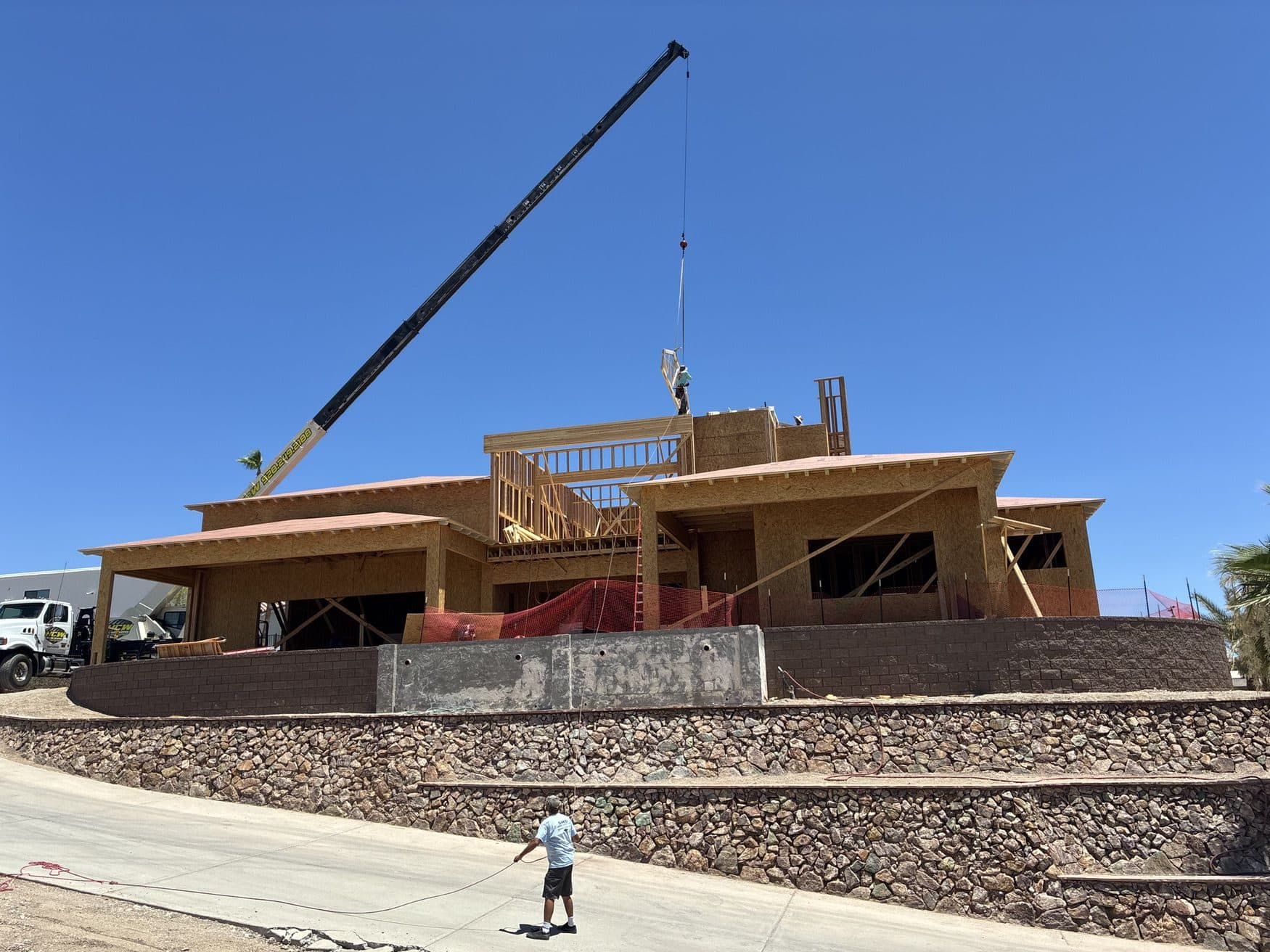
Framing lift on a hillside home 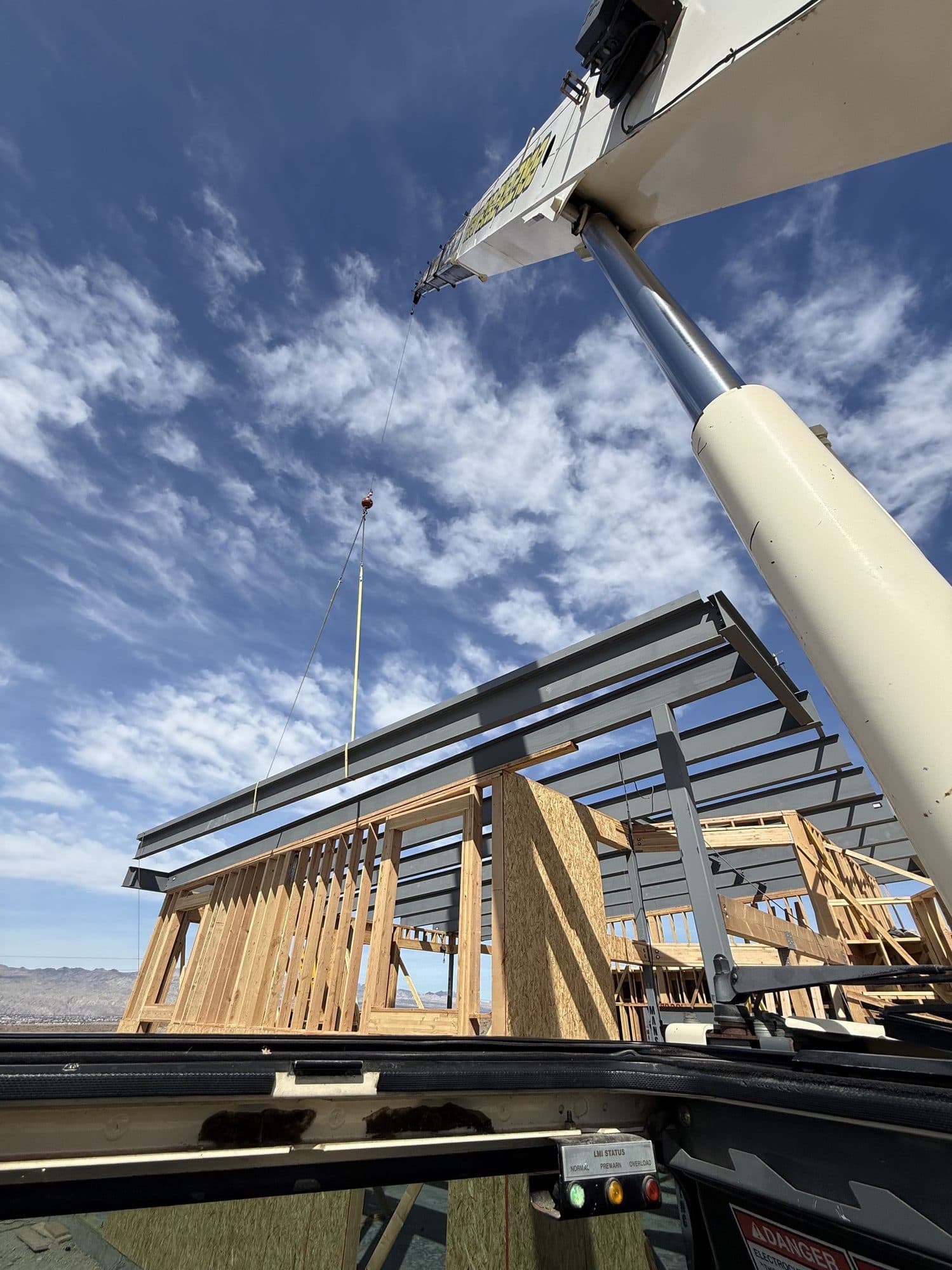
Operator view of a beam landing 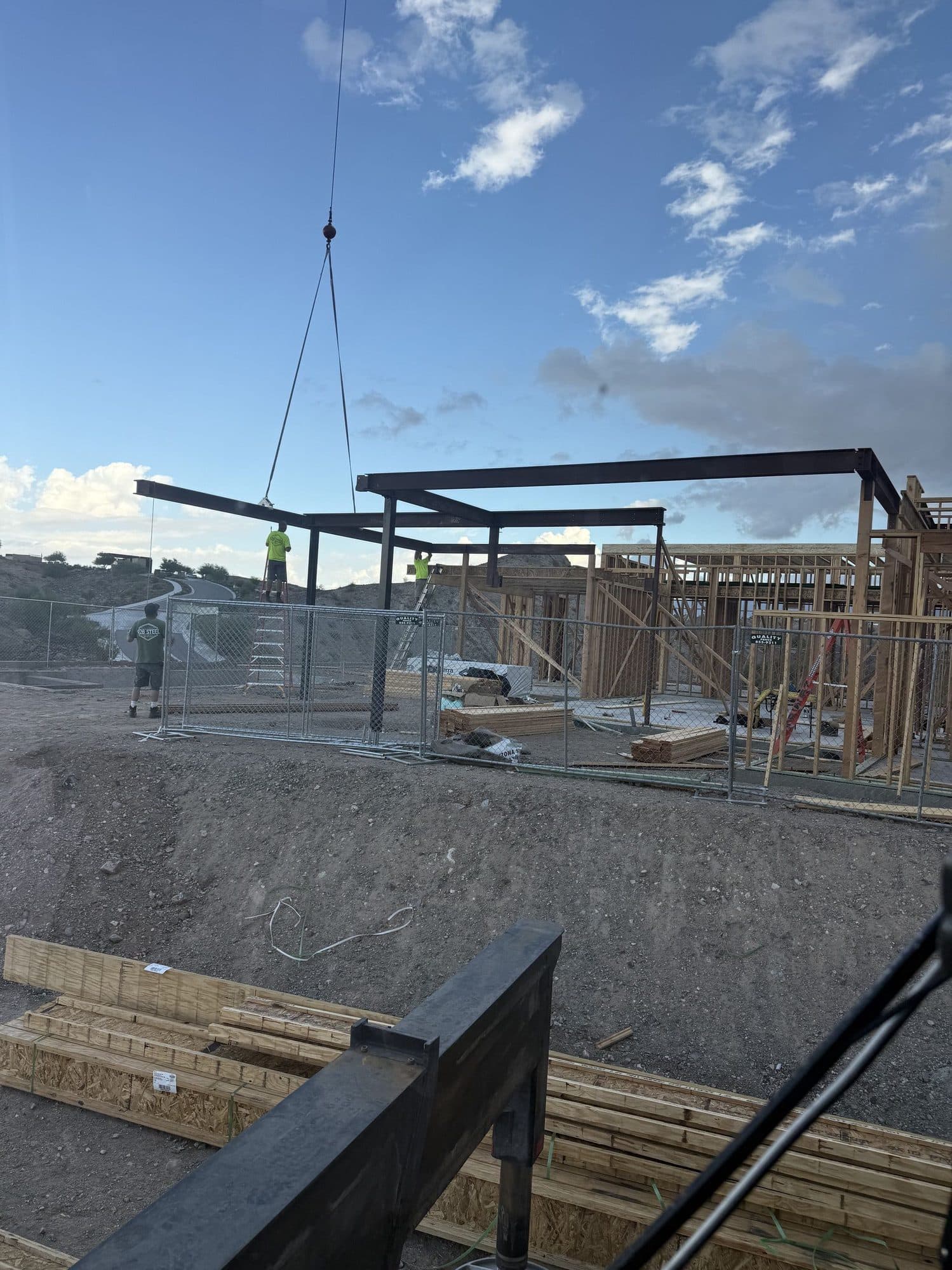
Steel frame beams on a hillside lot 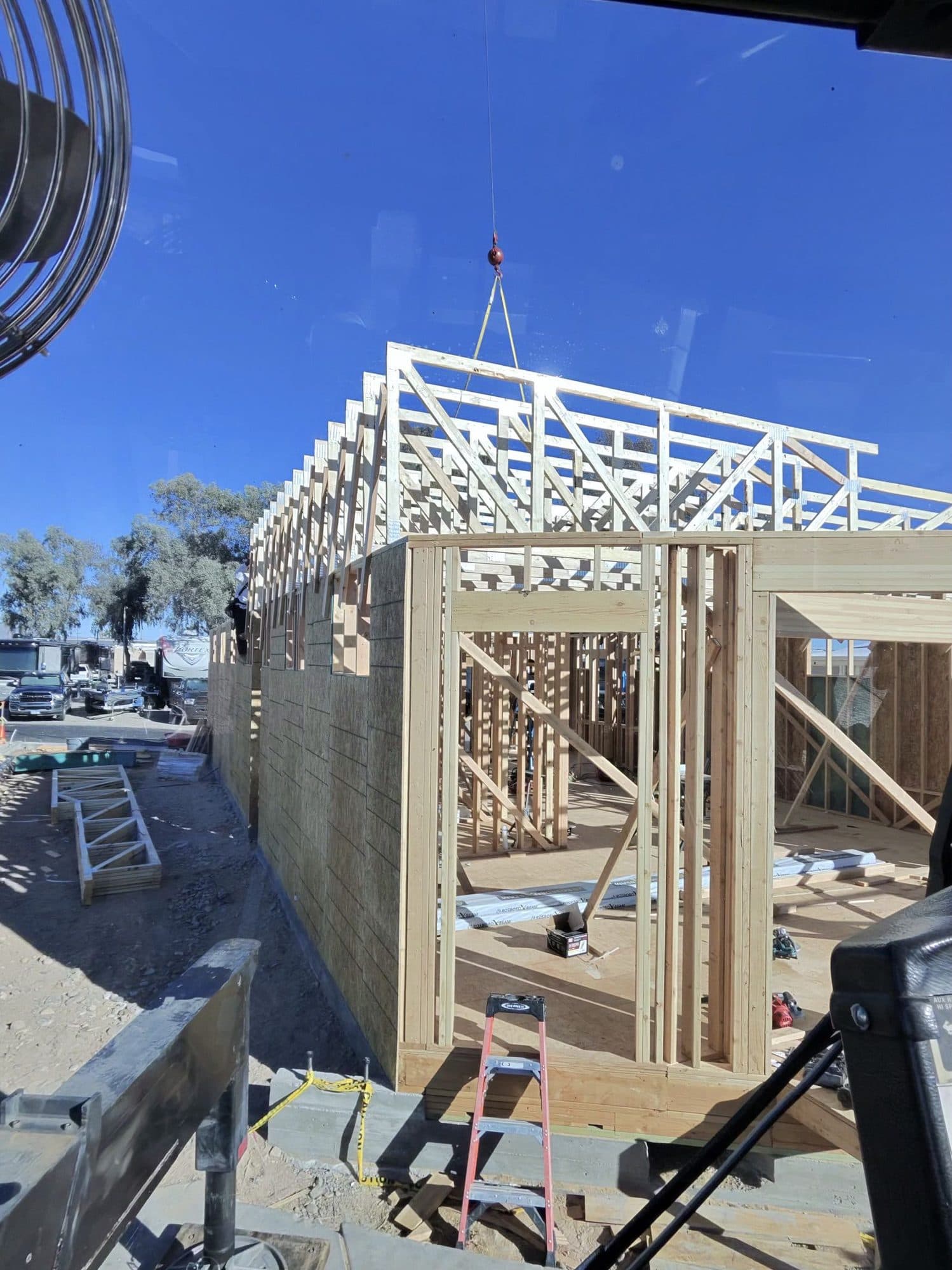
Trusses landing on a house frame
Answers
Frequently Asked Questions
Can you work on a steep driveway?
Sometimes, with cribbing built up properly, and sometimes the honest answer is that the street is the only safe position. We check the slope and the reach before committing to either.
How do you protect finished stone and pavers?
Mostly by not putting weight on them. Outriggers go on the street or on structural slab, on pads and cribbing, and the load path is planned to travel over ground where a problem would not be expensive.
Will you talk to the owner if they are on site?
Yes, and it usually makes the day easier. Someone who has been told the plan and given a place to stand does not wander into the exclusion zone at the wrong moment.
Can you stage roofing or solar material on the same visit?
Yes. If the truck is already set up for a beam or equipment, tile, underlayment, solar panels and racking can go up afterwards from the same setup, which saves booking a second visit onto a busy job.
Other Industries
- General and Residential ConstructionTruss days, beam sets and material staging for builders in Lake Havasu City. Cribbed outriggers for raw pads, and roofing load-ups on the same visit.
- Builders and Project ManagersOne late crane moves five trades. Confirmed arrival windows, the owner as your point of contact, and weather calls made early enough to act on.
- Remodeling ContractorsBeams into finished rooms, old units out, new equipment in, over the roof of an occupied Lake Havasu home. Short windows, protected surfaces, one call-out.
- Damage Prevention FocusPads and cribbing under every outrigger, the whole swing path checked rather than just the endpoints, and fragile things moved before the boom goes up.
- HVAC and Mechanical ContractorsChangeout day runs on the crane. We hold the window, pull the old unit, set the adapter and the new one from one setup in Lake Havasu City.
- General and Residential ConstructionTruss days, beam sets and material staging for builders in Lake Havasu City. Cribbed outriggers for raw pads, and roofing load-ups on the same visit.
- Facility Managers and Maintenance TeamsA failed rooftop unit is a continuity problem. Overnight and early lifts, tenant-aware setups, and photo records you can put straight into your building file.
- Homeowners With Specialty Lift NeedsNever hired a crane before? Here is what happens in your driveway, what the truck touches, and how a load clears a block wall without hitting anything.
- Builders and Project ManagersOne late crane moves five trades. Confirmed arrival windows, the owner as your point of contact, and weather calls made early enough to act on.
- Structural Steel, Precast and ModularPiece weight and radius decide the setup, not the badge on the truck. Steel, precast and modular sections set with margin and held until your crew connects.
Ready to schedule your lift?
Tell us the load, the site and the timing. We will confirm capacity, access and a window.