Spa and Residential Specialty Lifts
Tight Access Lifts in Lake Havasu City
3 min readUpdated July 2026
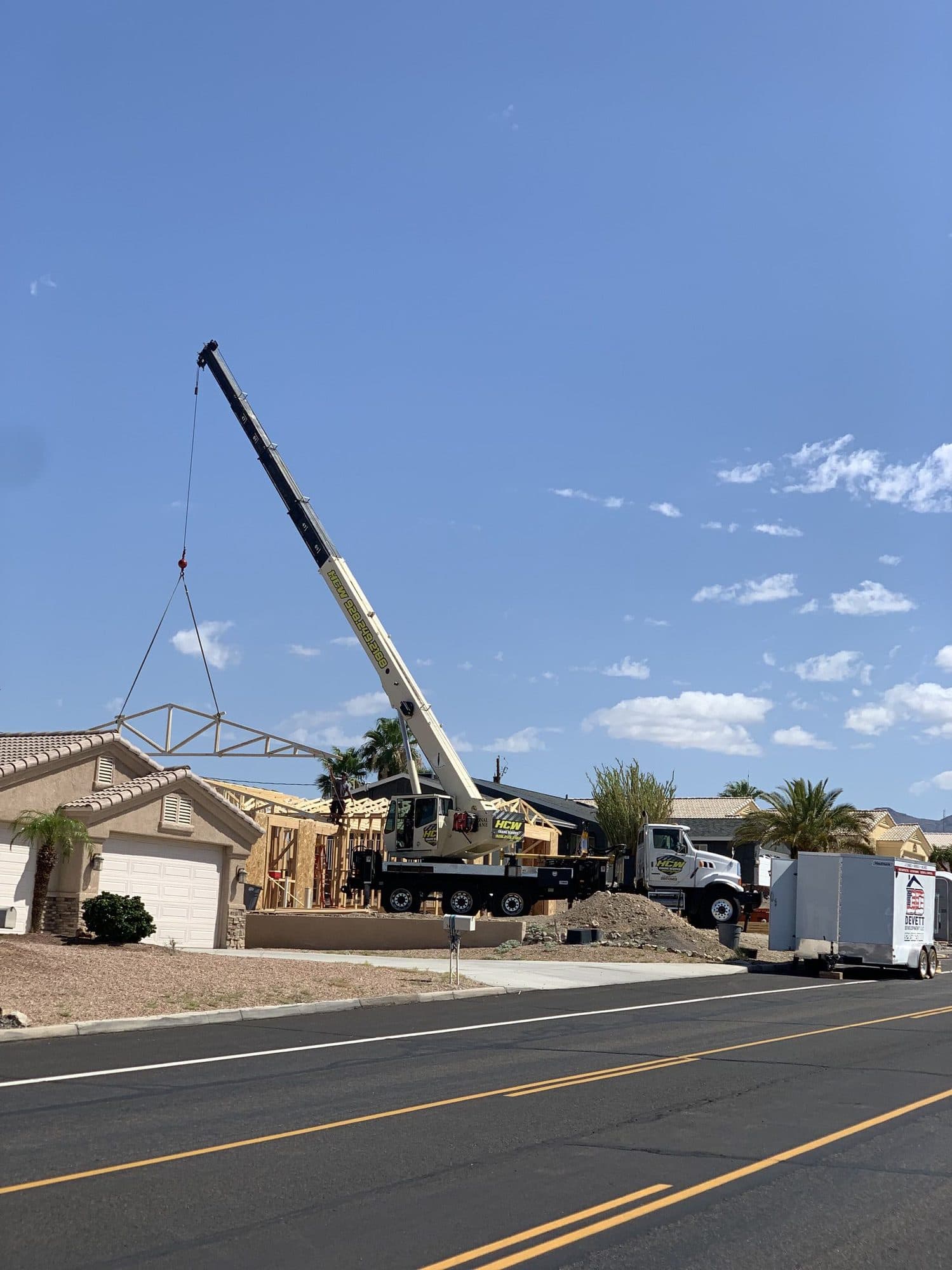
Tight access lifts are jobs where the constraint is the setup, not the load. Narrow streets, zero-lot-line homes, cul-de-sacs, overhead service drops, and steep driveways. The solution is usually a smaller outrigger footprint, more boom from further back, or a completely different setup position.
The Problem Is Where the Crane Sits
On a tight access job the load is rarely the issue. A spa, a condenser, or a safe is well within either machine. The whole question is whether there is anywhere to put a crane that can reach the landing point without hitting something.
Three things usually decide it. Street width and how many cars have to move, the outrigger spread the machine needs, and what is overhead between the crane and the yard. Any one of those can rule a position out.
Sometimes the answer is not obvious. We have worked jobs where the practical setup spot was two houses down, on a wider part of the street, using more boom to reach the same yard. Reach is a tool for solving access problems, not just tall ones.
Zero Lot Lines and Missing Side Yards
A lot of newer Havasu builds sit close to one property line with nothing but a walkway on that side, and older waterfront lots are frequently tighter still. There is no route in from the side, so the load either goes over the house or it does not go in at all.
Going over the house is routine work, but it changes the machine. Clearing a ridge and then descending into a narrow yard needs height, radius, and someone in the backyard with a radio, because the operator cannot see the landing point at all once the load drops below the roof line.
The yard itself may be barely wider than the load. That is a slow, precise descent with tag lines, planned so the load never has to pass over the pool, the patio glass, or the neighbor's fence.
One thing that helps more than anything else is moving what can be moved. Patio furniture, planters, umbrellas, and the barbecue all buy back space in a yard that has none, and clearing them the night before costs nothing.
Overhead Is the Hard Constraint
Everything else can be negotiated. Cars move, gates open, planters get shifted. Power lines do not, and there is no clever rigging solution that makes working close to an energized service drop acceptable.
So overhead gets assessed first. Where the drop runs, how high, whether the flight path can stay well clear of it through the entire swing, and whether the boom itself stays clear at every point in the movement, not just at the ends.
If a safe path does not exist from any workable position, we say so. That is a small number of jobs, and the honest answer is better than a creative one. Sometimes the fix is having the utility involved, and that is a conversation to have well before a lift date.
The last constraint is usually the yard itself. A space barely wider than the load leaves no room for the load to move on the way down, which means very slow work and a spotter who can see both sides at once. It is doable, and it takes the time it takes. We would rather tell you that than surprise you with it.
The Smaller Machine Is Often the Right Answer
Our 22-ton needs less outrigger spread and less street than the 40-ton. On a narrow cul-de-sac or a street with cars on both sides, that difference is frequently what makes the job possible.
But not always. If the tight spot means the crane has to sit far back from the landing point, the smaller machine runs out of capacity at that radius and the bigger one is the answer despite needing more room. Those two constraints pull against each other, which is exactly why tight access jobs are worth a site visit.
On anything genuinely marginal we would rather come look before the day than turn up and discover it. Twenty minutes standing in the street with a tape saves everybody a wasted morning.
How the job runs
Our Process
Step 1: Site Visit First
On tight access we come and look. Street width, setup ground, overhead lines, wall heights, and the radius from every candidate position.
Step 2: Choose the Position and the Machine
Footprint against radius. The smaller machine fits more places, the larger one reaches from further back. The site decides which constraint wins.
Step 3: Clear the Street
Cars moved, cones set, neighbors told. On a cul-de-sac we work out beforehand who needs to get out and when.
Step 4: Set Up Precisely
Outriggers onto mats in a spread that fits the space, machine leveled, and the swing path walked to confirm clearance at every point.
Step 5: Slow, Spotted Lift
Tag lines, a spotter with eyes on the landing point, and a controlled descent into a space that may be barely wider than the load.
Scope
What Is Included
- Site visit before the day on marginal access jobs
- Choice of 22-ton or 40-ton based on footprint against radius
- Overhead line and clearance assessment from every candidate position
- Outrigger mats sized for narrow streets and paver driveways
- Cones, street management, and neighbor coordination
- Radio spotter for blind descents into narrow yards
- An honest answer when a safe setup position does not exist
Real HCW jobs
From the Job Site
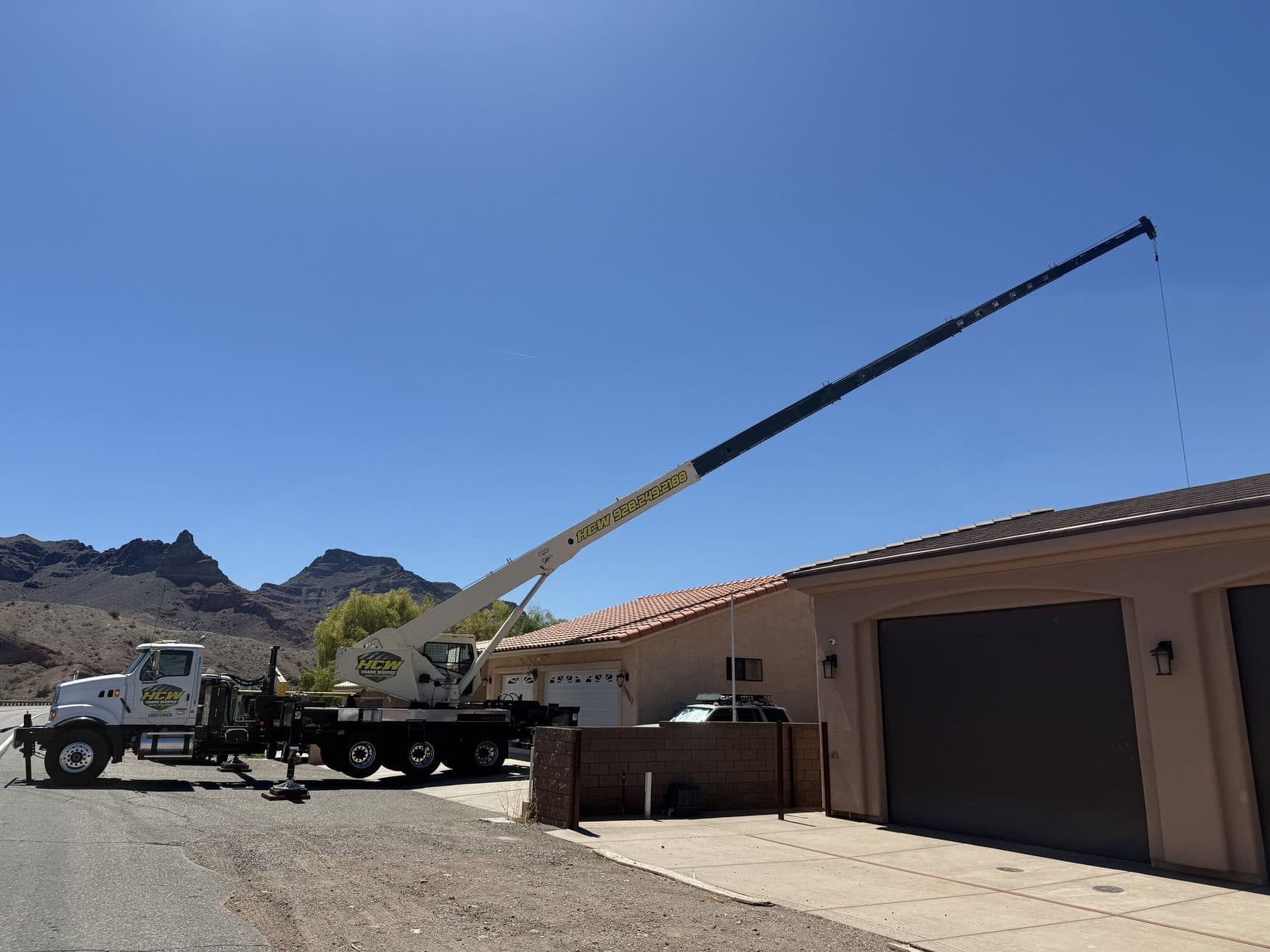
Long reach over a garage roof 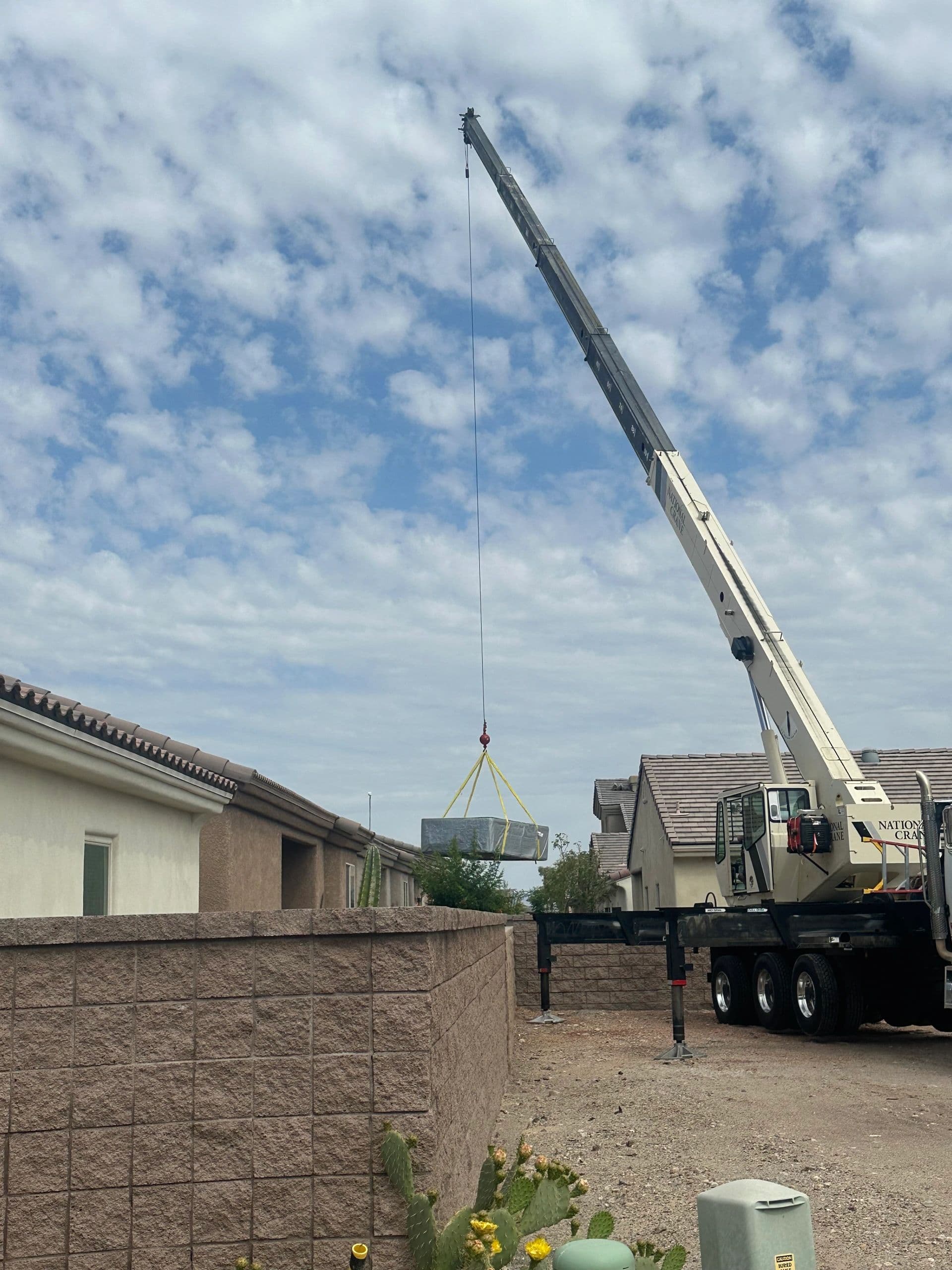
Load lifted over a block wall 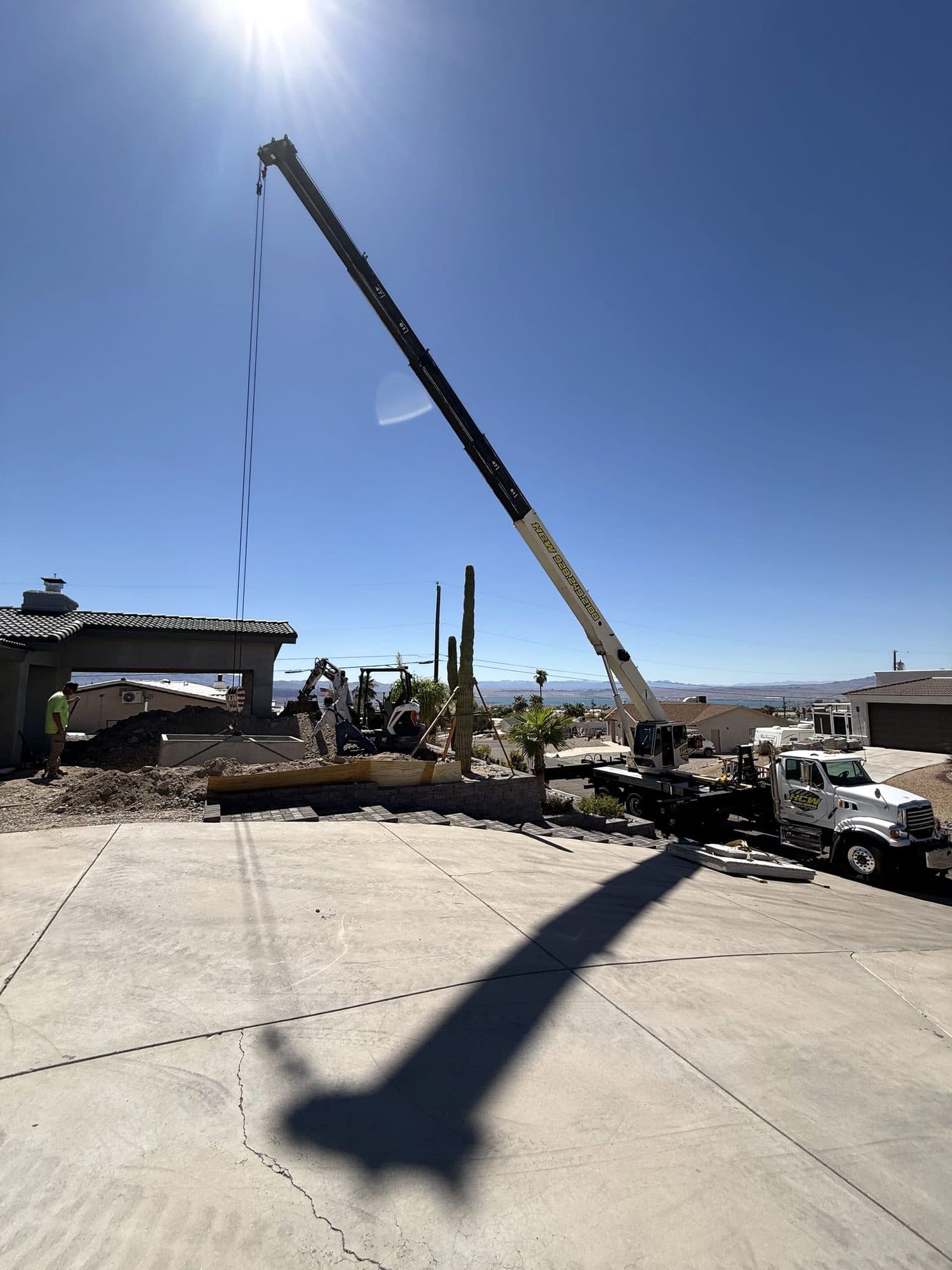
Landscape lift above the lake
Answers
Frequently Asked Questions
My street is very narrow. Can you still do the lift?
Usually. The 22-ton has a smaller footprint and needs less street. If the position that fits is too far from the landing point, we look at working from a wider spot nearby with more boom.
There is no side yard at all. What then?
The load goes over the house. That is routine work here, and it needs height, radius, and a spotter in the backyard since the operator cannot see the landing point once the load drops below the roof.
There is a power line right where you would set up.
Then we find another position. Working close to an energized service drop is not something we do. If no safe position exists, we will tell you, and sometimes the answer involves the utility.
Do you need to see the site first?
On tight access, yes, and it is worth the twenty minutes. Photos miss clearances, slopes, and the exact position of an overhead line more often than not.
How many cars will need to move?
Usually two or three, sometimes more on a narrow cul-de-sac. We will tell you exactly what we need clear when we confirm the job, so you can give the neighbors notice.
Related Services
- Over-Structure PlacementFlying a load over a house, a garage, or a block wall. Ridge clearance, a blind descent on the far side, and a spotter running the last stage.
- 22-Ton Crane ServiceOur 22-ton boom truck is the tight-street machine. Smaller setup footprint, quicker to place, and the right call for most single-story residential lifts.
- Spa and Residential Specialty LiftsSpas, hot tubs, and awkward residential loads flown over block walls into finished backyards.
- Spa PlacementA spa carries its weight in the shell, not the cabinet. Sling placement, a cured level pad, and equipment bay orientation are what make the set work.
- Hot Tub Crane LiftDelivery day logistics for a hot tub lift. Where the truck parks, how long the street is blocked, and getting the old tub out on the same visit.
- Over-Structure PlacementFlying a load over a house, a garage, or a block wall. Ridge clearance, a blind descent on the far side, and a spotter running the last stage.
- Residential Specialty LiftsSafes, boulders, fountains, statuary, sheds, playsets, and pool equipment. The one-off household loads that will not fit through a gate.
Ready to schedule your lift?
Tell us the load, the site and the timing. We will confirm capacity, access and a window.