Truss and Structural Placement
Steel Member Positioning in Lake Havasu City
2 min readUpdated July 2026
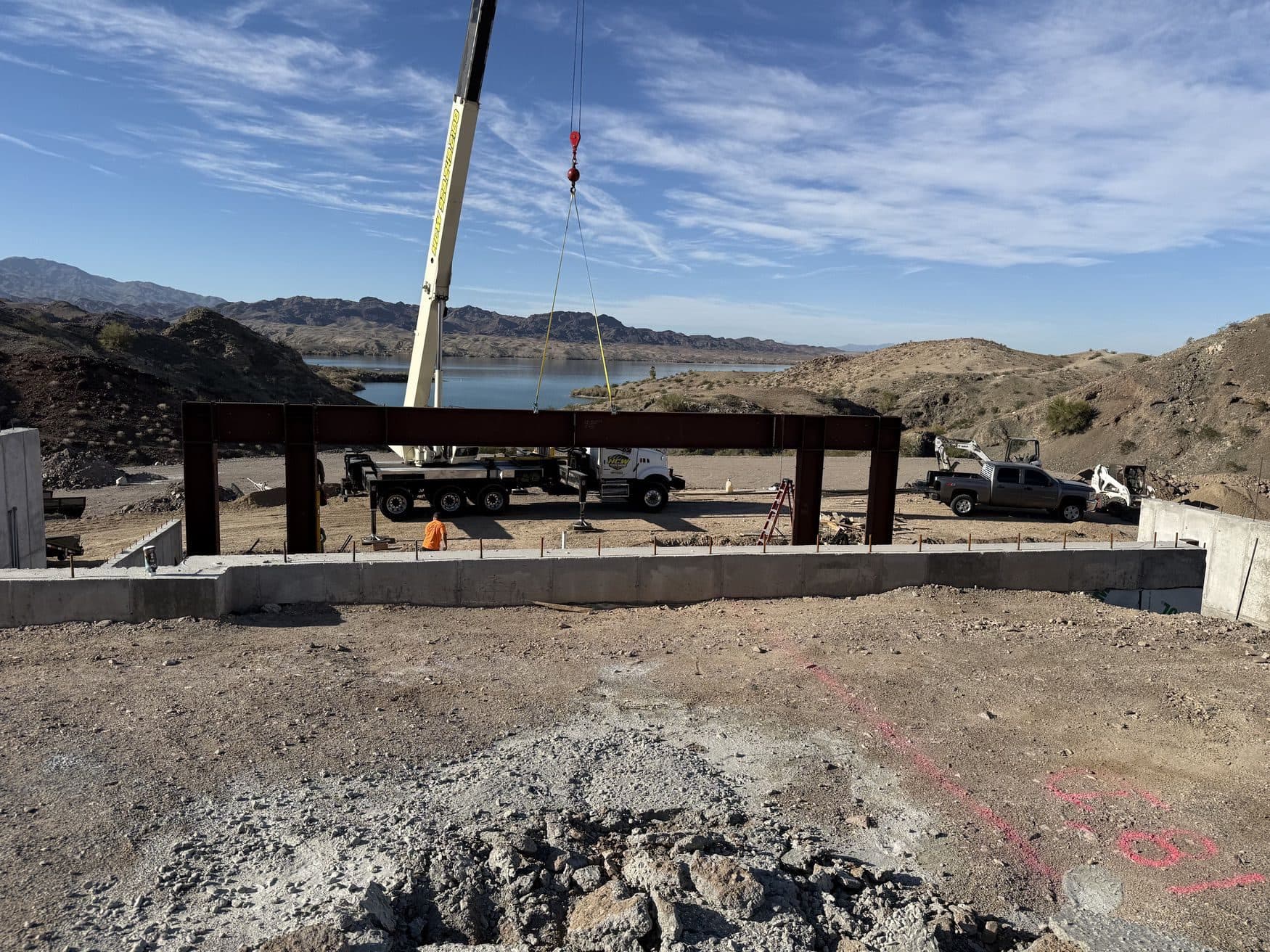
Steel member positioning covers purlins, bar joists, tube steel, angle, and miscellaneous framing set for bolted or field connections. The crane brings the member to position and makes small adjustments while the crew aligns holes with drift pins. Tolerances are tight and hold time is normal.
Holes Never Line Up on the First Try
Steel connections are bolted through holes with very little slop. Shop tolerance, thermal movement, and a structure that is not perfectly square all conspire to leave the holes a fraction out when the member arrives at position.
That is what drift pins are for, and it is also why the crane stays on the load. The crew drives a pin to draw the holes together while the operator makes tiny corrections in boom and hoist. It is a two-way conversation and it does not work if the crane has already released.
What the operator is really providing here is fine control at low speed, which is where a hydraulic boom truck is at its best. Small metered movements, held position, no drift.
Rigging Steel Without Marking It
Steel is heavy for its size and unforgiving on webbing. Sharp mill edges and cut ends will cut a synthetic sling under load, so we use chain or wire on raw steel edges, or we pad the corners properly.
Choker hitches are common on long members because they hold the piece from rolling, but a choker on a coated or galvanized member can mar the finish. On architecturally exposed steel we plan the rigging around that before the member leaves the ground.
Long slender members like purlins and angle bow badly on a single pick point. Two-point rigging with a spreader keeps them straight so the crew can line up both ends at once.
Working Steel in Havasu Heat
Steel sitting in the sun through a summer morning gets hot enough to burn through a glove. That is not a crane problem, but it changes the pace of the crew, which changes the day.
Steel also grows. A long member that was measured in the cool of the morning is measurably longer by mid-afternoon, which is one more reason holes do not line up on a hot day. Crews who work steel here know it. It is worth knowing when you plan the sequence.
The practical answer is the same as the rest of our summer work. Start early, get the tight connections done before the heat, and leave the easier work for the afternoon.
How the job runs
Our Process
Step 1: Confirm the Piece and the Connection
Member weight, length, and how it connects. Bolted, field connected, or seated. That tells us how long the crane will be holding it.
Step 2: Rig for Edges and Finish
Chain or wire on raw steel, padded corners, and choker placement chosen around any coating or exposed finish. Spreader bar on long slender pieces.
Step 3: Bring to Position and Hold
The member arrives at the connection and stops. The operator makes small metered corrections while the crew drifts the holes together.
Step 4: Release on the Crew's Call
Bolts in and snug, or the connection made secure, before the crane comes off. The crew confirms, not the operator.
Scope
What Is Included
- Crane and operator with fine metered control for connections
- Chain and wire rigging for raw steel edges
- Corner padding and finish protection on coated members
- Spreader bars for long purlins, angle, and joists
- Hold time while holes are drifted and bolts are set
- Early start scheduling for hot summer steel work
Real HCW jobs
From the Job Site
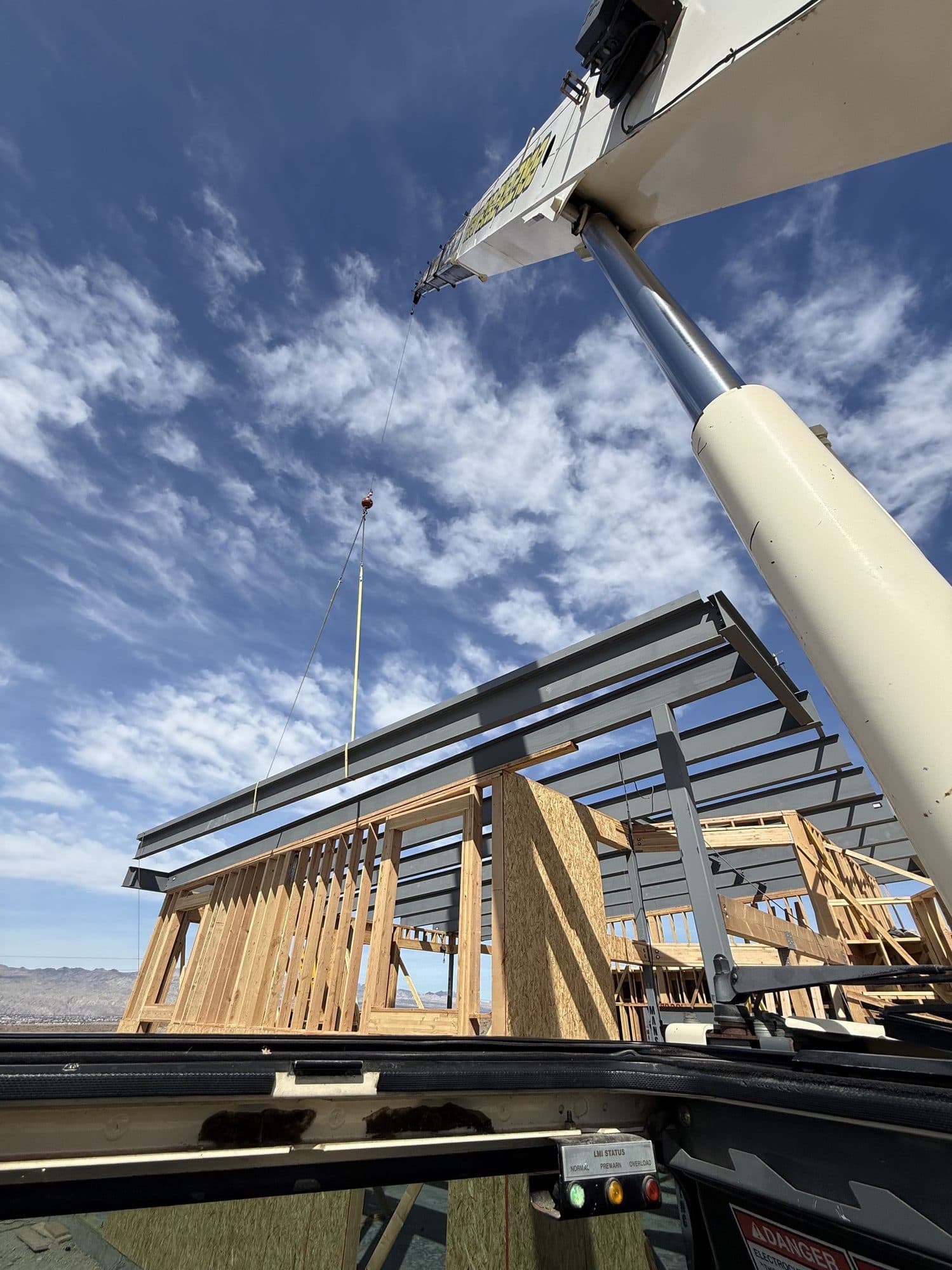
Operator view of a beam landing 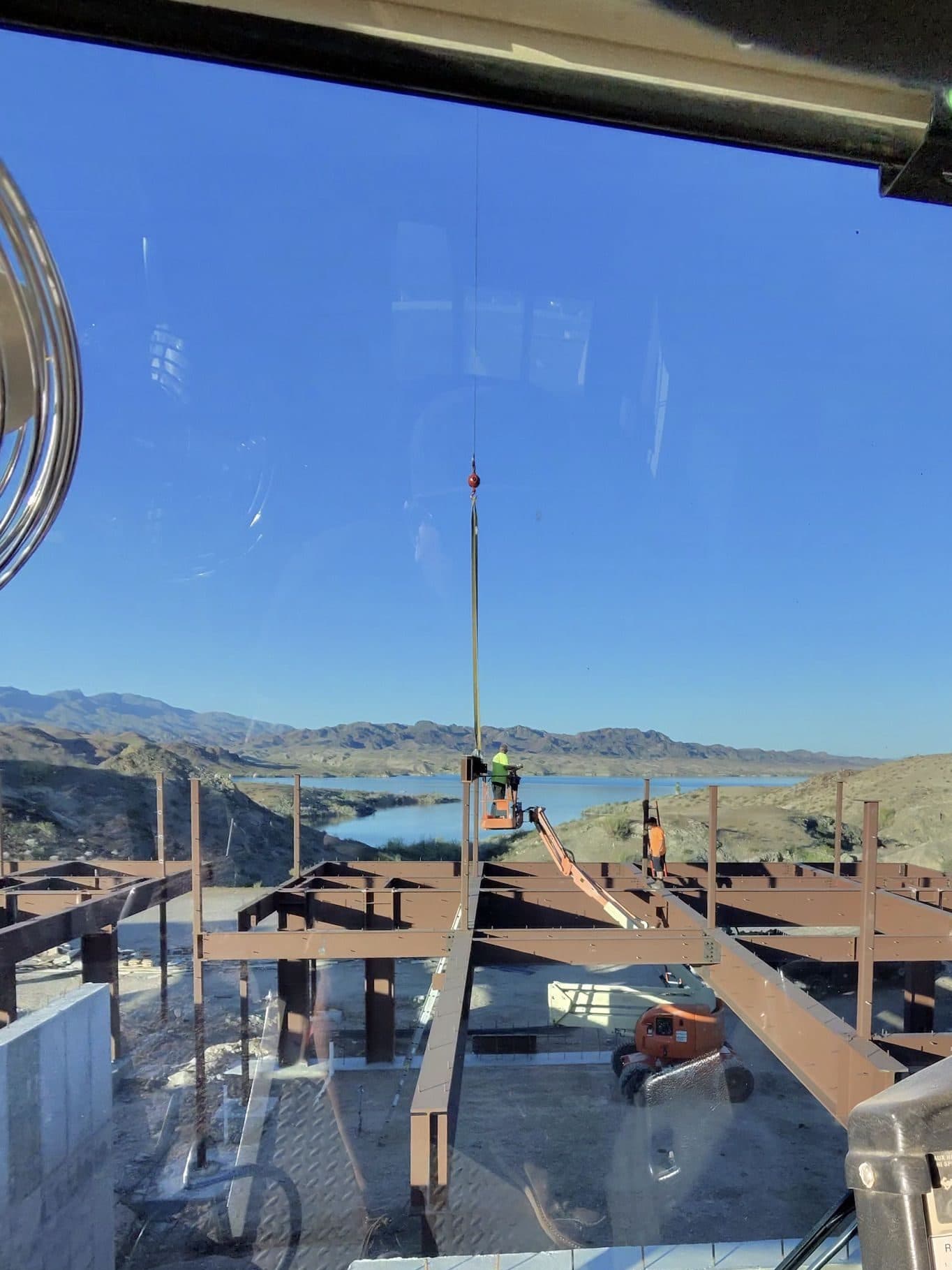
Steel framing above the lake 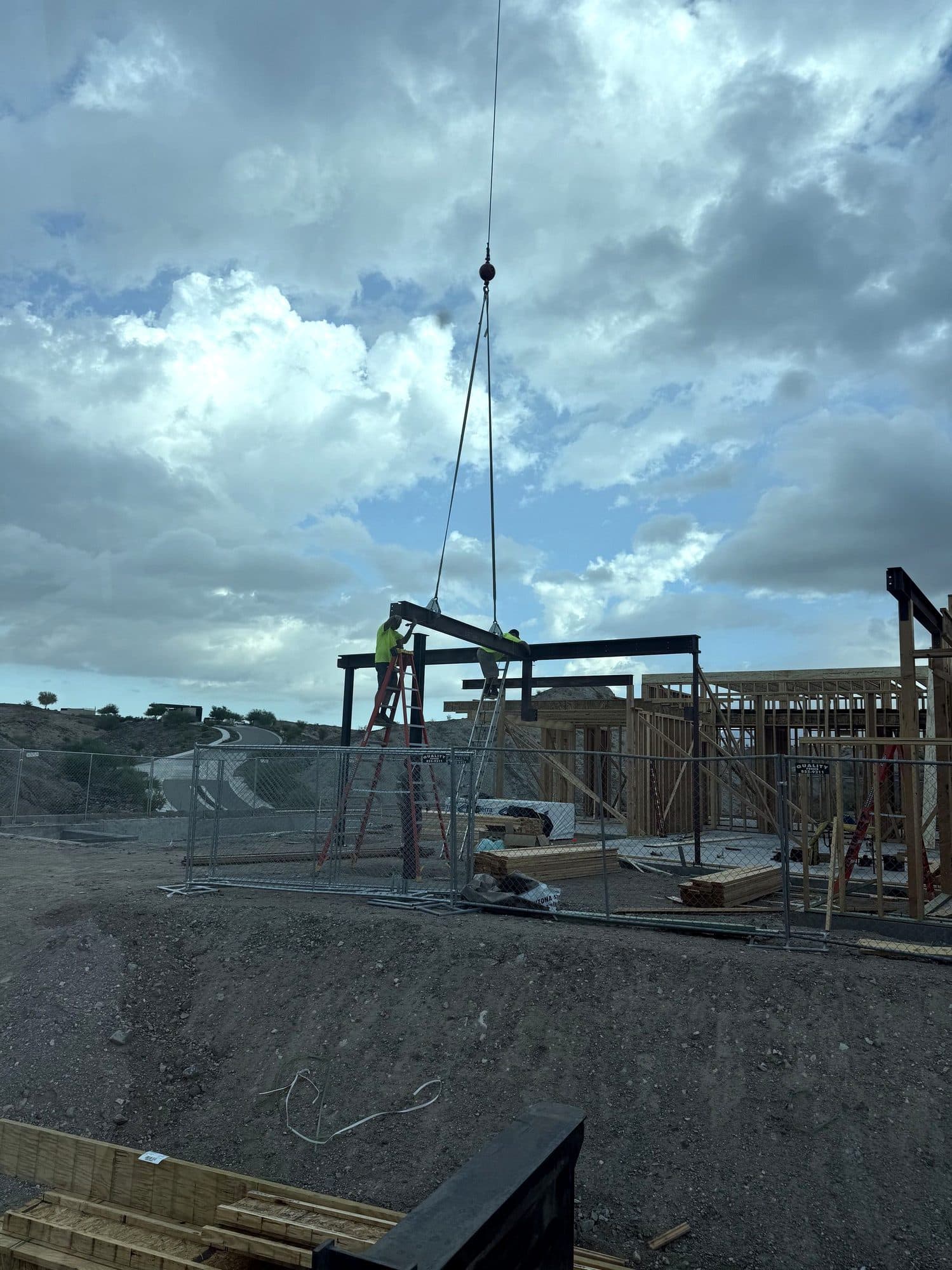
Steel beam set on a hillside frame 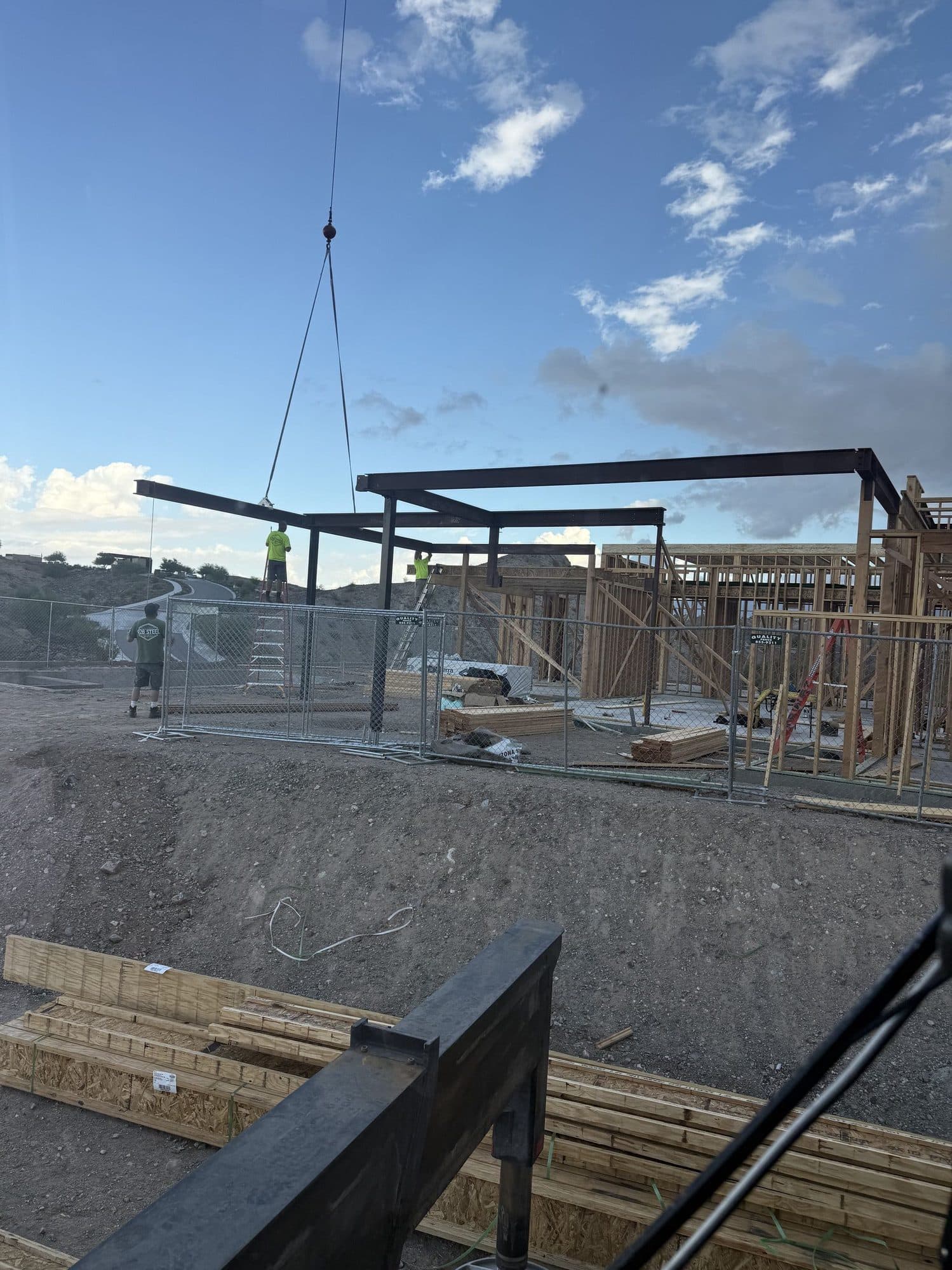
Steel frame beams on a hillside lot
Answers
Frequently Asked Questions
Can the crane hold a member while we bolt it up?
Yes, that is the normal way steel goes together. The operator makes small corrections while your crew drifts the holes. We release when you say the connection is made.
Will the slings mark our finished steel?
Not if we plan for it. Tell us it is architecturally exposed or coated and we will pad the contact points and choose hitches that do not drag on the finish.
How do you handle long flexible members?
Two pick points and a spreader bar so the member stays straight. A bowed purlin will not line up at both ends no matter how good the crane control is.
How long will you hold a member while we connect it?
As long as the crew needs to get it secure. Hold time is part of the job. Tell us how it connects and how many pieces there are, so the day gets planned around realistic hold times rather than hopeful ones.
Related Services
- Beam and Column PlacementGlulam and steel beams onto post seats, columns plumbed on anchor bolts. The crane holds the member while your crew makes the connection.
- Structural Component LiftsCanopies, stair sections, mezzanine framing, headers, awnings, and retrofit steel. The odd structural pieces that do not fit a standard category.
- Truss and Structural PlacementRoof trusses, beams, columns, steel, precast, and modular sections set to your framing crew's pace.
- Roof Truss LiftingTrusses arrive banded and go up floppy. Spread pick points, two tag lines, and a crew that braces as it goes. Crane and operator supplied.
- Beam and Column PlacementGlulam and steel beams onto post seats, columns plumbed on anchor bolts. The crane holds the member while your crew makes the connection.
- Precast Panel PlacementPrecast panels are heavy, flat, and all sail. Rated inserts, panels kept vertical, and bracing to the slab before the crane ever comes off.
- Modular Section PlacementFactory-built sections set onto foundations and piers. One pick per section, alignment marks that have to match, and rigging that will not rack the box.
- Structural Component LiftsCanopies, stair sections, mezzanine framing, headers, awnings, and retrofit steel. The odd structural pieces that do not fit a standard category.
Ready to schedule your lift?
Tell us the load, the site and the timing. We will confirm capacity, access and a window.