Mobile Crane Service
Heavy Lift Crane Service in Lake Havasu City
2 min readUpdated July 2026
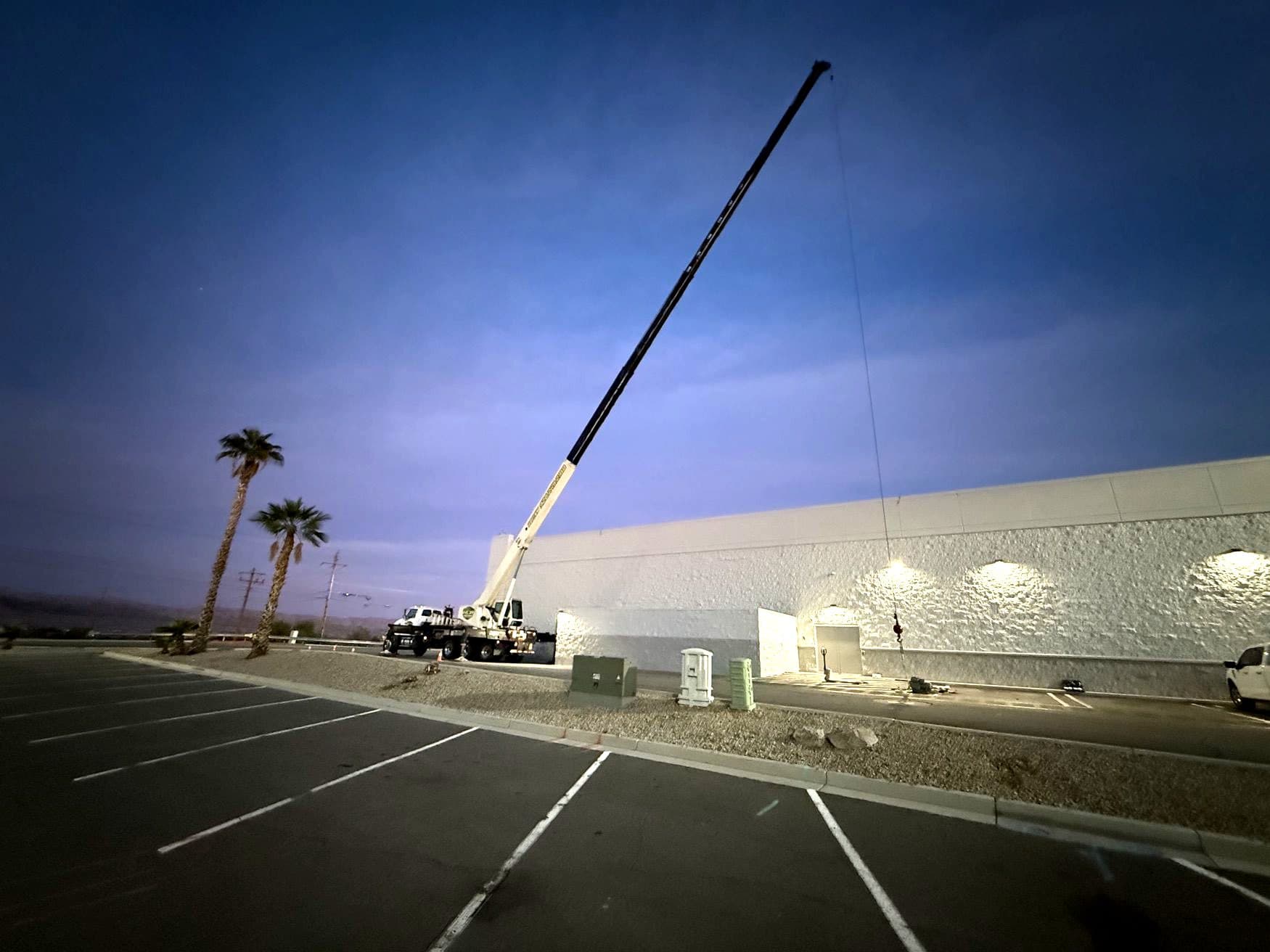
Heavy lift crane service covers picks near the working limits of the machine, where load weight, radius, and ground conditions all have to be confirmed rather than estimated. HCW runs a 40-ton mobile crane for this work. Every heavy pick is planned against the load chart at the actual radius and boom length.
Owner Devan Decastro is NCCCO certified: Telescopic Boom Crane, Swing Cab (TLL). CCO ID 444146986.Verify on NCCCO(opens verifycco.org in a new tab)
Verify the Weight, Not the Story
On a light pick, a weight that is off by a few hundred pounds does not matter. On a heavy pick it decides whether the lift happens. So we chase the real number. Data plate, spec sheet, shipping ticket, manufacturer drawing, or a scale ticket if the load came in on a truck.
Estimates run low far more often than they run high, because people quote the dry weight and forget the skid, the crate, the fluid, the batteries, or the snow of accumulated hardware bolted to the frame over twenty years.
If we truly cannot confirm it, the plan gets built around the worst credible number. That may mean a longer setup, a different position, or telling you the pick needs a bigger machine than we run. We would rather say that early.
Slow Is the Whole Technique
Weight on the hook is static. Movement adds to it. Snatching a load off the ground, stopping a swing abruptly, or letting a load bounce on the line all add force above the actual weight, and near the limits of the chart there is nothing left to absorb that.
So a heavy pick looks boring. The load breaks free slowly and stops a few inches up. We hold, check that it hangs true and that nothing has shifted in the rigging, and check that the outrigger pads have not moved. Then it travels at a speed where nobody would call it exciting.
Side loading is the other thing we avoid completely. Dragging a load sideways to get it started, or swinging to pull something free, puts force into the boom in the direction it is least able to take. If a load is stuck, we solve why it is stuck.
Ground, Setup, and the Second Look
Heavy loads push more force through each outrigger pad, so ground checks get stricter. We look for fill, trenches, drainage, and anything hollow underneath. Mats go under every pad and we build the cribbing up rather than trust a thin pad on soft ground.
After the first swing loads a side, we look again. Ground that held during setup can settle once the weight goes out over it, and the honest time to find that is at a test lift and not with the load out at full radius.
How the job runs
Our Process
Step 1: Confirm the Load
Weight from a documented source, dimensions, center of gravity if it is off center, and rated lifting points. This step is the whole job on a heavy pick.
Step 2: Chart the Pick
Radius, boom length, and required height checked against the load chart with margin left over. If it is marginal, we change the setup position rather than the margin.
Step 3: Build the Setup
Full outrigger spread on mats and cribbing, machine leveled, ground reassessed under load. Work area cleared well beyond the load footprint.
Step 4: Test Lift and Move
Break free, stop, inspect the rigging and the pads, then move slowly with tag lines. No abrupt starts, stops, or side pulls at any point.
Scope
What Is Included
- 40-ton mobile crane with operator for heavy picks
- Documented weight verification before we commit to the lift
- Load chart planning at the actual radius and boom length
- Heavy mats and built-up cribbing under every outrigger pad
- Test lift, hang check, and a second ground assessment under load
- Tag lines and a dedicated signal person on the landing point
Real HCW jobs
From the Job Site
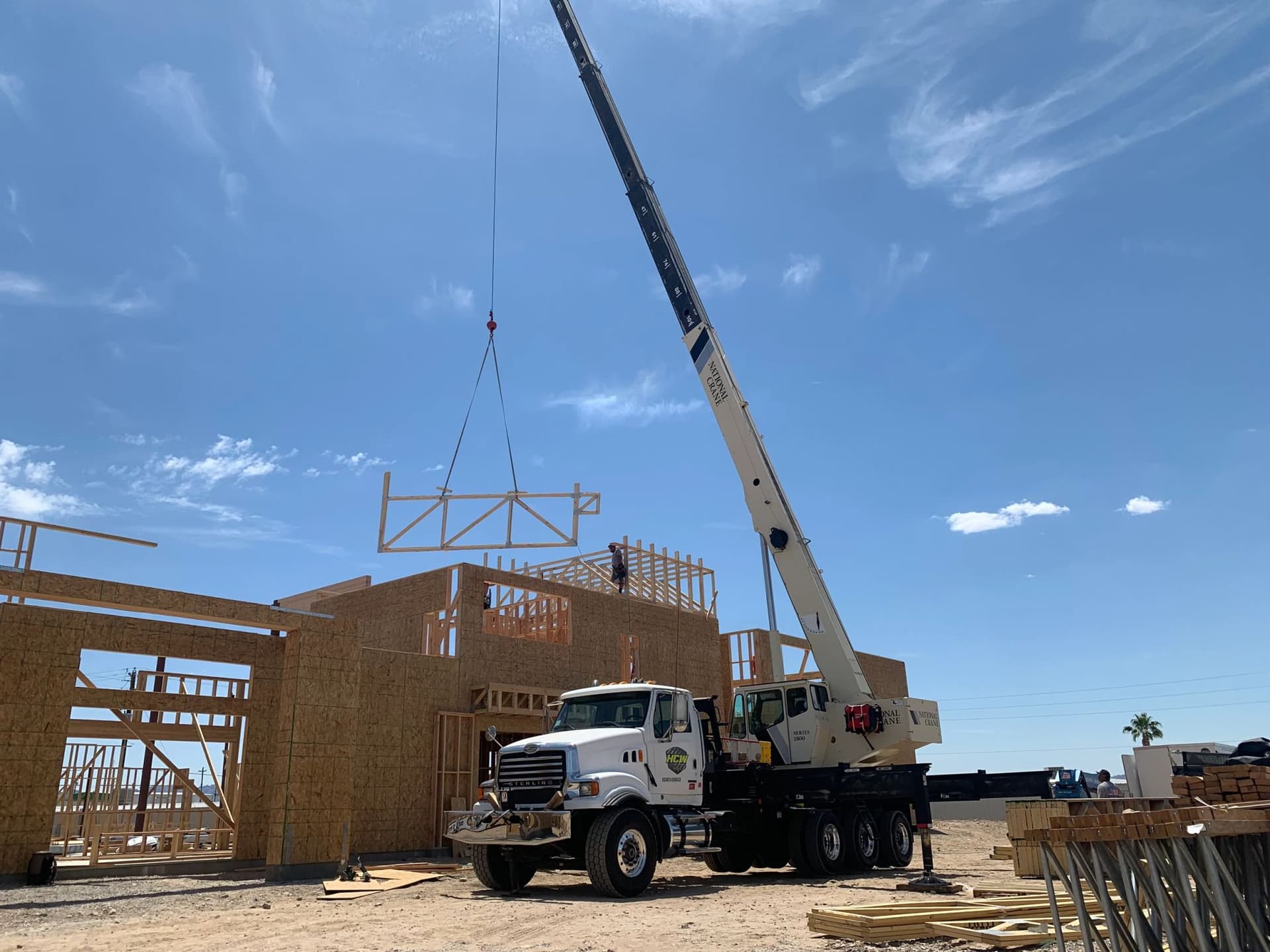
Roof truss set on a two-story frame 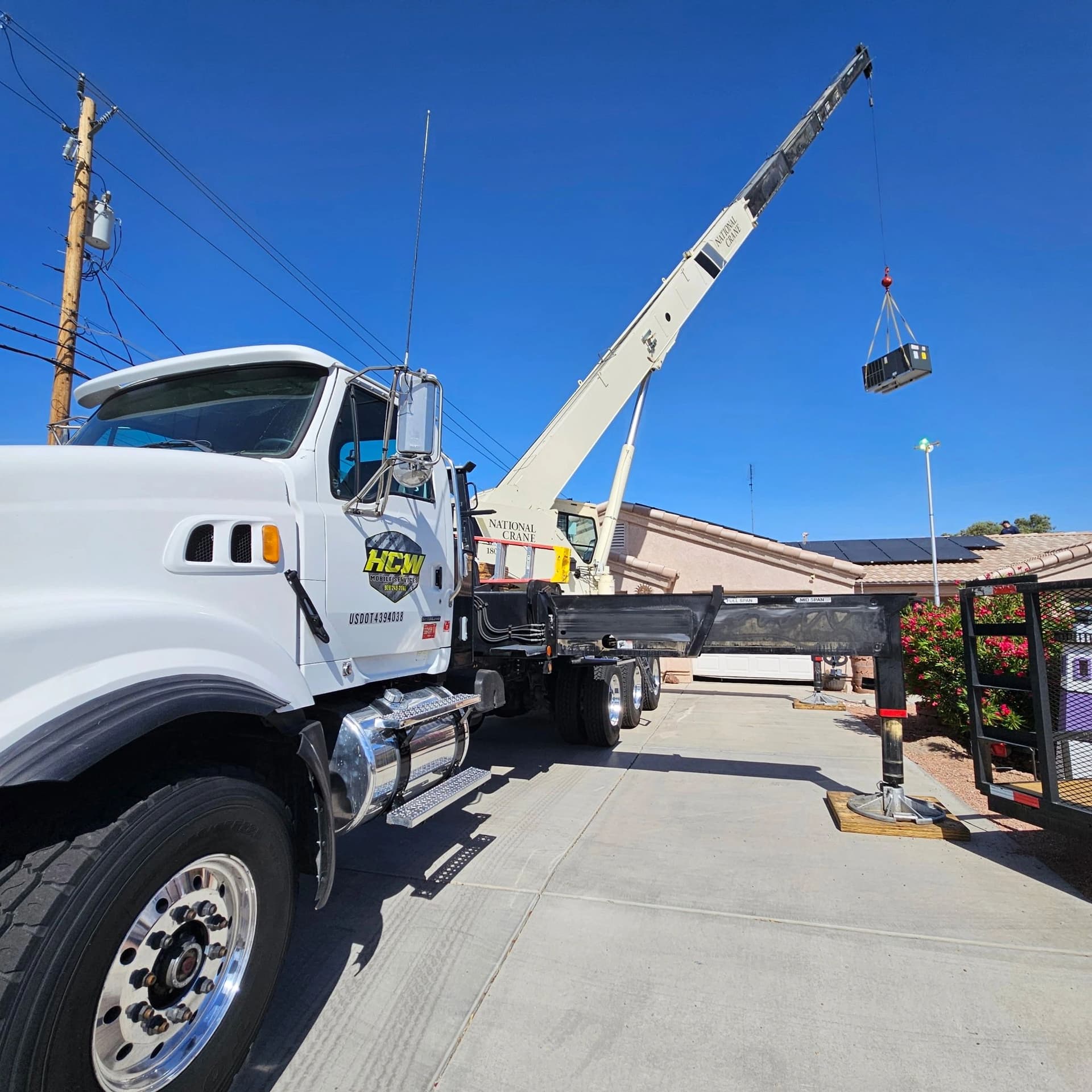
Rooftop unit lifted over a driveway 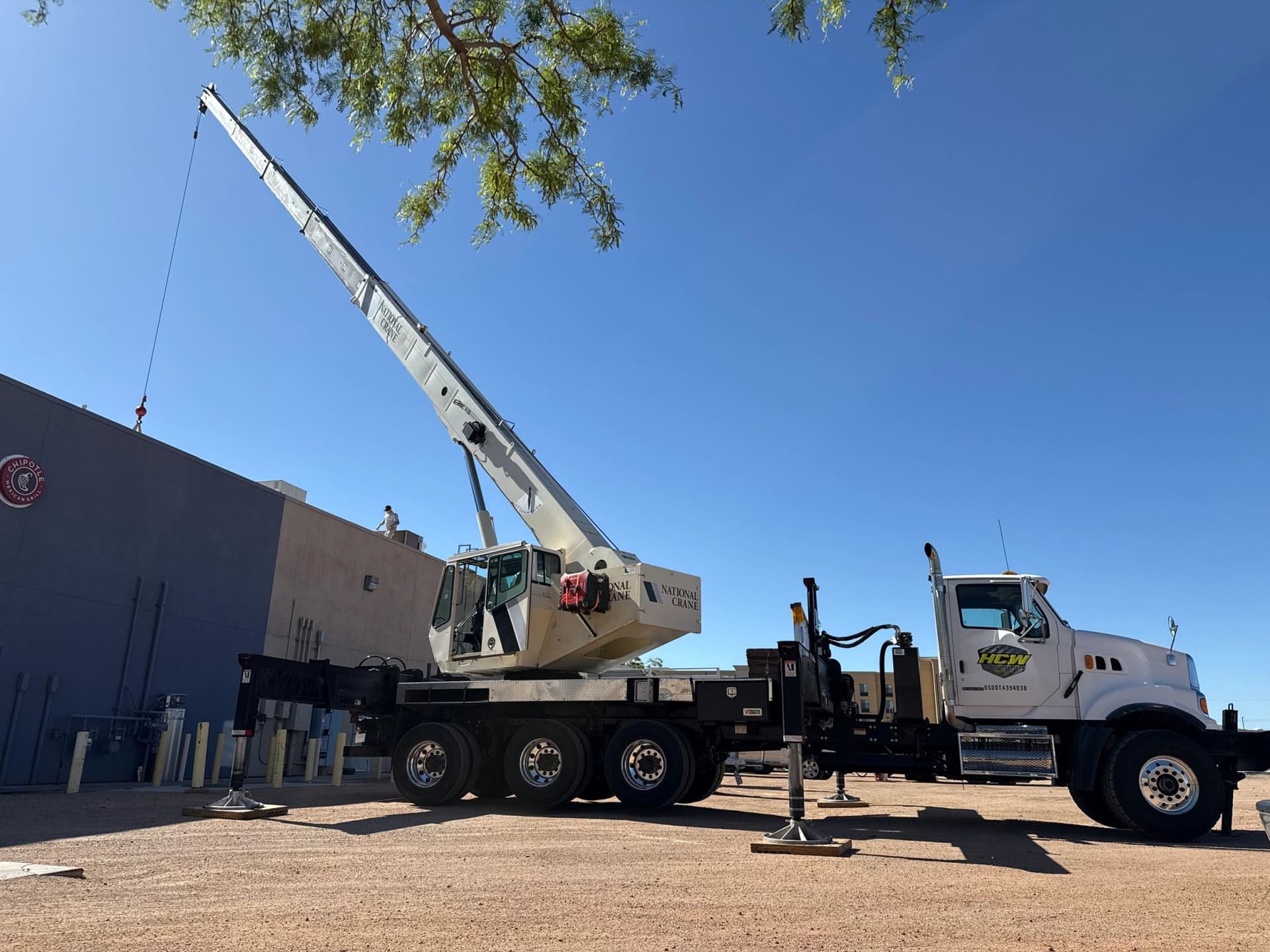
Outriggers set beside a commercial roof 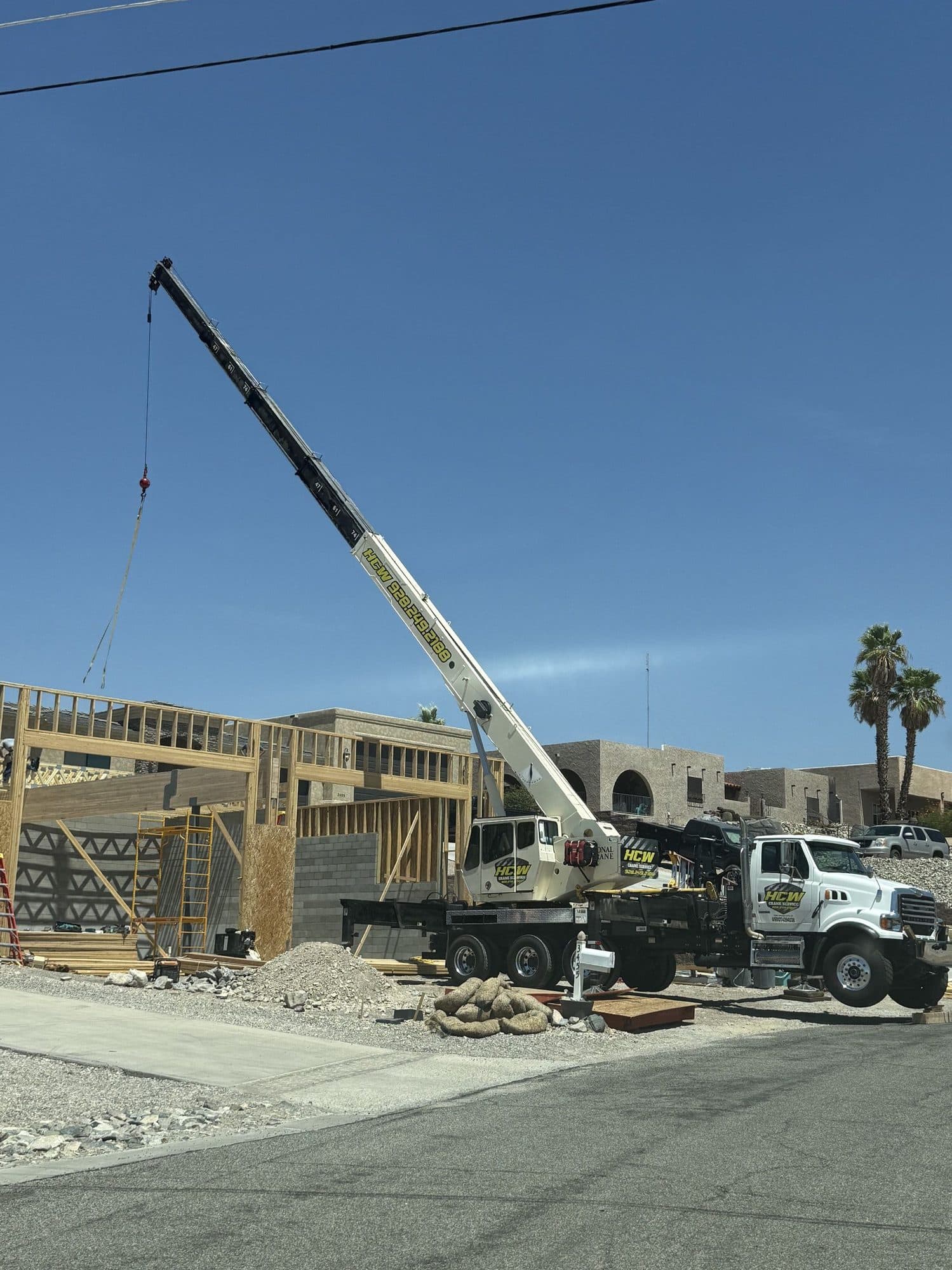
Boom truck working a framing site
Answers
Frequently Asked Questions
How heavy a load can you lift?
It depends entirely on radius. Our largest machine is a 40-ton mobile crane, and the rated capacity applies close in. Give us weight and distance and we will tell you plainly whether it is within reach.
What if the weight turns out to be wrong on the day?
The test lift finds it before the load ever travels. If the number is wrong in the dangerous direction, the load goes back down and we replan. That is why the first few inches always come with a stop.
Can you pull something loose with the crane?
No. A crane lifts vertically. Using it to drag or free a stuck load puts side force into the boom, which is the direction it handles worst. We find out why it is stuck and fix that first.
Do you need special ground for a heavy pick?
We need ground that we have actually assessed. Caliche is good, fresh fill and backfilled trenches are not. Mats and cribbing under every pad are standard, and we re-check them once the load goes out over a side.
Related Services
- 40-Ton Crane ServiceOur 40-ton boom truck reaches up to 142 feet and holds weight far out from the truck. The machine for two-story picks and deep commercial roofs.
- Controlled Load PlacementA load that swings is a load nobody controls. Tag lines, smooth boom movement, and a hard stop when the monsoon wind starts to build.
- Mobile Crane Service22-ton and 40-ton boom trucks with an operator on every call, reaching up to 142 feet.
- Owner-Operated Crane ServiceThe owner takes the call, walks the site, and runs the crane. One person accountable for the lift from the first phone call to the final walkthrough.
- Crane With OperatorEvery crane goes out with an operator and the rigging to do the job. Here is exactly who does what on site, and what your crew is responsible for.
- 22-Ton Crane ServiceOur 22-ton boom truck is the tight-street machine. Smaller setup footprint, quicker to place, and the right call for most single-story residential lifts.
- 40-Ton Crane ServiceOur 40-ton boom truck reaches up to 142 feet and holds weight far out from the truck. The machine for two-story picks and deep commercial roofs.
- Hydraulic Crane ServiceBoth of our boom trucks are hydraulic. Smooth metered control, fast setup, and no assembly. Here is what that means for your lift and for desert heat.
Ready to schedule your lift?
Tell us the load, the site and the timing. We will confirm capacity, access and a window.