Spa and Residential Specialty Lifts
Over-Structure Placement in Lake Havasu City
2 min readUpdated July 2026
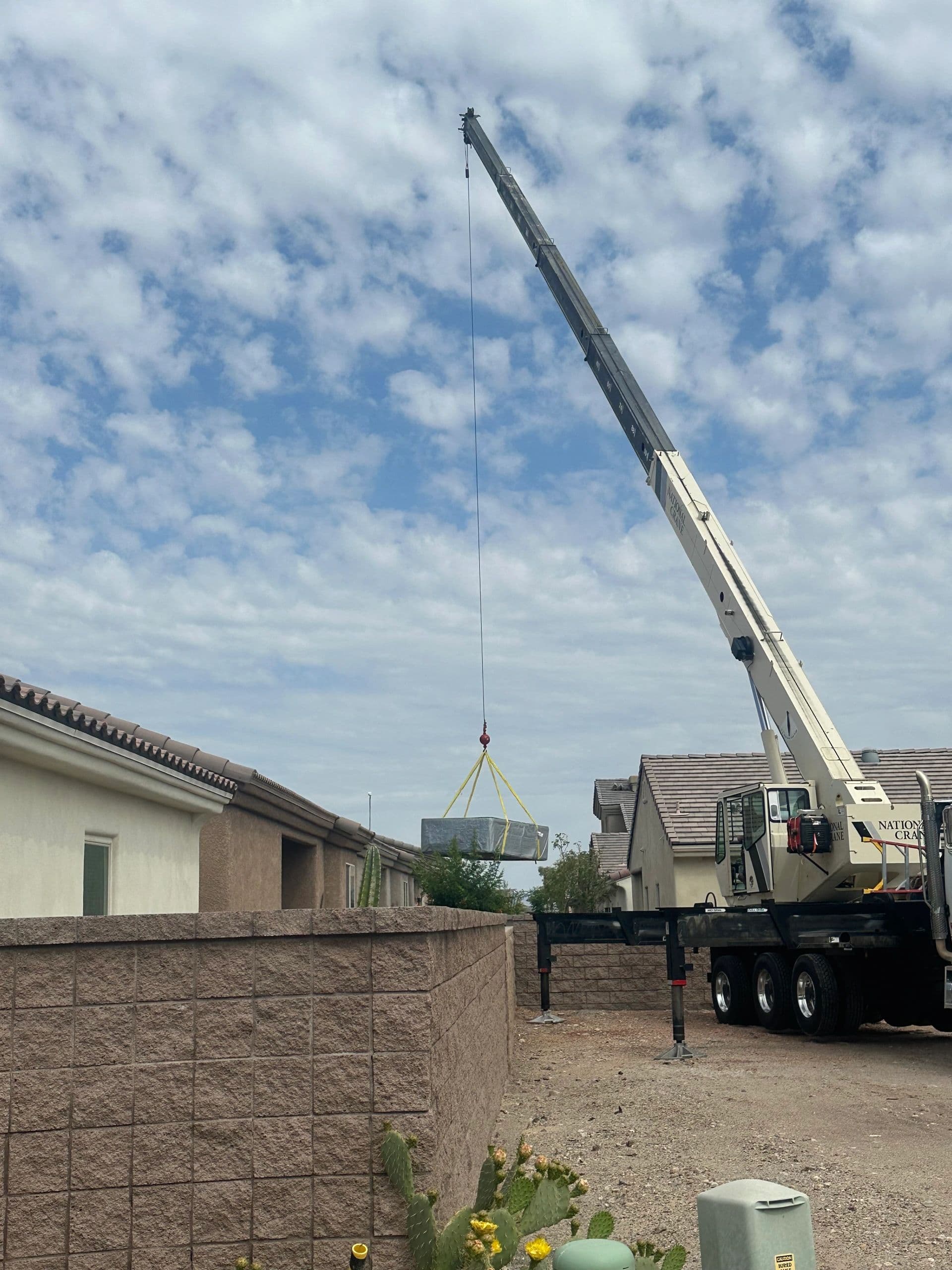
Over-structure placement is flying a load above a house, garage, patio cover, or block wall to reach a space with no ground access. It requires clearing the ridge with margin, and because the operator loses sight of the load on the far side, a spotter with a radio controls the descent.
Clearance Over the Ridge Is Not Optional
The load has to be lifted higher than the highest point it passes over, with real margin on top of that. Margin matters because a load moves. Even a well-controlled load rises and falls slightly as the boom works, and a swinging load moves a lot more.
Tile roofs make this expensive to get wrong. Ridge tiles are the highest and most fragile part of the roof, they sit on mortar, and a load that touches one on the way past breaks the tile, cracks the mortar bed, and creates a leak that shows up in the next monsoon.
Patio covers, shade sails, and mature trees are the ones that get missed. People think about the house and forget the aluminum patio cover sitting exactly where the load has to come down.
Solar panels are the newer version of this. A roof covered in array leaves very little margin and nothing that anybody wants a load passing over. If there is solar on the roof, tell us on the phone, because it can change the setup position entirely.
The Blind Half of the Lift
Once a load drops below the roof line on the far side, the operator cannot see it. He is working the boom and hoist against a landing point he has never had a direct view of, in a yard he may only have seen from the street.
That is why a spotter in the yard with a radio is not optional on these picks. He has continuous view of the load, the wall, and the target, and he owns the last stage completely. Signals get agreed before the load leaves the ground and only that one person talks.
We also walk the descent path first where possible. Knowing there is a drip line, a light fixture, or a low branch in the way is much better than finding it with a load coming down on it.
Communication has to be settled before the load leaves the ground. Radios checked, channel agreed, and one voice only. On a blind descent the operator is acting entirely on what he is told, so a second person calling out is worse than no one calling at all.
How the job runs
Our Process
Step 1: Measure the High Point
Ridge height, patio cover height, and anything else in the path. The plan is built on the highest obstruction plus real margin, not on the average roof.
Step 2: Walk the Descent
Where possible we go into the yard and look at the landing point and the path down to it. Drip lines, lights, and branches are easier to move than to work around.
Step 3: Set the Spotter
One person in the yard with a radio, positioned where he can see the load, the wall or ridge, and the target at the same time. Signals agreed before the pick.
Step 4: Over and Down
The load goes up with margin, crosses at a controlled speed on tag lines, and then comes down slowly on the spotter's call until it is set.
Scope
What Is Included
- Crane sized for the height needed to clear with margin
- Ridge, patio cover, and tree clearance assessed before setup
- Tag lines for control across the whole crossing
- A dedicated radio spotter for the blind descent
- Descent path walked in advance where access allows
- 142 feet of reach available when the height demands it
Real HCW jobs
From the Job Site
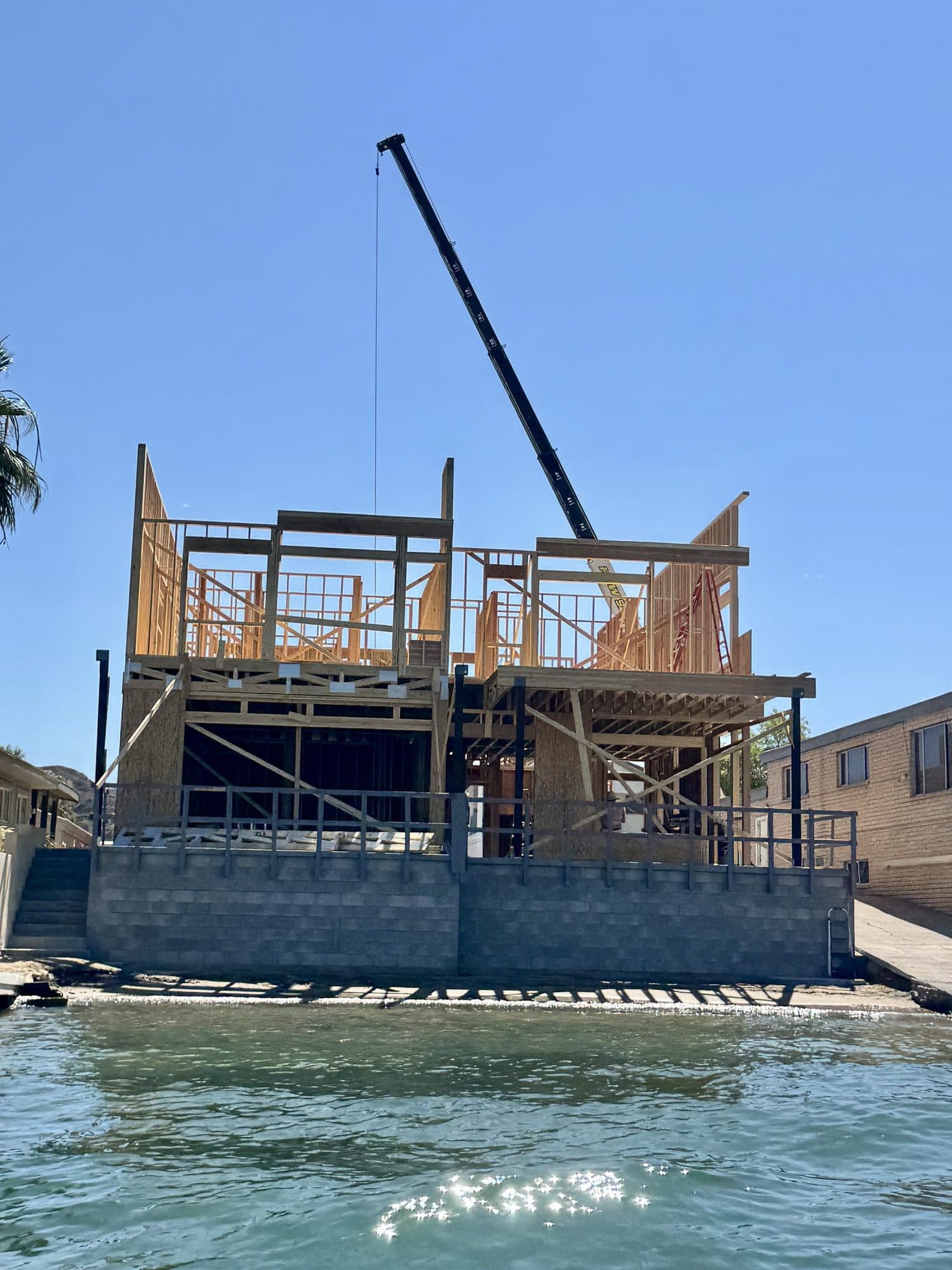
Lakefront framing seen from the water 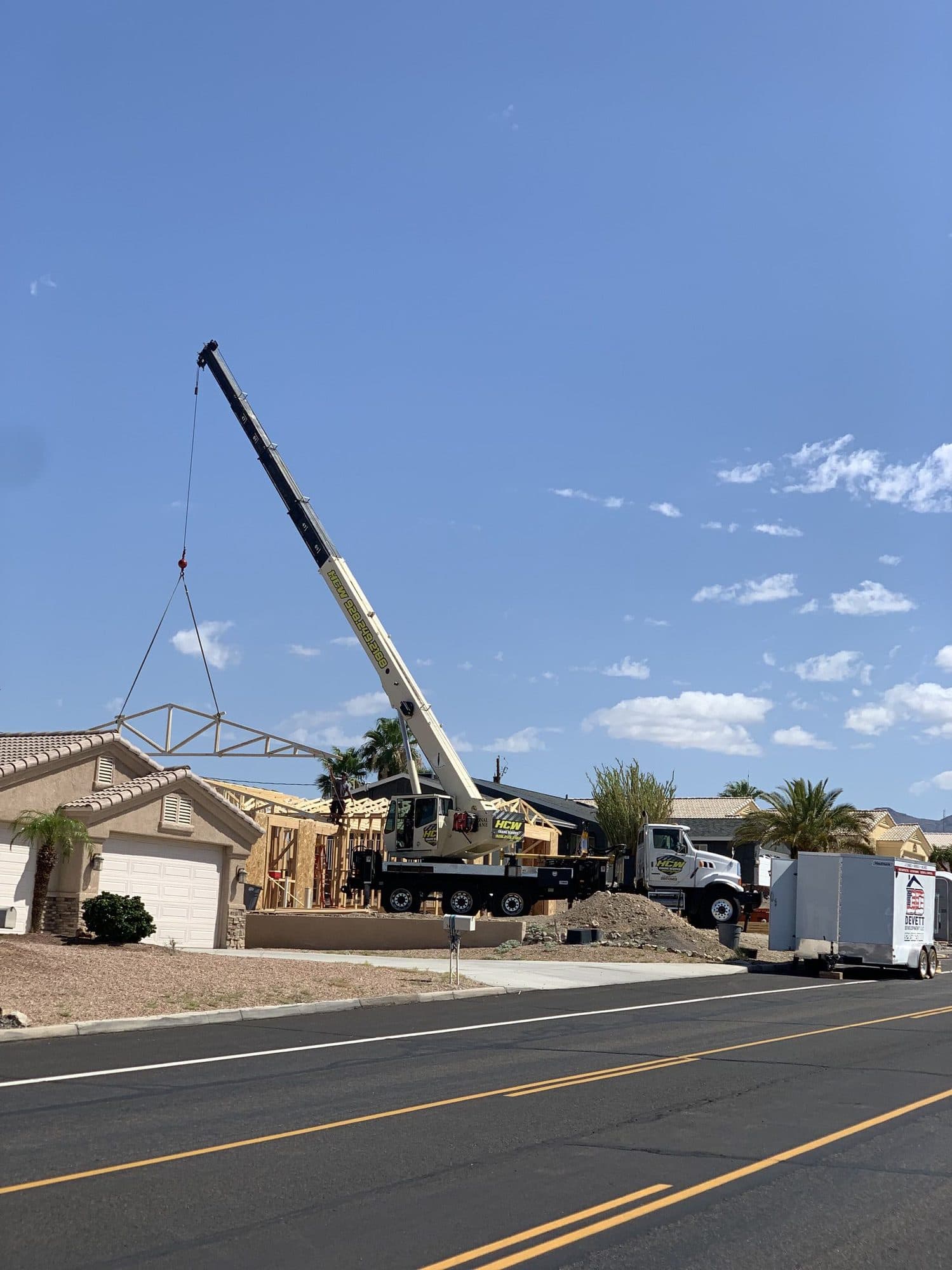
Truss lifted over a neighboring roof 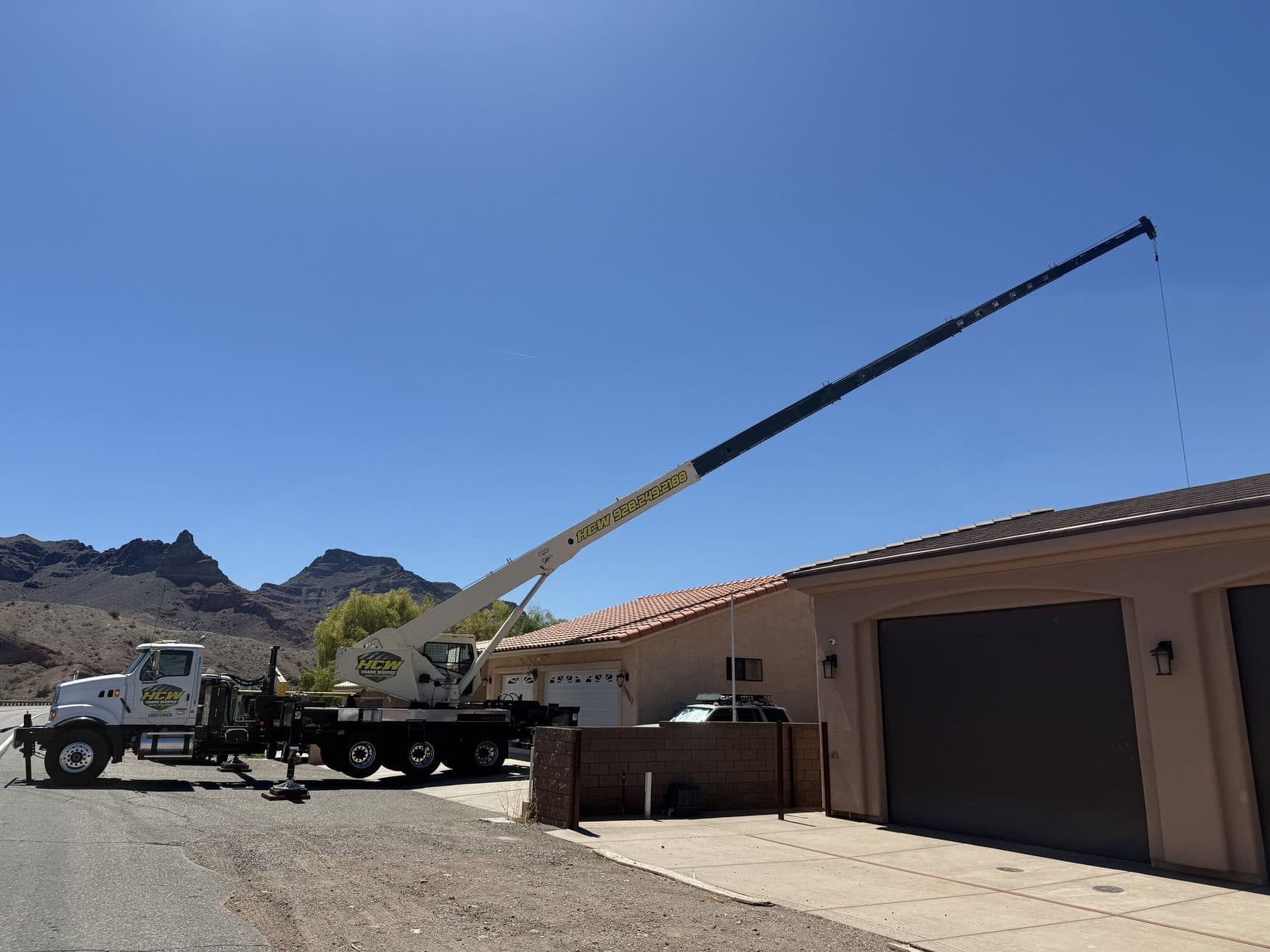
Long reach over a garage roof 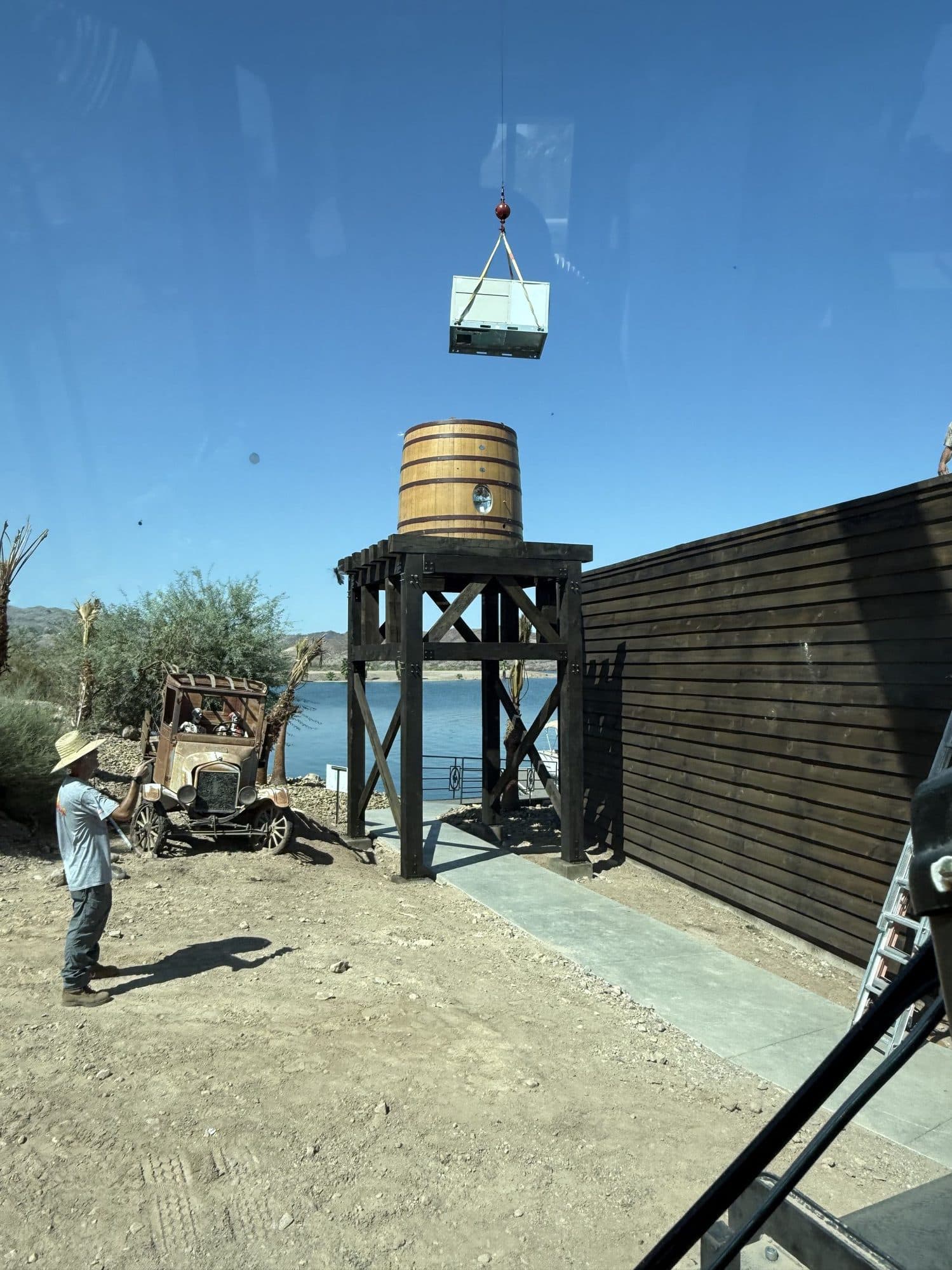
Lakeside lift seen from the cab
Answers
Frequently Asked Questions
Can you really lift over a two-story house?
Yes. That is what the 40-ton and its 142 feet of reach are for. Height plus setback decides the machine, and a photo from the street usually answers it quickly.
Will the load hit my roof tiles?
Not if it is planned properly. The load clears the ridge with margin and never skims it. Ridge tiles are the fragile high point, so that is the height everything is measured from.
How does the operator see where the load is going?
He does not, once it drops below the roof line. A spotter in the backyard with a radio has continuous view and runs the last stage of the descent.
What about my patio cover?
That is the obstruction people forget. Tell us about patio covers, shade sails, and pergolas up front, because they sit right where a load has to come down.
Is it safer to go over the wall instead?
When there is a side yard the crane can reach into, over the wall is shorter and simpler. Over the house is the answer when there is no side access at all.
Related Services
- Tight Access LiftsNarrow streets, no side yard, overhead lines, and neighbors on both sides. How we work a lift where there is barely room to set up.
- Controlled Load PlacementA load that swings is a load nobody controls. Tag lines, smooth boom movement, and a hard stop when the monsoon wind starts to build.
- Spa and Residential Specialty LiftsSpas, hot tubs, and awkward residential loads flown over block walls into finished backyards.
- Spa PlacementA spa carries its weight in the shell, not the cabinet. Sling placement, a cured level pad, and equipment bay orientation are what make the set work.
- Hot Tub Crane LiftDelivery day logistics for a hot tub lift. Where the truck parks, how long the street is blocked, and getting the old tub out on the same visit.
- Tight Access LiftsNarrow streets, no side yard, overhead lines, and neighbors on both sides. How we work a lift where there is barely room to set up.
- Residential Specialty LiftsSafes, boulders, fountains, statuary, sheds, playsets, and pool equipment. The one-off household loads that will not fit through a gate.
Ready to schedule your lift?
Tell us the load, the site and the timing. We will confirm capacity, access and a window.