
Lift Planning and Site Support
Signal Person Assistance on Blind Picks
2 min readUpdated July 2026
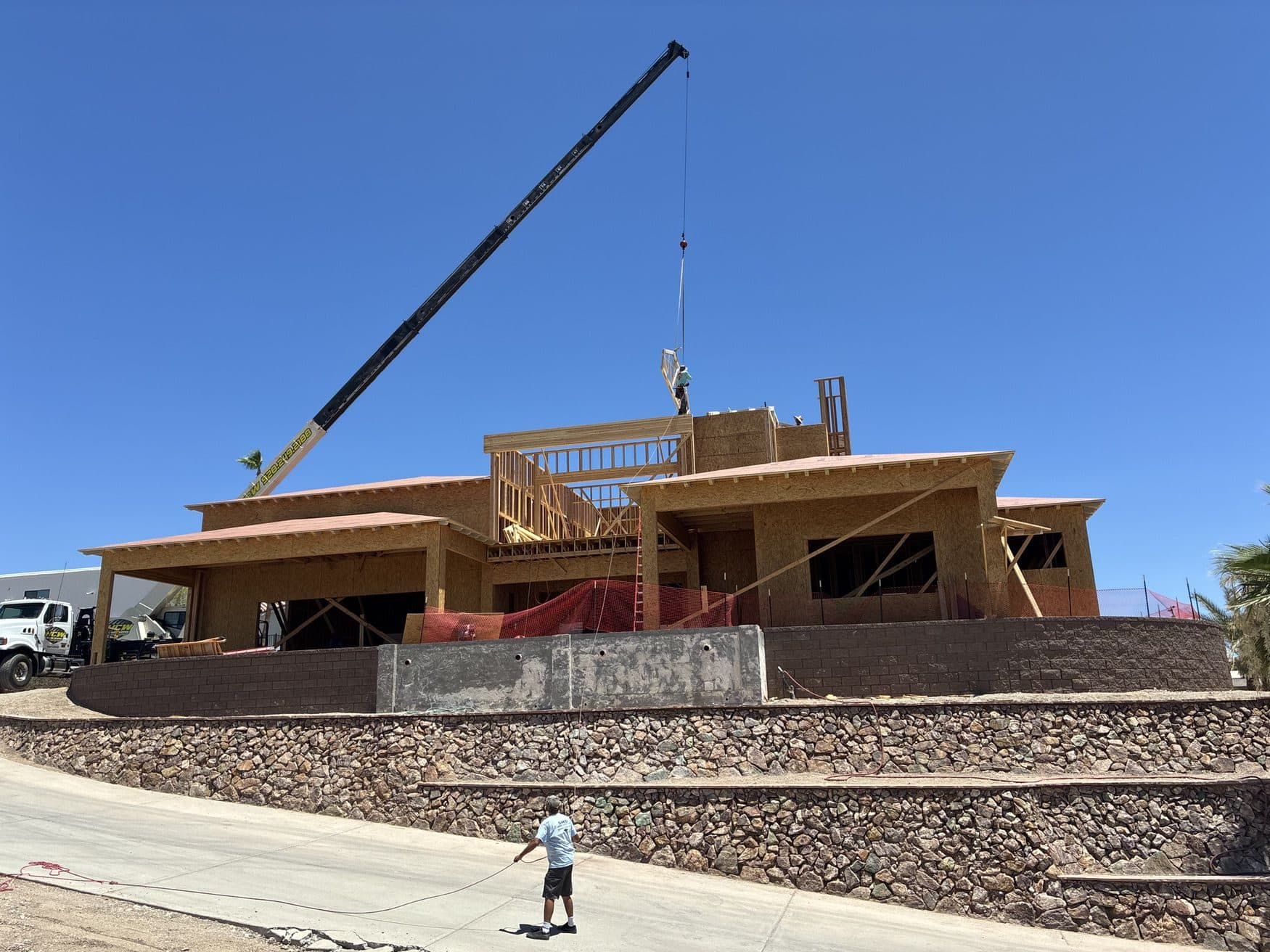
Signal person assistance covers lifts where the operator cannot see the load, such as picks over a roofline or down into a walled yard. One person gives standard hand or radio signals and the operator responds only to them, with the exception that a stop signal is honored from anyone on site.
The part of the pick nobody in the seat can see
Most of the interesting work around here is blind. A unit going over a roofline disappears behind the parapet exactly when it is closest to something. A load dropping into a walled back yard vanishes below the block wall in the last ten feet, which is the only ten feet where precision matters. The operator is flying on somebody else's eyes.
That makes the signal person a working part of the crane, not a helper. Every inch of movement in those last moments comes from one person's hands or one person's voice, and the operator's job becomes doing exactly what is asked, at the speed it is asked for, and nothing more. It only works if both people trust that the other is not improvising.
One person, standard signals, no improvising
Standard hand signals get used because they are unambiguous. Boom up, boom down, hoist, lower, swing, stop, and the slow versions of each. Invented gestures fail at the worst time, because the person receiving them fills in a meaning that was never sent. If somebody is unfamiliar with the signals, they get run through before the pick rather than learned during it.
One signal person at a time, and the operator responds to that person only. A second person waving from another corner gets ignored, which sounds harsh until you picture the alternative. The single exception runs the other direction: a stop signal is honored from anybody on site, immediately, no matter who they are.
Where to stand, and what happens when the radio dies
The signal person needs to see both the load and the operator, which usually means standing off to one side rather than in line with the work. Getting a better view by moving under the load is exactly backwards and it happens because it feels helpful. The right answer is to move around the outside until the sightline opens up, or to change position and tell the operator where you went.
Radios get checked before the pick, not tested for the first time when the load is in the air. Both units on, both heard, channel agreed and a spare plan if one quits. If communication drops at any point, the load stops where it is and stays there until it is back. Nobody continues a blind pick on a guess about what was probably meant.
How the job runs
Our Process
Step 1: Identify the blind portion
During planning we work out where the operator loses sight of the load: behind a parapet, below a block wall, past a roof edge. That section defines where signaling has to be flawless and where the pick will slow down to a crawl on purpose.
Step 2: Name one signal person
One person is assigned and everyone else is told they are not signaling. If they are unfamiliar with standard hand signals, we go through the ones this pick will use before setup. The stop signal is covered separately because it is the one everybody keeps.
Step 3: Set position and radios
The signaler picks a spot with a clear view of both the load and the operator, off to the side and never under the load. Radios go on, get checked both ways and a channel is agreed. If a position change is needed mid pick, the operator is told before the move.
Step 4: Run the pick slow
Through the blind section, movements are small, deliberate and one at a time. The operator does exactly what is signaled and nothing extra. If a signal is unclear, ambiguous or missing, the load holds until it is clear rather than continuing on an assumption.
Scope
What Is Included
- Blind portion of the lift identified during planning
- One signal person named before setup begins
- Standard hand signals agreed and gone through beforehand
- Radio check both directions before the load moves
- Signaler positioned clear of the load with sightlines
- Load stops automatically if communication is lost
Real HCW jobs
From the Job Site
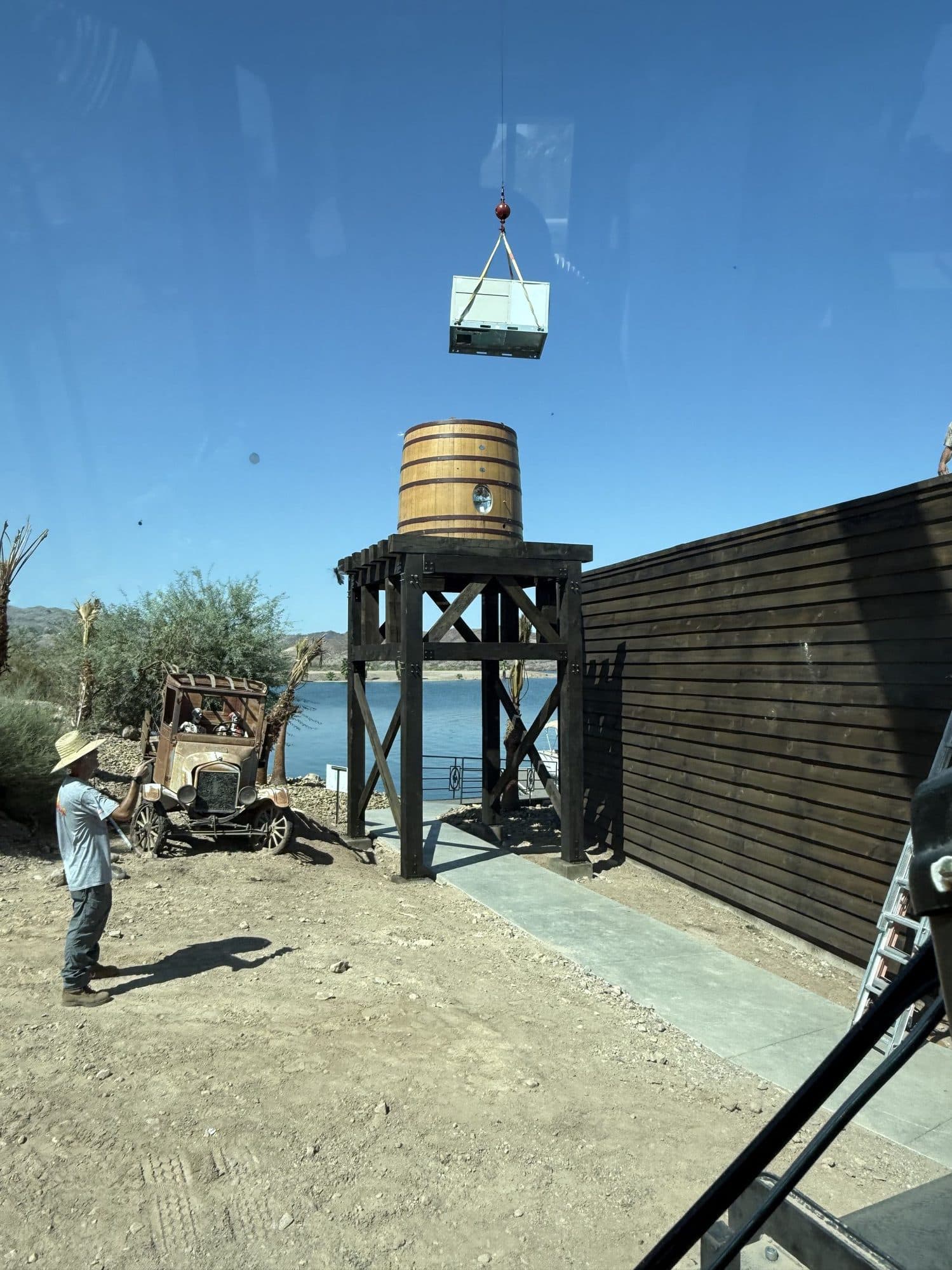
Lakeside lift seen from the cab 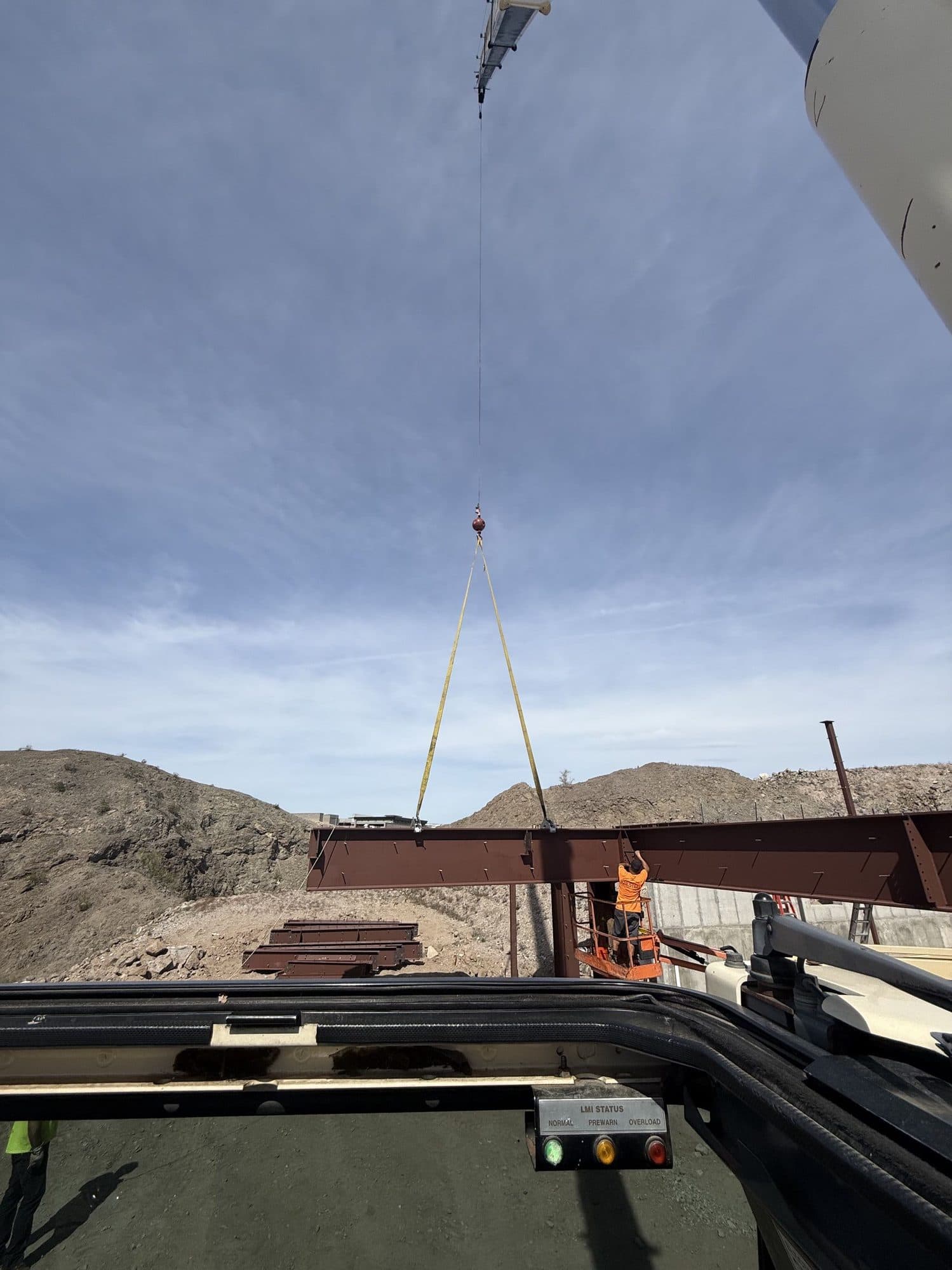
Guiding a beam from the cab 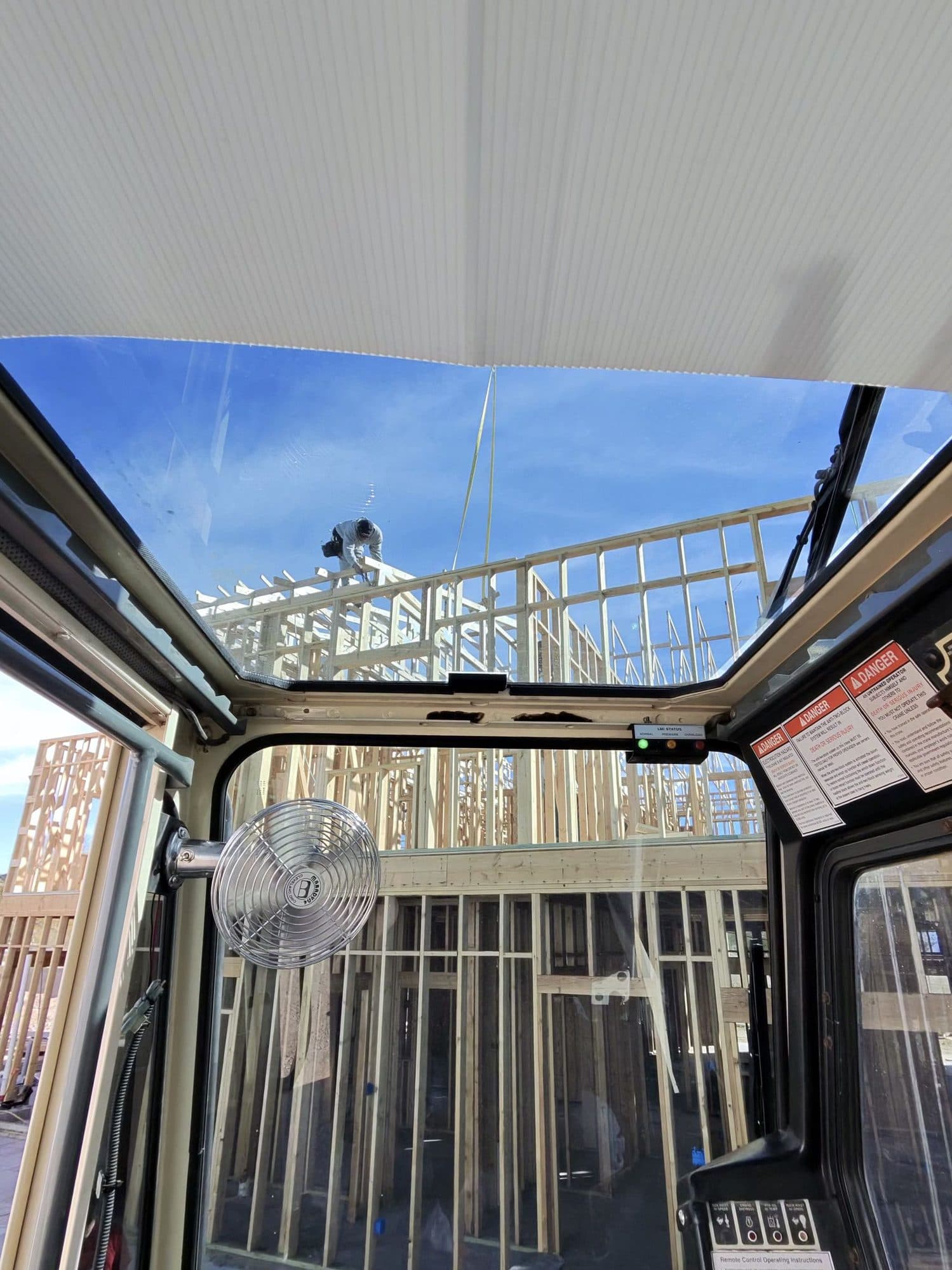
Skylight view of a framing crew 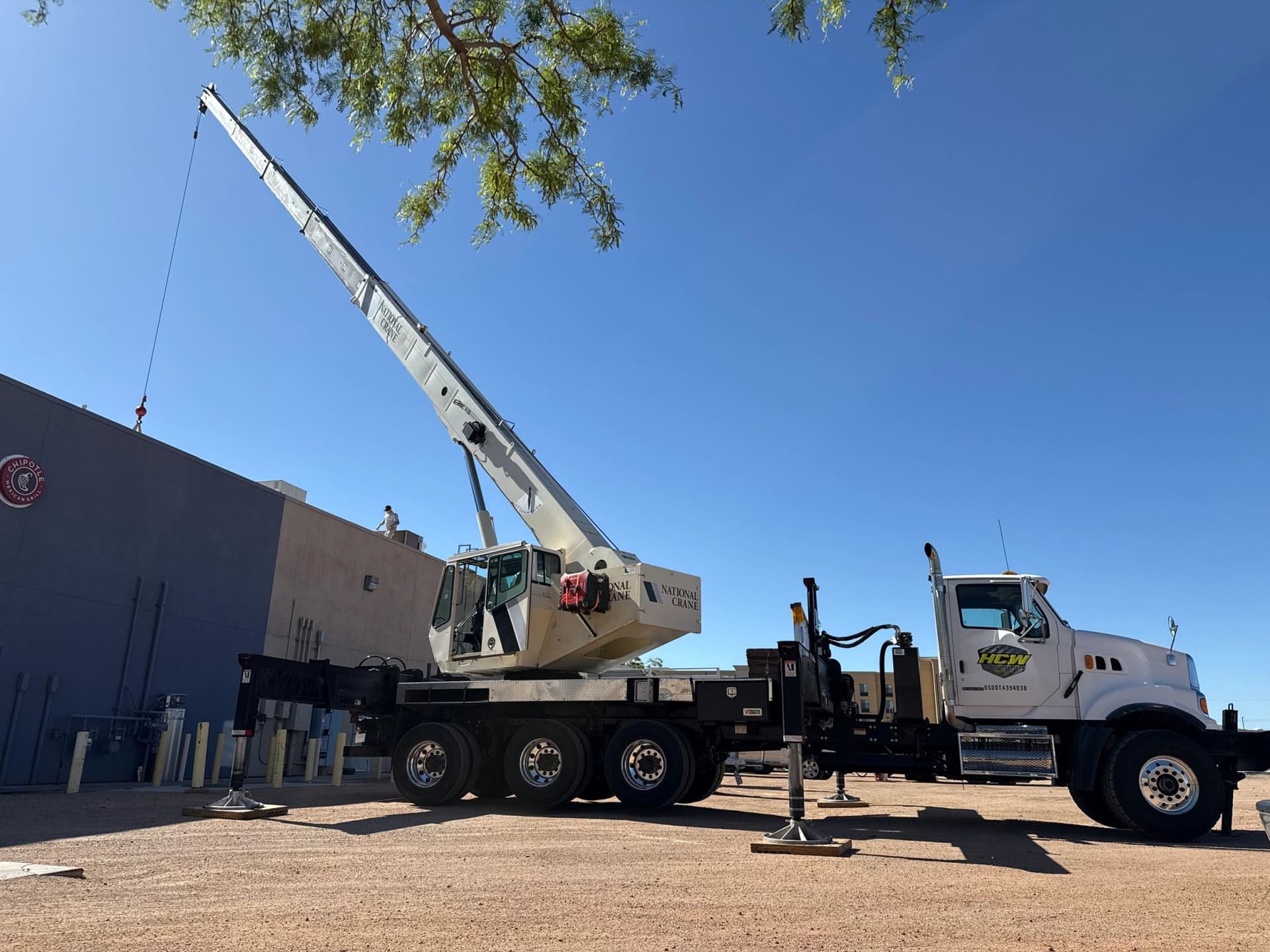
Outriggers set beside a commercial roof
Answers
Frequently Asked Questions
Can I be the signal person on my own job?
Often yes, and on residential work it is common. We go through the signals we will use before setup, agree where you will stand and check the radios. The only requirements are a clear view of the load, a clear view of the crane and a willingness to stop rather than guess if something looks off.
What if two of us are helping? Can we both signal?
No, and this is one of the few hard rules. Two people signaling produces conflicting instructions at the moment the operator has no independent view of the load. One person signals and the other handles the tag line or receives. The stop signal is the exception, since that one is honored from anybody present.
Why can the signaler not stand where they see best?
They can, as long as it is not under the load. The tempting spot on a blind pick is directly below, because the view is perfect there. That is also where the load lands if something lets go. The correct move is to work around the outside until a sightline opens, or to reposition and tell the operator first.
What happens if the radio cuts out mid lift?
The load stops and holds. It does not continue toward the landing spot on the last instruction and it does not get finished on a hunch about what was probably meant. The signaler moves to where hand signals work, or the radio issue gets sorted, and only then does the pick resume.
Do you bring radios or should I have my own?
We bring them, and they get checked both directions before anything moves. If you would rather use your own, that is fine as long as they work reliably on the site and both ends are heard clearly during the check. Phones on a call are a poor substitute and are not used for signaling.
Related Services
- Pre-Lift Safety BriefingPre lift safety briefing in Lake Havasu City. Roles, signals, exclusion zone, stop authority and the abort plan agreed out loud before the outriggers go down.
- Reach and Radius PlanningReach and radius planning in Lake Havasu City. Where the boom truck can stand sets the radius, and radius decides what the crane can lift over your house.
- Lift Planning and Site SupportWeight, radius, ground and overhead worked out before the truck rolls, by the operator who runs the crane.
- Capacity MatchingCrane capacity matching in Lake Havasu City. We read the load chart at your real radius and pick the 22 ton or 40 ton boom truck that fits the site.
- Reach and Radius PlanningReach and radius planning in Lake Havasu City. Where the boom truck can stand sets the radius, and radius decides what the crane can lift over your house.
- Site AssessmentCrane site assessment in Lake Havasu City. Gates, driveway slope, turnaround room, overhead lines and the landing point checked before the day of the lift.
- Ground Condition EvaluationGround condition evaluation in Lake Havasu City. Outrigger bearing pressure, caliche crust, backfill, buried vaults and pads sized before the crane sets up.
- Power Line Clearance PlanningPower line clearance planning in Lake Havasu City. Minimum approach distance, full swing path clearance and utility coordination settled before a crane sets up.
Ready to schedule your lift?
Tell us the load, the site and the timing. We will confirm capacity, access and a window.