Service
Emergency and Same Day Crane Service in Lake Havasu City
6 min readUpdated July 2026
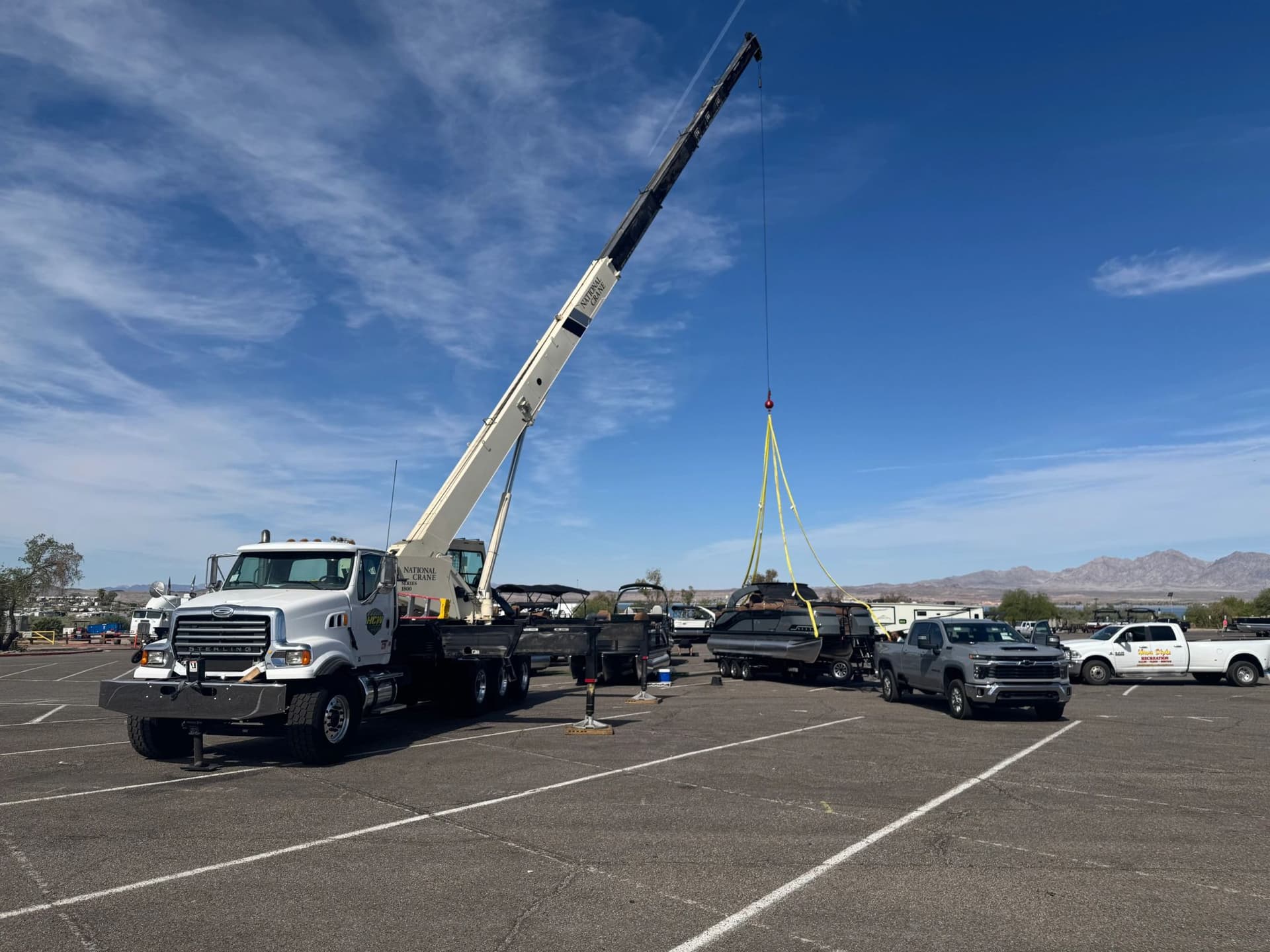
Emergency and same day crane service means HCW answers the phone at any hour and decides on that call whether the truck can roll now or the lift needs an hour of planning. A 22-ton or 40-ton boom truck arrives, and the owner who took the call runs the lift.
What a Two in the Morning Call Sounds Like
The phone gets answered at any hour. What happens next is a short conversation, not a dispatch. In a few minutes of questions the job usually sorts itself into one of two piles: something the truck can leave for right now, or something that needs an hour of planning before anybody drives anywhere. Both answers are useful. Only one of them is fast.
The jobs that go now are the ones where the weight is known, the site is reachable, and there is a place to set the load down. The jobs that need planning are the ones where nobody can say what the piece weighs, or where the only spot for the outriggers has a car parked on it, or where a service drop crosses the exact air the boom needs.
Being open around the clock is not a promise about how many minutes it takes to get there. The truck might be sitting at the shop on London Bridge Road or it might be halfway to Parker with the outriggers already down. Where it is right now, and what your job actually needs, decide the timing. You get told which of those is true on the call.
Four Things to Have Ready When You Call
Four answers do most of the work on an urgent call. Have them ready before you dial and the conversation takes a few minutes instead of half an hour of callbacks. None of them require a tape measure or an engineer. They are the things somebody standing next to the load can see.
A rough weight beats no weight. If it is a piece of machinery there is usually a data plate on it, and a photo of that plate answers half the questions at once. If nobody knows, say so plainly, because a guess presented as a fact is worse than an honest unknown. It is better to size the pick around a range than to get surprised at the hook.
The overhead question is the one people forget most. A yard that looks wide open from the ground can have a service drop running across it at twenty feet, and that changes everything about where the truck stands and how far the boom can swing.
- What it is and roughly what it weighs, even a rough number
- Where it is, with an address and which side of the building
- How a truck gets to it: gate width, driveway grade, turning room
- What is overhead: service drops, eaves, carports, awnings, shade structures
The Load Chart Does Not Get Bigger at Night
A crane's capacity comes off a chart that pairs boom length and radius with a number. That number does not care that a delivery driver is on the clock or that the shop opens at six. Out at long radius the 40-ton truck is not a 40-ton truck anymore, it is whatever the chart says at that distance, and urgency does not add a pound to it.
So the honest version is this: if the load is over the number, the answer is a different setup, not a harder pull. Sometimes that means moving the truck closer and getting the radius down. Sometimes it means a two stage move, setting the piece somewhere in between and repositioning. Sometimes it means the job waits for a morning when there is room to do it right.
The same thinking applies under the outriggers. The chart assumes the crane is level and fully supported. On caliche that has a hard crust over loose fill, a float that looked fine in daylight can punch through once the boom swings out over that corner. Pads and cribbing take a few minutes, and an urgent job is not the place to save them.
What Changes About a Lift After Dark
Night work is not day work with a flashlight. Depth perception goes first. A load that is drifting looks still, and a gap between the load and a wall reads bigger than it is. That is why the lighting has to be on the load and on the landing point, not aimed at the truck from behind the operator.
Headlights pointed at the work throw shadows in the wrong direction and blind whoever is standing near the load. Portable work lights set at the landing spot are better. Two smaller lights from different angles beat one bright one, because a single source hides the exact thing that needs watching, which is the gap between the load and whatever it is about to touch.
People are the other variable. At two in the morning everybody on site has already had a full day. Tired people stand in the wrong place, hold a tag line slack, and answer a question they did not really hear. So the plan gets said out loud before anything comes off the ground, and the number of hands near the load stays small on purpose.
A mistake in the dark is harder to see coming. In daylight you notice a sling starting to slip or a piece rotating early enough to set it back down. At night that same warning shows up later, so the lift runs slower and stops sooner. Slower at night is not caution for its own sake. It is buying back the reaction time the darkness took.
Wind in Monsoon Season and the Urgent Lift
Wind postpones more lifts here than weight does. A monsoon cell can build in the afternoon and push a gust front out ahead of it long before any rain shows up, and that gust arrives with dust that takes the visibility with it. On an urgent job that front can land in the middle of the pick, which is the worst possible timing.
A suspended load is a sail. The bigger and flatter the piece, the more that matters, which is why a panel or a light frame is more trouble in wind than a compact steel block of the same weight. Wind pushes the load out from under the hook, the radius grows, and the number on the chart shrinks at the same moment the load starts to swing.
On an urgent call this is where the answer is sometimes no for a while. Not no forever. Cells here move through. The realistic move is often to get the truck set and the load rigged, then wait out the front and lift in the calm behind it, rather than fight a gust with a load in the air.
The Person on the Phone Runs the Lift
The practical advantage on a call-out like this is that there is no dispatcher. The owner answers the phone, asks the questions, decides which truck, and then drives it out and runs the crane. What you describe at midnight is exactly what the operator already knows when the truck pulls up.
That matters more than it sounds. A load that turned out heavier than the caller thought, a setup spot that is blocked, or a piece with no lifting point on it anywhere: on an urgent call those get sorted by the person who can actually change the plan, standing right there, not relayed through an office that closed at five.
Two trucks, a 22-ton and a 40-ton, reaching out to 142 feet, means the crane that rolls is matched to the load rather than to whatever was free. And knowing the roads matters at night. Real road miles to the outlying towns, and which routes a crane truck cannot take, get figured into the arrival time you are given.
How the job runs
Our Process
Step 1: The Call
Someone answers at any hour. You get asked what the piece is, roughly what it weighs, where it sits, how a truck reaches it, and what runs overhead. Those answers decide whether the truck leaves now or the job gets an hour of planning first.
Step 2: Choosing the Truck
Weight and radius pick the machine. The 22-ton boom truck fits into tighter yards and shorter driveways. The 40-ton goes where reach or weight rules the smaller one out. Maximum reach is 142 feet, but reach and capacity always trade against each other.
Step 3: Approach and Setup
The truck gets positioned before anything else moves. Outrigger spots get checked for slope, buried lines and soft ground under the crust. Pads and cribbing go under the floats, the machine gets leveled, and the swing path gets walked so nothing is standing in it.
Step 4: Lighting and Positions
On a night job the work lights go on the load and on the landing point from two angles. Everyone gets told where to stand and where not to. Tag lines get assigned. Whoever is receiving the load confirms the spot is clear before the hook takes weight.
Step 5: The Pick
The load comes up an inch and stops. Slings get checked for slip and the piece gets checked for balance. If it hangs crooked it comes back down and the rigging changes. Then it moves slow, with the boom kept short and the radius kept tight.
Step 6: Setting Down and Clearing Out
The load lands where it was meant to land, not near it. Blocking goes underneath if the ground is not final. Rigging comes off, outriggers come up, and the load gets one last look to confirm it is sitting where it should before the truck leaves the site.
Scope
What Is Included
- Phone answered at any hour, nights and weekends included
- 22-ton or 40-ton boom truck matched to the load
- Operator on site with every crane, never a bare rental
- The owner on the phone and on the controls
- Outrigger pads and cribbing for caliche and soft fill
- Portable lighting placed on the load and the landing point
- Rigging worked out on site when a piece has no lift points
- Straight answer on whether wind or weight postpones the lift
- Load chart checked against actual radius before the pick
Answers
Frequently Asked Questions
Is the phone really answered in the middle of the night?
Yes. The number is (928) 249-2188 and it gets answered around the clock. What you get on that call is a real conversation about the job, not a message taken for the morning. By the end of it you know whether the truck is coming out now or whether the job needs daylight and some planning first.
How fast can you get to me?
That depends on two things nobody can promise in advance: where the truck is at that moment and what the job needs once it arrives. It could be sitting at the shop or it could be set up on a job in Kingman with the boom out. You get told which on the call rather than a number that might not be true.
What if I do not know what the piece weighs?
Say so. A lot of equipment has a data plate with a weight on it, and a photo of that plate answers the question in seconds. If there is no plate, the make and model usually gets close enough, and dimensions plus material get closer still. What causes trouble is a confident guess that turns out to be low once the load is on the hook.
Will you lift in the wind during monsoon season?
Not with a gust front coming through. Wind pushes a suspended load sideways, which grows the radius and cuts capacity at the same time, and a big flat piece catches far more of it than its weight suggests. Usually the better plan is to set up and rig during the wind, then make the pick in the calm behind the cell.
Do you need power or lights on site?
No power is needed. The crane runs off the truck. Lighting helps at night, so tell us if the setup area and the landing spot are dark. A storage yard with no service, a lot with the breakers off, or a lakefront driveway with nothing to plug into are all workable with the right plan.
The piece has nothing to lift it by. Now what?
That is a common one on urgent calls. We look for a solid frame member, base rail, or structural point that can carry slings, padded where they touch, instead of a strap wrapped somewhere hopeful. On damaged pieces cribbing and blocking often go in first so nothing folds while it is picked.
How far out do you go on an urgent call?
Lake Havasu City is the base, and Havasu Heights, Desert Hills and the rest of the immediate area are routine. Parker, Kingman and Bullhead City are real drives, and a call that direction takes a serious piece of the day. That is worth knowing on the phone because it affects what else can happen that day.
Can I just rent the crane and run it myself?
No. An operator comes with the crane every time. There is no drop off option. Part of what you are getting on an urgent call is somebody who reads the chart, judges the ground and decides whether the pick is sound, and none of that transfers with a set of keys.
All Emergency and Same Day Service Services
- Rapid Response LiftsRapid response crane lifts in Lake Havasu City. What happens between the phone call and the outriggers, and what actually slows an arrival down.
- Urgent Placement ServiceUrgent crane placement in Lake Havasu City for loads already on site. When to set a piece now, and when staging it clear is the smarter move.
- Same Day Crane ServiceSame day crane service in Lake Havasu City. An honest look at what fits inside one day, what needs a permit, and why you get a window.
- Emergency Crane SupportEmergency crane support in Lake Havasu City after wind damage, a failure or a dropped load. Stabilize first, then lift, with the owner on the controls.
- Rapid Response LiftsRapid response crane lifts in Lake Havasu City. What happens between the phone call and the outriggers, and what actually slows an arrival down.
- Same Day Crane ServiceSame day crane service in Lake Havasu City. An honest look at what fits inside one day, what needs a permit, and why you get a window.
- Emergency Crane SupportEmergency crane support in Lake Havasu City after wind damage, a failure or a dropped load. Stabilize first, then lift, with the owner on the controls.
- Rigging and Construction LiftsCrane picks for material, machines, containers, signs, and landscape, rigged and run by the owner.
Ready to schedule your lift?
Tell us the load, the site and the timing. We will confirm capacity, access and a window.