HVAC and Mechanical Lifts
Package Unit Placement in Lake Havasu City
3 min readUpdated July 2026
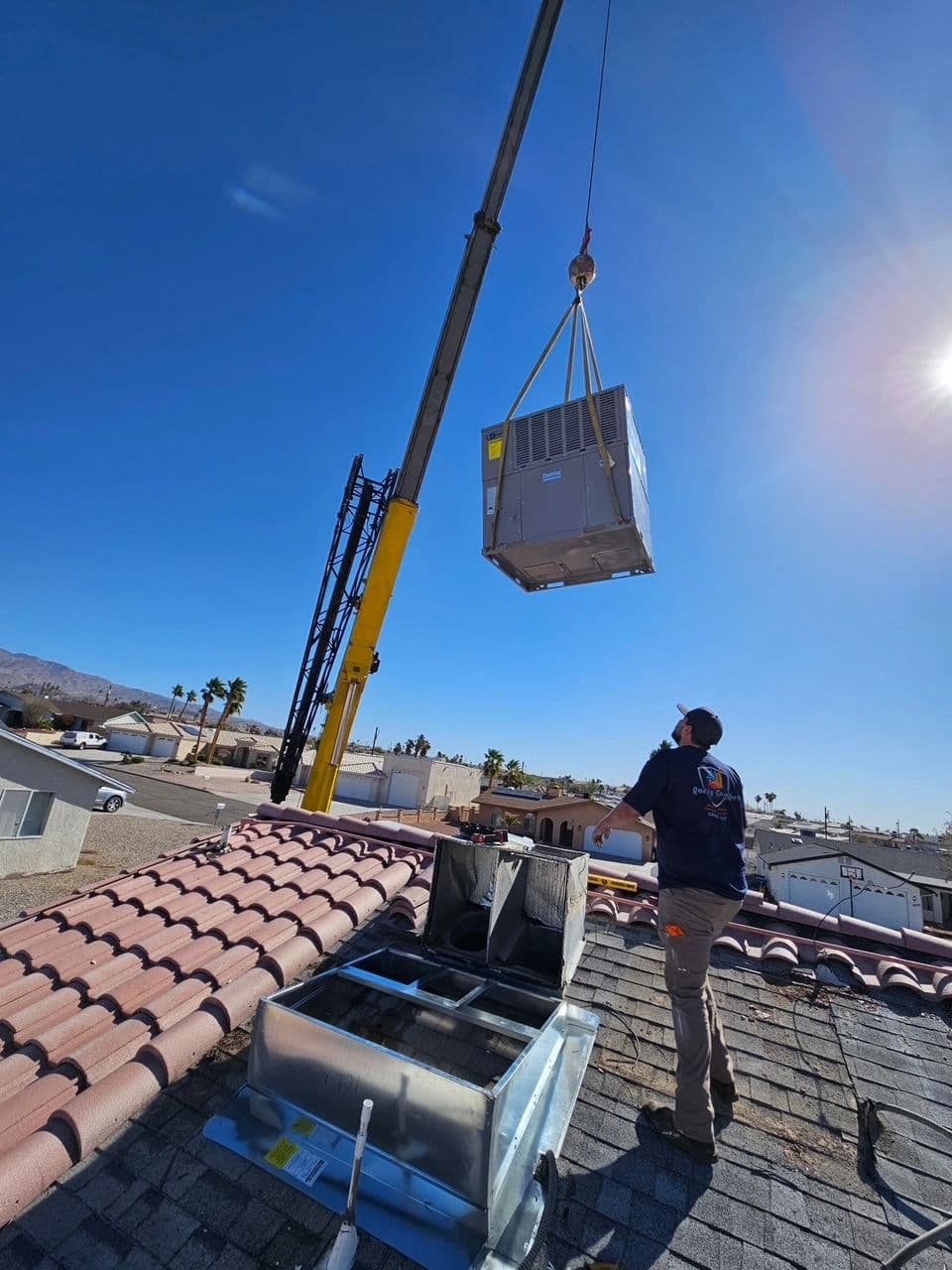
A package unit is a self-contained rooftop HVAC unit that sits on a curb over the duct openings. Setting one means bringing it in over the curb and lowering it square so the gasket seals and the supply and return line up. HCW provides the crane, operator, and rigging. Your HVAC contractor handles the connections.
The Curb Is What Makes This Different
A package unit is not just set on a roof, it is set onto a curb. The curb is a raised frame that the ductwork comes up through, and the unit has to land on it square, with the gasket compressed evenly and the supply and return openings lined up with the drops below.
That means an approach from directly above, coming straight down. You cannot land a package unit next to the curb and slide it over. Dragging it tears the gasket, scrapes the roof membrane, and can rack the cabinet.
It also means the roof is open while the old unit is off. If the curb is uncovered, the building is open to weather and to anything that falls in. That is one reason we plan the two picks tight together rather than leaving a gap in the middle of the day.
Curb Match and the Thing That Goes Wrong
The most common problem on a change-out is a new unit that does not match the old curb footprint. Manufacturers change dimensions between model generations, and the difference shows up when the unit is hanging over an open hole.
That is a conversation to have before the crane arrives. If an adapter curb is needed, it has to be on site and installed while the roof is open, and that adds time between the two picks. Somebody has to own that decision, and it is not something to discover on the day.
The second most common problem is a weight that came from the brochure rather than the data plate. Operating weight with the compressor, the coil, and the economizer is not the shipping weight of the base cabinet.
Condensate and gas connections are worth a thought too. The drain has to fall the right way and the gas line has to reach, and both of those depend on the unit sitting where the old one did. A unit set even slightly off can turn a simple hookup into an afternoon of reworking pipe.
Rigging a Sheet Metal Cabinet
Package units are large sheet metal boxes with the mass concentrated on one side, usually where the compressor sits. That means the center of gravity is off center and the unit will not hang level on evenly spaced slings unless the rigging accounts for it.
Most units have factory lifting holes or brackets in the base rail. Those get used. Where they exist, a spreader bar keeps the sling legs vertical so they are not pulling inward on the cabinet panels, which is what dents a unit and springs a door.
Anything removable and loose comes off or gets secured before the pick. Panels, hoods, and economizer covers turn into sails and into projectiles, and neither is something you want above a roof with people on it.
Setting It Down
The unit is brought to a position above the curb and stopped. The tech on the roof confirms orientation, because a unit set backwards is a full second pick to correct. Then it comes down in small increments while he sights the alignment on all four sides.
The rigging stays on until he confirms the unit is seated on the gasket, square, and not hung up on a duct flange. Coming off the load early is how a unit ends up slightly cocked and leaking air at the curb for the next fifteen years.
If it does not go on cleanly, we lift it back off and set it down rather than work it. A unit that is fighting the curb is telling you something, usually that a flange is bent or the curb is out of square, and forcing it just hides the problem under a unit that is now hard to move.
How the job runs
Our Process
Step 1: Confirm Unit and Curb
Operating weight from the data plate, unit footprint, and whether it matches the existing curb. If an adapter is needed, it has to be on site before we start.
Step 2: Position for Both Picks
The crane is set where it can reach the staged new unit, the curb, and the drop zone for the old unit, all from one position where possible.
Step 3: Old Unit Off
Once disconnected and free of the curb, it comes straight up and out, then down to a trailer or a laydown area. The curb gets inspected while it is open.
Step 4: New Unit In
Brought in directly over the curb, stopped, orientation confirmed, then lowered in inches with the tech sighting all four sides.
Step 5: Confirm and Release
Rigging stays on until the tech confirms the unit is square and seated on the gasket. Then we come off the load and clear the roof.
Scope
What Is Included
- Crane and operator for the old unit and the new one
- Spreader bar and slings sized for a sheet metal cabinet
- Use of factory base rail lifting points where fitted
- Vertical approach directly over the curb, no dragging
- Radio or hand signals with the technician on the roof
- Old unit set to trailer or laydown area as directed
- Tight sequencing so the roof is open for as little time as possible
Real HCW jobs
From the Job Site
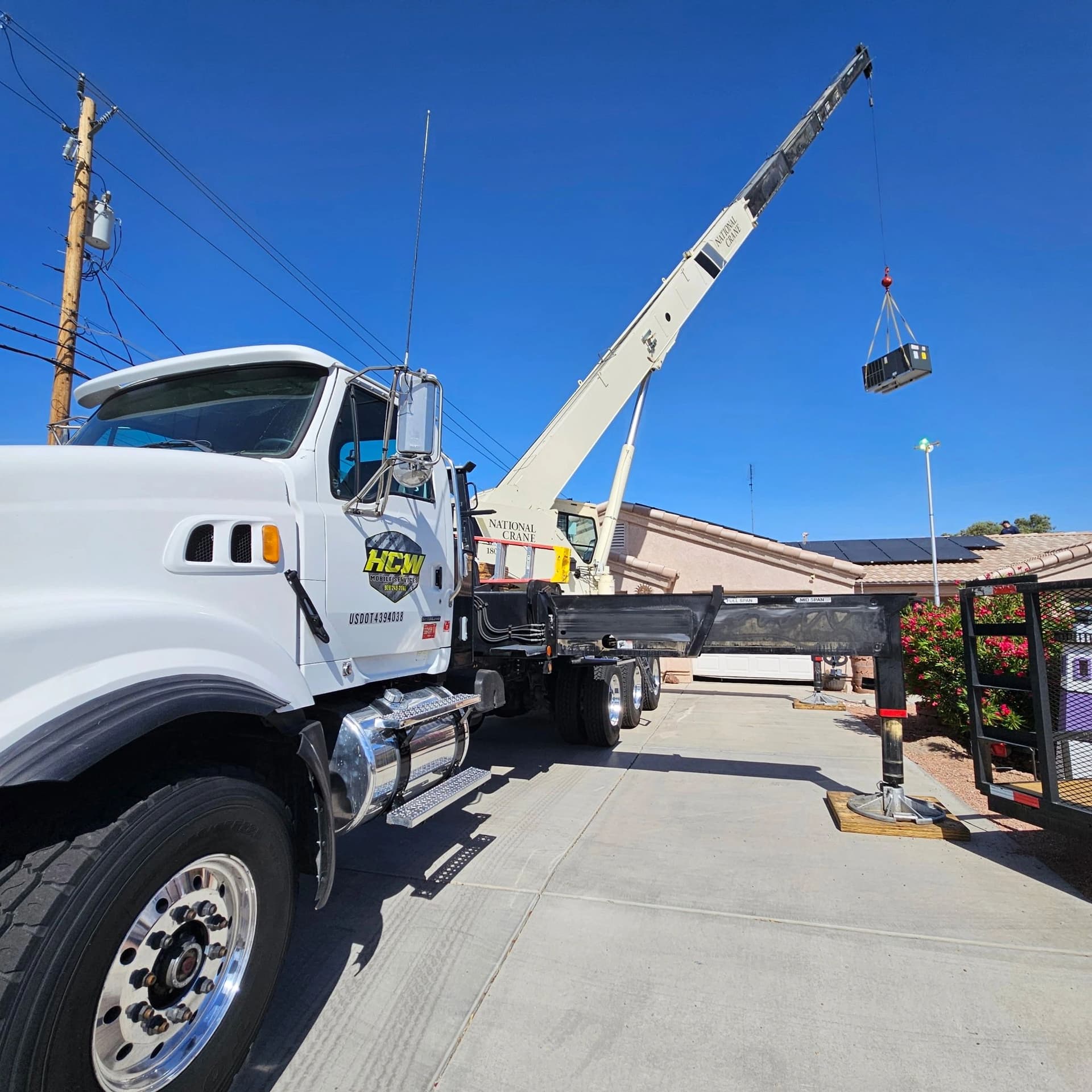
Rooftop unit lifted over a driveway 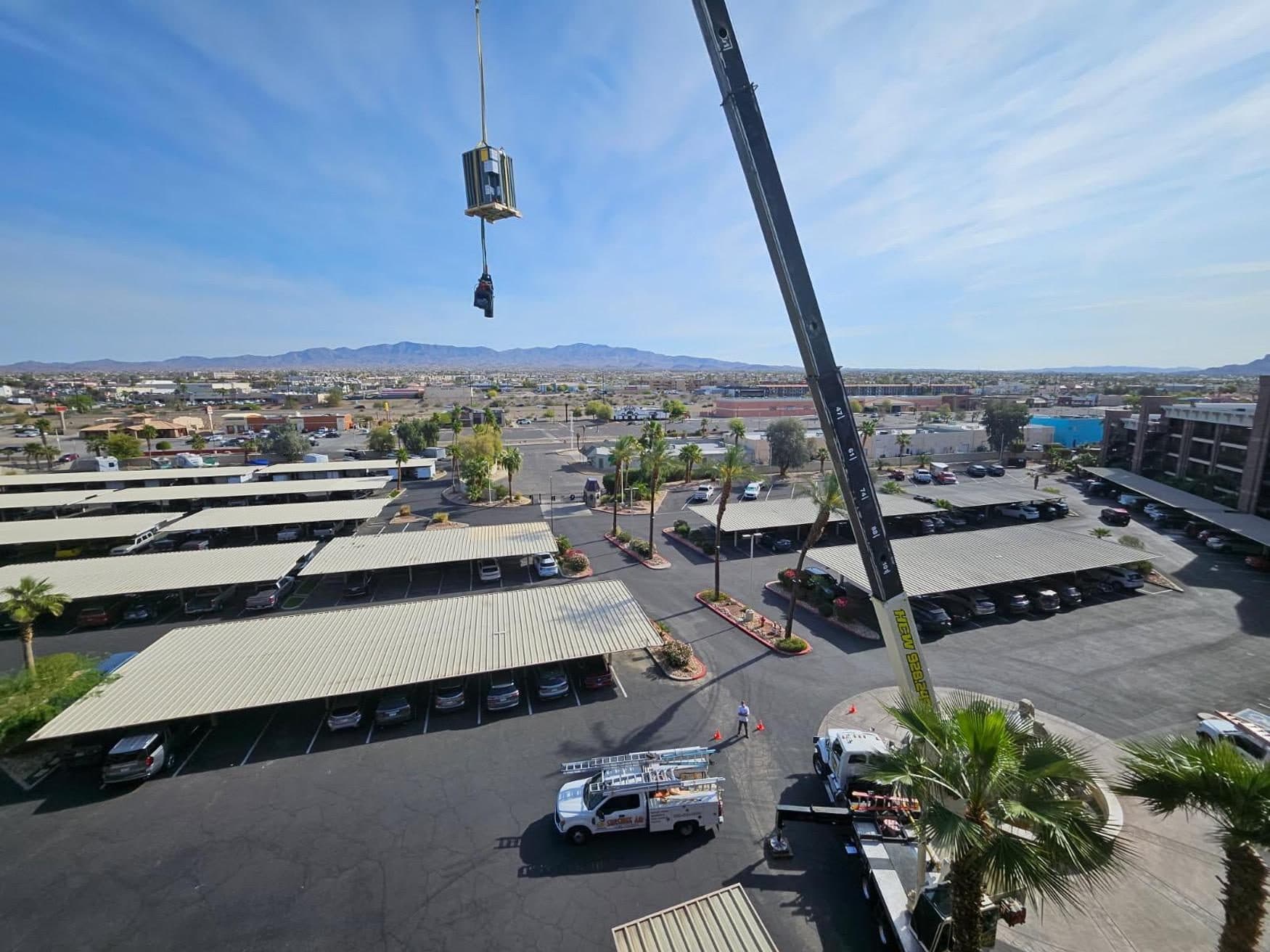
Rooftop HVAC unit in the air 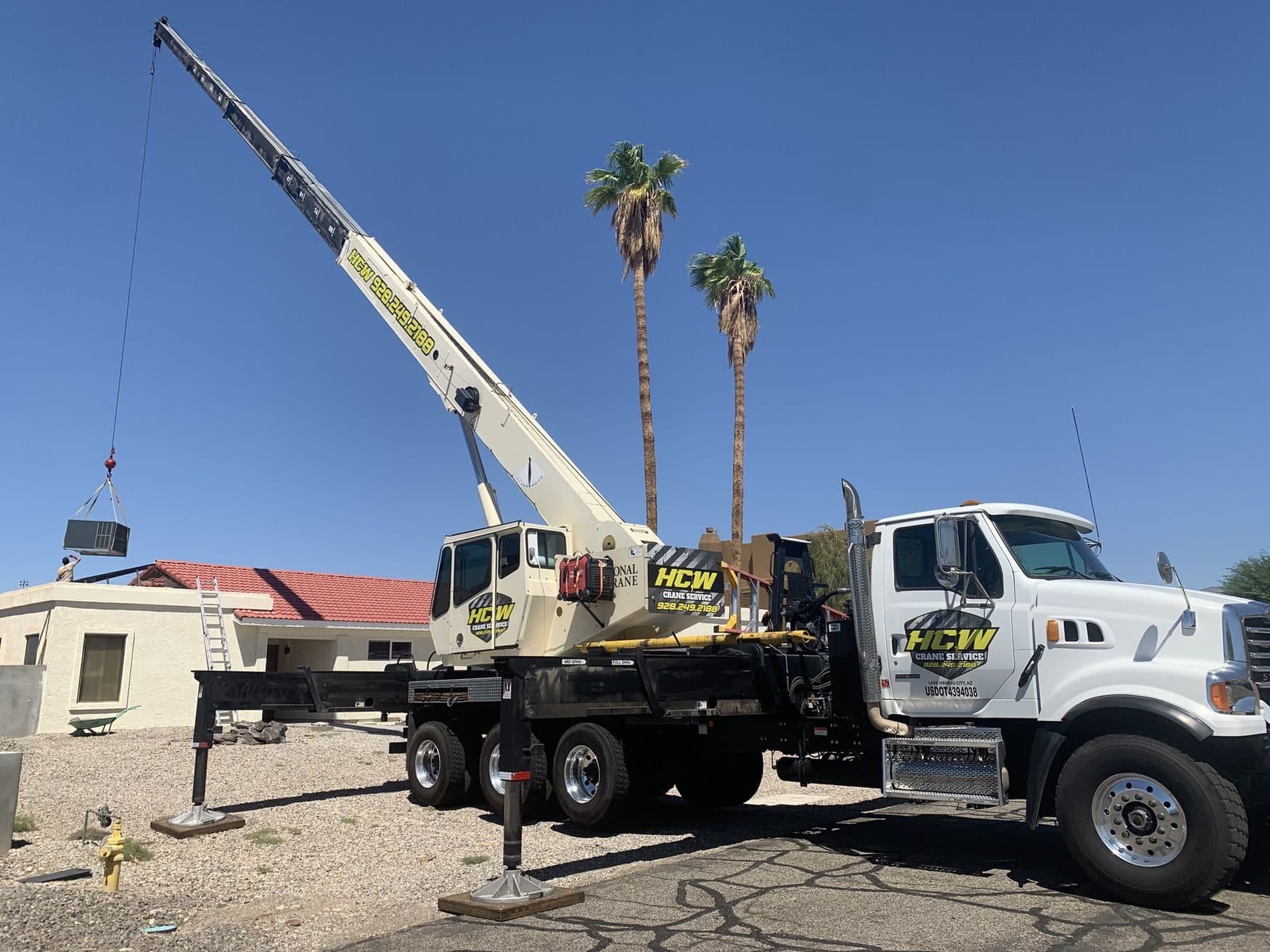
HVAC unit swung over a tile roof 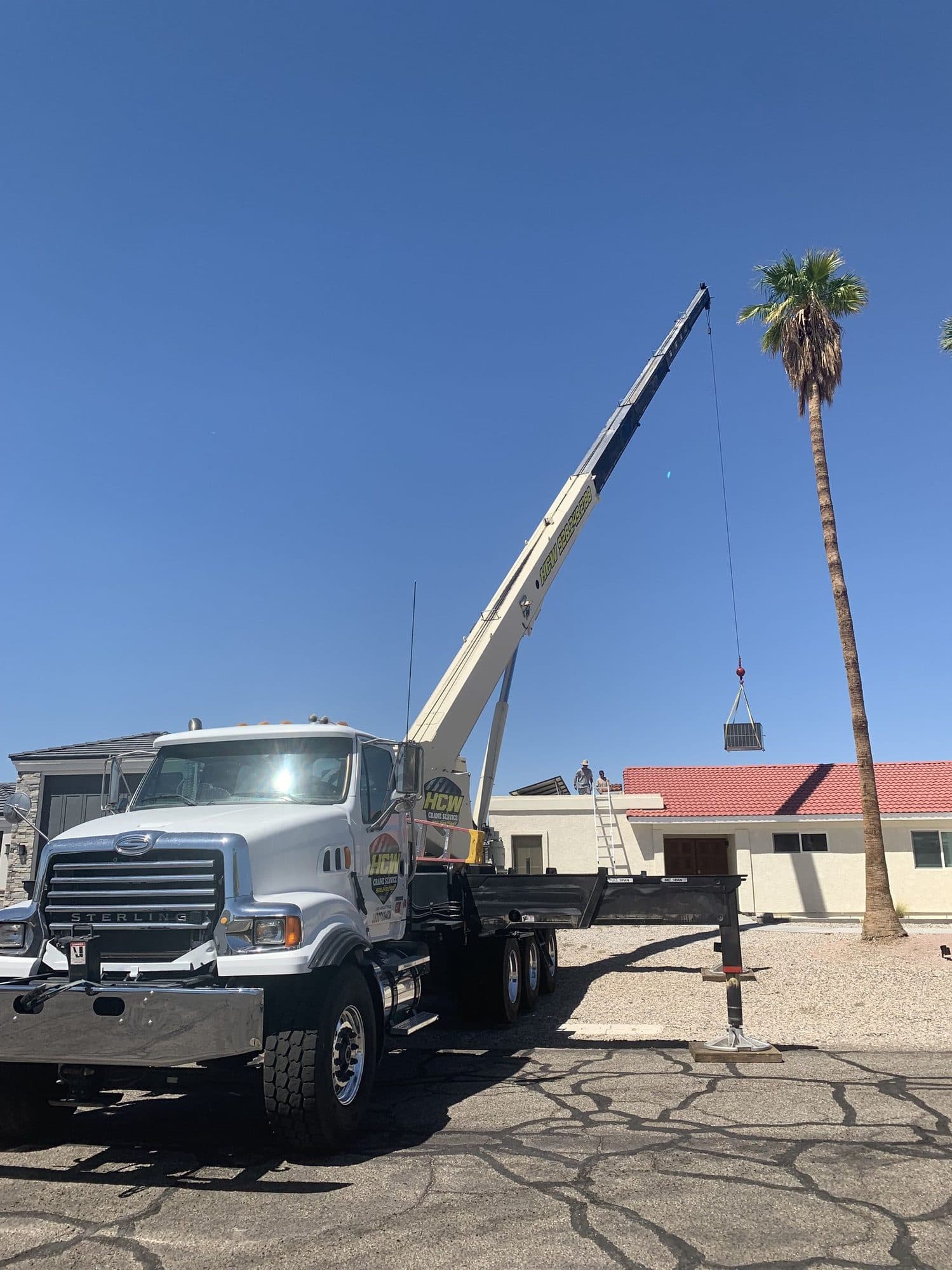
Rooftop unit headed for a tile roof
Answers
Frequently Asked Questions
What weight do you need for a package unit?
Operating weight from the data plate or the submittal, not shipping weight from a brochure. Compressors, coils, and economizers add up, and a low number is the thing most likely to stop the job.
What happens if the new unit does not fit the old curb?
You need an adapter curb, and it has to be on site and installed while the roof is open. Check the footprints before the day. This is the single most common cause of a change-out running long.
Can you set the unit if my tech is not there?
No. Somebody has to disconnect the old unit, prep the curb, and receive the new one on the roof. The crane is one part of a change-out and it is not the part that makes it work.
How do you keep from denting the cabinet?
A spreader bar keeps the sling legs vertical instead of pulling in on the panels, and we lift from the factory base rail points when the unit has them. Loose panels and hoods come off before the pick.
How long is the roof open between picks?
As short as we can make it. That is mostly determined by how fast the curb can be prepped. If an adapter has to go on, plan for a longer window and a weather check first.
Related Services
- Rooftop Equipment LiftsExhaust fans, kitchen hoods, evaporative coolers, ductwork, and mechanical equipment lifted onto commercial and residential roofs.
- HVAC Unit Removal and ReplacementA change-out is two picks and an open roof in between. Sequencing, curb inspection, and a weather check are what keep it to one visit.
- HVAC and Mechanical LiftsRooftop units, air handlers, condensers, and mechanical equipment set for HVAC contractors and homeowners.
- Air Handler PlacementAir handlers rarely land on an open roof. They go through an opening or into a mechanical room, which makes the last twenty feet the hard part.
- Condenser Unit PlacementCondensers are light and fragile. The coil fins bend if you look at them wrong. We set them over walls into side yards without touching the coil.
- Rooftop Equipment LiftsExhaust fans, kitchen hoods, evaporative coolers, ductwork, and mechanical equipment lifted onto commercial and residential roofs.
- Mechanical Equipment LiftsPumps, generators, water heaters, compressors, and mechanical skids lifted into place. Off-center weight and rated lifting lugs are the whole problem.
- HVAC Unit Removal and ReplacementA change-out is two picks and an open roof in between. Sequencing, curb inspection, and a weather check are what keep it to one visit.
Ready to schedule your lift?
Tell us the load, the site and the timing. We will confirm capacity, access and a window.