Mobile Crane Service
Hydraulic Crane Service in Lake Havasu City
2 min readUpdated July 2026
A hydraulic crane uses hydraulic cylinders and motors to extend the boom, raise it, and turn the machine. Both HCW boom trucks are hydraulic. The practical benefit is smooth, metered movement and quick setup, with no lattice sections to assemble before the first pick.
Owner Devan Decastro is NCCCO certified: Telescopic Boom Crane, Swing Cab (TLL). CCO ID 444146986.Verify on NCCCO(opens verifycco.org in a new tab)
What Hydraulic Control Buys on a Lift
Hydraulics let the operator meter movement. The load does not lurch into motion and it does not stop dead. That matters most at the two moments when loads misbehave, which are the instant it breaks free of the ground and the instant it settles onto its landing point.
Fine control is also what makes an inch-level set possible. Bringing a package unit down onto an open curb, or dropping a beam onto a post seat, means moving the load in small increments while somebody guides it. A hydraulic boom truck does that well.
Setup is the other advantage. Hydraulic outriggers come down in minutes, the boom telescopes out of itself, and there is nothing to bolt together. A one-pick job can be in and out in an hour or two rather than half a day.
None of that changes the load chart. A hydraulic machine is easier and faster to work with, but the physics of weight at radius are the same as any other crane. Smooth control makes a pick cleaner, not heavier.
Hydraulics in Desert Heat
Hydraulic oil gets thin when it is hot and hot is the default here from May through September. Thin oil means the system works harder and small leaks become obvious leaks. We check hoses, fittings, and cylinder rods regularly, and we look at them again before a long day in the sun.
Cylinder drift is the thing to watch. A hydraulic boom holds position because oil is trapped behind a piston. If a seal or a holding valve is weakening, the boom or the outriggers will creep slowly under load. We check for that rather than wait to notice it mid-pick.
The practical version for a customer is simple. On a July afternoon the machine is fighting heat the same way your crew is, so we schedule long or heavy work early in the day whenever the job allows it.
It also means we do not leave a machine sitting rigged in the sun any longer than the job needs. Setting up, waiting an hour on somebody else, and then working is harder on the equipment than it needs to be, which is one more reason we care about your crew being ready.
How the job runs
Our Process
Step 1: Pre-Trip Hydraulic Check
Oil level, hose condition, fittings, cylinder rods, and outrigger holding. This happens before the truck leaves, not in your driveway.
Step 2: Set Outriggers and Level
Hydraulic outriggers extend and set onto mats. The machine gets leveled properly, because a crane out of level loads the swing bearing and the boom in ways nobody wants.
Step 3: Function Test
Boom up, boom out, swing each way, hoist up and down before rigging anything. Any hesitation or drift in a function gets sorted before there is a load on the hook.
Step 4: Metered Pick and Set
Break the load free slowly, hold, then move at a speed the load stays quiet at. The final few inches onto the landing point are done in small deliberate movements.
Scope
What Is Included
- Hydraulic boom truck with the operator on the controls
- Pre-trip and on-site function checks before any load is rigged
- Hydraulic outriggers set on mats and the machine leveled
- Fine metered control for close-tolerance sets
- Fast setup and teardown with no assembly on site
Real HCW jobs
From the Job Site
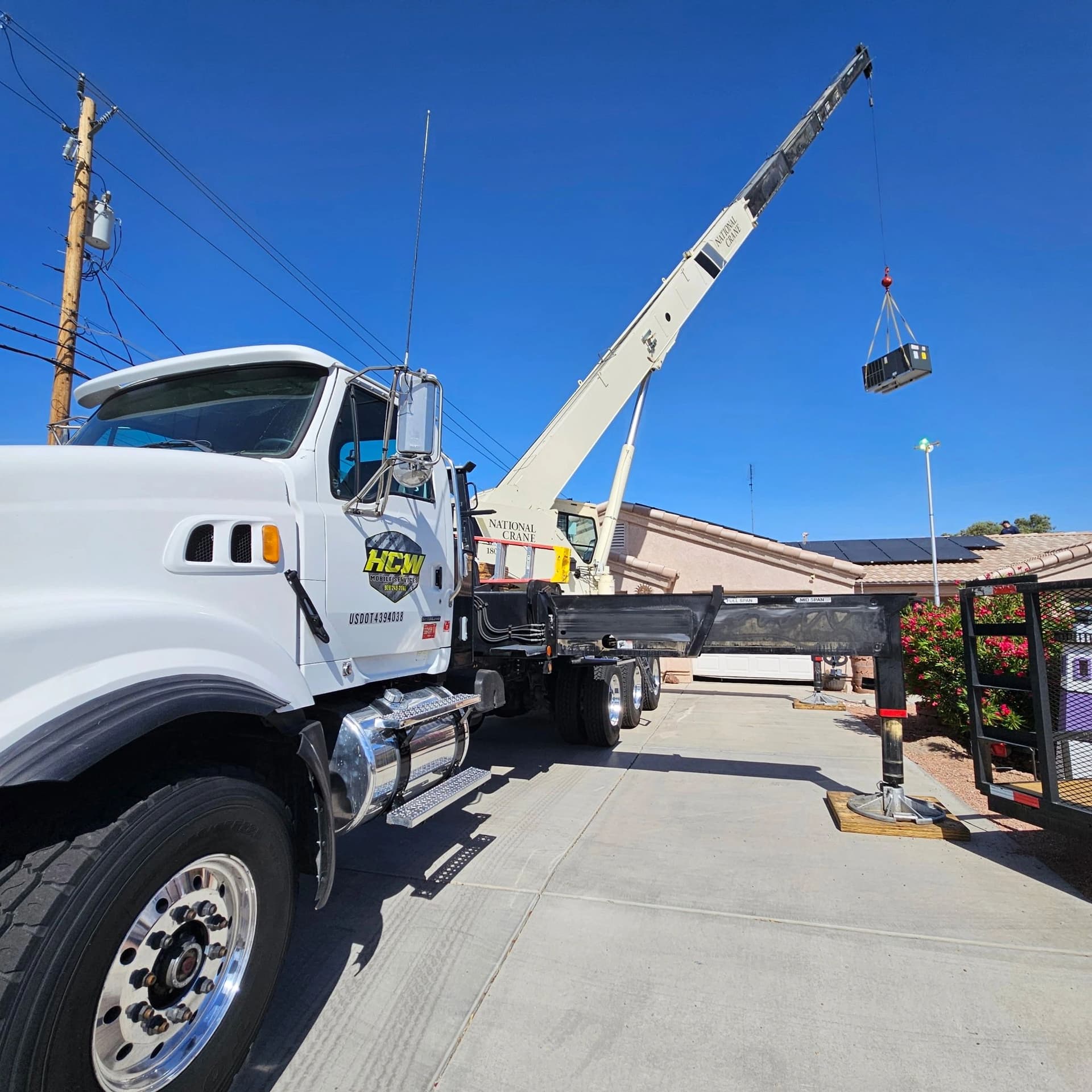
Rooftop unit lifted over a driveway 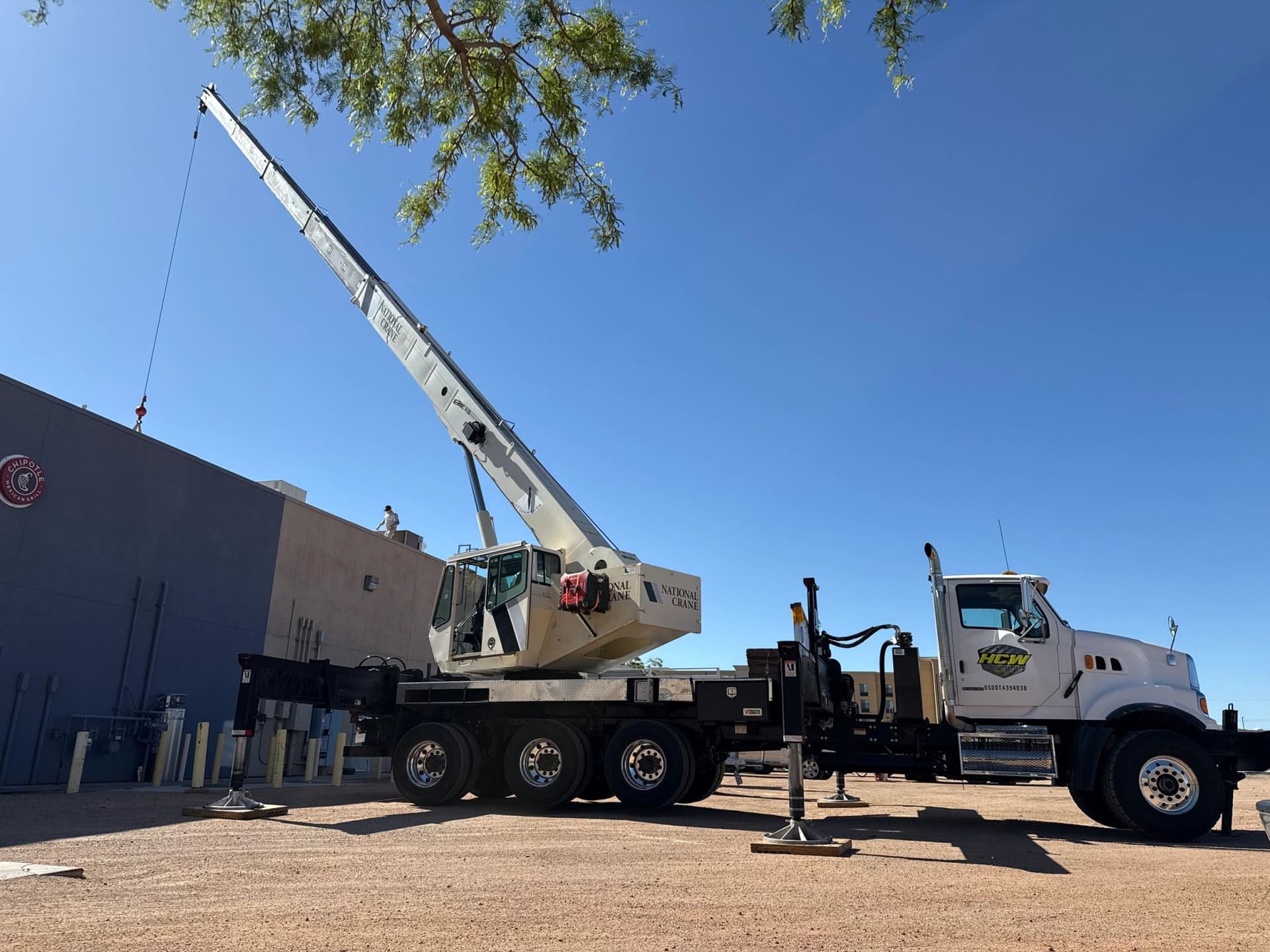
Outriggers set beside a commercial roof 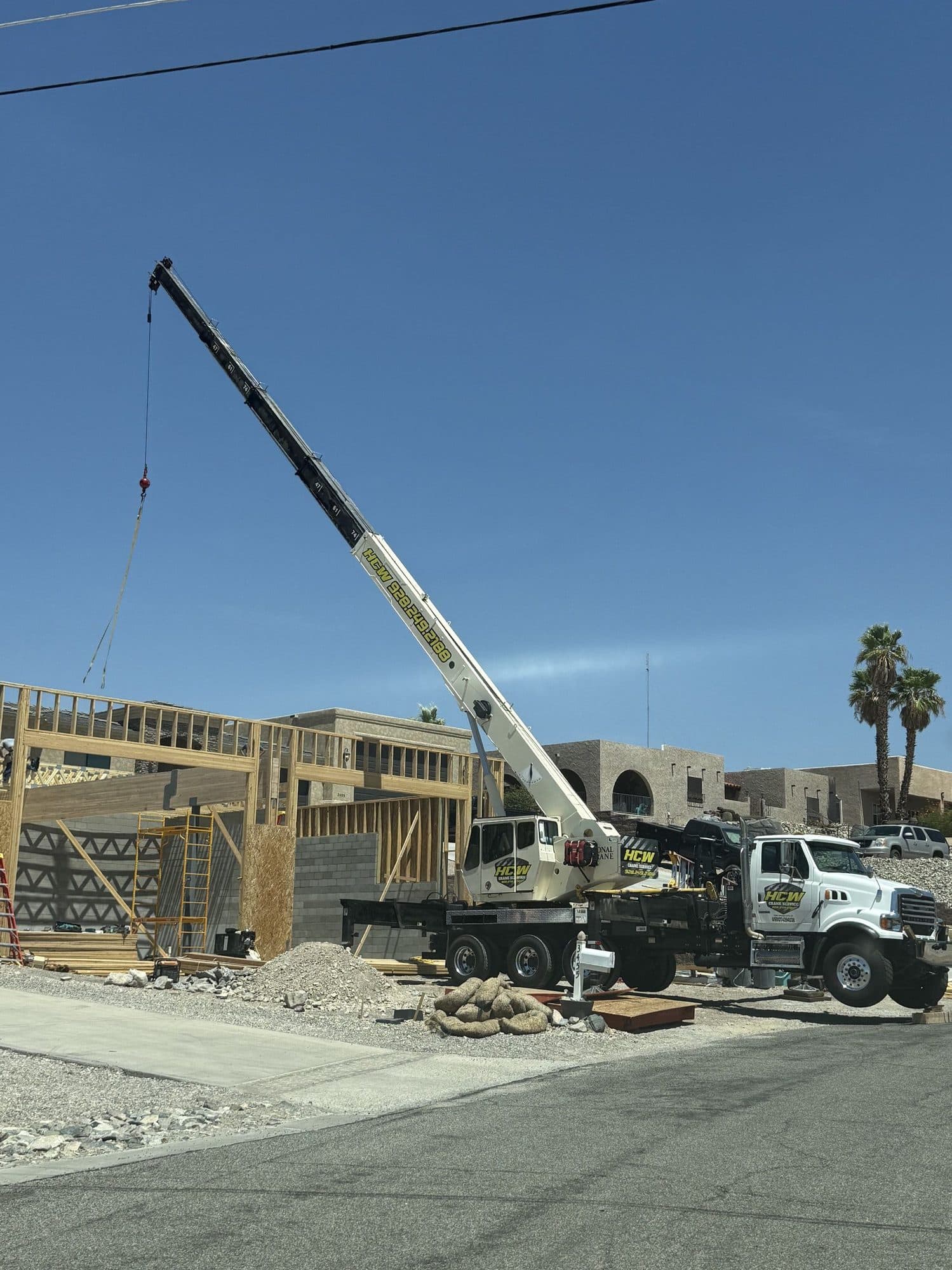
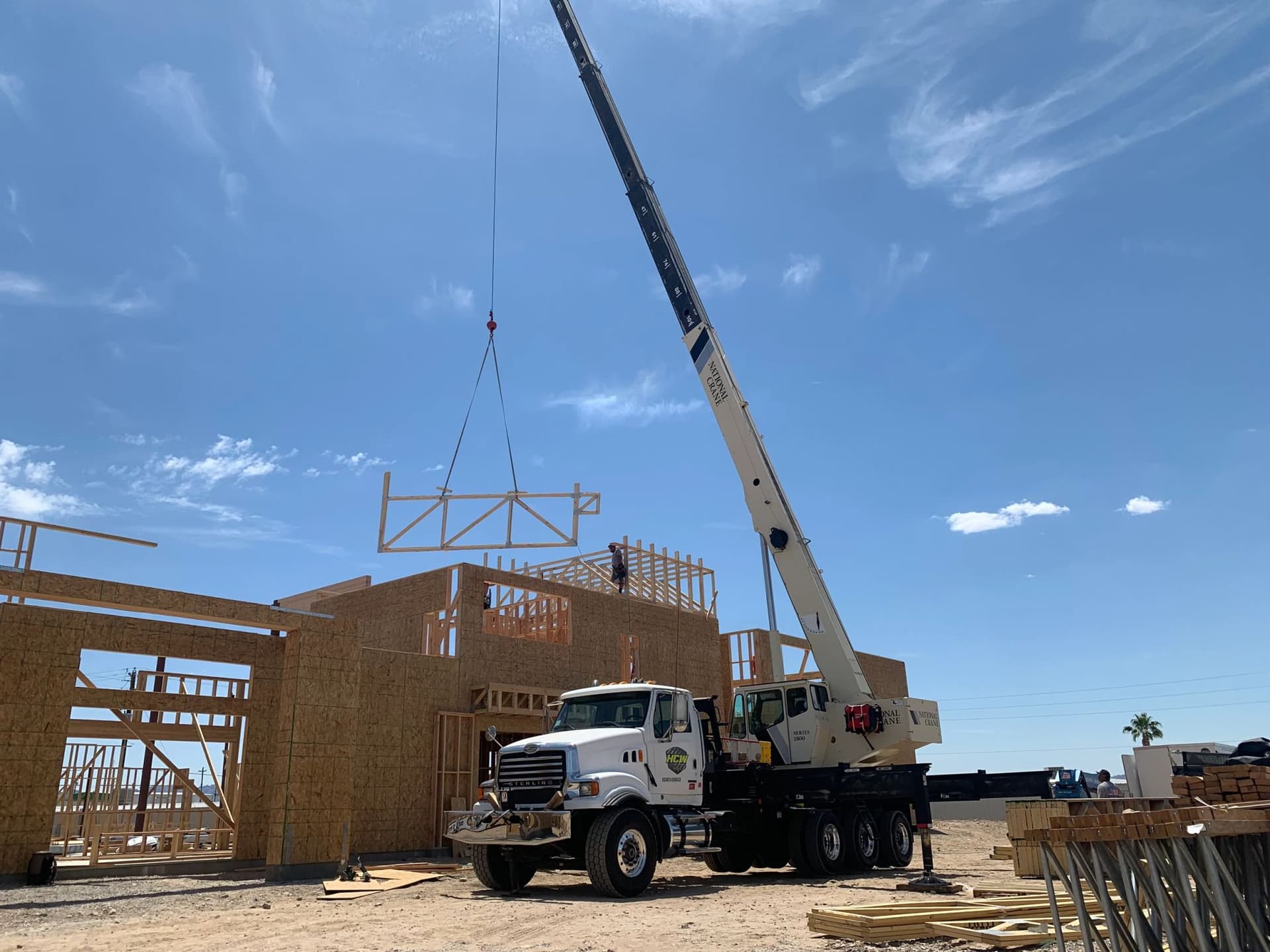
Boom truck working a framing site 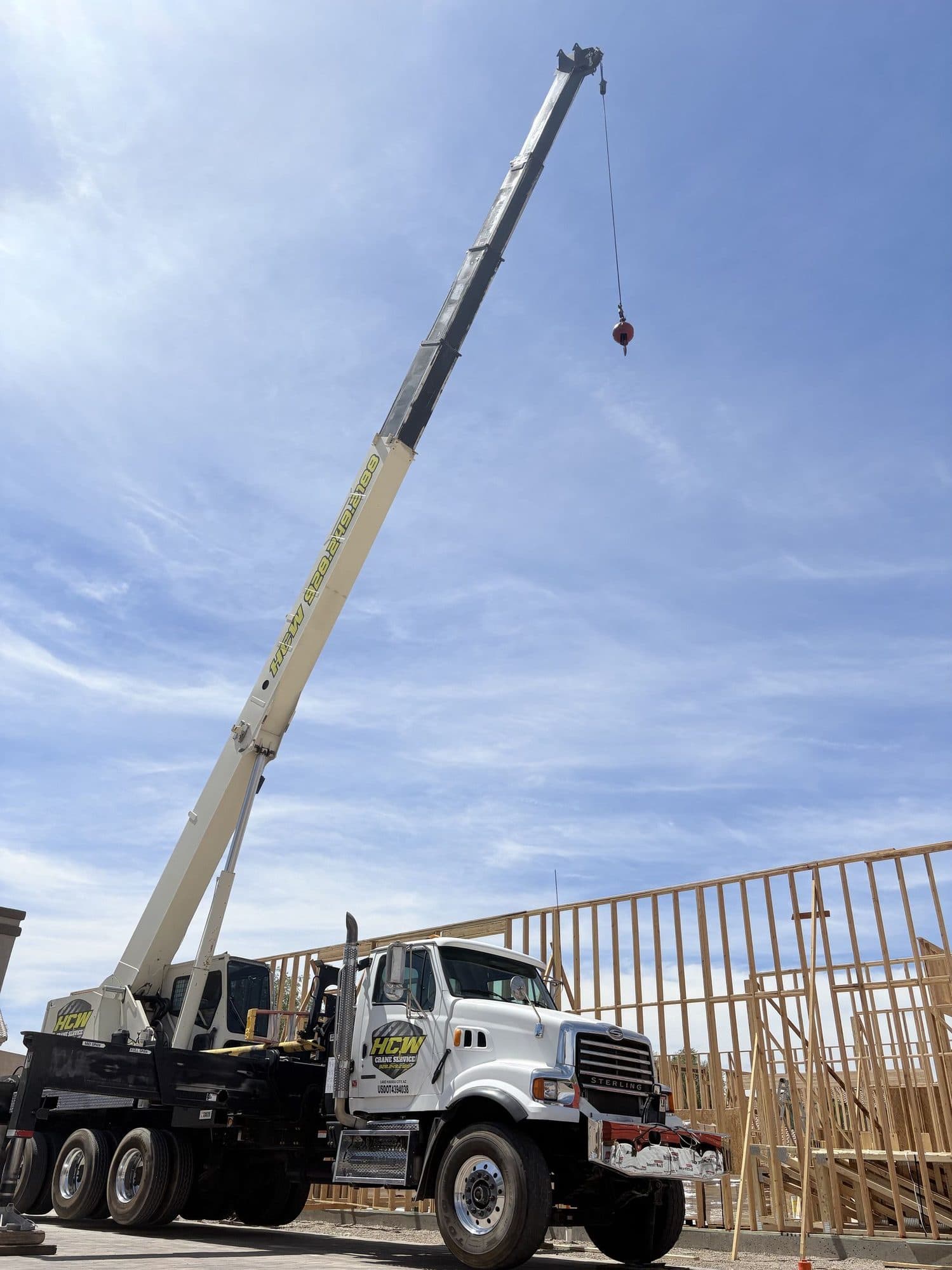
Boom raised beside new framing
Answers
Frequently Asked Questions
What is the difference between a hydraulic crane and a lattice crane?
A hydraulic crane telescopes its boom out of itself and is ready to work shortly after it parks. A lattice crane is assembled from sections on site, which takes crew and time. For local, single-pick work the hydraulic boom truck is the practical machine.
Can a hydraulic crane hold a load in the air?
Yes, and holding is normal while a crew makes a connection or checks alignment. We keep hold time to what the job actually needs, because a suspended load is the part of the job with the least margin.
Does the heat affect what the crane can lift?
Heat does not change the load chart. It does affect the machine and the people. We start early in summer so the work is done before the hottest part of the day, which is better for everybody on site.
How quickly can you be set up?
Once the truck is positioned, outriggers and leveling are usually a matter of minutes on decent ground. Soft fill, slopes, and pavers add cribbing time. The site walk before setup is usually the longer part.
Related Services
- Telescopic Crane ServiceTelescopic boom trucks extend the boom in sections, so capacity changes with every foot you pull out. Here is how we plan a pick around that.
- Boom Crane ServiceBoth HCW cranes are boom trucks. They drive to your site, set up on outriggers, make the pick, and leave. No trailers, no assembly, no crew required.
- Mobile Crane Service22-ton and 40-ton boom trucks with an operator on every call, reaching up to 142 feet.
- Owner-Operated Crane ServiceThe owner takes the call, walks the site, and runs the crane. One person accountable for the lift from the first phone call to the final walkthrough.
- Crane With OperatorEvery crane goes out with an operator and the rigging to do the job. Here is exactly who does what on site, and what your crew is responsible for.
- 22-Ton Crane ServiceOur 22-ton boom truck is the tight-street machine. Smaller setup footprint, quicker to place, and the right call for most single-story residential lifts.
- 40-Ton Crane ServiceOur 40-ton boom truck reaches up to 142 feet and holds weight far out from the truck. The machine for two-story picks and deep commercial roofs.
- Telescopic Crane ServiceTelescopic boom trucks extend the boom in sections, so capacity changes with every foot you pull out. Here is how we plan a pick around that.
Ready to schedule your lift?
Tell us the load, the site and the timing. We will confirm capacity, access and a window.