Lift Planning and Site Support
Rigging Support and Sling Angle Planning
2 min readUpdated July 2026
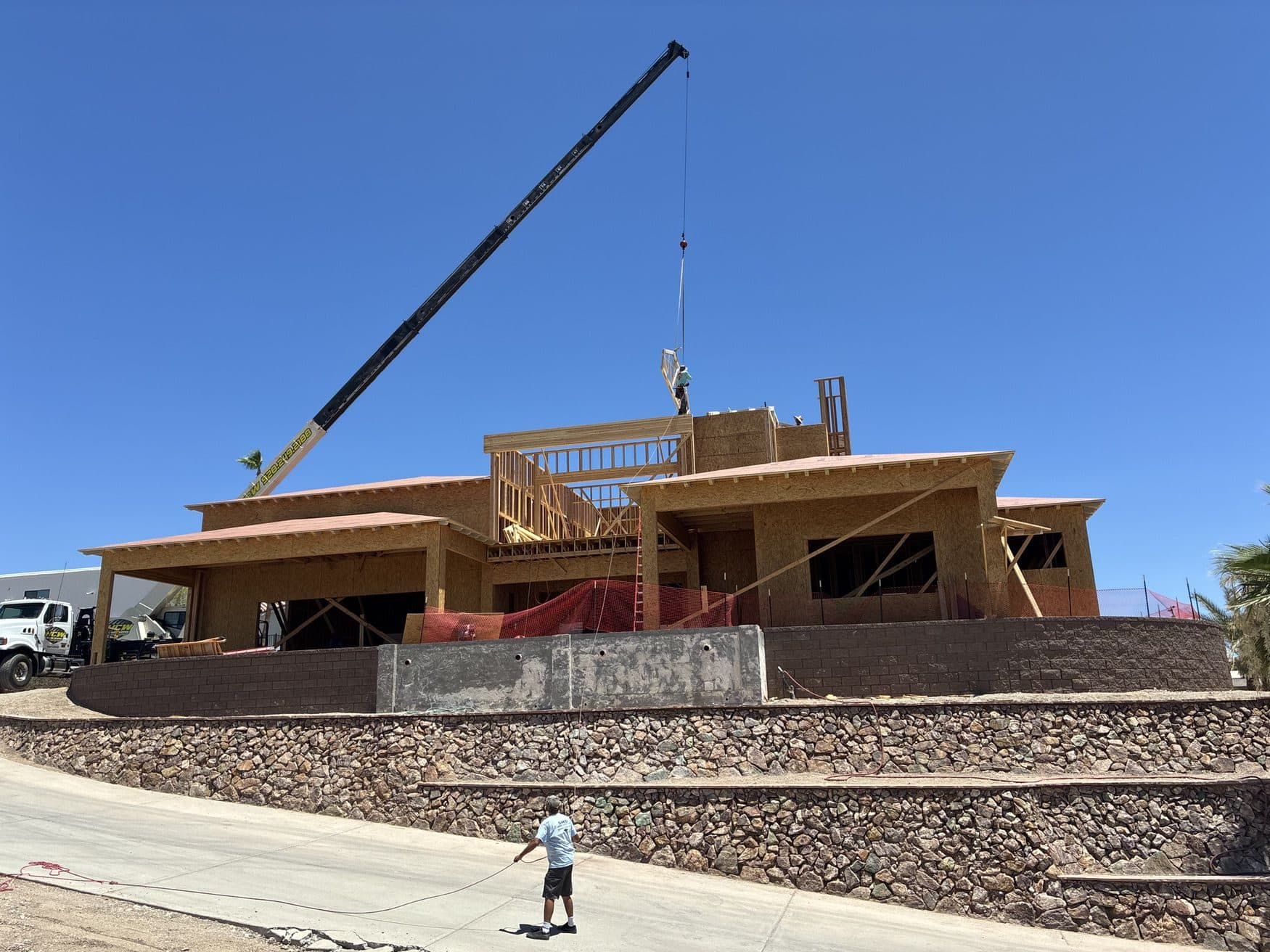
Rigging support is selecting and hooking the gear that connects a load to the crane. Sling angle, hitch type, edge protection and center of gravity all decide whether the rigging is loaded within its rating. HCW Crane Service plans the angles before the lift rather than sorting them out at the hook.
Sling angle is where the numbers hide
Two slings holding one load do not each carry half of it unless they are straight up and down. As the legs spread and the angle to horizontal gets shallower, tension in each leg climbs, and it climbs steeply once you get below about forty five degrees. At very shallow angles each leg can be pulling considerably more than the entire load weighs.
That is how people overload slings that look enormously oversized for the job. The rating stamped on the tag is a straight pull number. Hang the same load off wide, flat legs and the working tension is a multiple of what the arithmetic in somebody's head said. Nothing about it looks dangerous, which is precisely the problem.
The fixes are straightforward once you know to look. Longer slings steepen the legs. A spreader beam takes the pick points wide apart and brings the legs back to near vertical, which is why a beam turns up on wide equipment even when the load itself is light. Steep legs are cheap, shallow legs are expensive, and the difference is entirely geometry.
Edges, softeners and finding center
Anywhere a sling crosses a corner it needs protection. A synthetic sling laid over the sharp edge of a steel plate or a channel flange will cut under load far faster than anyone expects, and the load does not have to move for it to happen. Softeners, sleeves or corner protectors go on every time, and they go on before the tension does.
The hook goes over the center of gravity, not over the middle of the object. On equipment with a compressor at one end or a full tank on one side, those are different places by a surprising margin. Get it wrong and the load swings the instant it breaks free, which puts it out of the radius you planned and into whatever is standing next to it. The load gets lifted a few inches first and checked before it goes anywhere.
How the job runs
Our Process
Step 1: Find the pick points
We look for designed lifting points first: lugs, eyes or a marked frame location. Where none exist, we work out where the load can be picked without bending it, which usually means slings around a base rail or frame member, padded where they touch, with a spreader bar holding the legs vertical.
Step 2: Work the angles
Sling length is chosen so the legs sit steep enough that tension stays well inside the rating, with the hitch type accounted for. When the pick points are too far apart to get a workable angle, a spreader beam goes in and its weight comes off the crane's available capacity.
Step 3: Protect and inspect
Tags get read and each piece of gear gets looked over for cuts, pulled stitching, broken wires or deformation before it is used. Softeners or corner protectors go on wherever a sling crosses an edge. Anything damaged comes out of service and off the truck.
Step 4: Trial lift and check
The load comes up a few inches and stops. We look at whether it hangs level, whether the hook is over the center of gravity, whether any leg is doing more than its share and whether anything is slipping. It goes back down and gets rehung if the answer is wrong.
Scope
What Is Included
- Pick points identified or a safe rigging method worked out
- Sling lengths chosen for a workable leg angle
- Hitch type matched to the tag rating
- Spreader beam used where pick points sit wide
- Softeners fitted wherever a sling crosses an edge
- Trial lift a few inches off to check balance
Real HCW jobs
From the Job Site
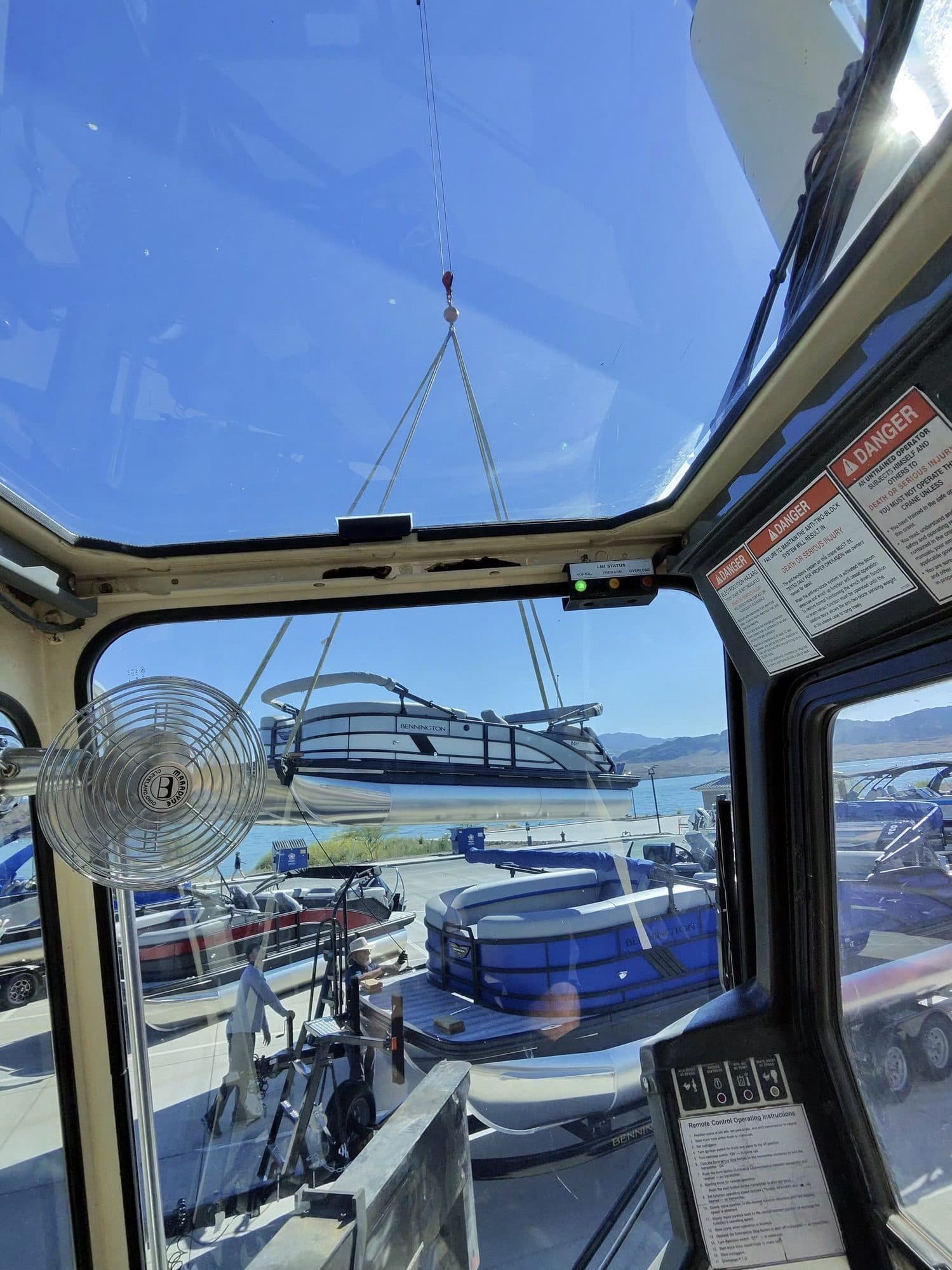
Pontoon lifted at a lakeside lot 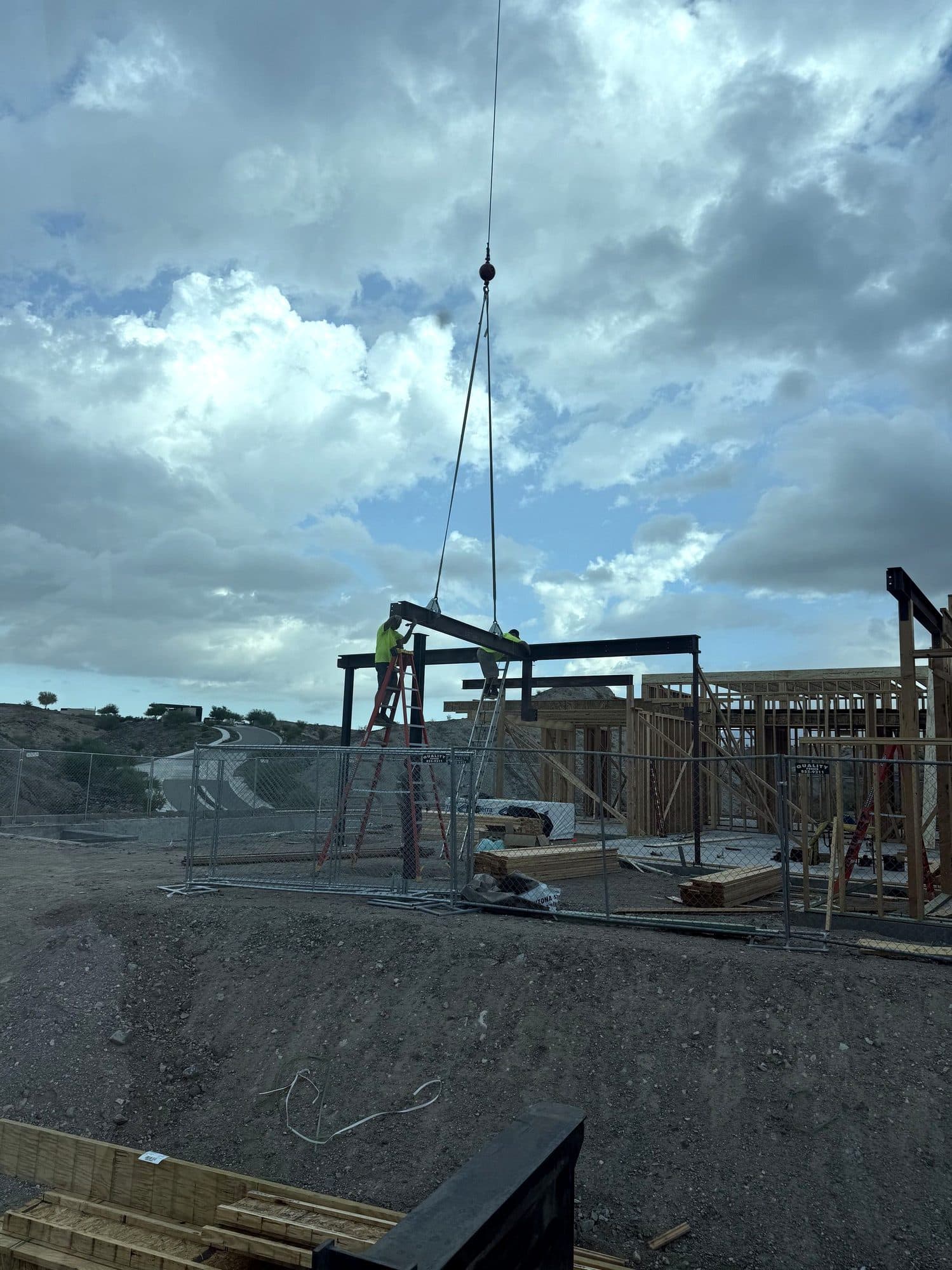
Steel beam set on a hillside frame 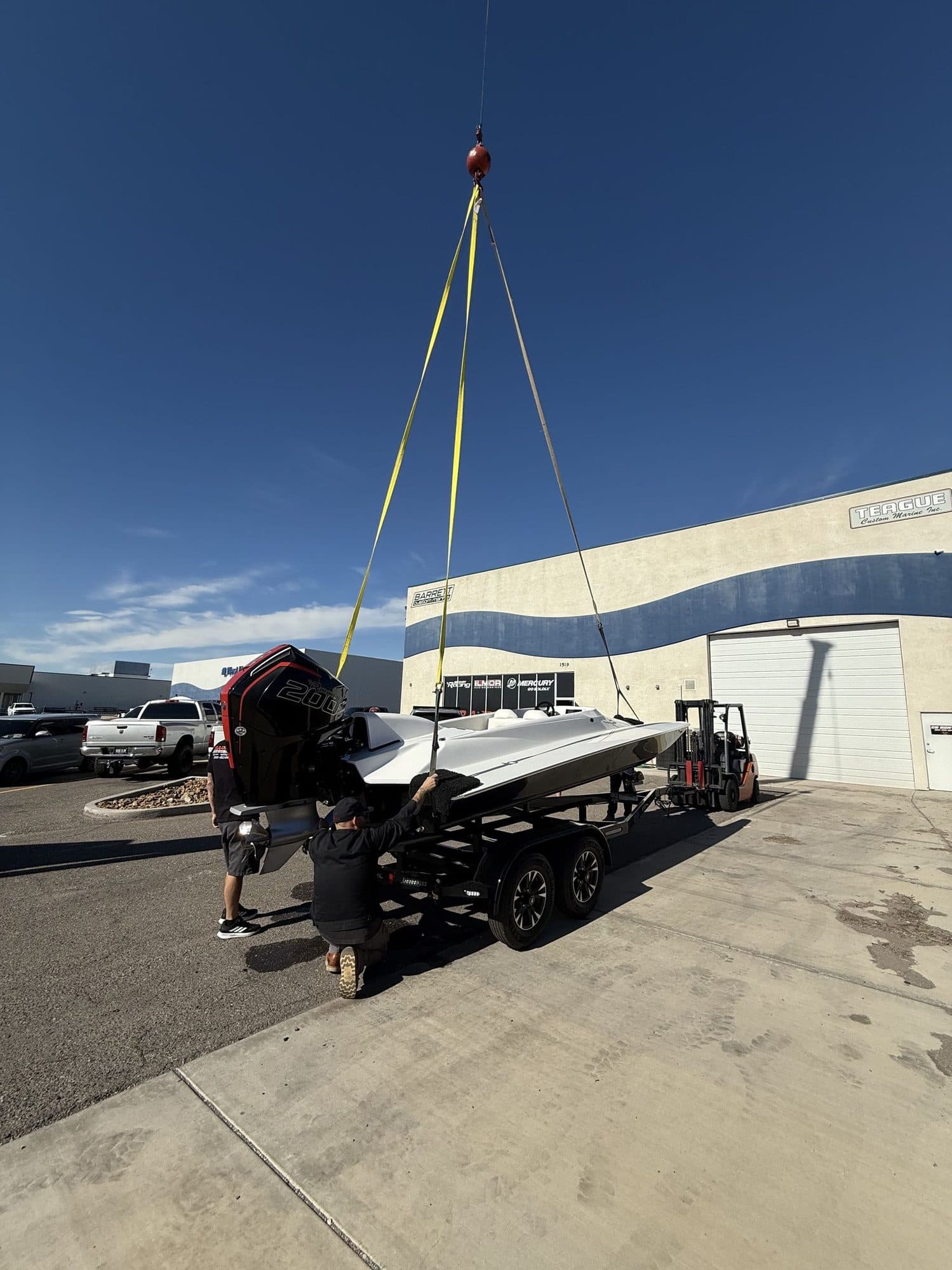
Race boat lifted off its trailer 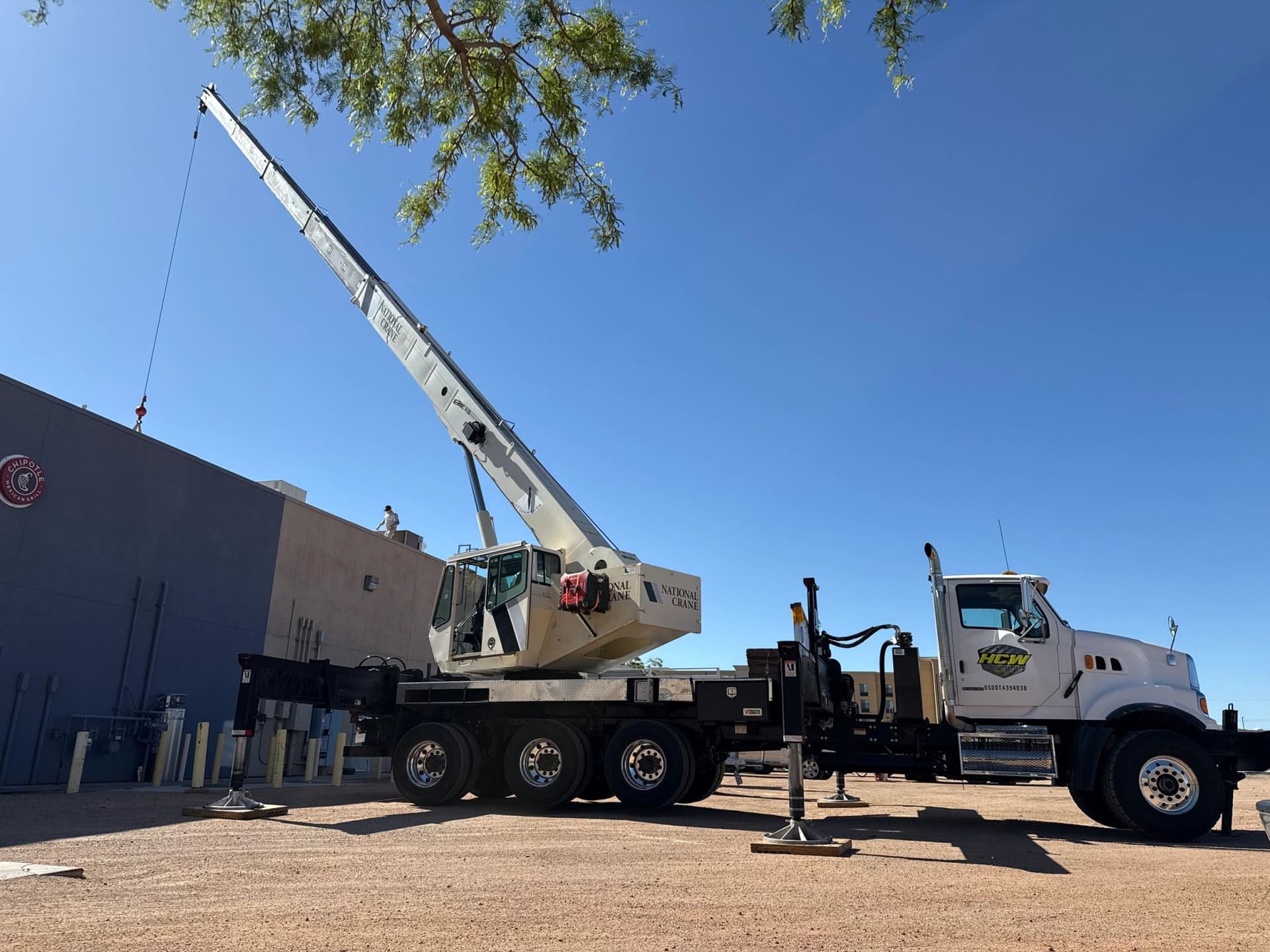
Outriggers set beside a commercial roof
Answers
Frequently Asked Questions
Why do you need longer slings for a wide load?
Because leg angle is what decides tension. Short slings on a wide load force the legs out flat, and flat legs pull much harder than the load weighs. Longer slings steepen them back up. Where length alone cannot do it, a spreader beam separates the top connections and brings the legs close to vertical.
My unit has no lifting lugs. What then?
We find a place it can be picked without deforming it, usually a frame member or base rail, with padded slings and a spreader bar. If nothing on it is sound enough to carry the load, we say so before the day so the owner can have proper lift points added by whoever services it.
Do I need to supply rigging for my own load?
No. Slings, shackles and spreaders come with us, chosen from the weight, the pick points and the geometry worked out during planning. If you have gear you want used, we will look at the tags and its condition first, and if anything about it is unreadable or damaged it does not go on the hook.
What is a softener and why does my load need one?
It is a sleeve or pad that sits between a sling and a sharp corner. Synthetic slings are strong in tension and easy to cut across an edge, and a steel plate corner or an angle iron flange will do it under load without any movement at all. It costs seconds to fit and it prevents a failure with no warning.
Related Services
- Machinery Moving and SettingCrane machinery moving and setting in Lake Havasu City, Arizona. Shop machines picked out of one building, hauled, and set level in the next one.
- Pre-Lift Safety BriefingPre lift safety briefing in Lake Havasu City. Roles, signals, exclusion zone, stop authority and the abort plan agreed out loud before the outriggers go down.
- Lift Planning and Site SupportWeight, radius, ground and overhead worked out before the truck rolls, by the operator who runs the crane.
- Capacity MatchingCrane capacity matching in Lake Havasu City. We read the load chart at your real radius and pick the 22 ton or 40 ton boom truck that fits the site.
- Reach and Radius PlanningReach and radius planning in Lake Havasu City. Where the boom truck can stand sets the radius, and radius decides what the crane can lift over your house.
- Site AssessmentCrane site assessment in Lake Havasu City. Gates, driveway slope, turnaround room, overhead lines and the landing point checked before the day of the lift.
- Ground Condition EvaluationGround condition evaluation in Lake Havasu City. Outrigger bearing pressure, caliche crust, backfill, buried vaults and pads sized before the crane sets up.
- Power Line Clearance PlanningPower line clearance planning in Lake Havasu City. Minimum approach distance, full swing path clearance and utility coordination settled before a crane sets up.
Ready to schedule your lift?
Tell us the load, the site and the timing. We will confirm capacity, access and a window.