
Truss and Structural Placement
Beam and Column Placement in Lake Havasu City
2 min readUpdated July 2026
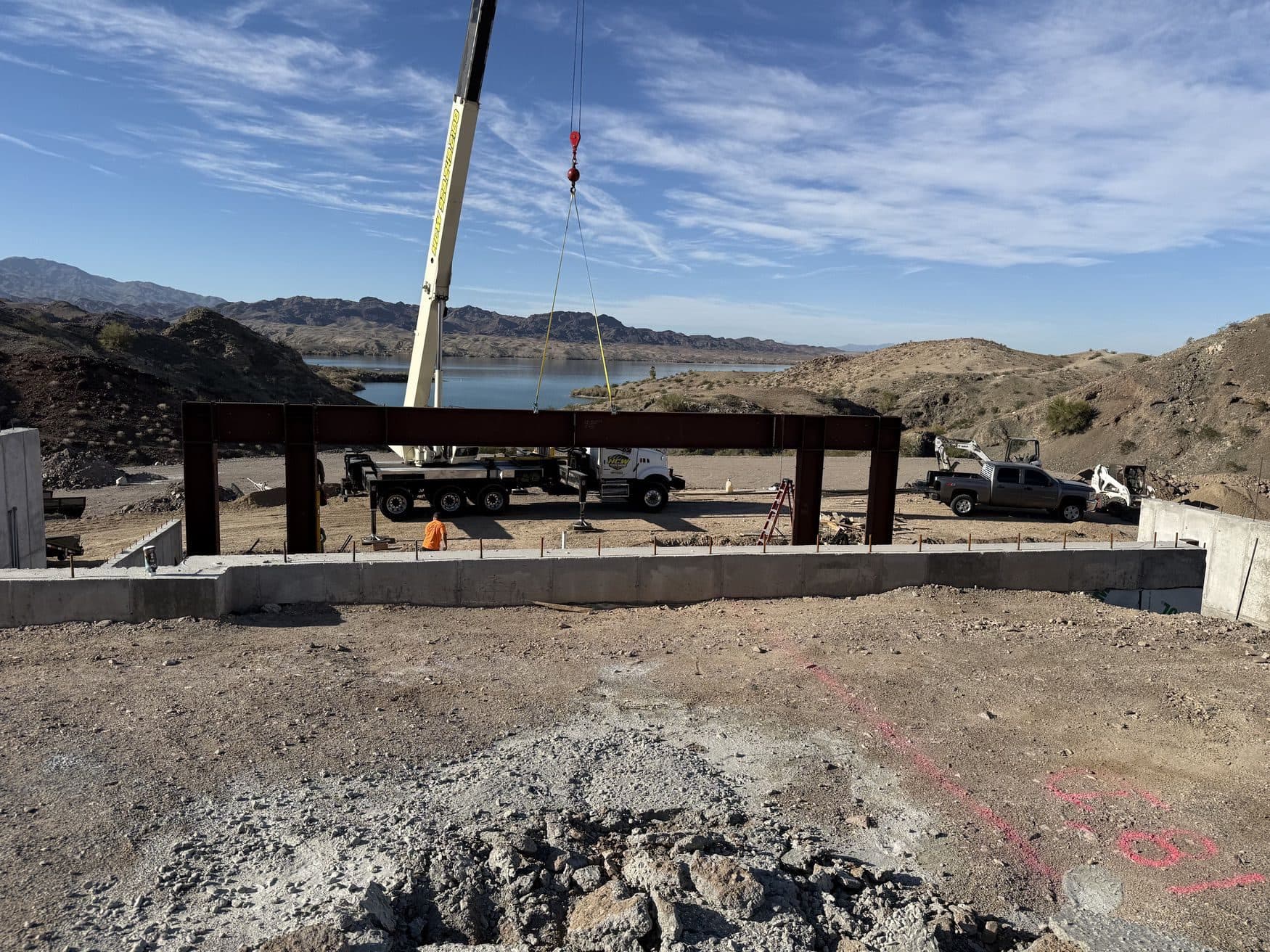
Beam and column placement means setting structural members into their bearing points and holding them while a crew makes the connection. A column has to be plumbed on its anchor bolts before release. A beam has to seat fully in its saddle or hanger. Hold time is the defining feature of this work.
Columns Go Up First and Have to Be Plumb
A column is set on anchor bolts or a base plate and then plumbed with shims and braces before anything lands on top of it. Until it is plumbed and braced, it is a tall object standing on four bolts, and it stays in the rigging.
Two things go wrong here. Anchor bolts set slightly out of position, which nobody discovers until the base plate is hanging over them, and base plates that will not sit flat because the grout or the pier surface is off. Both are worth checking before the column leaves the ground.
We keep tension on the column while the crew shims, plumbs, and braces it. Coming off early means the column is holding itself, and a column that shifts a quarter inch at the base is a lot more than a quarter inch out at the top.
Column length is worth checking against the boom before the day. A tall column has to be lifted from horizontal to vertical on the ground first, and that tilt-up takes headroom and space that a tight site may not have available.
Beams Have to Seat, Not Just Land
A beam sits in a saddle, a hanger, or on a post cap, and it has to seat fully across its bearing surface. A beam that lands on the edge of a cap or hangs up on a bolt looks placed and is not. Weight alone will not always pull it down into position.
Getting a beam level in the air is what makes it seat. A glulam or steel beam with off-center sling placement will arrive at an angle and catch on one end. We adjust sling lengths on the ground until it hangs true, then bring it in flat.
Long beams are also flexible enough to matter. On longer spans we use a spreader so the pick points stay wide and the beam is not being bowed by the rigging while the crew is trying to line up bolt holes.
Temporary support is the other thing to settle in advance. If a beam is going into an existing structure, whatever it is replacing has to be shored before anything comes out. That is your contractor's scope, and the crane day depends on it being done.
How the job runs
Our Process
Step 1: Check the Bearing Points
Anchor bolt layout, base plate flatness, post caps, and hangers all checked before the member is picked. It is far easier to fix at ground level.
Step 2: Rig for a Level Hang
Sling positions adjusted so the member hangs level and near its final orientation. Spreader bar on long beams so the pick points stay wide.
Step 3: Bring In and Seat
The member comes in slowly on tag lines and is brought down onto its bearing. The crew guides the last inches and confirms it has seated fully.
Step 4: Hold Until Connected
The crane keeps tension while the crew plumbs, shims, bolts, or braces. We come off the load on their word, not on ours.
Scope
What Is Included
- Crane and operator with hold time built into the plan
- Spreader bars and adjustable rigging for a level hang
- Tag line control for bringing members in flat
- Support while columns are shimmed, plumbed, and braced
- Coordination with your steel or framing crew on sequence
- Load held under tension until the crew confirms the connection
Real HCW jobs
From the Job Site
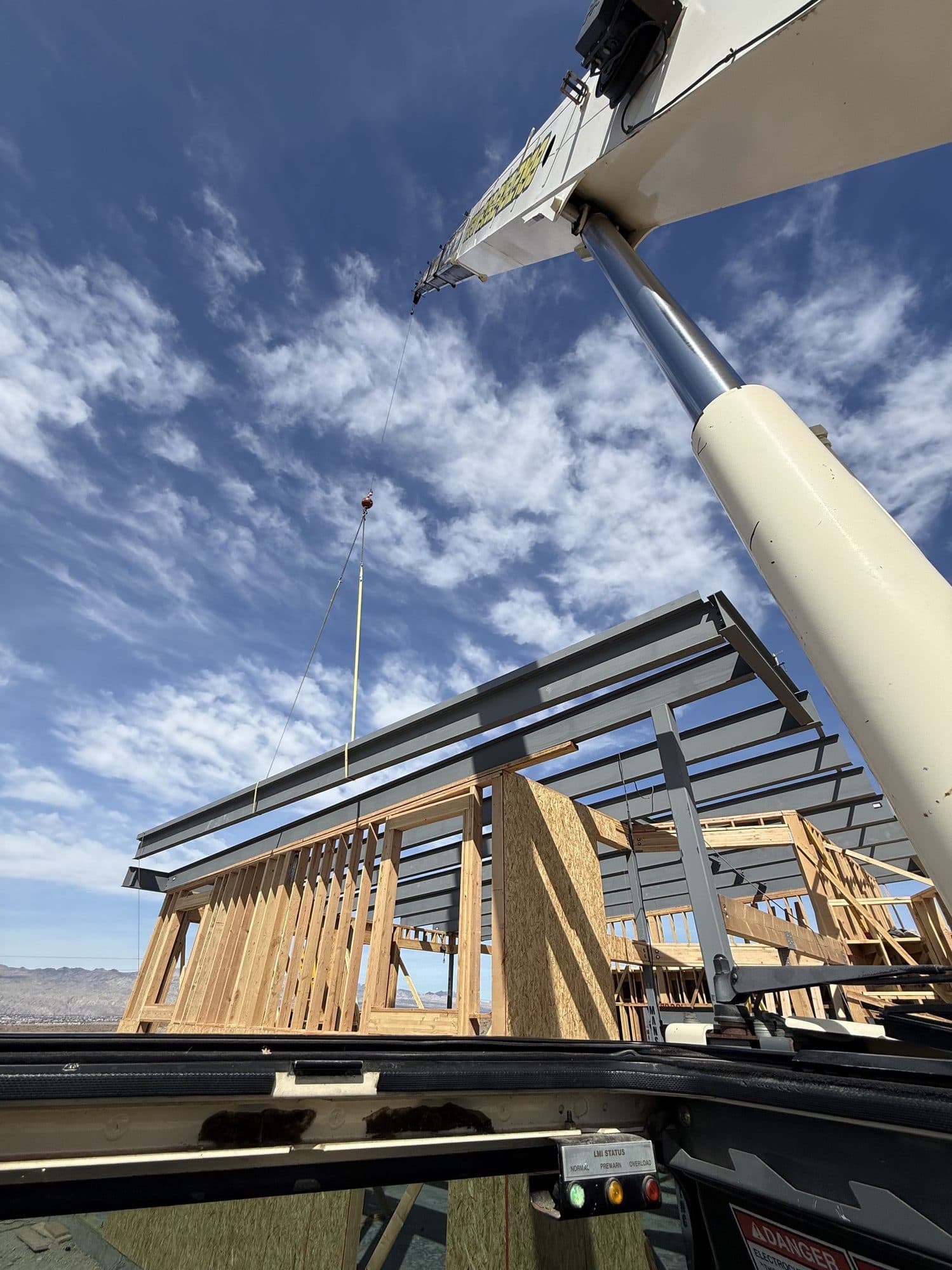
Operator view of a beam landing 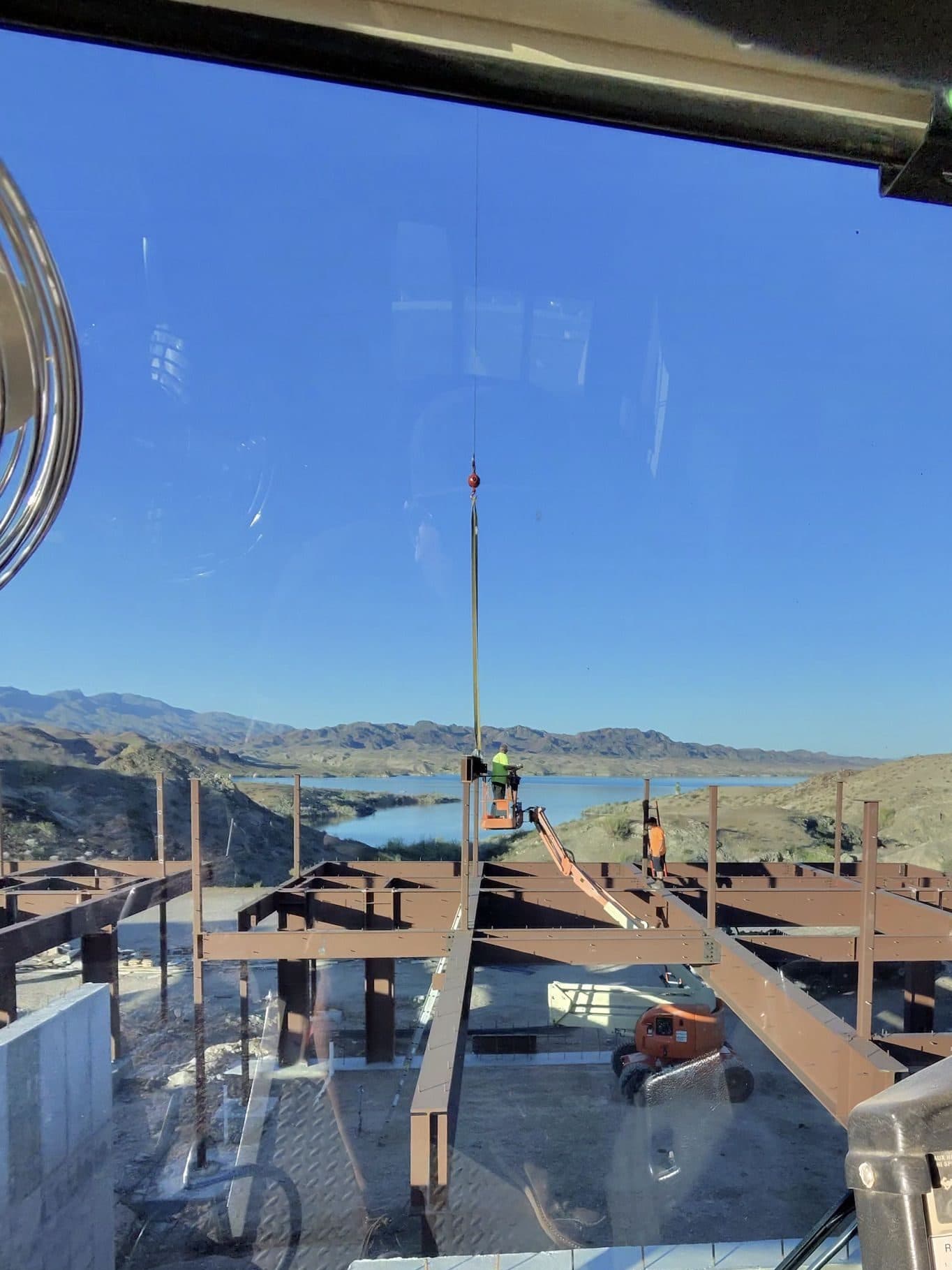
Steel framing above the lake 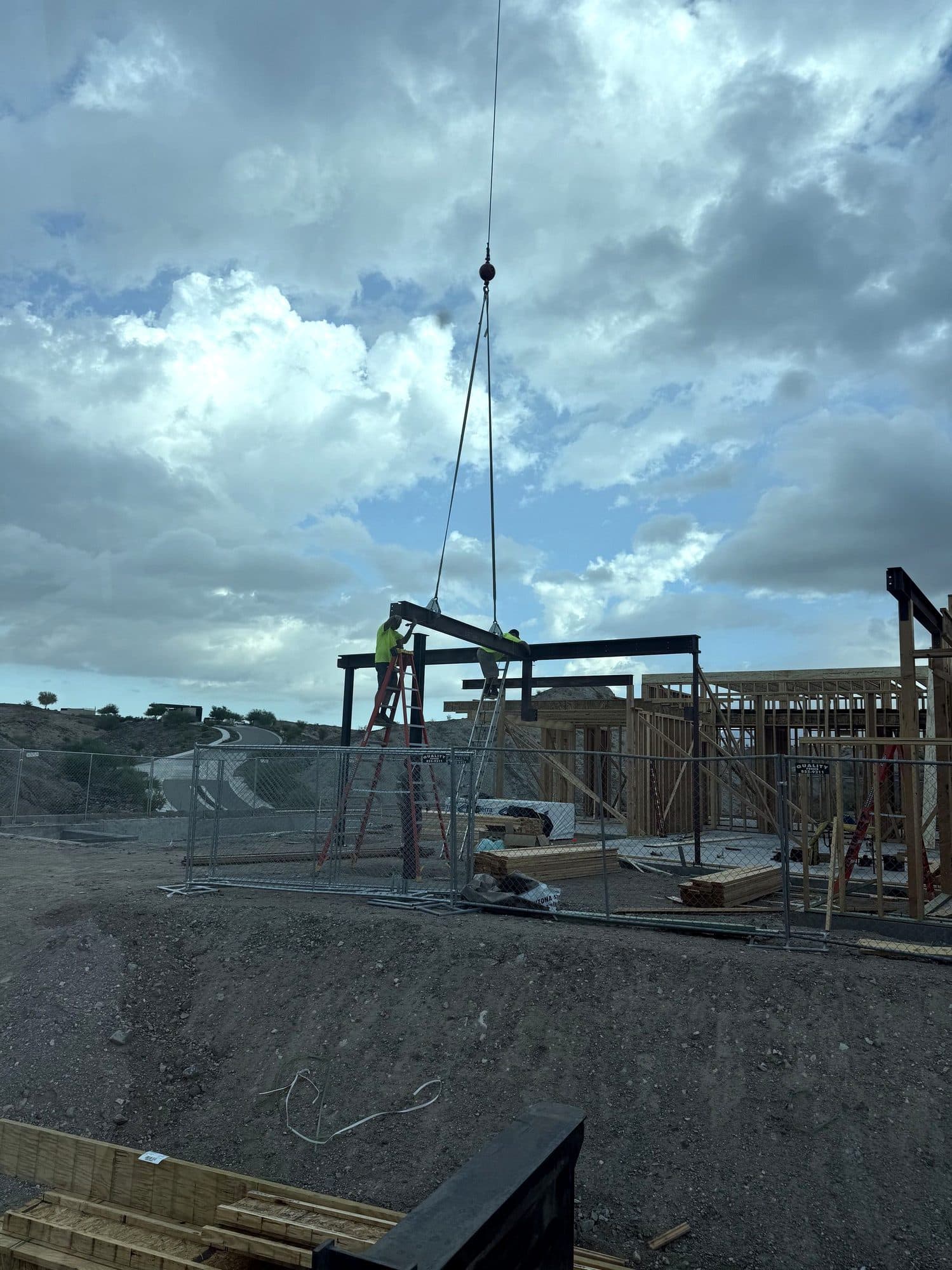
Steel beam set on a hillside frame 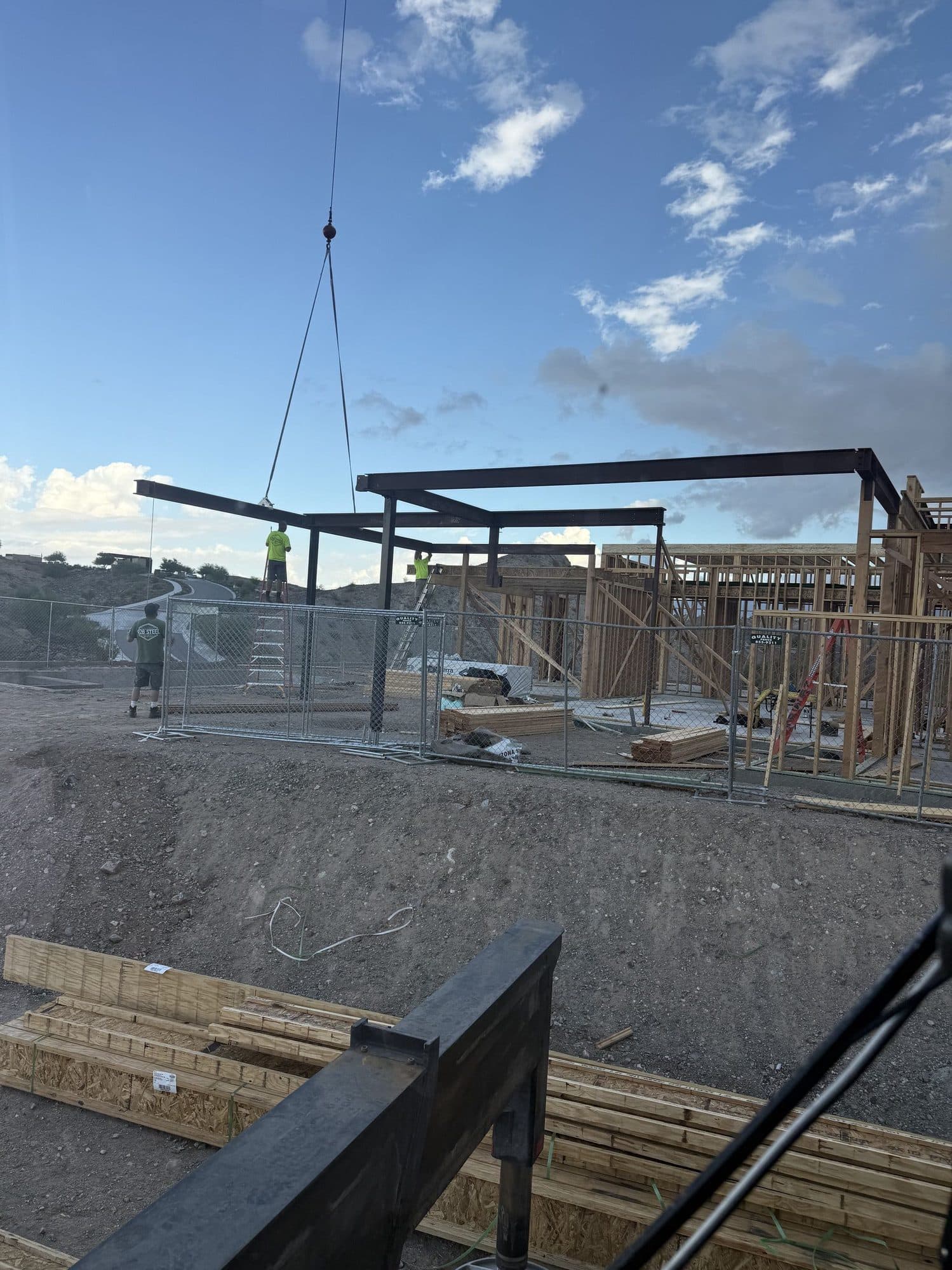
Steel frame beams on a hillside lot
Answers
Frequently Asked Questions
How long will the crane have to hold the beam?
As long as the connection takes. That is normal on structural work and we plan the day around it. Tell us how many members and how long each connection typically takes for your crew.
What if the anchor bolts are out of position?
We set the column back down and you sort the bolts. Forcing a base plate onto misplaced anchors damages the plate, the bolts, or both, and leaves the column out of position anyway.
Can you set a beam between two existing walls?
Often yes, with a vertical approach and tight control. Clearance at both ends is the question. Send dimensions and a photo and we will tell you whether the geometry works.
Do you plumb the column?
No. Your crew shims, plumbs, and braces. We hold the member steady and under tension the whole time they are doing it.
Related Services
- Steel Member PositioningPurlins, joists, tube steel, and framing members positioned for bolted connections. Drift pins, tight tolerances, and steel that gets hot to touch.
- Roof Truss LiftingTrusses arrive banded and go up floppy. Spread pick points, two tag lines, and a crew that braces as it goes. Crane and operator supplied.
- Truss and Structural PlacementRoof trusses, beams, columns, steel, precast, and modular sections set to your framing crew's pace.
- Roof Truss LiftingTrusses arrive banded and go up floppy. Spread pick points, two tag lines, and a crew that braces as it goes. Crane and operator supplied.
- Steel Member PositioningPurlins, joists, tube steel, and framing members positioned for bolted connections. Drift pins, tight tolerances, and steel that gets hot to touch.
- Precast Panel PlacementPrecast panels are heavy, flat, and all sail. Rated inserts, panels kept vertical, and bracing to the slab before the crane ever comes off.
- Modular Section PlacementFactory-built sections set onto foundations and piers. One pick per section, alignment marks that have to match, and rigging that will not rack the box.
- Structural Component LiftsCanopies, stair sections, mezzanine framing, headers, awnings, and retrofit steel. The odd structural pieces that do not fit a standard category.
Ready to schedule your lift?
Tell us the load, the site and the timing. We will confirm capacity, access and a window.