Rigging and Construction Lifts
Vehicle and Boat Hoisting in Lake Havasu City, Arizona
2 min readUpdated July 2026
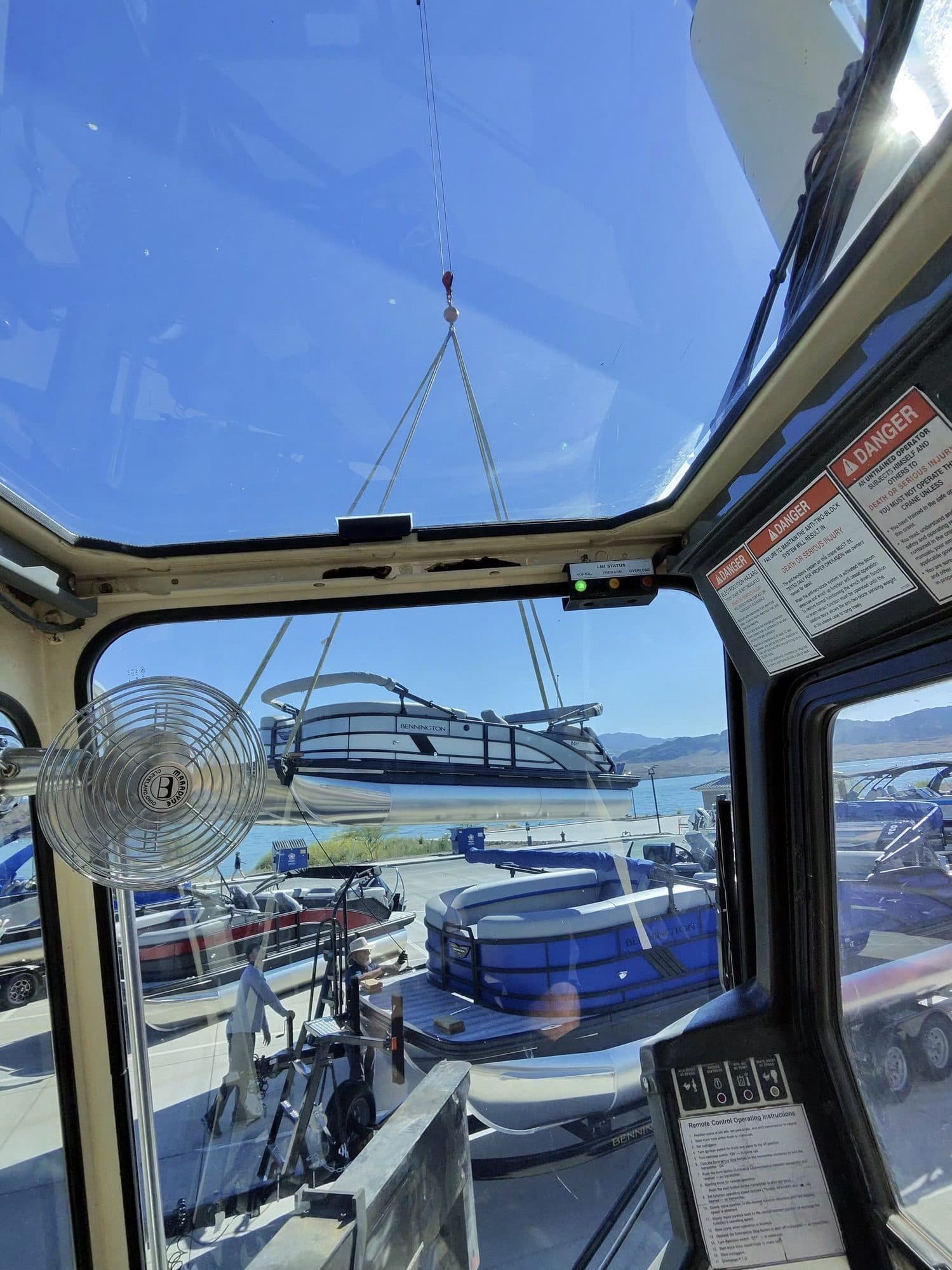
Vehicle and boat hoisting is lifting boats, side by sides, and vehicles with a crane where a trailer or tow truck cannot reach, such as over a block wall, onto stands, or onto a trailer on a tight lot. Boats ride in wide nylon straps at the sling marks. Vehicles are lifted by the wheels.
Boats Are Heavier Than the Brochure
The weight on a boat's spec sheet is almost always dry weight. The engines, the fuel, the water in the bilge and the ballast tanks, the batteries, and whatever gear is stowed aboard all go on top of that. On a wake boat with full ballast, the difference is large enough to change which truck comes.
So we ask for the dry weight, the engines, and what is aboard. Draining ballast and bilge and pulling loose gear before the lift is the easy way to bring the number down. Fuel is harder to remove, so the tank size goes into the figure.
Lake Havasu City has a lot of boats in backyards, side yards, and storage behind block walls, and a lot of lots on slopes where a trailer cannot back down. That is where a crane earns its place: over the wall and down onto stands or a trailer, without anyone trying to jackknife a trailer through a gate.
Rigging a Hull Without Damaging It
Many boats have sling marks on the hull showing where lifting straps belong. Those are the manufacturer's answer to where the hull can carry its own weight, and they are where the straps go. Without them, straps go under the strongest part of the hull, clear of the drives, the transducers, and the trim tabs.
Wide nylon straps, not chain or wire, go against a hull. A spreader bar keeps the straps from squeezing inward on the rails and the windshield. On a boat with a tower, the straps and the bar get set so nothing contacts the tower on the way up.
Straps can slide on a hull as it tilts. They get set so the boat hangs level fore and aft, and a line between the straps keeps them from walking toward each other. A test lift an inch or two off the trailer shows whether it hangs right before it goes anywhere.
Side by Sides, Project Cars, and Other Vehicles
Side by sides and off road vehicles are everywhere in Havasu, and they end up in places they cannot drive out of: a backyard with a new wall, a second story garage pad, or a job trailer that cannot back in. Vehicles get lifted by the wheels with wheel straps or a lifting frame, not by slings around the body or through the roll cage unless it is designed for it.
Project cars and vehicles without running gear come up the same way, with the weight taken from the manufacturer's curb weight plus whatever has been added or removed. A car with no engine in it hangs very differently from one with it, and the balance point gets figured before the pick.
Fluids stay in, but caps get checked. Batteries get disconnected. Anything loose in the bed or on the rack comes off first.
How the job runs
Our Process
Step 1: Weight and Details
For a boat, we ask for the make, model, dry weight, engines, fuel capacity, and whether ballast and bilge are drained. For a vehicle, the curb weight and anything added or removed. Photos of the hull or chassis show where it can be rigged.
Step 2: Site and Path
Photos of where the truck can park, the path over the wall or fence, and the landing spot tell us the radius. Stands, a trailer, or blocking get positioned at the landing spot before the day.
Step 3: Rigged and Test Lifted
Boats go in wide nylon straps at the sling marks with a spreader bar. Vehicles go in wheel straps or a lifting frame. The load comes up a couple of inches and we check that it hangs level before it travels.
Step 4: Landed on Stands or Trailer
The boat or vehicle comes down slowly with tag lines holding rotation, onto the stands, the trailer bunks, or the pad. The straps stay on until it is supported and stable.
Scope
What Is Included
- Weight figured with engines, fuel, and gear, not dry weight alone
- Wide nylon straps at the hull's sling marks
- Spreader bar to keep straps off rails, windshields, and towers
- Wheel straps or a lifting frame for vehicles
- Test lift to check fore and aft balance
- Tag lines and a slow landing onto stands or bunks
Real HCW jobs
From the Job Site
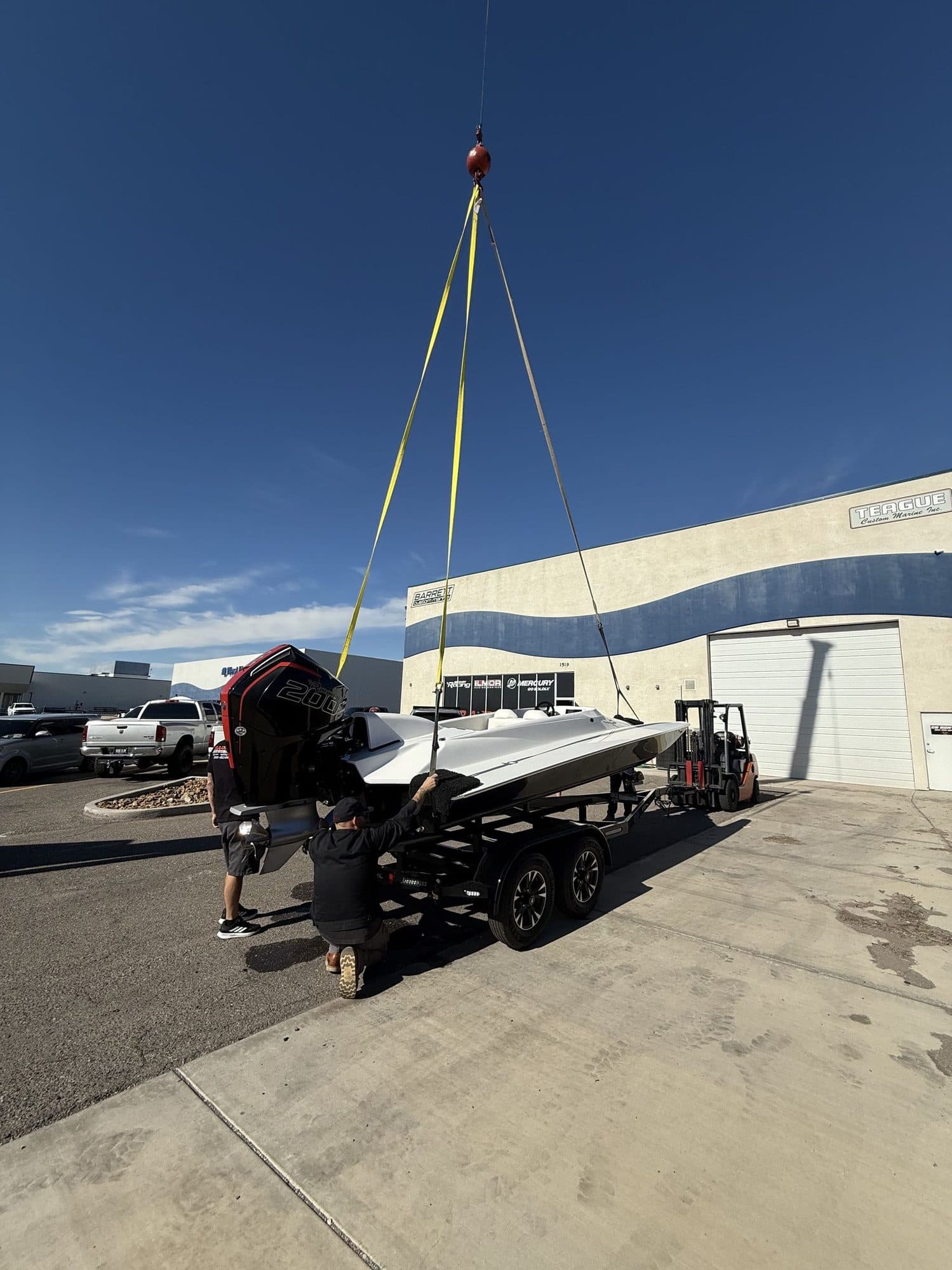
Race boat lifted off its trailer 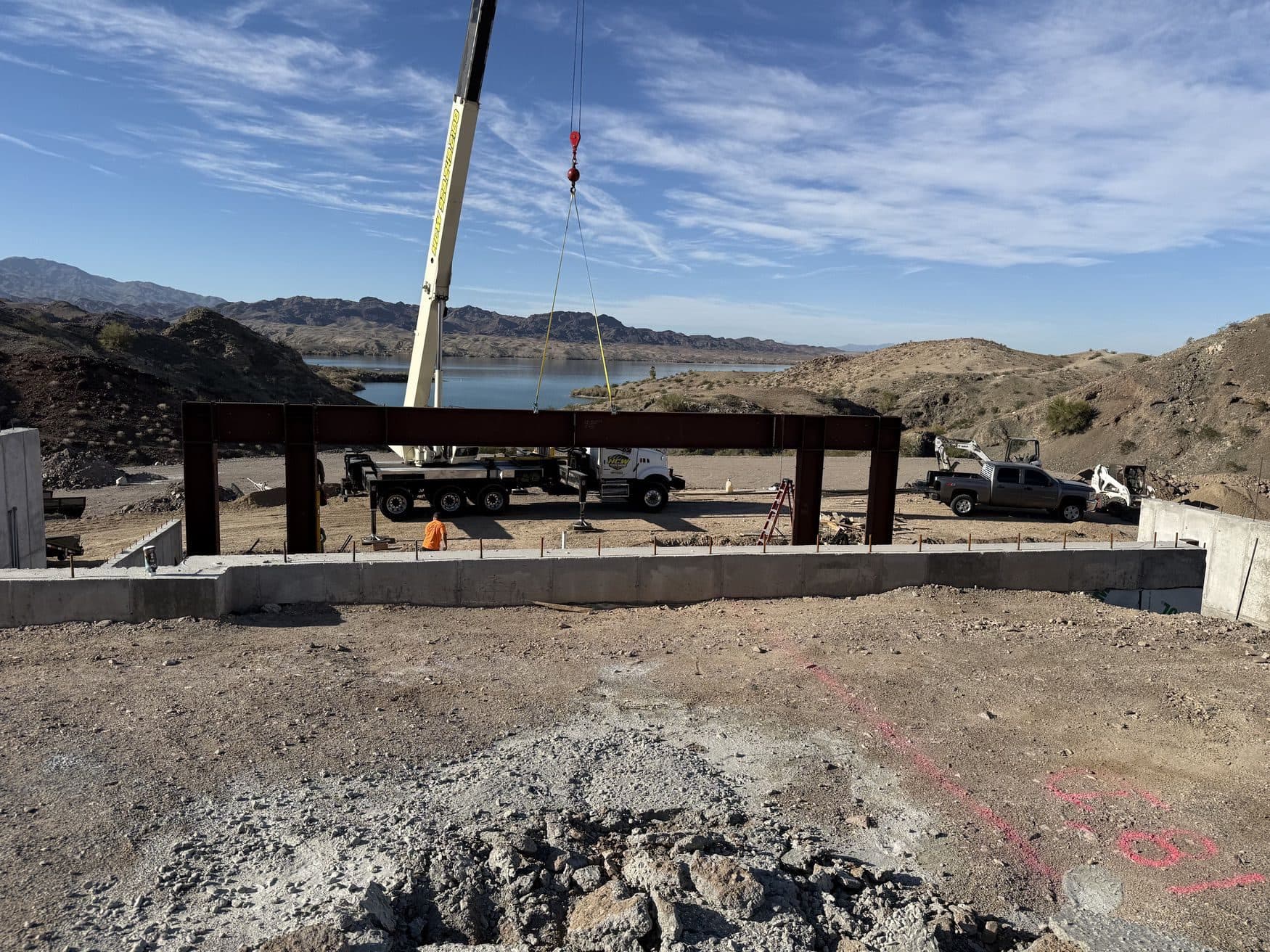
Steel portal frame above the lake 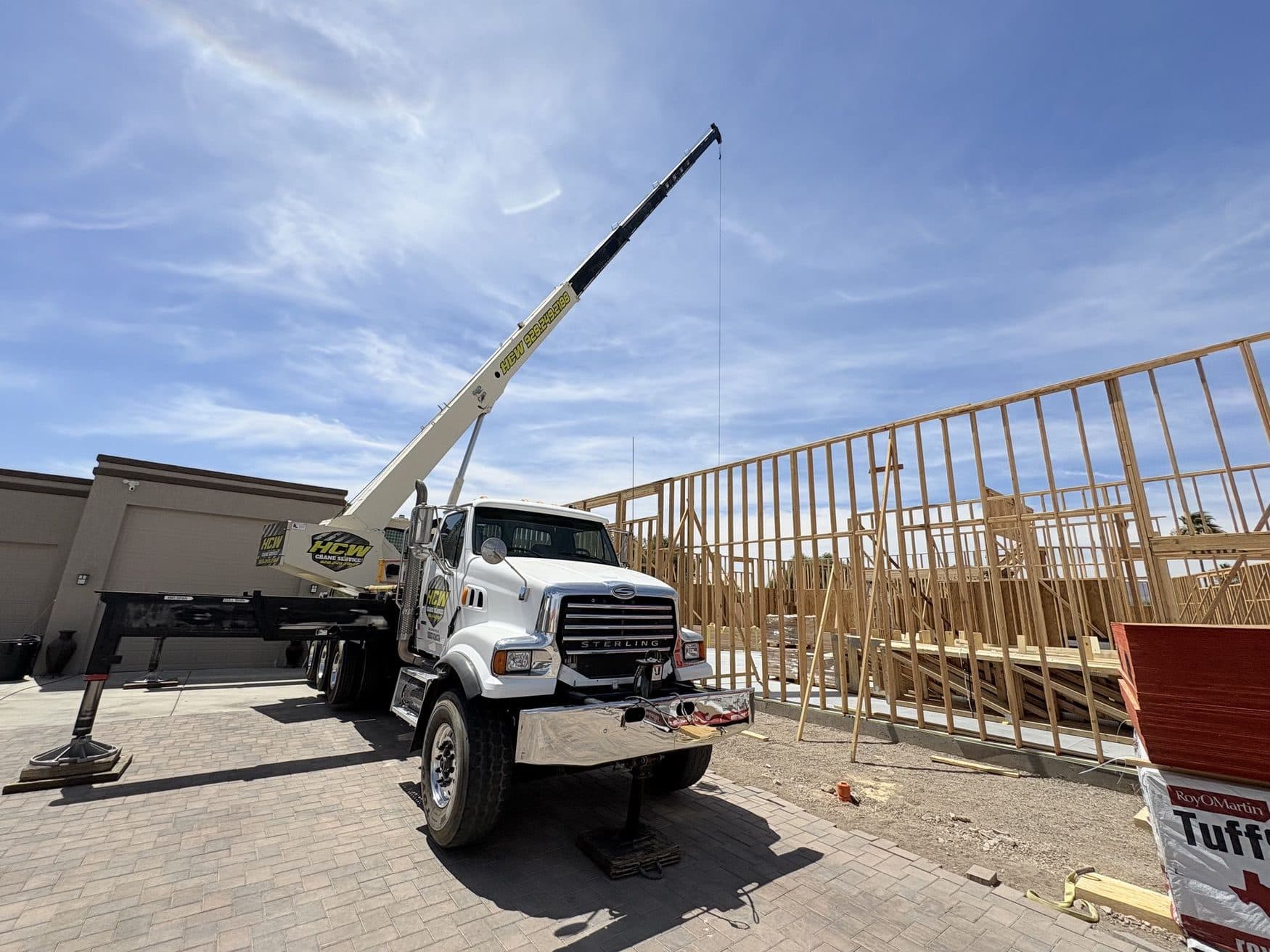
Crane staged at a framing job 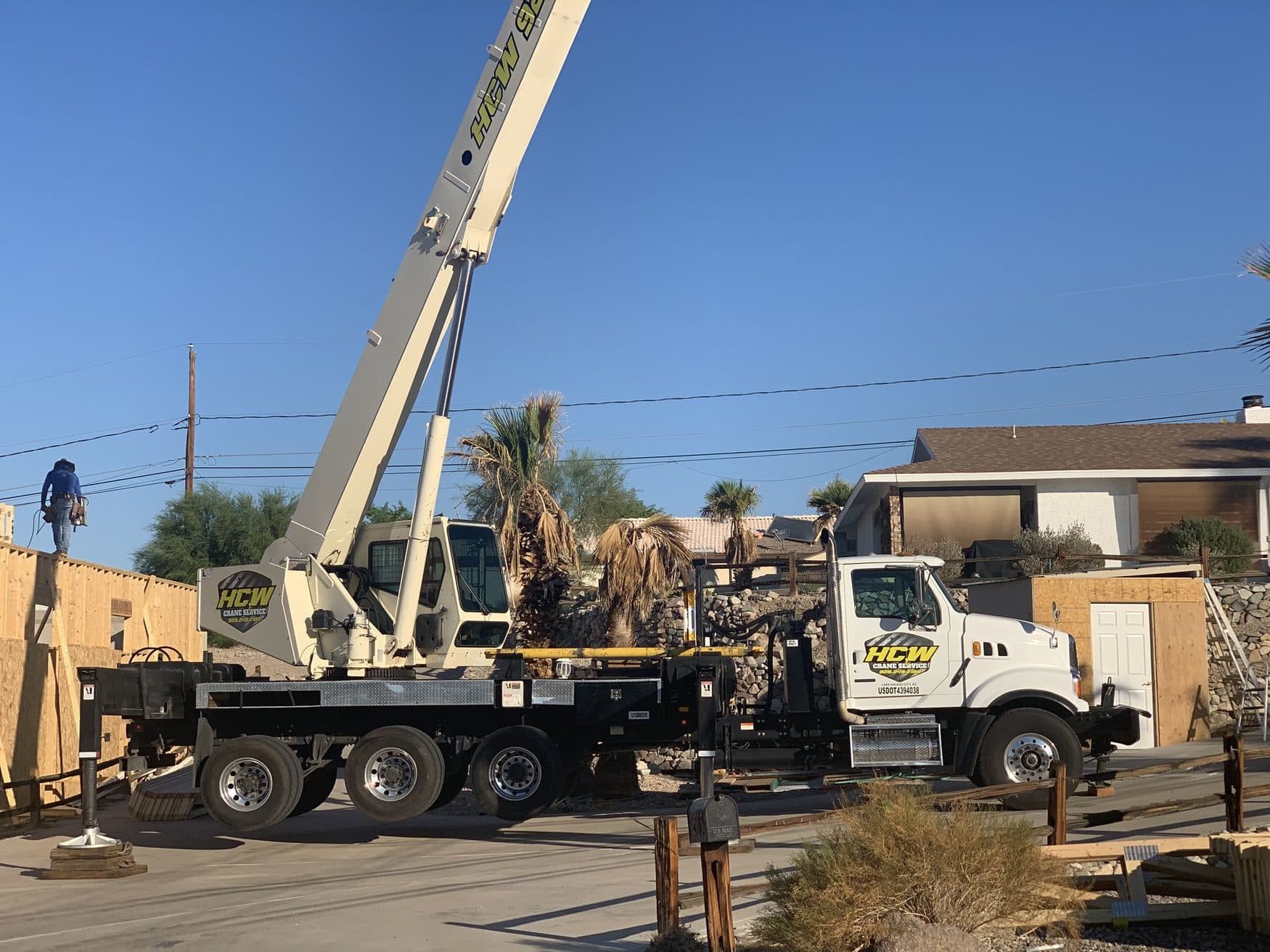
Crane set beside new wall framing
Answers
Frequently Asked Questions
Can you lift my boat over the wall into my backyard?
Often yes. It is a question of weight at the distance from where the truck parks to where the boat lands. Send the boat's make, model, and dry weight, what engines it has, and the distance from the street to the spot, with photos, and we will tell you which truck it takes.
Do I need to drain the boat first?
Yes, drain the ballast tanks and the bilge and pull loose gear. Water is heavy, and ballast on a wake boat can add a lot of weight that is not on the spec sheet. Fuel stays in, so tell us the tank size. The lighter and more predictable the boat, the better the lift.
Can you put a boat in the lake?
Launching is what ramps are for, and in most cases a ramp is the better answer. The crane is for getting a boat to or from places a trailer cannot reach. If you have a situation where a ramp truly will not work, describe it and we will tell you honestly whether a crane makes sense.
Will the straps damage the hull?
Wide nylon straps at the sling marks, with a spreader bar keeping them from squeezing the rails, are how boats are meant to be lifted. Chain and wire never touch a hull. We keep straps clear of drives, transducers, and trim tabs, and a test lift confirms it hangs level.
Can you lift a side by side onto a trailer or into a yard?
Yes. Side by sides get lifted by the wheels with wheel straps or a lifting frame, not with slings through the cage unless it is designed for that. Tell us the model and anything added, like a roof or a stereo, and where it has to go.
Related Services
- Tight Access LiftsNarrow streets, no side yard, overhead lines, and neighbors on both sides. How we work a lift where there is barely room to set up.
- Over-Structure PlacementFlying a load over a house, a garage, or a block wall. Ridge clearance, a blind descent on the far side, and a spotter running the last stage.
- Reach and Radius PlanningReach and radius planning in Lake Havasu City. Where the boom truck can stand sets the radius, and radius decides what the crane can lift over your house.
- Rigging SupportRigging support in Lake Havasu City. Sling angles, hitch types, spreader beams, edge protection and center of gravity settled before the load leaves the ground.
- Machinery Moving and SettingCrane machinery moving and setting in Lake Havasu City, Arizona. Shop machines picked out of one building, hauled, and set level in the next one.
- Truck Loading and UnloadingCrane truck loading and unloading in Lake Havasu City, Arizona. Flatbeds and step decks cleared where no forklift can reach, on the driver's schedule.
- Shipping Container PlacementShipping container placement in Lake Havasu City, Arizona. Twenty and forty foot boxes set behind walls and on level pads where a tilt bed cannot reach.
- Roofing Material LiftsCrane roofing material lifts in Lake Havasu City, Arizona. Concrete tile, shingle bundles, and underlayment staged on the roof where the roofer wants it.
- Solar Panel and Racking LiftsCrane solar panel and racking lifts in Lake Havasu City, Arizona. Panel pallets and rail bundles set on the roof or ground mount where installers need them.
Ready to schedule your lift?
Tell us the load, the site and the timing. We will confirm capacity, access and a window.