Mobile Crane Service
40-Ton Crane Service in Lake Havasu City
3 min readUpdated July 2026
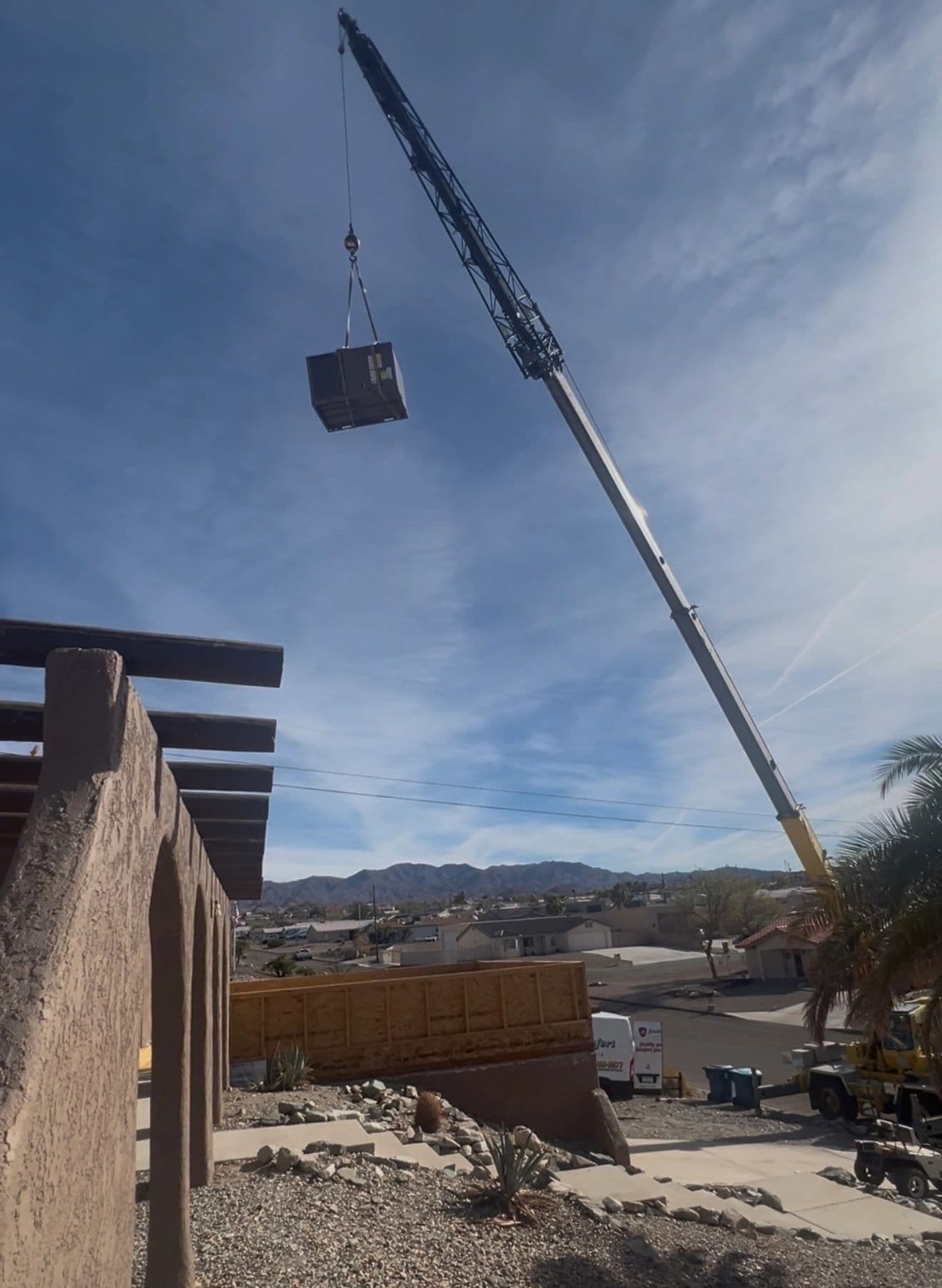
The 40-ton mobile crane is our larger boom truck, with a maximum reach of 142 feet. It carries more weight at long radius than the 22-ton, which makes it the machine for picks over two-story homes, deep commercial roofs, and any landing point far from where the truck can park.
Owner Devan Decastro is NCCCO certified: Telescopic Boom Crane, Swing Cab (TLL). CCO ID 444146986.Verify on NCCCO(opens verifycco.org in a new tab)
Capacity at Radius Is What You Are Buying
People hear forty tons and picture a forty ton load. That is not how a crane works. Forty tons is the rating close in, straight up, with the boom short. Out at distance the number is a fraction of that, and the fraction shrinks as the boom extends.
What the bigger machine actually buys is capacity out where the work is. A rooftop unit that weighs a few thousand pounds is nothing at fifteen feet of radius and a serious pick at seventy. The 40-ton keeps a comfortable margin in that second case where the smaller truck would not.
So the useful question is never just what does it weigh. It is what does it weigh and how far out does it have to go, measured from where the truck can actually sit.
Reach to 142 Feet, and What That Solves
Maximum reach on this machine is 142 feet. That matters in two ways at once. It gets height, so the load clears a two-story roof, a tall parapet, or a mature tree canopy. And it gets distance, so the crane can sit on the street and still put a load in the back corner of a deep lot.
Havasu has a lot of hillside lots where the house sits well above or well below the road, and a lot of newer builds with deep setbacks. Both situations turn an easy load into a long-boom problem, and both are the reason we own the bigger truck.
Reach also means we can sometimes avoid a bad setup spot entirely. If the only close position is over a septic field or a soft slope, backing off thirty feet onto solid ground and using more boom is a better answer than forcing the close pick.
Setup Room, Street Space, and Ground Bearing
The trade for that capability is footprint. The 40-ton needs a wider outrigger spread and more room to swing. On a residential street that often means both lanes for the duration of the pick, and a conversation with the neighbors about the driveway they will not be using for an hour.
Ground bearing goes up too. More machine and more counterweight put more pressure through each pad. Mats are not optional here. On fill, on a slab edge, on pavers, or anywhere near a trench, we crib it properly and check it again after the first swing loads that side.
Setup takes longer than the smaller truck. That is worth knowing when you are planning a day with a framing crew, because the crane being level is a hard prerequisite and it is not a step anyone should be rushing.
Jobs That Usually Call for It
Large rooftop package units on commercial buildings, where the curb sits well back from any place a truck can park. Precast panels and long-span trusses. Modular sections. Boats and heavy equipment on and off transport.
On the residential side it is the spa going over a two-story house, the pool equipment landing in a walled backyard with no gate access, and the boulder or fountain that has to travel across a finished front yard rather than through it.
It is also the safe answer when the weight is uncertain. If nobody can produce a data plate and the load could be a good deal heavier than the guess, we bring the machine with the margin rather than find out on the first test lift.
Working from further back is the underrated use of it. If the only close setup spot sits over a septic field, a soft slope, or a paver driveway that nobody wants marked, backing off thirty or forty feet onto solid ground and spending more boom is usually the better trade. Reach solves access problems, not just tall ones.
How the job runs
Our Process
Step 1: Weight, Radius, and Height
Three numbers set the plan. What it weighs, how far out it has to travel, and how high it has to clear on the way. Photos from the street and from the landing point usually get us most of the way there.
Step 2: Site Visit for Setup Position
On long-radius picks we come look before the day. We are finding solid ground, a clear swing path, and a position that keeps the load out of power lines the entire way across.
Step 3: Traffic and Access Plan
If the setup blocks a street or a commercial drive lane, we sort that out ahead of time. Cones, a spotter, and a heads up to whoever owns the lot beats an argument mid-lift.
Step 4: Set Up and Verify
Wide outrigger spread onto mats, machine leveled, and pads checked. We load the boom out over each side before the real pick and watch how the ground responds.
Step 5: Long-Radius Pick
Loads move slower at long radius because the load swings further for the same boom movement. Tag lines and a signal person at the landing point keep it quiet the whole way in.
Scope
What Is Included
- 40-ton boom truck with reach up to 142 feet, operator included
- Load chart work against actual radius and boom extension
- Heavy mats and cribbing for the wider outrigger footprint
- Site visit ahead of the day on long-radius or blind picks
- Tag lines and a dedicated signal person for the landing point
- Traffic and access coordination when the setup blocks a lane
- Coordination with delivery drivers, framers, and mechanical crews
Real HCW jobs
From the Job Site
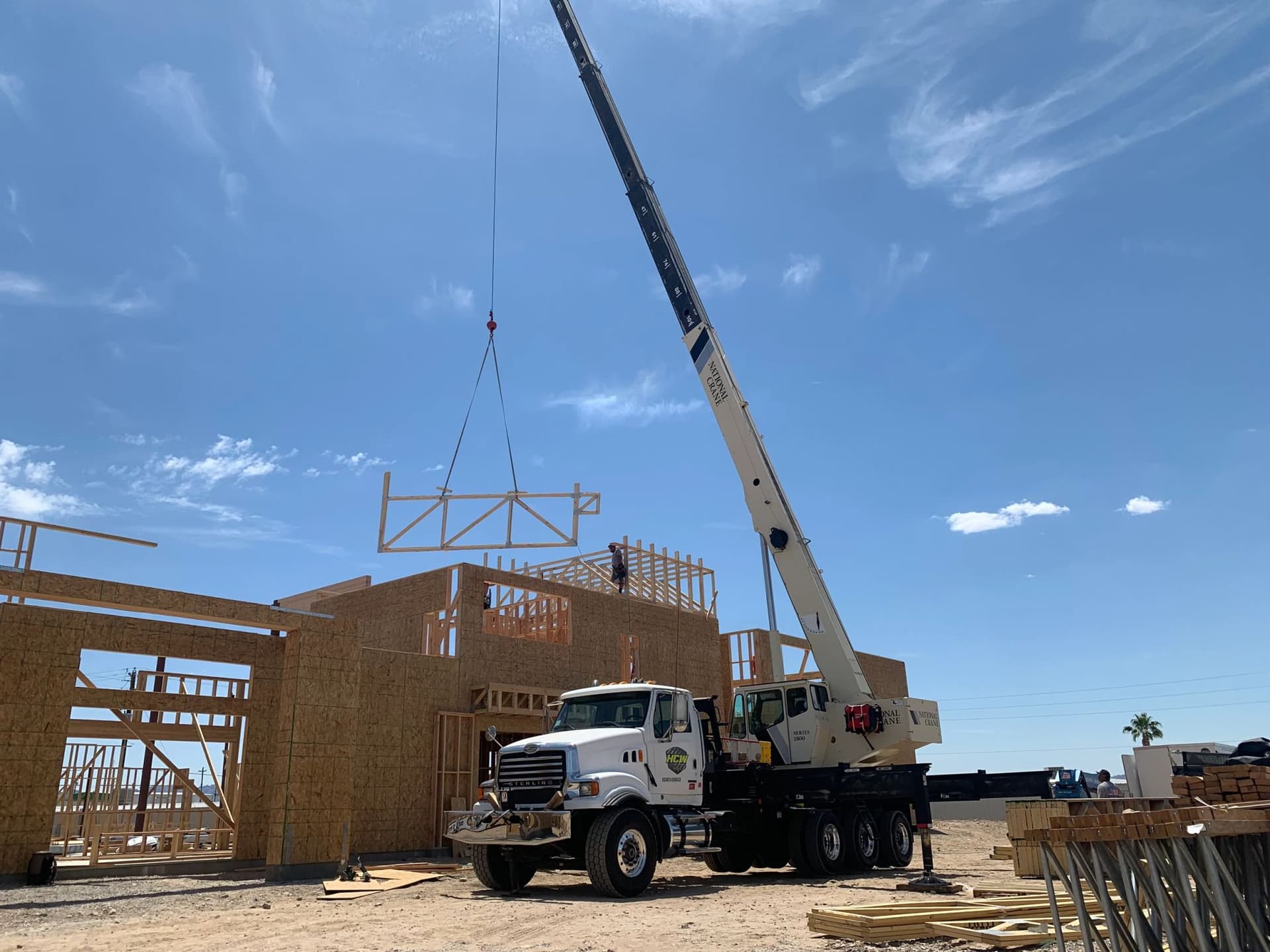
Roof truss set on a two-story frame 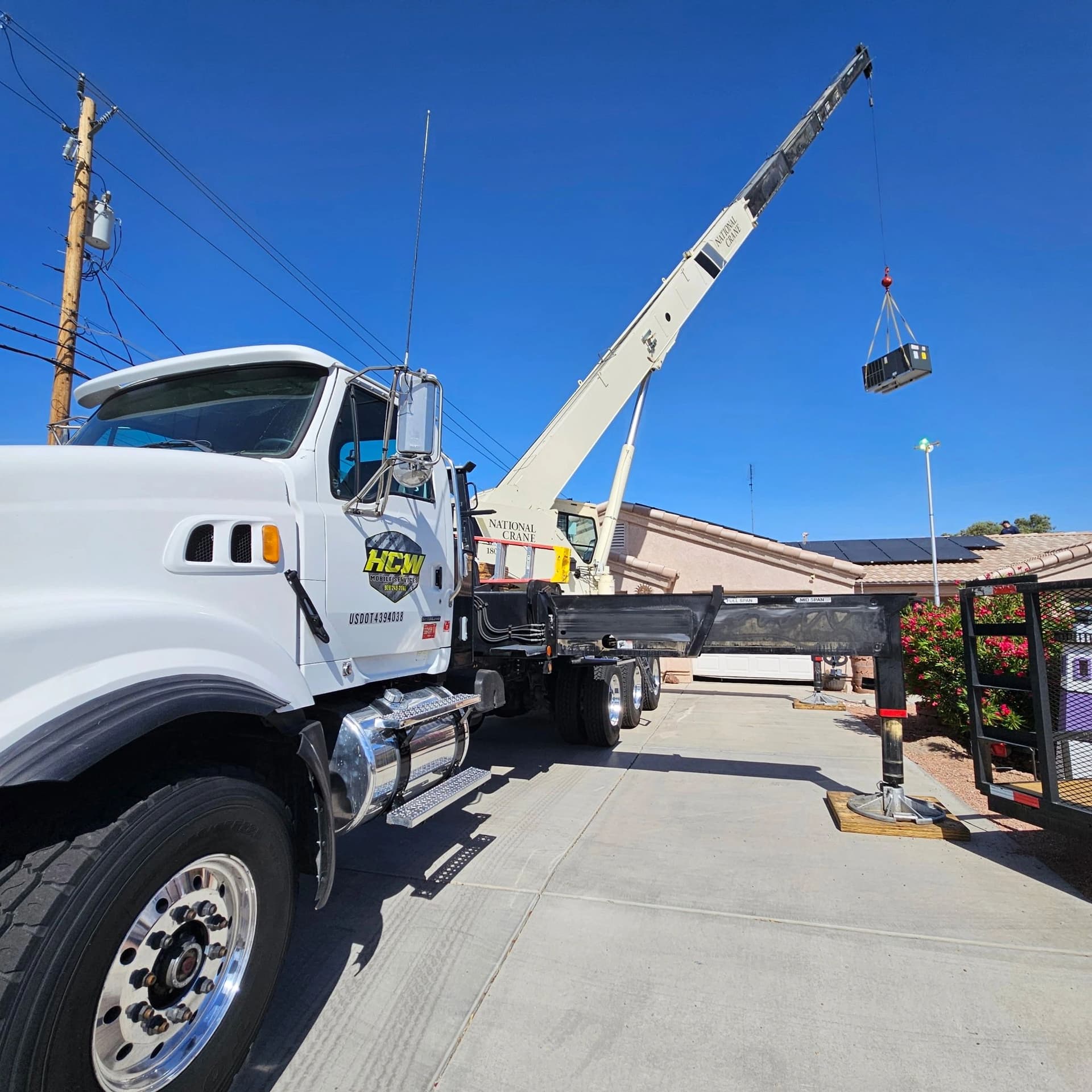
Rooftop unit lifted over a driveway 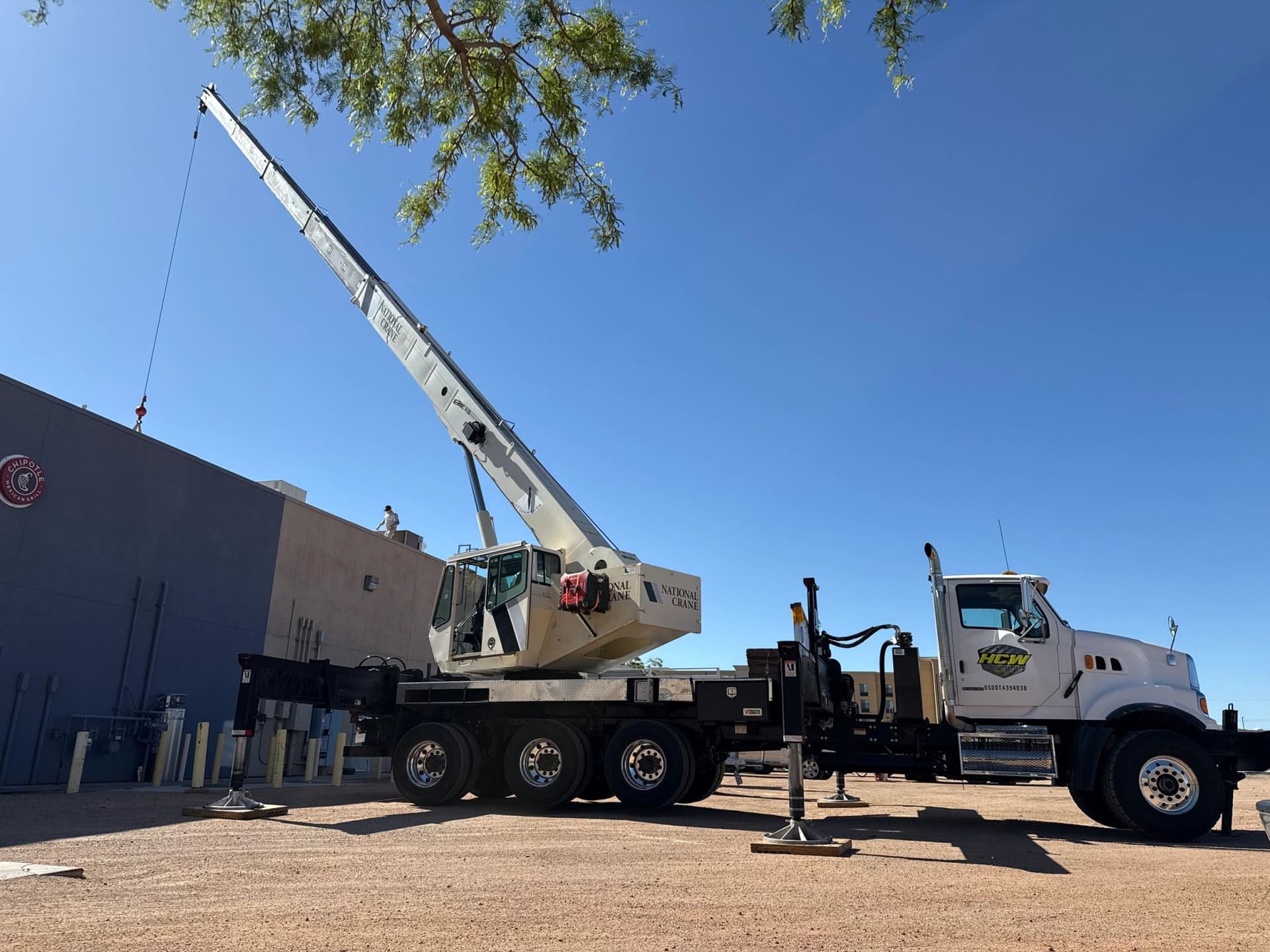
Outriggers set beside a commercial roof 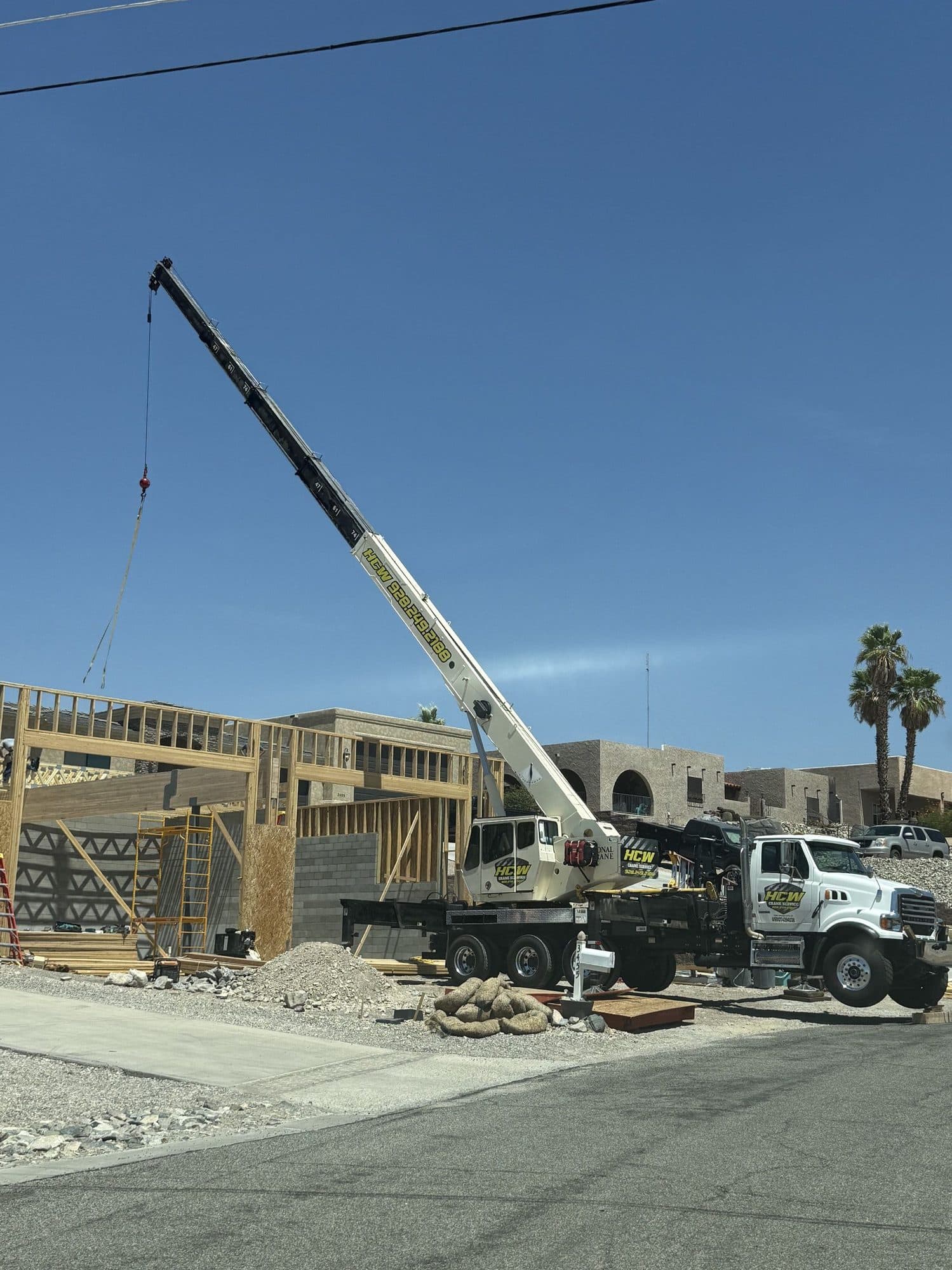
Boom truck working a framing site
Answers
Frequently Asked Questions
Can the 40-ton lift 40 tons?
Only at short radius with the boom in close. Capacity drops as the boom extends and the load moves away from the truck. Every real pick gets checked against the load chart for that exact radius and boom length.
What is the maximum reach?
142 feet. That is the outer limit of the machine, not a working rating for a heavy load. Reach and capacity trade against each other, so the useful figure is always weight at a stated radius.
Will it fit in my neighborhood?
Most streets, yes. Very tight cul-de-sacs and narrow older streets are the ones worth checking first. Sometimes the answer is that the 40-ton can reach the load from a wider street a house or two away.
Do you need to close the road?
Sometimes we need one or both lanes for the length of the pick. We plan that in advance with cones and a spotter, and on commercial sites we coordinate with whoever manages the property.
Is the bigger crane overkill for a house?
Not when the geometry says otherwise. Deep lots, two-story homes, hillside builds, and picks made from the street are all residential jobs that regularly need the larger machine.
Related Services
- 22-Ton Crane ServiceOur 22-ton boom truck is the tight-street machine. Smaller setup footprint, quicker to place, and the right call for most single-story residential lifts.
- Heavy Lift Crane ServiceHeavy picks leave no room for a guessed weight. We verify the load, check the chart at the real radius, and keep the lift slow and deliberate.
- Mobile Crane Service22-ton and 40-ton boom trucks with an operator on every call, reaching up to 142 feet.
- Owner-Operated Crane ServiceThe owner takes the call, walks the site, and runs the crane. One person accountable for the lift from the first phone call to the final walkthrough.
- Crane With OperatorEvery crane goes out with an operator and the rigging to do the job. Here is exactly who does what on site, and what your crew is responsible for.
- 22-Ton Crane ServiceOur 22-ton boom truck is the tight-street machine. Smaller setup footprint, quicker to place, and the right call for most single-story residential lifts.
- Hydraulic Crane ServiceBoth of our boom trucks are hydraulic. Smooth metered control, fast setup, and no assembly. Here is what that means for your lift and for desert heat.
- Telescopic Crane ServiceTelescopic boom trucks extend the boom in sections, so capacity changes with every foot you pull out. Here is how we plan a pick around that.
Ready to schedule your lift?
Tell us the load, the site and the timing. We will confirm capacity, access and a window.