Why Choose HCW
Handing the Problem Over and Getting It Back Finished
2 min readUpdated July 2026
When you hire HCW Crane Service you are handing over the decisions that carry risk: how the load is rigged, where the truck sets up, whether the ground will hold, and whether the lift should happen at all. What stays with you is site knowledge, permits and the mechanical work at either end.
What You Are Actually Handing Over
Nobody hires a crane for a crane. They hire it because something heavy has to move and being the person responsible for that is uncomfortable. The product here is the transfer of that responsibility, and it deserves to be described honestly rather than gestured at.
The decisions that come with us are the ones with consequences attached. How the load gets rigged and whether that arrangement will hold when it rotates. Where the truck sets up and whether that ground will carry outrigger loading. Whether the weight at that radius is inside the chart with margin. Whether conditions on the day still support the plan.
Those are the parts that are hard to evaluate from the outside, which is exactly why they are the parts worth paying someone to own.
What Stays Yours
An honest handover has a boundary and it helps to say where it is. Permits, road closures and any approval your property or association requires belong to you or your contractor. So does telling neighbours a crane is coming, which is worth doing on a residential street.
Site knowledge stays yours too, and it is the piece we cannot substitute for. What is buried under the front lawn, which section of driveway was poured last spring, whether the patio is on structural slab or fill. We will ask, and we will believe the answer.
At either end of the lift, the mechanical and electrical work stays with the trade that owns it. We set the equipment where it goes. Your people connect it and confirm it works.
What Finished Looks Like
The lift being over is not the same as the job being done. Finished means the load is where it should be, confirmed by whoever has to live with it, and the site is in the state it was found in.
So there is a walk at the end as well as at the start. You look at the placement. We look at the surfaces the truck was on, pick up cribbing, pads and cones, and account for anything that came off the truck.
If something needs revisiting, that gets said before we leave rather than being discovered by you afterwards. A quiet departure with a known problem behind it is not a finished job.
The Part That Is Not Comfortable
Handing something over only works if the person you handed it to will tell you when it is not going well. That is the awkward half of this arrangement and it is the half that makes it real.
So you will occasionally be told things you did not want to hear. That the pad is not cured enough. That the ground will not hold where you wanted the truck. That the reach is not there and the job needs a different approach. That today is too windy.
None of that is enjoyable to say. It is, though, the only version of this that is worth anything, because the alternative is a contractor who agrees with you right up until the moment it matters.
How the job runs
Our Process
Step 1: We Take the Risk Decisions
Rigging, setup position, ground assessment, capacity and go or no go on the day. Those come with the operator and they are not delegated back to you.
Step 2: You Supply Site Truth
What is buried, what is new, what is fragile and who needs to be told. We ask, and the answers change the plan more than anything else does.
Step 3: The Lift Runs to the Plan
Zone closed, one signal person, trial lift, then a slow travel and a controlled set. Nothing improvised once the load is in the air.
Step 4: Walk It Before We Leave
You confirm the placement, we confirm the site is clear, and anything worth mentioning gets mentioned rather than left for you to find.
Scope
What Is Included
- Rigging and lift planning handled by the operator
- Ground and capacity assessment on every setup
- A clear division of what is ours and what is yours
- A closing walk with placement confirmed by you
- Cribbing, pads and cones removed before we leave
- Straight answers when something should not proceed
From the cab
The View From the Operator's Seat
These were taken from inside the crane cab on real HCW jobs.
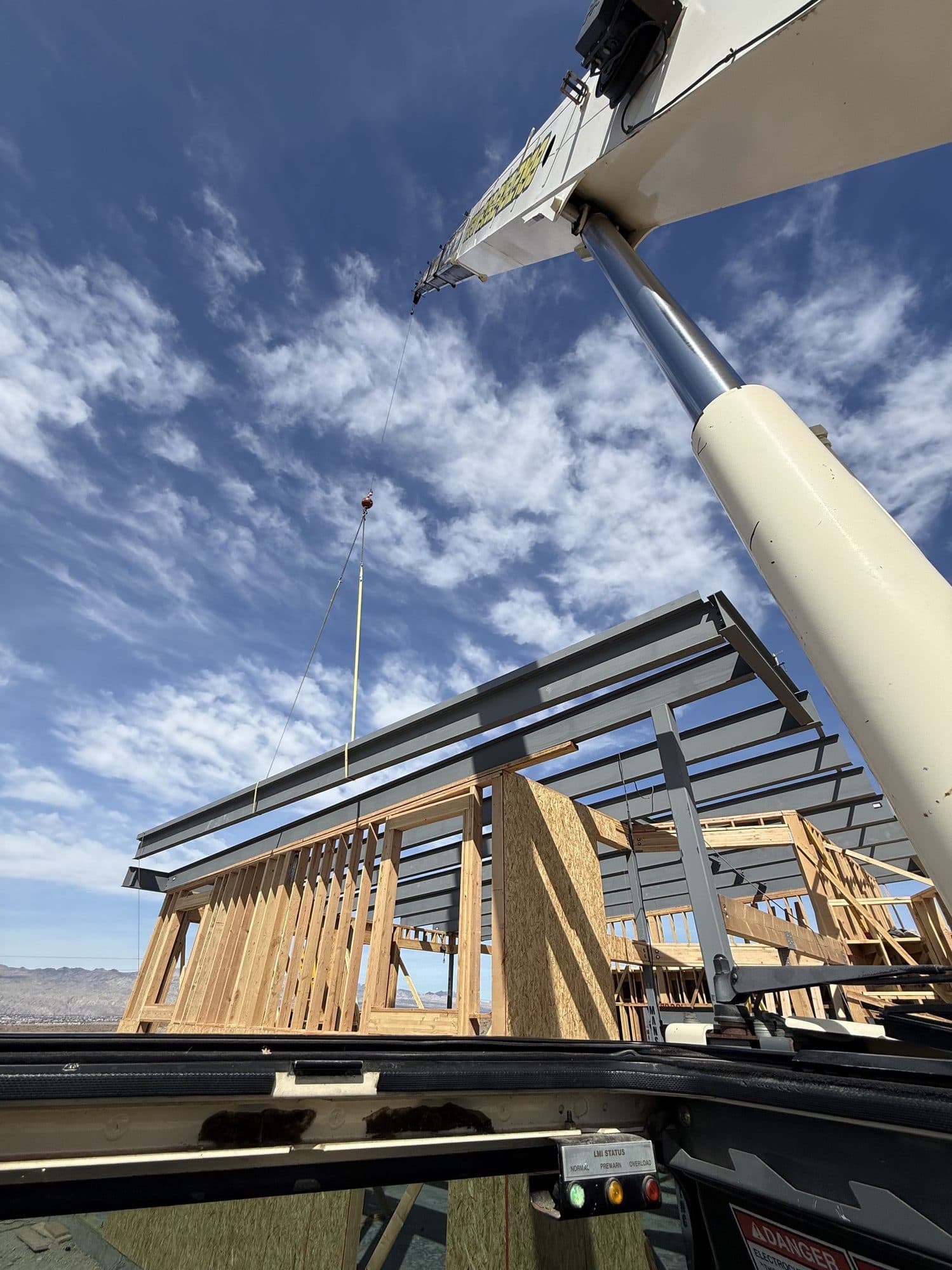
Operator view of a beam landing 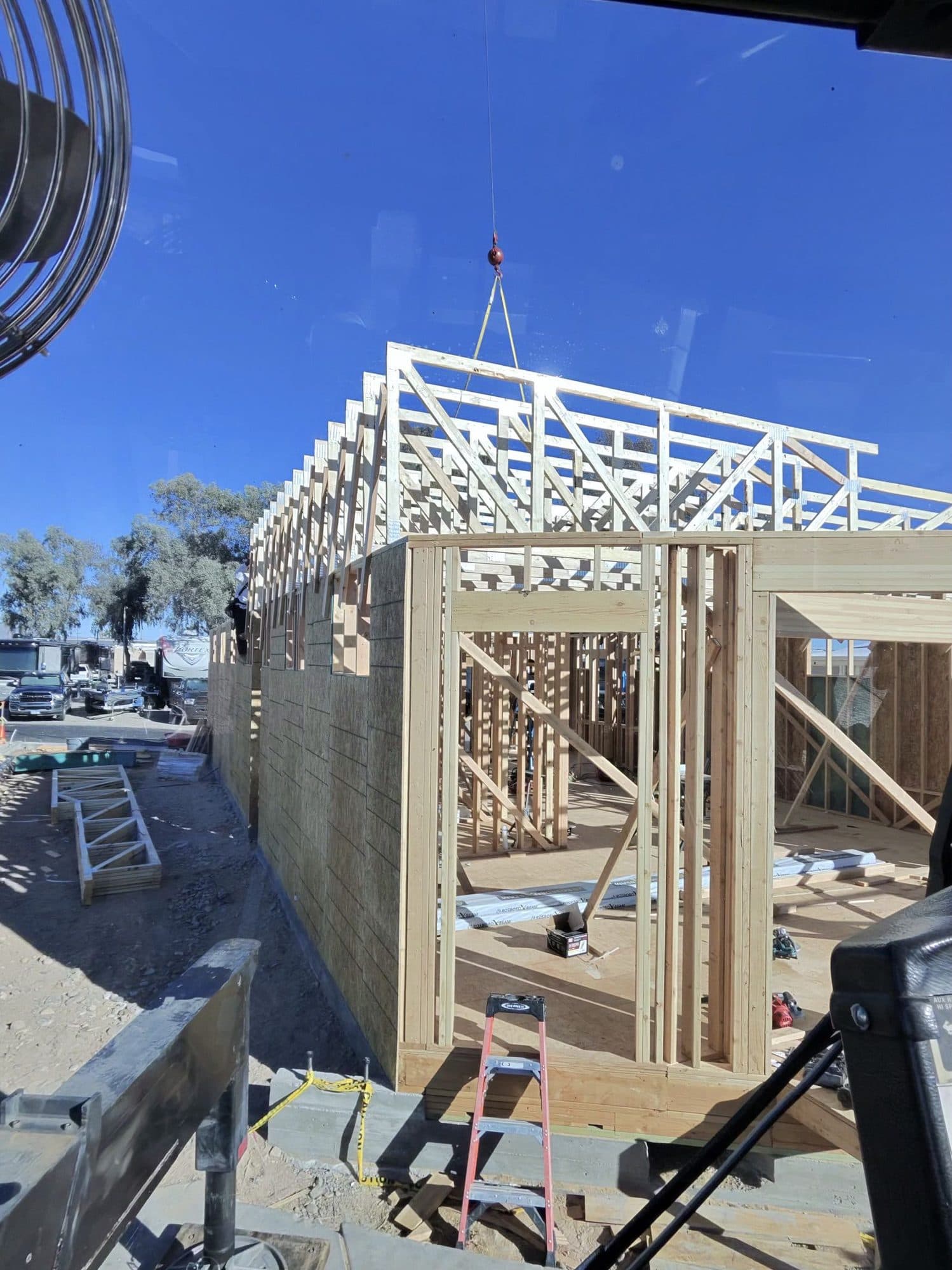
Trusses landing on a house frame 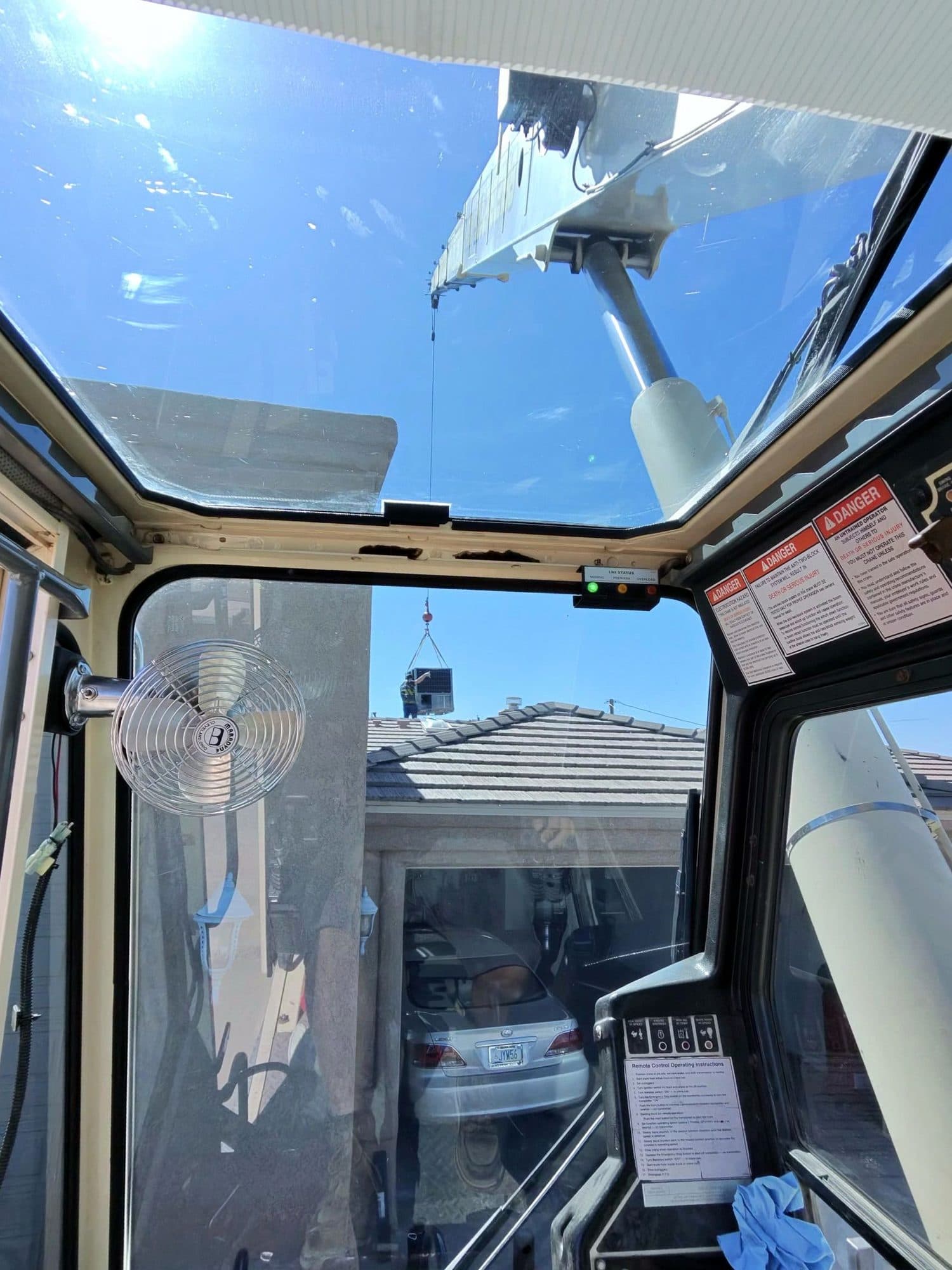
Rooftop unit lifted over a tile roof
Answers
Frequently Asked Questions
What do you need from me before the lift?
Honest site information and access. What is buried, what has been dug recently, what surfaces are fragile, and who can open a gate or move a vehicle. Those answers shape the plan more than the weight of the load does.
Do you handle permits?
No. Permits, road closures and property approvals belong to you or your contractor. What we will do is tell you exactly how much space the setup needs, so anything you have to apply for gets applied for with the right footprint.
Will you connect the equipment after you set it?
No. We place it where it goes and make sure it sits square and level. The mechanical, electrical and plumbing work belongs to the trade that owns it, and having a crane operator start on that is not doing anyone a favour.
What if I am not happy with where it landed?
Say so before it is unhooked and it moves. That is the whole reason the set is slow and the reason nothing is released until you have looked at it. Adjusting while the load is still on the hook takes a minute. Afterwards it is a new job.
How do I know the plan is sound if I do not know cranes?
Ask us to explain it. A plan that cannot be described in plain language to the person paying for it is usually not a plan. Where the truck sits, where the load goes, what is underneath, and why that is the safe route.
More Reasons
- Safety First ProcessThe walk, the ground check, the load chart, the exclusion zone and the briefing. What actually happens before a load leaves the ground on a Havasu job.
- Clean Professional PlacementA load set on the marks, checked for level before anything is unhooked, and every pad, sling, block and piece of packaging taken off the site with us.
- Damage Prevention FocusPads and cribbing under every outrigger, the whole swing path checked rather than just the endpoints, and fragile things moved before the boom goes up.
- Documented ProcessCondition photos before setup, the setup itself, and the finished placement. A record of what happened on your property that does not rely on memory.
- Safety First ProcessThe walk, the ground check, the load chart, the exclusion zone and the briefing. What actually happens before a load leaves the ground on a Havasu job.
- On Time and Clear CommunicationArrival windows instead of day ranges, a confirmation call the day before, and one phone number that reaches the person driving the truck to your job.
- Experienced OperatorsOver 20 years of operating experience shows up in small decisions, not in headlines. Reading ground, catching a bad pick early, and knowing when to say no.
- Owner Supervised QualityThe person who quotes your job is the person who runs the crane on it. No handoff, no relayed instructions, and one name attached to the outcome.
- Local Reliable ResponseBased on London Bridge Road, not dispatched from another county. What a night call actually sounds like and what can honestly be done before daylight.
- Damage Prevention FocusPads and cribbing under every outrigger, the whole swing path checked rather than just the endpoints, and fragile things moved before the boom goes up.
Ready to schedule your lift?
Tell us the load, the site and the timing. We will confirm capacity, access and a window.