
Rigging and Construction Lifts
Shipping Container Placement in Lake Havasu City
2 min readUpdated July 2026
Shipping container placement is lifting a twenty or forty foot container off the delivery truck and setting it on a prepared, level base with a crane. It is used where a tilt bed truck cannot slide the box into place, such as behind block walls, on sloped lots, or in tight side yards.
When a Tilt Bed Cannot Get There
Most containers get delivered on a tilt bed truck that slides the box off the back onto the ground. That works on an open lot with a straight run twice the length of the container. It does not work behind a block wall, down a narrow side yard, onto a slope, or anywhere the truck cannot back straight to the spot.
A crane lifts the container off the delivery truck and swings it over whatever is in the way. That is often the only way to get a storage container into a backyard, onto a job site with fencing already up, or onto a lot on the hills above the lake where nothing is flat for long.
The weight is easy. The tare is painted on the container door and on the data plate. Empty is how containers should move, because anything loaded inside has no known weight and can shift. If it has to be moved loaded, we need to know what is in it and how it is secured.
Rigging From the Corner Castings
Containers are built to be lifted by their corner castings, the steel blocks at each corner with openings made for lifting hardware. Slings or chains go to the four top castings with the right hooks or shackles, and nowhere else. The top rails and the roof panels are not lift points.
Sling angle matters on a long box. Short slings run at a flat angle pull the top corners inward and put a lot of tension into each leg. Longer slings or a spreader bar keep the pull closer to vertical, which is how a container is meant to be lifted.
A forty foot box is a big flat side on a windy day. Two tag lines go on opposite ends so it can be held against a gust, and if the wind is strong enough to swing it past what the crew can hold, the lift waits for calmer air.
A Level Base So the Doors Open
The number one complaint about a placed container is that the doors will not close. That comes from setting it on ground that is not level or that settles unevenly. A container racks when one corner sits lower, and the door gaskets and the locking bars stop lining up.
The base goes in before the truck arrives. A compacted gravel pad, concrete footings at the corners, or solid blocking at each corner casting are all common. Whatever is used, it has to be level end to end and side to side, and it has to be firm enough that a corner does not sink after the first monsoon rain.
Plan where the doors face before the day. A container dropped with the doors toward a wall is a second crane call to turn it. Leave room in front of the doors for them to swing all the way open.
Rules on Residential Lots
Many neighborhoods have HOA rules about storage containers, and the city may have its own requirements depending on the zoning and whether it is temporary or permanent. Those are the property owner's to check, and it is much easier to do before a container is sitting in the yard.
Setbacks, visibility from the street, and how long a container may stay are the usual questions. Get the answers first, then book the lift.
How the job runs
Our Process
Step 1: Container and Site Details
We ask for the container size, whether it is empty, the tare from the door, where the delivery truck can park, and photos of the path over walls or fences to the spot. That tells us the radius and the truck.
Step 2: Base Ready
The customer has the base in and level before the day: gravel pad, corner footings, or blocking. Door direction and clearance get agreed so the container lands facing the right way the first time.
Step 3: Rigged to the Castings
Slings or chains go to the four top corner castings, with sling length or a spreader bar keeping the pull near vertical. Two tag lines go on the ends. A test lift checks that it hangs level.
Step 4: Swung and Landed
The container travels over the wall or fence and comes down slowly onto the base, corners onto the supports. Level gets checked and the doors get opened and closed before the rigging comes off.
Scope
What Is Included
- Tare weight confirmed from the container door or data plate
- Rigging to the four top corner castings only
- Spreader bar or long slings to keep the pull near vertical
- Two tag lines on the ends for wind control
- Landing on the prepared base with corners supported
- Doors checked before the rigging comes off
Real HCW jobs
From the Job Site
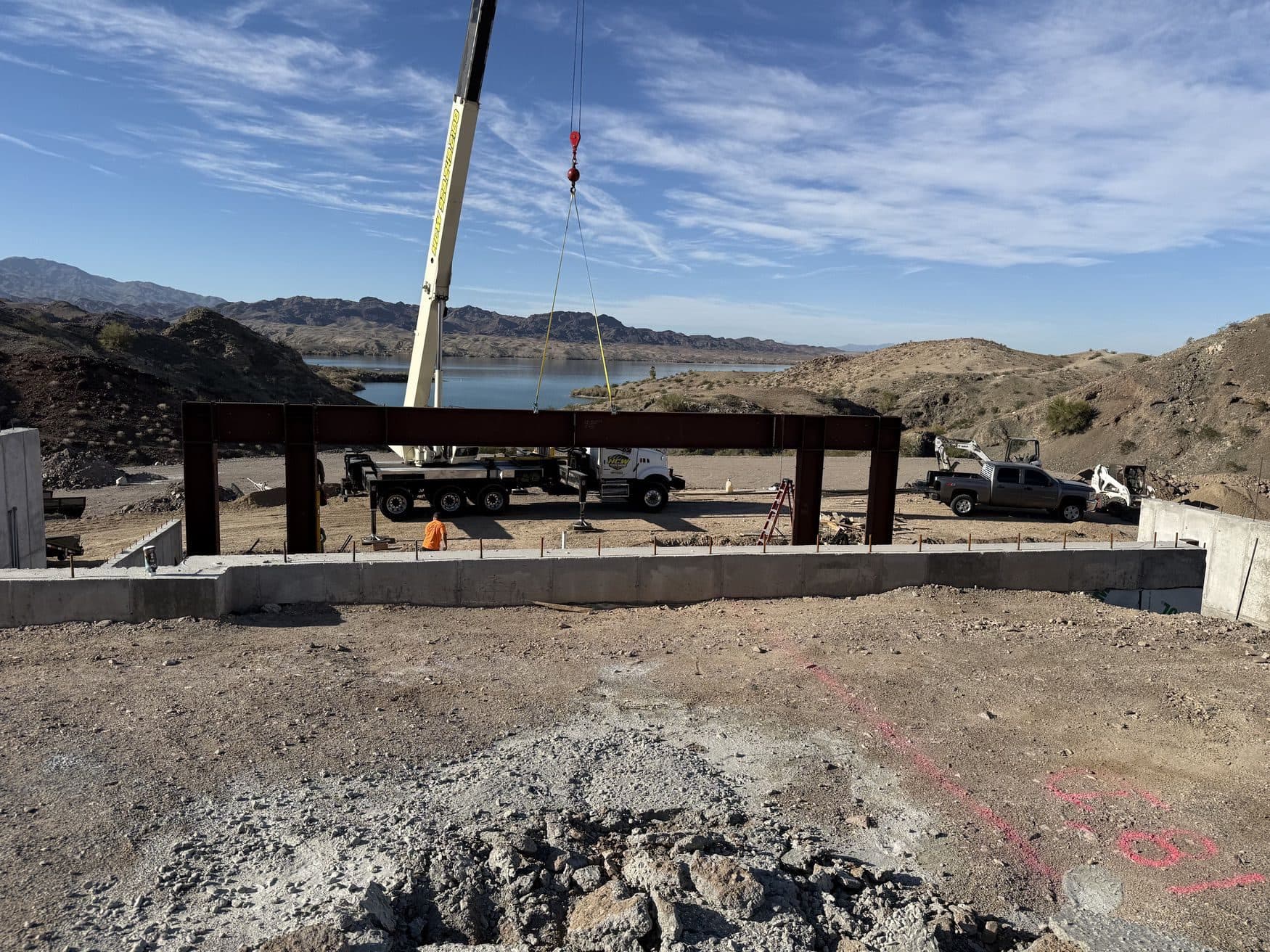
Steel portal frame above the lake 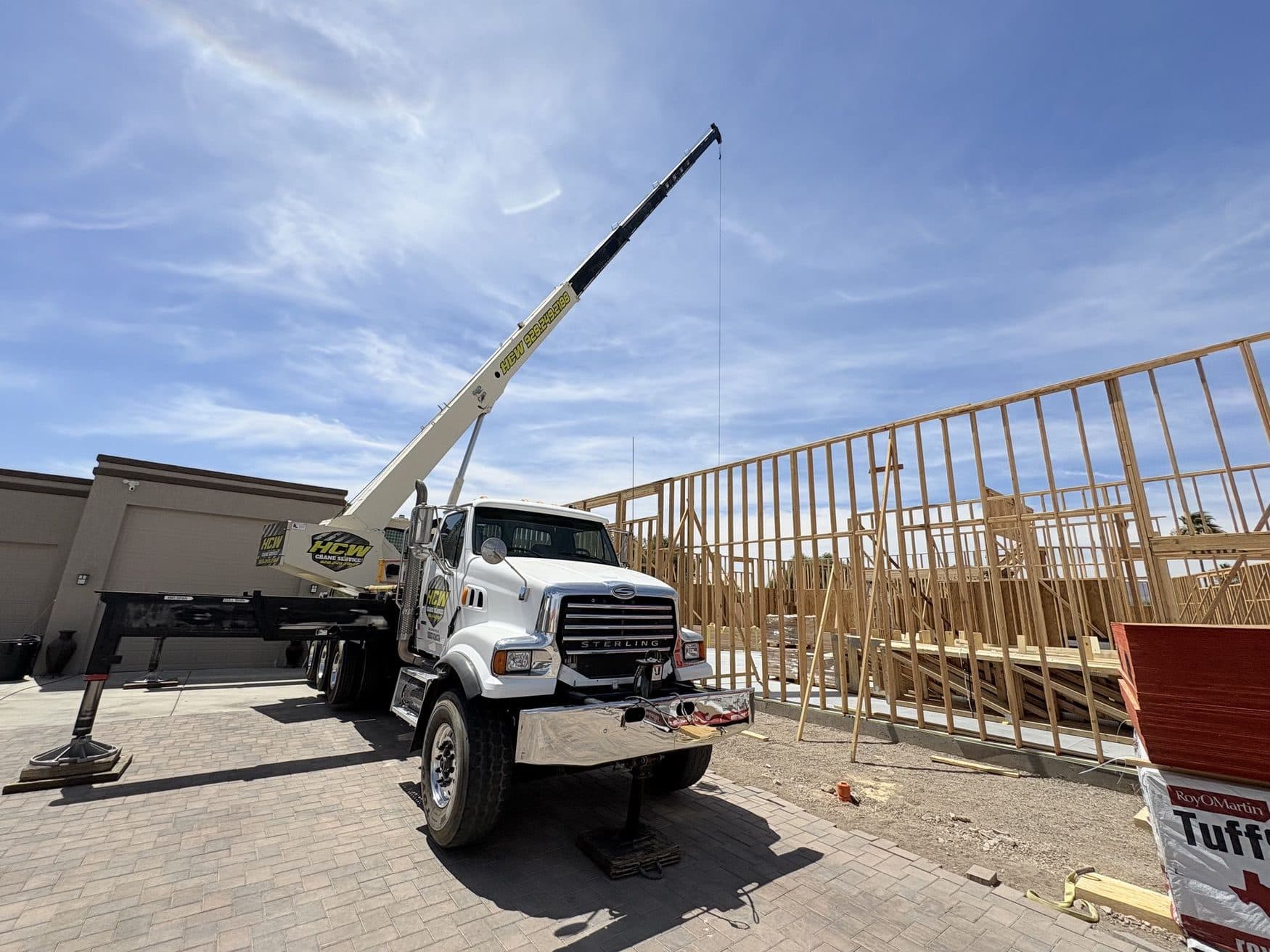
Crane staged at a framing job 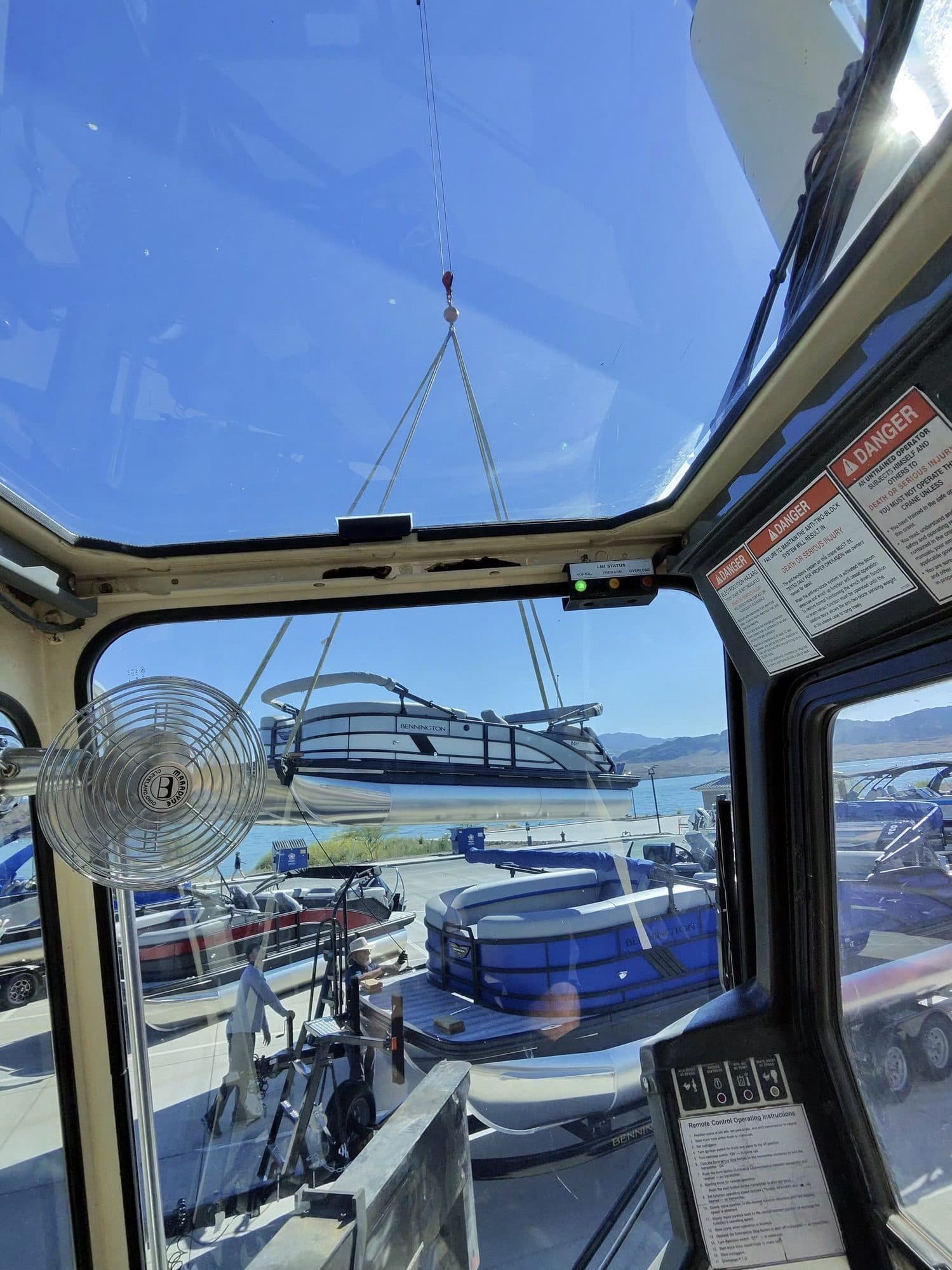
Pontoon lifted at a lakeside lot 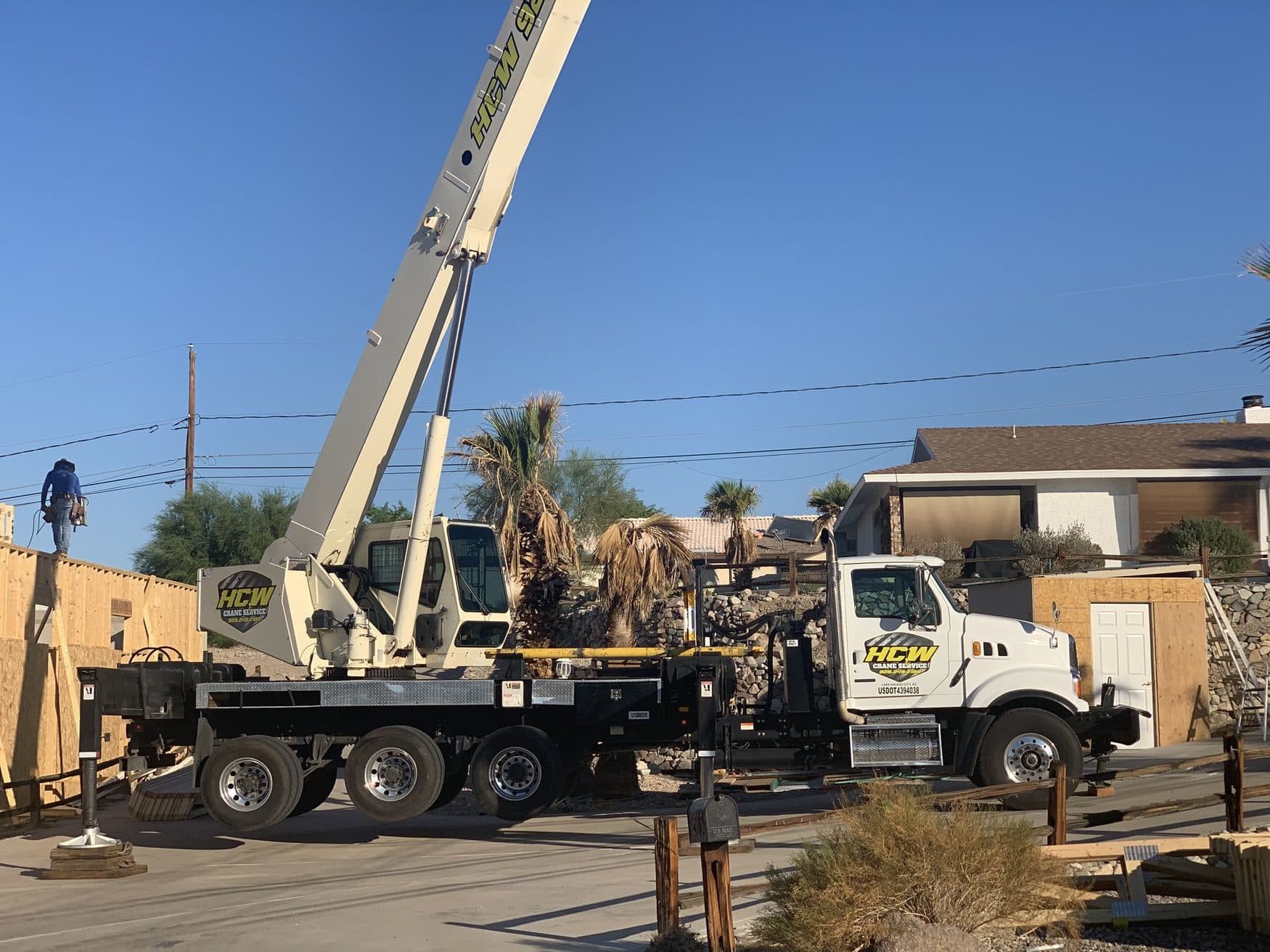
Crane set beside new wall framing
Answers
Frequently Asked Questions
Can you put a container in my backyard?
If the crane can reach from the street or the driveway to the spot. A forty foot box behind a house is a radius question more than a weight question. Send the container size and the distance from where the truck can park to the spot, with photos, and we will tell you which truck it takes.
What should the container sit on?
A level, firm base. Compacted gravel, concrete footings at the corners, or solid blocking at each corner casting are common. The main thing is that it is level end to end and side to side and will not settle. A container that settles unevenly racks and the doors stop closing.
Can you move a loaded container?
Empty is strongly preferred. Loaded, the weight is unknown and the contents can shift in the air, which moves the balance mid lift. If it has to move loaded, we need to know what is inside, roughly what it weighs, and how it is secured, and we may still say no.
Do I need permission to put a container on my lot?
Possibly. Many HOAs have rules about storage containers, and the city may have requirements depending on zoning and how long it stays. Those are the property owner's to check before the lift. It is far easier to sort out before the container arrives.
Can you relocate a container that is already on my property?
Yes, as long as it is empty or close to it and the crane can reach both spots. The same rules apply: corner castings, a level base at the new spot, and door direction agreed first. Sometimes it can move in one setup, sometimes it takes two.
Related Services
- Truck Loading and UnloadingCrane truck loading and unloading in Lake Havasu City, Arizona. Flatbeds and step decks cleared where no forklift can reach, on the driver's schedule.
- Tight Access LiftsNarrow streets, no side yard, overhead lines, and neighbors on both sides. How we work a lift where there is barely room to set up.
- Ground Condition EvaluationGround condition evaluation in Lake Havasu City. Outrigger bearing pressure, caliche crust, backfill, buried vaults and pads sized before the crane sets up.
- Reach and Radius PlanningReach and radius planning in Lake Havasu City. Where the boom truck can stand sets the radius, and radius decides what the crane can lift over your house.
- Machinery Moving and SettingCrane machinery moving and setting in Lake Havasu City, Arizona. Shop machines picked out of one building, hauled, and set level in the next one.
- Truck Loading and UnloadingCrane truck loading and unloading in Lake Havasu City, Arizona. Flatbeds and step decks cleared where no forklift can reach, on the driver's schedule.
- Vehicle and Boat HoistingCrane vehicle and boat hoisting in Lake Havasu City, Arizona. Boats, side by sides, and project cars lifted over walls, onto stands, or onto trailers.
- Roofing Material LiftsCrane roofing material lifts in Lake Havasu City, Arizona. Concrete tile, shingle bundles, and underlayment staged on the roof where the roofer wants it.
- Solar Panel and Racking LiftsCrane solar panel and racking lifts in Lake Havasu City, Arizona. Panel pallets and rail bundles set on the roof or ground mount where installers need them.
Ready to schedule your lift?
Tell us the load, the site and the timing. We will confirm capacity, access and a window.