
Heavy Equipment
What a soft set means and why it matters
In Short
A soft set lands a load with tension still in the slings, so it can be nudged, checked, and corrected before the crane lets go. Anchors demand it.
May 5, 20264 min read878 words
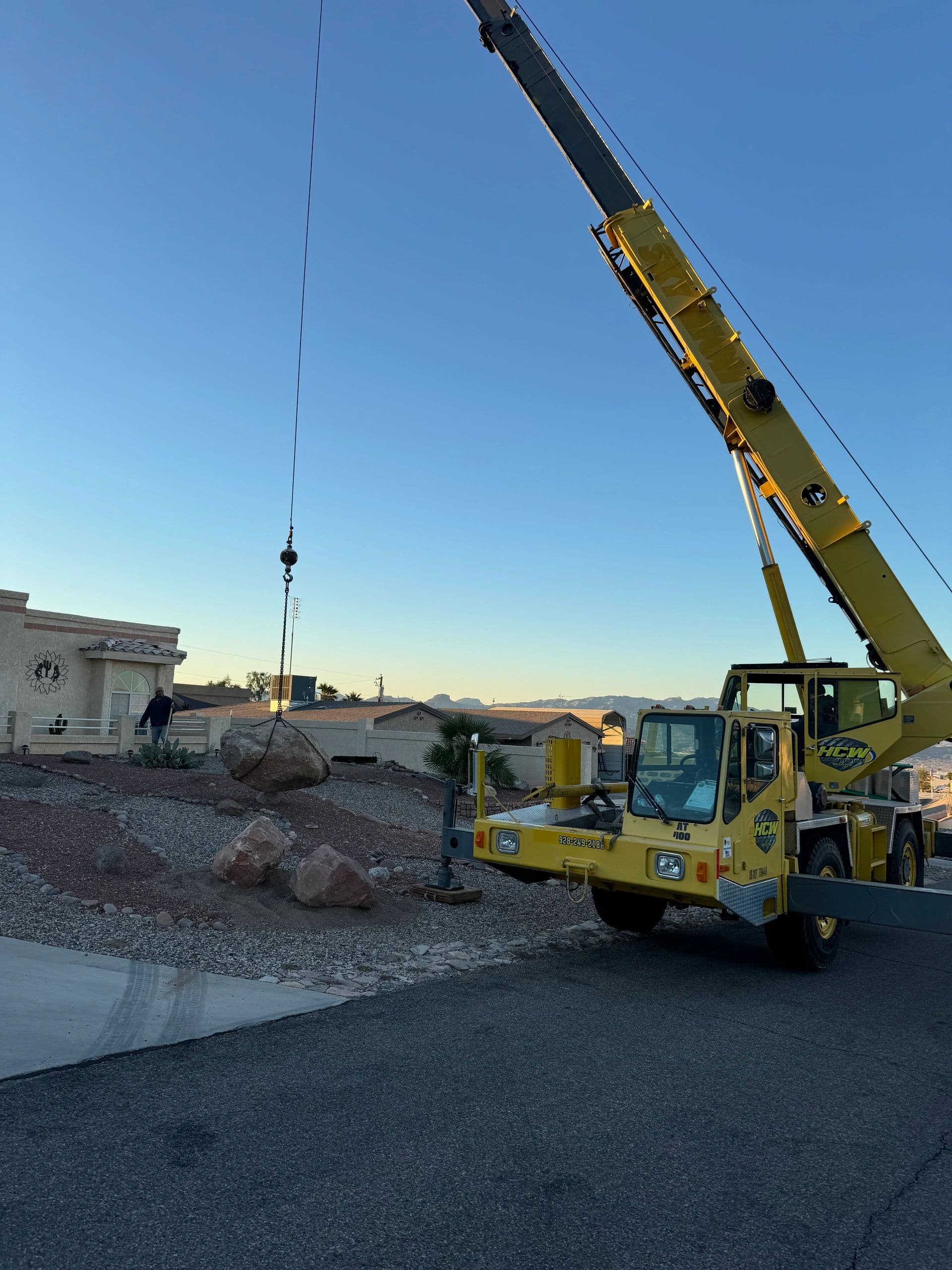
A soft set is a landing where the load is brought down slowly and stopped just as it takes weight, with the slings still under tension. That lets the crew check alignment, correct position, and confirm the load is seated before the crane transfers the full weight and comes off the hook.
The Difference Between Landing and Setting
There is a way to bring a load down that is not really controlled. The load descends, hits, the slings go slack, and now it is wherever it happened to end up. If that is close enough, fine. If it is not, moving it means picking it back up.
A soft set treats the last inch as its own operation. The load comes down slowly, contact is made, and the operator stops with the load just barely taking its own weight. The slings are still tight. The crane is still carrying most of it.
In that state the load can be moved. A crew with hands on it can slide it a fraction, spin it a few degrees, and get it lined up. Then the crane lowers the rest of the way and the load settles into a position that somebody chose rather than one that gravity picked.
Why Anchor Bolts Demand It
Anchor bolts are the clearest case. A base with four holes has to come down over four studs, and the tolerance is whatever the clearance in those holes gives you, which is usually not much.
Dropping a base onto anchors that are not quite aligned bends threads. A bent thread means a nut that will not run down, and the fix is chasing threads on a machine that is now sitting on top of them, or cutting the stud off and dealing with a much larger problem.
With a soft set the base gets brought down until it is just above the studs, aligned by hand while it is still hanging, and then lowered over them. Nobody is fighting anything. It is the difference between a two minute set and a two hour repair.
Isolators, Rails, and Compliant Landings
Vibration isolators are designed to compress. That means the load does not stop when it touches. It keeps settling as weight comes onto it, and it settles unevenly if the weight is not distributed the way somebody assumed.
So the load lands on the isolators, sits there taking weight gradually, and the crew watches whether it settles level. If one corner is going down faster than the others, that is information you want while the crane is still holding it.
Rails and stands are similar. A skid landing on two rails has to bear on both, not on one with the other a quarter inch clear. Coming down slowly lets somebody get an eye on that gap and shim before the full weight goes on.
Grout, Shims, and Getting Level Right
For anything with a rotating element, level is not cosmetic. A pump, a compressor, a generator, or a motor set out of level runs with a load on bearings and couplings that it was not designed to carry, and the bill for that shows up months later.
Shimming happens with the load partly supported. The pack goes under a corner, the load comes down onto it, and level gets checked. If it needs another shim, the crane picks that corner back up. Doing that with a load fully set means jacking, which is slower and less controlled.
On grouted bases the sequence is the same. The base gets set, leveled on shims, checked, and only then grouted. A base that was slammed down and is out of level cannot be fixed by grout, and grout under an unevenly bearing plate leaves voids.
How the Operator Actually Does It
This is where owner-operated matters more than it sounds like it should. A soft set is a slow, fine motion at the very bottom of the hoist range, and it is done by feel as much as by sight.
The operator is watching the load line for the moment it starts to go slack, which is the moment the load began carrying itself. That transition is small and it happens quickly, and stopping in the right part of it is a learned thing.
It is also the point in a lift where the operator is most dependent on someone else's eyes, because the last inch is usually not visible from the seat. The signal person is describing a gap the operator cannot see, so the communication has to have been agreed on before it matters.
Where It Comes Up Most
Anywhere the landing has a right answer that is narrower than the load. That covers more jobs than people expect.
- Equipment landing over anchor bolts or studs
- Anything set on vibration isolators or spring mounts
- Rooftop units seating onto a curb and gasket
- Skids landing on rails or a structural stand
- Tanks going into saddles that have a defined bearing area
- Boulders and landscape stone that have a face that has to show
- Anything landing on a finished surface that cannot take an impact
What It Costs and Why It Is Worth It
A soft set is slower than a drop. It adds minutes, sometimes ten of them, to a pick that would otherwise be over. That is the entire cost.
What it buys is the elimination of the most expensive category of mistake, which is a load that is in the wrong place and now has to be picked again. Repicking means re-rigging, and re-rigging a load that is sitting on the ground with slings trapped underneath it is genuinely awkward.
It also buys the ability to say the equipment was set correctly rather than set approximately. On anything with bearings, seals, alignment, or a warranty, that distinction is the whole job.
Filed under Heavy Equipment. Published May 5, 2026.
Answers
Frequently Asked Questions
Does a soft set take much longer?
Minutes, not hours. The extra time is in the final approach and the checking. On any job where the landing has to be right, that time is recovered immediately by not having to do it twice.
Can any crane do a soft set?
It is more about control and the operator than about the machine. What it needs is fine, slow motion at the bottom of the hoist and someone who can read the moment the load starts taking its own weight.
Who does the shimming and alignment?
Usually your crew or the equipment installer, with the load still supported. We hold it where they need it and adjust on their signal. That is what the crane is there for at that stage.
Is a soft set needed for a simple set on flat ground?
Not always. If the target is generous and the surface is dirt or gravel, a controlled normal landing is fine. It becomes important when the target is tight or the surface is unforgiving.
What if the anchor bolts turn out to be in the wrong place?
The load stays on the hook and nobody forces it. That is exactly the situation a soft set is designed to catch, because catching it while the crane is still holding the piece keeps every option open.
Keep Reading
- How a generator gets set on its padLevel, anchors, and isolators decide whether a generator runs quietly for years or shakes itself apart. The set is where all three get decided.
- Air handler and package unit lifts are different problemsA package unit is built to be craned. An air handler is not. The difference changes the rigging, the landing, and how long the crane is on site.
- Why an empty tank is a wind problem, not a weight problemA large empty tank is light for its size and enormous in profile. Sail area, not tonnage, governs the pick. Here is how that changes the plan.
- Heavy Lifting and Equipment PlacementMobile crane work that sets heavy equipment in its final position, once.
- What to Expect on Lift DayA walkthrough of lift day from arrival to departure, including how long each stage takes, what you can do, and why setup takes longer than the pick.
- Mobile Crane Service22-ton and 40-ton boom trucks with an operator on every call, reaching up to 142 feet.
Ready to schedule your lift?
Tell us the load, the site and the timing. We will confirm capacity, access and a window.