Resources
Setting and Moving Shop and Yard Equipment
In Short
Machines get picked from the frame, not the sheet metal. Find the lifting points or test lift to find the balance. Measure the diagonal, not the doorway.
2 min readUpdated July 2026
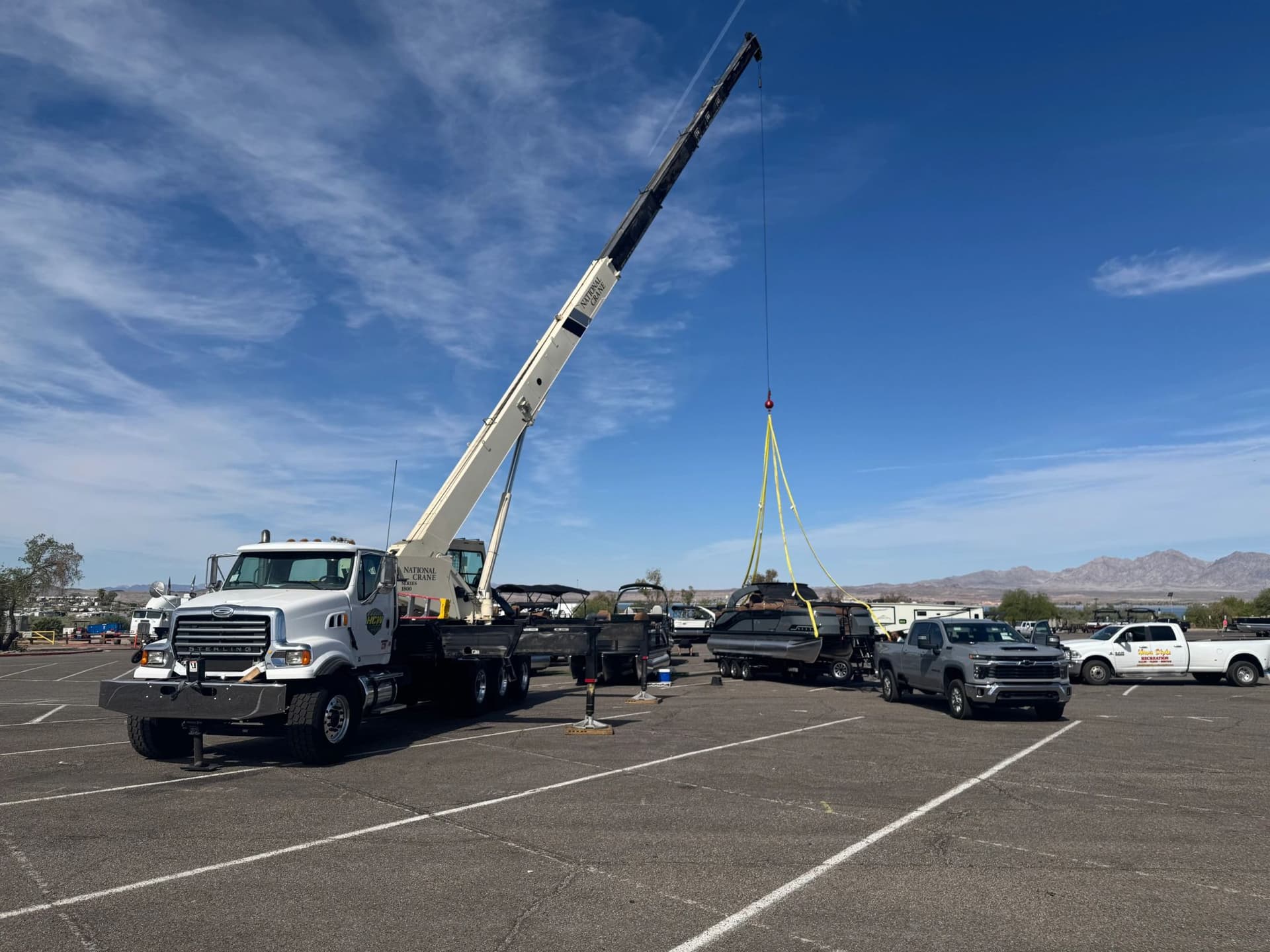
Machinery placement covers setting and moving shop and yard equipment: lathes, presses, compressors, tanks and pumps. The work starts by finding the lifting points, or working from the frame when there are none. Sheet metal and control panels get protected, the route gets measured on the diagonal, and the machine is landed, leveled and shimmed.
Where Does the Sling Actually Go
The first question on any machine is where you pick it from. A well made machine has lifting eyes built into the frame and a plate telling you what it weighs. Plenty of machines have neither. What they have is a painted sheet metal skin wrapped around a heavy cast base, and the heavy part is nowhere near the middle of the footprint.
When there are no lifting points, we work from the structure and ignore the body. That usually means slings or forks under the base rails, a spreader bar to keep the straps from crushing the sides, and a test lift of an inch or so to see which way the machine wants to lean before it goes anywhere. A lathe hangs nose down if you guess. So nobody guesses. You lift slightly, watch it settle, set it back, move the rigging, and lift again until it hangs the way you want it.
Skins, Panels and the Route It Has to Travel
Control panels, glass doors, gauges and painted metal are the parts that get damaged on an equipment move, and not one of them is carrying load. Straps get padded or run through corner protection, and anything that sticks out and can be unbolted gets removed and boxed rather than trusted to survive the trip.
Then you measure the route, all of it. Doorway width is the number people bring to the phone call, and it is almost never the number that decides the job. What decides it is the diagonal of the machine against the diagonal of the opening, the header height, the swing of the door leaf itself, the turn at the end of the corridor, and whether the floor between here and there will carry a concentrated load on a skate.
- Overall length, width and height with everything still attached
- Diagonal dimension, which is what really fits through an opening
- Center of gravity, or at minimum which end is the heavy end
- Header height, door leaf swing and corridor turns
- Floor, dock or mezzanine capacity along the whole route
Mezzanines, Raised Pads and Short Moves
Getting a machine up onto a mezzanine or a raised pad is a crane job because a forklift cannot reach the elevation and a pallet jack cannot get there at all. The pick itself is short and undramatic. The planning is about which side the boom can come in from, whether a roll-up door or a removable panel gives access at level, and how the machine gets landed and skated to its final spot once it is up there.
The other common call is the short move that is not a move at all. A compressor lifted off its pad so the slab underneath can be repaired. A tank picked and parked in the yard for a week. A boat picked off its trailer so the frame or the axles can be worked on, then set back when the work is done. These are minutes of actual lifting and mostly a question of having a sensible place to set the thing down while the work happens.
Moving equipment around inside a yard falls in the same category. Rows are tight, aisles were laid out for delivery trucks and not for a boom, and the shortest looking route is frequently the one that cannot be used at all.
How the job runs
Our Process
Step 1: Find the pick points, or work around not having any
Lifting eyes and a data plate make this easy. When both are missing, we rig off the frame, use a spreader to keep straps off the skin, and test lift to learn the balance before the machine leaves the deck.
Step 2: Strip and protect what is not structure
Removable panels, gauges and vulnerable trim come off or get padded. Corner protection goes under every strap that touches painted or polished surfaces.
Step 3: Prove the route and the landing spot
Diagonal, header, turns and floor capacity get checked against real measurements. The landing spot gets confirmed clear, swept and ready before the machine is in the air.
Step 4: Set, level and shim
The machine comes down slow onto its pad, feet or rails. Level gets checked and shims go in while the hook can still take the weight back off the base.
Scope
What Is Included
- Lift point assessment and a test lift to find the balance
- Spreader and padding to keep straps off panels and skins
- Route measurement checked against real machine dimensions
- Placement onto a pad, mezzanine, rails or trailer
- Short-duration holds so work can be done underneath
Answers
Frequently Asked Questions
My machine has no lifting eyes. Can you still move it?
Yes. We rig off the frame or the base rails instead of the body, use a spreader so the straps do not crush the sides, and take a short test lift to see how it hangs before committing to the move.
How do I find the weight if the data plate is gone?
Manufacturer literature by model number is the best source. Failing that, a dealer or a rebuilder can usually tell you. If nobody can, say so on the phone and we plan the setup around the uncertainty rather than discovering it on the hook.
Can you get equipment onto a mezzanine?
Often, yes. It depends on where the boom can approach from, whether there is an opening at level, and whether the mezzanine deck will carry the machine once it is there. Photos of the opening and the mezzanine edge tell us most of it.
Can you hold a piece of equipment while a repair is made underneath?
Yes, that is a common call. A machine or a boat comes off its base, gets held or set aside, the repair happens, and it goes back. If the repair is quick, the crane can wait and set it back on the same visit.
Can you move machinery around inside our yard?
Yes. Send a photo down the aisle you want the truck in and a photo of the destination. Yard moves usually come down to whether the boom can reach both points from one setup, or whether the truck has to relocate mid-job.
More Guides
- Equipment Setting PackageMachinery, tanks, containers and modular sections set square to the anchors already in your slab, rigged from the frame when there are no lifting eyes.
- Rigging FundamentalsHow slings, shackles and spreader bars attach a load to the hook. Sling angle, center of gravity, gear inspection, and who supplies the rigging.
- Tight Access LiftsSetting up in the street, partial outrigger extension, working over the corner, and staging loads closer when there is barely room for the truck.
- Rigging ProcessHow rigging gets chosen and run on a crane job: the weight, the pick points, the hardware, the test lift, tag lines, landing on dunnage and the release.
- Generator PlacementWhat it takes to crane a standby or portable generator onto a pad, roof or platform, from cure time and anchor bolts to electrician coordination.
- How Mobile Crane Service WorksA mobile crane brings the machine and the operator to your site. Here is what happens from the first phone call through setup, the pick and pack up.
- Capacity and Reach ExplainedA 40-ton crane will not lift 40 tons at full boom. Here is what capacity ratings, load radius and 142 feet of reach actually mean for your job.
- Site Preparation ChecklistWhat to clear, move, unlock and check before a crane arrives. A prepared site keeps the visit short and stops problems being found at the worst moment.
- What to Expect on Lift DayA walkthrough of lift day from arrival to departure, including how long each stage takes, what you can do, and why setup takes longer than the pick.
- HVAC Unit Crane Placement GuideHow rooftop package units and condensers get craned on and off, how the work is sequenced with your HVAC contractor, and what a curb mismatch means.
- Truss Lifting Process and SafetyHow roof trusses get set with a boom truck: staging bundles, spreader bars, bracing, wind limits and keeping the crane in one position along the wall line.
Ready to schedule your lift?
Tell us the load, the site and the timing. We will confirm capacity, access and a window.