
HVAC and Rooftop
How a rooftop package unit swap works
In Short
A change-out is two picks from one setup: old unit off, new unit on. The curb match and the mechanical crew's prep decide the pace.
February 10, 20265 min read1051 words
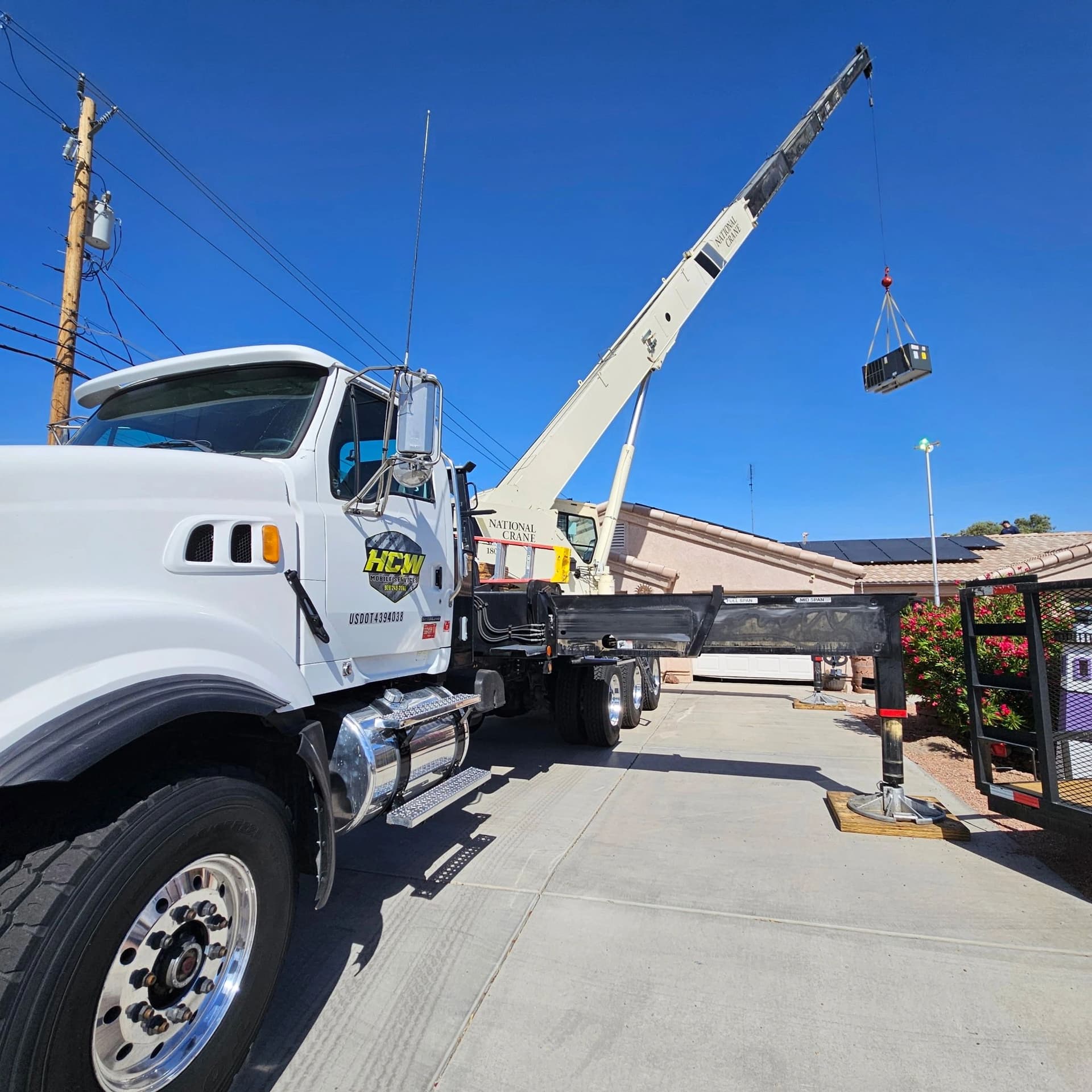
A rooftop change-out is two picks from a single crane setup. The mechanical contractor disconnects and breaks the old unit loose, the crane lifts it off and sets it down, then picks the new unit and lands it on the curb. The crane portion is short. Coordination is what makes it one visit.
The Crane Is a Small Part of a Long Day
It helps to be clear about what the crane does and does not do. It lifts the old unit off and sets the new one on. That is the whole crane contribution, and on a straightforward job it is a short window.
Everything before that is mechanical work: pulling disconnects, recovering refrigerant, securing gas, disconnecting duct and drain, and cutting the old unit free of the curb. Everything after is more mechanical work: sealing, connecting, wiring, commissioning.
Understanding that split matters because it is where scheduling goes wrong. If the crane arrives at seven and the disconnect work starts at seven, the crane spends two hours watching. If the disconnect work happened the previous afternoon, the crane arrives, does two picks, and leaves.
Setup Is Decided by the Curb, Not the Truck
The setup position is a compromise between where the truck can physically sit and how far it is from there to the curb.
Radius is what determines whether a job is comfortable. A unit on the near edge of a small building is easy. The same unit in the center of a large roof, picked from a parking lot on one side, is a substantially longer radius, and capacity falls off with radius.
Building height and parapets add to it. The load has to get above the parapet before it can come inboard, and on a taller building that is a real amount of boom used purely on getting over the edge.
So the site walk starts at the curb and works backward. Where does the load need to end up, what does it have to clear, and given those, where can the truck sit that makes the geometry reasonable and the ground acceptable.
Pick One: The Old Unit
The first pick is the unpredictable one, because nobody knows exactly what the old unit weighs or what is still holding it down.
Old units are heavier than their published weights suggest. Twenty years of accumulation, a sump that has water in it, an economizer that was added later, a curb adapter that is coming off with it. All of that is extra and none of it is on the data plate.
It is also the one most likely to be stuck. A unit that has been sealed to a curb for two decades bonds to the gasket, the sealant, and sometimes the flashing. If it has not been genuinely broken free before the pick, the crane will feel resistance, and pulling on a load that is still attached is exactly the thing not to do.
So the first pick starts with a slow lift and a pause. The load comes up an inch and stops. If it is free, it lifts clean. If there is any hesitation, it goes back down and somebody goes to look. That pause has prevented more torn roof flashing than any other single habit.
Between the Picks
Once the old unit is on the ground or on a trailer, there is a gap while the roof crew works on the curb.
That work is real and it is not fast. The curb has to be cleaned of old sealant and gasket. It gets inspected for rot, rust, or damage that was invisible under the unit. Then the new gasket goes down, evenly, on a clean surface.
This is also where curb mismatch shows up. The new unit may not have the same footprint as the old one. Manufacturers change dimensions between model generations, and a curb adapter is the usual solution. If an adapter is needed, it needs to have been ordered weeks earlier, not discovered on the roof.
That is why we ask for both model numbers up front. It is not really a crane question. It is a question whose wrong answer strands everybody on a roof with a hole in it.
Pick Two: The New Unit
The second pick is the precise one. The new unit is rigged from its designed lifting points with a spreader keeping the slings off the cabinet panels.
It comes up, over the parapet, and in over the curb. Then it slows right down. The last part is a soft set: the unit comes to within a few inches, the crew gets hands on it, and it is aligned to the curb before it takes its own weight.
Getting it square matters. A unit that lands cocked on the curb does not seal evenly on the gasket, and an uneven seal is a leak. It also has to be correct in rotation, because the duct openings underneath have to line up with what is in the roof.
It stays in the rigging until the crew confirms it is seated properly all the way around. Then the slings come off, and the crane's part is done.
What Happens to the Old Unit
It has to go somewhere and that somewhere should be decided in advance. On a trailer is cleanest, if the trailer is there when the unit comes off.
On the ground in a parking space is fine for a short period. Left in a drive aisle for three days until a scrap hauler shows up is a problem for whoever manages the property, and it usually becomes the contractor's problem by the second day.
The other consideration is that an old unit still has refrigerant handling and disposal requirements. That is the mechanical contractor's responsibility, and the crane simply needs to know where to put it.
- Both model numbers, old and new, sent before the day
- Curb adapter identified and ordered if the footprints differ
- Disconnect and break-loose work completed beforehand
- New unit on site and staged before the crane arrives
- Somewhere decided for the old unit to go
- Roof crew on site at the start time, not after it
- A first-light start from May through September
Emergencies and After Hours
A failed unit in August on an occupied building is a different kind of job. It happens, we take those calls at any hour, and the same rules apply with less notice.
What speeds up an emergency more than anything is having the replacement unit available. The lift can be arranged quickly. Sourcing a unit cannot always be.
Night work solves the heat problem and creates a lighting one. On a commercial building with a lit parking lot and a crew set up for it, that trade can be worth making. It is a conversation to have on the phone rather than an assumption either way.
Filed under HVAC and Rooftop. Published February 10, 2026.
Answers
Frequently Asked Questions
How long is the crane on site for a change-out?
The picks themselves are short, often well under an hour combined. What extends it is waiting on roof work. With prep done beforehand it is a quick visit.
Can you do both picks from one setup?
Almost always, yes. Setting up twice is what we design the position to avoid. It occasionally comes up when the old unit has to be set somewhere the geometry does not reach.
What if the old unit will not come free of the curb?
It goes back down and gets cut properly free. We do not pull on a stuck unit. That is how flashing tears and how a load lets go suddenly once it does release.
What if the new unit does not match the curb?
You need a curb adapter, and that is a lead time item. Sending both model numbers ahead of the day is how this gets caught with time to fix it.
Do you work on multi-story buildings?
Yes. Height changes the setup position and the radius, and taller buildings need more attention to where the truck sits. Send a photo and the approximate height and we will tell you what is workable.
Keep Reading
- What HVAC contractors should tell the crane companyFive details decide whether a rooftop change-out is one visit or two. None of them are complicated and all of them get left out of the phone call.
- Air handler and package unit lifts are different problemsA package unit is built to be craned. An air handler is not. The difference changes the rigging, the landing, and how long the crane is on site.
- Why summer rooftop work starts early in HavasuRoof surfaces here run far hotter than the air. That is why summer rooftop lifts start at first light, and why an afternoon start costs you the job.
- HVAC and Mechanical LiftsRooftop units, air handlers, condensers, and mechanical equipment set for HVAC contractors and homeowners.
- Emergency and Same Day ServiceCrane call-outs answered any hour, with an honest read on what can happen now and what needs planning first.
- What to Expect on Lift DayA walkthrough of lift day from arrival to departure, including how long each stage takes, what you can do, and why setup takes longer than the pick.
Ready to schedule your lift?
Tell us the load, the site and the timing. We will confirm capacity, access and a window.