
HVAC and Rooftop
Why summer rooftop work starts early in Havasu
In Short
A Havasu roof in July is far hotter than the air temperature. Heat slows crews and damages sealants. Morning starts protect the work and the people.
July 21, 20264 min read947 words
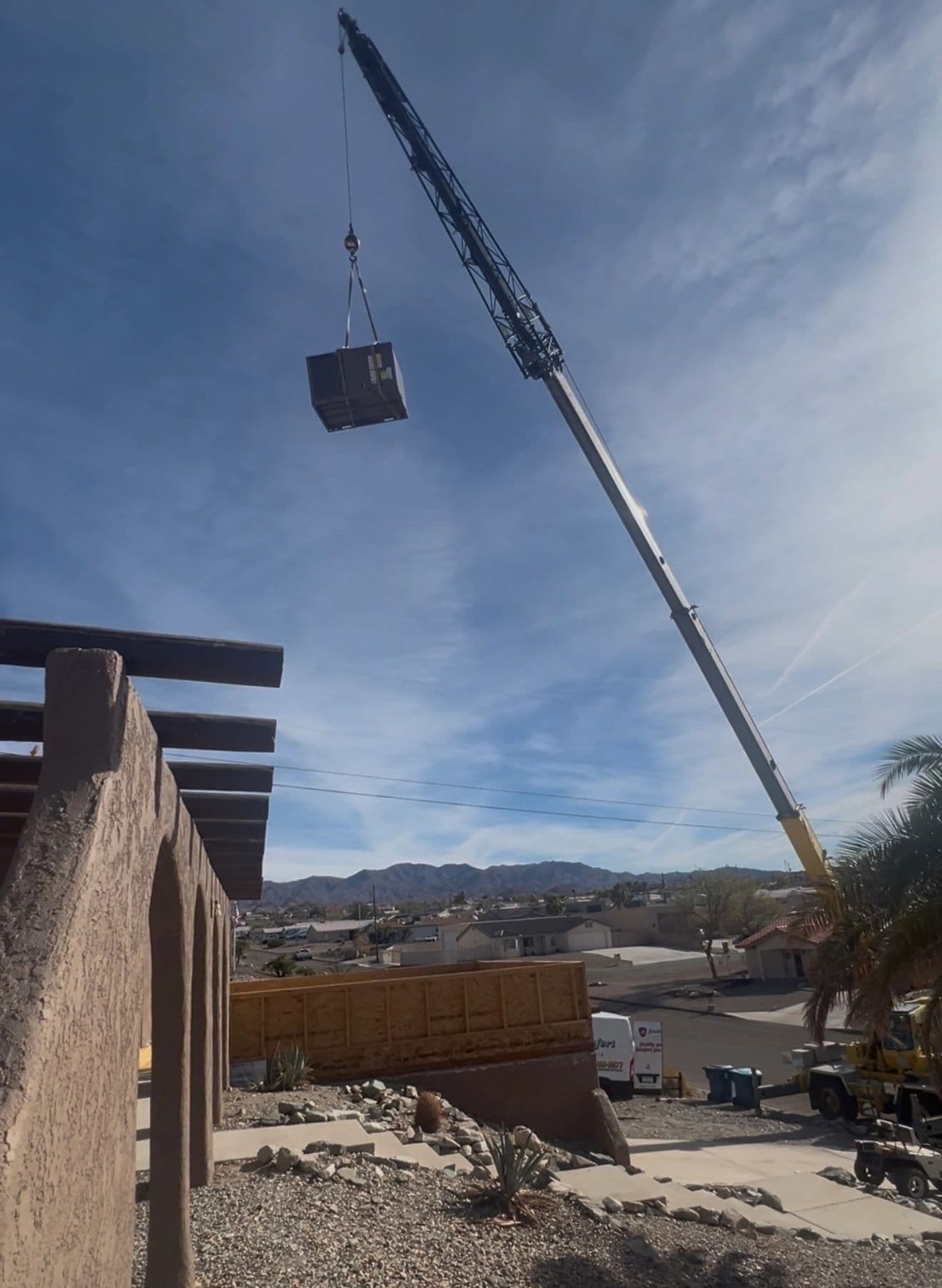
Summer rooftop lifts in Lake Havasu start at first light because the roof surface, not the air, sets the limit. Dark membrane and tile can run well above ambient by mid morning. Hot roofs slow the receiving crew, soften sealants and curb gaskets, and push crews toward mistakes on the part of the job that matters most.
The Roof Is Hotter Than the Forecast
The number on the phone is air temperature measured in shade. A roof is not in shade. Dark single-ply membrane, mod-bit cap sheet, and painted metal all absorb sun and hold it. By mid morning in July a flat commercial roof in this town is a surface you cannot rest a bare hand on.
Tile roofs behave differently but are not easier. Concrete tile stores heat and radiates it back for hours after the sun moves off. The tile itself gets brittle and slick underfoot, and walking a tile roof in the afternoon breaks more tile than walking it in the morning.
So when we talk about a heat cutoff for rooftop work, we are talking about the surface the crew is kneeling on, not the reading at the airport.
Heat Slows the Part of the Job That Cannot Be Rushed
The crane is on site for a short window. The slow parts are on the roof: pulling the old unit off the curb, cleaning the curb, setting the gasket, landing the new unit square, and getting the fasteners in.
Every one of those tasks gets slower in heat. People take breaks they need to take. Hands get clumsy in gloves. Somebody has to go back down the ladder for a tool. Each of those is a minute, and each minute is a minute the crane is set up and standing by with nothing to do.
That is where an afternoon start turns into a second visit. The unit comes off, the curb work drags, and now the crew is racing to get a new unit landed and sealed before the day beats them. Nobody does careful work in that position.
Materials Behave Badly When They Are Hot
Curb gasket and closed-cell tape compress differently at a hundred and forty degrees than at eighty. Get it too hot and it goes soft, squeezes out under the unit, and does not give the even seal it is supposed to give.
Sealants and mastics skin over fast in direct sun, so a bead that would have tooled cleanly in the morning drags and tears in the afternoon. Roofing membrane gets soft enough that a dropped tool or a dragged corner will scuff or gouge it, and that scuff is a leak next monsoon.
Even the equipment itself is affected. Sheet metal panels expand, screws that lined up on the ground do not line up on the roof, and controls boards do not appreciate sitting on a hot deck waiting to be set.
What an Early Start Actually Looks Like
First light means we are rolling out of the yard before sunrise so the truck is positioned and on outriggers as the light comes up. The site walk and the outrigger setup happen while the temperature is still reasonable.
The mechanical contractor is on the roof at the same time, not an hour later. Disconnects are already pulled, the unit is already broken loose from the curb, the electrical and gas are already secured. That work should have happened the previous afternoon where possible.
The picks themselves are quick. Old unit off, set on the ground or a trailer. New unit up and landed. Both picks together are often less than an hour of crane time on a straightforward change-out. Then the crane comes off the load and the roof crew has the whole cool part of the morning to finish properly.
Why We Push Prep to the Day Before
The single biggest thing that keeps a summer rooftop job in the morning window is doing the disconnect work the day before. It costs the mechanical contractor a short afternoon visit and saves everybody the worst two hours of the following day.
The same applies to the new unit. If it is being delivered by a freight truck, get it on site and staged where the crane can reach it before lift day. A delivery driver who shows up at nine in the morning has just cost you the entire early window, and there is nothing the crane can do about it.
None of this is complicated. It is just sequencing. The jobs that go badly in July are almost never badly rigged. They are badly sequenced.
Second Homes and Empty Buildings Change the Math
A lot of property here sits empty part of the year. A seasonal owner in a cooler state gets a call that the unit failed, and there is nobody local to open a gate or move a car.
That is worth planning for in advance. If a property is going to be vacant through summer, leave access arrangements with somebody local before you need them. A lockbox, a neighbor, a property manager with a key.
It also changes urgency. An unoccupied house with a failed unit is not an emergency the way an occupied one is, and that flexibility is worth using. Take the morning slot two days out rather than pushing for an afternoon slot today.
Working Safely on a Hot Roof
Heat illness sneaks up. It does not announce itself with a dramatic collapse. It shows up as somebody getting quiet, making an odd decision, or losing track of what they were doing. On a roof with a suspended load nearby, that is exactly the wrong failure.
We watch for it in ourselves and we watch for it in the crews we work alongside. If somebody on the roof is off, the load goes down and the job stops. That is not negotiable and it has never once cost anybody more than it saved.
- Start at first light from May through September
- Have disconnects and curb break-loose done the day before
- Stage the new unit on site before lift day
- Bring more water than you think you need, and shade if there is none
- Keep the number of people on a hot roof to the ones who need to be there
- Stop the job if anybody is showing heat symptoms
Filed under HVAC and Rooftop. Published July 21, 2026.
Answers
Frequently Asked Questions
How early is early?
In the deep summer months we like to be set up and ready to pick as the sun comes up. That usually means arriving before five thirty. In spring and fall a seven or eight o'clock start is comfortable.
Can you do a rooftop swap in the afternoon in July?
We can lift in the afternoon. Whether the roof crew can do good work up there is a different question, and that is the one that decides whether the job finishes. If the schedule forces an afternoon, we will tell you what we think the risk is.
Does the heat affect the crane itself?
Hydraulic systems run hotter and everything gets checked for it, but the machine is not the limiting factor. People and materials are. The crane is designed to work in this climate. Roof sealant is not designed to be tooled at a hundred and forty degrees.
Is night work an option instead?
Sometimes, and we do it. Night work solves the heat problem and creates a lighting problem. On a commercial site with good site lighting and a crew set up for it, night can be a good answer. On a tile roof in a dark neighborhood it usually is not.
We are out of state and the unit just failed. What do we need to do?
Get us or your mechanical contractor a way onto the property, and get a model number off the old unit if anyone can photograph the data plate. From there most of the planning can happen without you being here.
Keep Reading
- How a rooftop package unit swap worksTwo picks, one setup, and a curb that has to match. How a rooftop change-out runs from the crane's side and where the coordination matters.
- What HVAC contractors should tell the crane companyFive details decide whether a rooftop change-out is one visit or two. None of them are complicated and all of them get left out of the phone call.
- What monsoon season does to crane schedulingMonsoon wind, dust, and washed ground change how lifts get scheduled in Lake Havasu from July into September. Here is what moves a job and what stops one.
- HVAC and Mechanical LiftsRooftop units, air handlers, condensers, and mechanical equipment set for HVAC contractors and homeowners.
- Emergency and Same Day ServiceCrane call-outs answered any hour, with an honest read on what can happen now and what needs planning first.
- What to Expect on Lift DayA walkthrough of lift day from arrival to departure, including how long each stage takes, what you can do, and why setup takes longer than the pick.
Ready to schedule your lift?
Tell us the load, the site and the timing. We will confirm capacity, access and a window.